Bootstrap
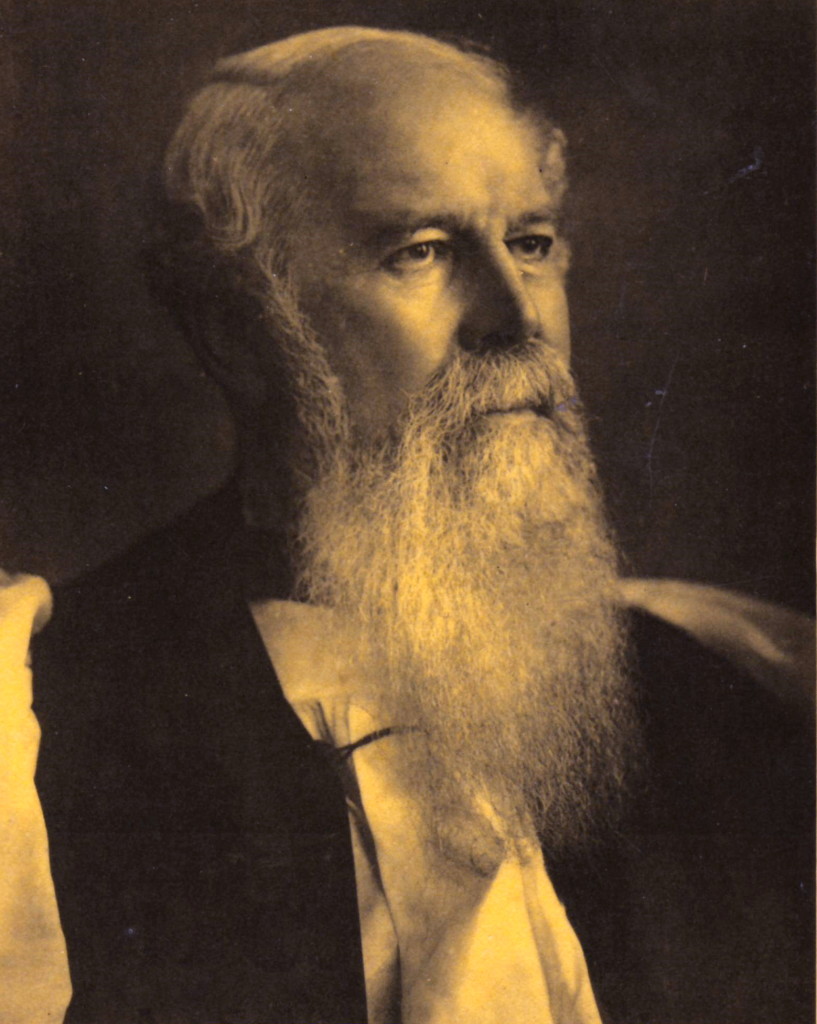
J.C. Ryle

115. The Authority of Jesus Questioned, Luke 20:1-8

Luke 20:1-8
J.C. Ryle October, 19 2018 Audio
0 Comments
This superb narration of Ryle's devotional commentary on the Gospel of Luke has been professionally read, and graciously supplied by Christopher Glyn. Please visit his website, treasures365.com/shop.php, where you can purchase additional superb audios at very reasonable prices.

You will find it helpful to READ the texts--as you LISTEN to the audios!

The TEXTS for the entire commentary can be bound here:
http://gracegems.org/Ryle/Luke.htm

The AUDIOS for the entire commentary can be bound here:
https://www.sermonaudio.com/search.asp?subsetit...

J.C. Ryle's sermon on Luke 20:1-8 addresses the authority of Jesus and the unbelief of the religious leaders of His time. The key argument presented is that the chief priests and scribes, motivated by envy and fear of losing power, questioned Jesus' authority rather than examining His works and teachings. Ryle emphasizes that their rejection of John the Baptist's testimony about Christ reveals their spiritual blindness. Supported by references such as Matthew 11:11, Ryle underscores the significance of John's ministry in pointing to Jesus as the Messiah. The practical implication of this passage encourages Christians to remain steadfast in their mission despite opposition, highlighting the importance of perseverance in the face of challenges and the assurance that God recognizes and values the labor of His faithful servants.

Key Quotes

“These men hated and envied Christ. They saw his influence increasing. They saw their own power waning.”

“If the servants of Christ are to cease from every movement which the world calls in question, they will soon come to an entire standstill.”

“However little man may esteem the work of faithful ministers, there is one in heaven who sees it and keeps account of all their labor.”

“Those who are now his enemies will one day confess that he was right, though they used to cry loudly that he was wrong.”

What does the Bible say about the authority of Jesus?

The Bible reveals that Jesus' authority comes from God, as He demonstrated through His teachings and miracles.

The authority of Jesus is a profound theme in the Gospels, particularly evident in Luke 20:1-8, where Jesus engages with the chief priests and scribes, questioning the source of His authority. By referencing John the Baptist, He underscores the divine endorsement of His ministry, challenging the leaders to acknowledge the prophetic testimony they had previously accepted. His authority isn't just self-derived but rooted in His identity as the Messiah, which the Jewish leaders refused to admit despite their knowledge of John's endorsement of Him as the Lamb of God.

Luke 20:1-8, John 1:29, Matthew 21:25

How do we know John the Baptist was a prophet?

John the Baptist's prophetic role is confirmed through biblical prophecy and the recognition of the Jewish people during his ministry.

John the Baptist's ministry is highlighted in the Gospels as the only New Testament ministry foretold in the Old Testament, establishing him as a prophet sent from God. He pointed to Jesus as the Messiah, proclaiming Him as the Lamb of God and preparing the hearts of the people for Christ’s arrival. His baptizing of countless individuals and the acknowledgment of his prophetic status by the masses further solidify his role as a legitimate prophet. The Gospels emphasize that John's ministry was intended to prepare Israel for the coming Messiah, leaving them without excuse for rejecting Christ once He began His public ministry.

Luke 20:4, Matthew 3:3, Isaiah 40:3

Why is the authority of Jesus important for Christians?

The authority of Jesus is foundational for Christians, underpinning their faith and the truth of the gospel.

Understanding the authority of Jesus is crucial for Christians as it affirms the validity of their faith and the teachings of scripture. Jesus’ authority confirms that His teachings are not merely human opinions but are divinely inspired and carry the weight of truth. This authority is also vital for the believer’s conduct in the world, especially when facing opposition or skepticism. Christ’s authority legitimizes the mission of His followers, reminding them that their work is anchored in his divine mandate. When Christians acknowledge Jesus’ authority, they find confidence and assurance in sharing the gospel and living out their faith amidst a world that often questions their beliefs.

Luke 20:8, Matthew 28:18-20, John 14:6

How should Christians respond to criticism?

Christians should respond to criticism with patience and faith, understanding that they follow Christ who faced opposition.

Response to criticism is an inevitable part of the Christian walk, as demonstrated in the encounter recorded in Luke 20:1-8, where Jesus faced scrutiny from religious leaders. Christians must remember that being unjustly criticized is part of sharing in Christ's sufferings. Instead of being discouraged, believers are called to persevere, relying on the truth of the gospel and the assurance of Christ's presence. Moreover, the encouragement from Jesus' own experiences can empower Christians to remain steadfast and focused on their mission of doing good, trusting that their faithful actions will ultimately bear fruit, despite worldly opposition.

Luke 20:1-8, Acts 24:5, Philippians 3:10

Sermon Transcript

Auto-generated transcript • May contain errors

100%
J.C. Ryle's Devotional Thoughts on the Gospel of Luke

Section 115 The Authority of Jesus Questioned Luke Chapter 20, Verses 1-8

And it came to pass that on one of those days, as he taught the people in the temple and preached the gospel, the chief priests and the scribes came upon him with the elders, and spoke unto him, saying, Tell us, by what authority do you do these things? Or who is he who gave you this authority?

And he answered and said unto them, I will also ask you one thing, and answer me. The baptism of John, was it from heaven or of men?

And they reasoned with themselves, saying, If we shall say from heaven, he will say, Why then believed you him not? But if we say of men, all the people will stone us, for they be persuaded that John was a prophet.

And they answered that they could not tell whence it was. And Jesus said unto them, Neither tell I you by what authority I do these things.

Let us notice firstly in this passage the demand which the chief priests and scribes made upon our Lord. Tell us, they said, by what authority you do these things, and who gave you this authority?

The spirit which prompted this demand is too evident to be mistaken. These men hated and envied Christ. They saw his influence increasing. They saw their own power waning. They resolved, if possible, to stop the progress of this new teacher, and the point on which they made their assault was his authority.

They ought to have examined his mighty works, his teaching they ought in all fairness to have compared with their own scriptures. But they refused to take one course or the other. They preferred to call his authority into question.

Every true-hearted Christian who tries to do good in the world must make up his mind to be treated like his master. He must never be surprised to find that the self-righteous and the worldly-minded dislike his ways. The lawfulness of his proceedings will be constantly called in question. He will be regarded as meddlesome, disorderly, self-conceited, a pestilent fellow, and a troubler of Israel. Acts chapter 24 verse 5, 1 Kings chapter 18 verse 17.

Scripture readers, district visitors, lay agents, and unordained missionaries are specially liable to meet with such treatment. And worst of all, they will often meet with enemies where they ought to find France.

Let all who are attacked by the world for trying to do good take comfort in the thought that they're only drinking of the bitter cup which Christ drank. Their master in heaven sympathizes with them. Let them work on patiently, and believe that if they are faithful, their work will speak for itself.

The world's opposition is sure to attend every really good work. If the servants of Christ are to cease from every movement which the world calls in question, they will soon come to an entire standstill. If we are to wait until the world approves our plans and is satisfied with the propriety of our efforts, we shall never do anything on Earth.

Let us notice secondly in this passage the manner in which our Lord speaks of John the Baptist's ministry. He refers those who questioned his authority to John's constant and unvarying testimony to himself. Ought they not to remember how John had spoken of him as the Lamb of God, as one whose shoe latchets he was not worthy to untie, as one who had the winnowing fan in his hand and had the Spirit without measure? Ought they not to recollect that they and all Jerusalem had gone out to John's baptism and confessed that John was a prophet? Yet John had always told them plainly that Christ was the Messiah. Surely, if they were honest, then they would not come now to question his authority. If they really believed John to be a prophet sent from God, then they were bound to believe that Jesus was the Christ.

It may reasonably be doubted whether the importance of John the Baptist's ministry is generally understood by Christians. The brightness of our Lord's history overshadows the history of his forerunner. And the result is that John's baptism and preaching do not receive the attention which they deserve. Yet it should never be forgotten that the ministry of the Baptist was the only New Testament ministry foretold in the Old Testament, excepting that of Christ. It was a ministry which produced an immense effect on the Jewish mind. and aroused the expectation of Israel from one end of Palestine to the other.

Above all, John's was a ministry which made the Jews without excuse in their rejection of Christ when Christ appeared. They could not say that they were taken by surprise when our Lord began to preach. Their minds had been thoroughly prepared for his appearing. To see the full sinfulness of the Jews and the entire justice of the judgments which came on them after crucifying our Lord, we must remember the ministry of John the Baptist.

However little man may esteem the work of faithful ministers, there is one in heaven who sees it and keeps account of all their labor. however little their proceedings may be understood, and however much they may be slandered and misrepresented, the Lord Jesus Christ writes all their doings in his book. He lives who testified to the importance of John the Baptist's ministry when John was dead and buried. He will yet testify to the toil of every one of his faithful servants at the last day. In the world, they may have tribulation and disappointment, but they are not forgotten by God.

Let us notice lastly in this passage the falsehood of which our Lord's enemies were guilty. In reply to our Lord's question whether the Lord's baptism was from heaven or from men, they answered that they did not know where it was from. This was a downright lie. They did know, but they would not admit it. They knew that if they said what they really believed, then they would condemn themselves. If they confess that John was a prophet sent from God, then they would be guilty of a gross inconsistency in not believing his testimony about Christ.

Falsehoods like these, it may be feared, are only too common among unconverted men. Thousands will lie rather than acknowledge themselves to be in the wrong. Lying is just one of the sins to which the human heart is most naturally inclined, and one of the commonest sins in the world. Gehazi and Ananias and Sapphira have more followers and imitators than Peter and Paul. The number of lies which are constantly told by men to save their own credit and to cover over their own wickedness is probably far greater than we are aware.

The true servant of Christ will do well to remember these things as he travels through this world. He must not believe all that he hears, and especially in the matter of religion. He must not suppose that unconverted men really believe all that they say in their own hearts. They often feel more than they appear to feel. They often say things against religion and religious people which they secretly know to be untrue. They often know the gospel is true, but have not the courage to confess it. They often know that the Christian's life is right, but they're too proud to say so.

The chief priests and scribes are not the only people who deal dishonestly in religion and say what they know to be false. Then let the servant of Christ go patiently on his way. Those who are now his enemies will one day confess that he was right, though they used to cry loudly that he was wrong.
J.C. Ryle
About J.C. Ryle
John Charles Ryle (10 May 1816 — 10 June 1900) was an English evangelical Anglican bishop. He was the first Anglican bishop of Liverpool.
Broadcaster:

Comments

0 / 2000 characters
Comments are moderated before appearing.

Be the first to comment!

Joshua

Joshua

Shall we play a game? Ask me about articles, sermons, or theology from our library. I can also help you navigate the site.