Bootstrap
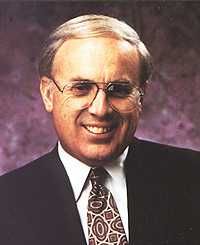
John MacArthur

Is Double-Predestination Biblical?

Ephesians 1:1-11; Romans 9:13-22
John MacArthur September, 12 2017 Video & Audio
0 Comments
Superb short video by John MacArthur and R.C. Sproul on the Scriptural doctrine of Double-Predestination.

Pastor John MacArthur's sermon addresses the doctrine of double predestination, emphasizing its biblical basis and theological implications. He defines double predestination as God's sovereign act of electing some for salvation while reprobating others, rejecting universalism and asserting that God's grace is not indiscriminately bestowed. He references Ephesians 1:1-11 and Romans 9:13-22 to illustrate that God's predestinating work encompasses both election and reprobation, highlighting that divine intervention is asymmetrical—bestowing grace on the elect while leaving the non-elect to their own sinful inclinations. The sermon's significance lies in clarifying misconceptions about double predestination, fostering a deeper understanding of God's sovereignty in salvation, and reinforcing traditional Reformed doctrines that differentiate between elect and non-elect without suggesting that God's intervention in reprobation is equivalent to grace.

Key Quotes

“Double predestination historically teaches that in God's sovereign predestinating work, it has two sides to it, election and reprobation.”

“Predestination is asymmetrical. It is positive-negative. God positively intervenes in the life of the elect and gives them mercy that they don't deserve, and He leaves the rest of corrupt mankind to their own devices.”

“Nobody receives injustice.”

“When God chooses to give grace to some, He chooses not to give grace to others.”

Sermon Transcript

Auto-generated transcript • May contain errors

100%
OK, my question's about double
predestination. So first I'd want Dr. Sproul to define it, and then
I want Dr. MacArthur to state his view on
it, and with Scriptural support, and then if either of you disagree
with him, I want you to state your view with Scriptural support.
Wait a minute. Wait a minute. Is that all? Yeah, that's all. You know, many years ago we published
a festschrift in honor of John Gerstner, which included essays
from men around the world and various points of theology, including
men like John Murray. John Murray's last essay, by
the way, was in that festschrift. And I wrote the article there
on double predestination. And so, let me give you my quick
definition of double predestination. Double predestination historically
teaches that in God's sovereign predestinating work, it has two
sides to it, election and reprobation. So double predestination initially
rejects universalism. It teaches that God in His sovereign
grace saves His elect, and those who are not numbered on the elect
are numbered among the reprobate, those who are not saved. So if you believe in divine election
and you believe in predestination, the Lutherans to the contrary,
unless you're a universalist You have to believe in double
predestination, that it has two sides. Not everybody is elect,
and the non-elect are distinguished from the elect. Okay? Now, however,
what that term usually refers to is a specific view of election,
which has been called historically a symmetrical view of election. or a view sometimes called, with
the bad use of language, equal ultimacy. And the idea of the
symmetrical view of election is this, that in the case of
the elect, God intervenes in their lives and creates faith
in their hearts through the supernatural power of regeneration activated
by God the Holy Spirit. On the other hand, in the case
of the reprobate, God also intervenes in their lives to harden their
hearts, to create, as it were, fresh evil in their souls to
make sure that they don't repent and come to faith. Now that view
of equal ultimacy or what we would call a positive-positive
view where God positively intervenes in the life of the elect and
positively intervenes in the life of the is abhorrent to orthodox
Calvinism. That is not what Reformed theology
historically teaches in terms of double predestination. Rather,
predestination is asymmetrical. It is positive-negative. God
positively intervenes in the life of the elect and gives them
mercy that they don't deserve, and He leaves the rest of corrupt
mankind to their own devices. He does not coerce them to unbelief,
so that one group gets grace, the other group gets justice.
Nobody receives injustice. Okay? Now, that's what we mean
by double predestination in a nutshell. Now you'll have to see whether
John agrees with that. Oh, I agree with that. That's
one of the reasons that You have to define your terms because
that's one of the reasons that we are criticized because people
make assumptions about what you might mean by double predestination.
Jude opens up by saying there were certain men who have crept
into the church who were long before ordained unto condemnation. before they ever showed up in
this world, there was a divine ordination to condemnation. So there's no question about
the fact that when God chooses to give grace to some, He chooses
not to give grace to others. But I think that that's the best
explanation I've ever heard of what God does and does not do.
Broadcaster:

Comments

0 / 2000 characters
Comments are moderated before appearing.

Be the first to comment!

Joshua

Joshua

Shall we play a game? Ask me about articles, sermons, or theology from our library. I can also help you navigate the site.