Bootstrap
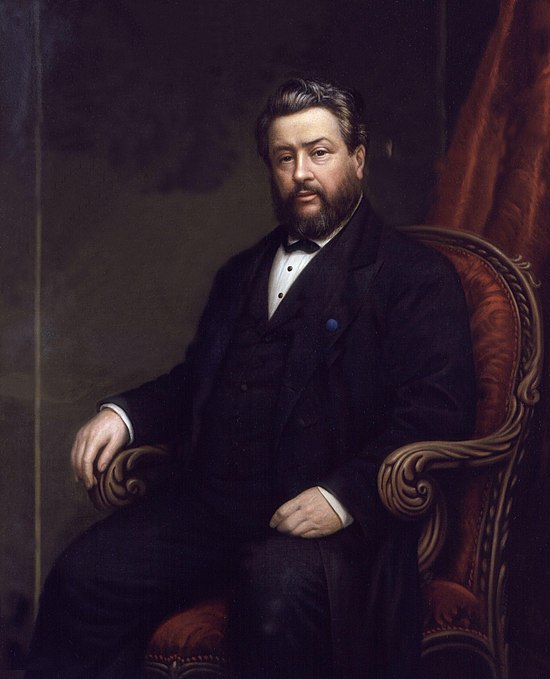
Charles Spurgeon

The Wounds of Jesus!

Luke 24:40; Luke 24
Charles Spurgeon March, 10 2017 Audio
0 Comments
Choice Puritan Devotional!

The main theological topic addressed in C. H. Spurgeon's sermon "The Wounds of Jesus" is Christ's resurrected body bearing the scars of His passion, emphasizing the significance of suffering, identity, and intercession. Spurgeon argues that the wounds serve three key purposes: they confirm Christ's identity as the same Savior who suffered for humanity, they serve as eternal reminders of His sacrifice, and they showcase His ongoing ministry as the High Priest in heaven. Specific Scripture references, particularly from Luke 24:40, underline the importance of these wounds as physical proof of the resurrected Christ, dispelling doubts among the disciples regarding His identities. The practical significance of this teaching underscores the Reformed doctrine of Christ’s dual role as Savior and Priest, affirming that believers can find solace in His sympathies with their own sufferings, while also acknowledging the honor associated with suffering as they follow Him.

Key Quotes

“He shows us his wounds. Innocence ought to have escaped suffering. Didn't Pilate mean as much when he said, I find no fault in him, therefore let him go? But innocence did not escape suffering.”

“The wounds of Christ in heaven will be a theme of eternal wonder to the angels.”

“Oh, he must prevail. Do you not see that Christ without His wounds in heaven might be strong enough, but there wouldn't be that glorious simplicity of intercession which you now see?”

“He will present the whole body before His Father's face, and wounded though He is, He will not cast His own wounds away.”

Sermon Transcript

Auto-generated transcript • May contain errors

100%
The Wounds of Jesus by Charles Haddon Spurgeon. This sermon was originally preached on January 30th in the year 1859. The text for today comes from the book of Luke, Luke chapter 24, verse 40. He showed them his hands and feet. I have selected this sentence as the text for today, although I will not strictly adhere to it. What was there to see on Christ's hands and feet? We are taught that the prints of the nails were visible, and that in his side there was still the gash made by the spear. For didn't Christ say to Thomas, put your finger here, see my hands? Reach out your hand and put it into my side. Stop doubting and believe. I wish to draw your attention to the simple fact that our Lord Jesus Christ, when he arose from the dead, had in his body the marks of his passion. If he wanted to, he could have easily removed them. He rose from the dead. and he could have erased from his body everything which could be an indication of what he suffered and endured before he descended into the tomb. But no, instead there were the pierced hands and feet and there was the open side. What was the reason for this? There was no absolute necessity for it. It could have easily been dispensed with. What then were the reasons? I will endeavor to enter into this subject and I hope we may draw some beneficial instructions from it. First, what influence did the showing of the hands and feet have upon the disciples? Secondly, why is it that Jesus Christ, now in heaven, still has the scars in his flesh? Thirdly, Is there any lesson for us in the fact that Jesus Christ still wears his wounds? I think there is. First, what influence did the showing of Christ's hands and feet have upon the disciples? I reply at once that they were infallible proofs that he was the same person. Jesus said, Look at my hands and my feet, it is I myself. It was to establish his identity, that he was the very same Jesus whom they had followed, whom in the end they had deserted, whom they had watched from a distance being crucified and slain, and whom they had carried to the tomb in the sadness of the evening. It was the very same Christ who was now before them, and they could clearly know it, for there was the seal of his sufferings upon him. He was the same person. The hands and feet could testify to that. You know, beloved, without such evidence being visible on our Savior, it is probable that his disciples would have been unbelieving enough to doubt the identity of his person. Have you ever seen men changed? extremely changed in their external appearance. I have known a man, perhaps five or six years ago. He had passed through a world of suffering and pain. And when I had seen him again, I declared, I would not have known you if I had met you in the street. Now when the disciples were last with Jesus, it was at the Lord's supper. Then they left with him. Then they walked with him into the garden. There the Savior prayed and sweated, as if it were great drops of blood. Don't you imagine that such a wrestling, such a bloody sweat as that, must have had some effect on his appearance? But now the plows of grief were sharpened, and anguish made deep furrows on him. There must have been lines of grief on his brow, deeper than they had ever seen before. This would have produced a change so great to make them forget what he used to look like. Nor was this all. You know he had to undergo the scourging at the pillar of the praetorium and then to die. Can you imagine that a man could pass through the process of death through such shocking agony as that which the Savior endured, and yet that there would be no change in his visible appearance? I can conceive that in passing through such a furnace as this, the very features of Christ's face would have seemed to have been melted and would need to be reshaped before the disciples could discern that he was the same person. Besides that, When Jesus rose from the dead, he arose, you know, as he now sits in heaven. His body was flesh and bone, but nevertheless it had miraculous powers. It was capable of entering into a room without the ordinary modes of access. We find our Savior standing in the midst of his disciples and the doors still locked shut. I believe that Jesus had a body just like we are to have in heaven. Jesus Christ was not a phantom or physical phenomenon. His body was not a spirit. It was a real body. And so in heaven, don't imagine that we are to be spirits. We are to be spirits until the great resurrection day. But then our spirit is afterwards to receive a spiritual body. It is to be clothed. It will not forever be a naked, bodiless spirit. That body will be for all intents and purposes the same body which will be laid in the tomb. It is sown in dishonor and the same body is raised in glory. It is sown in weakness and the same body is raised in power. Note that Jesus was still flesh. All flesh is not the same flesh. All bodies do not have the same qualities. So our Savior's resurrected flesh was flesh that could not suffer. Flesh that had extraordinary powers about it. Flesh, however, that could eat, although it was not necessary to do so. And so will be the body, the glorified body, which will be given to us when we will rise at the first resurrection. when we will be like our Lord Jesus. But now think, if Christ had to undergo in his body those matchless transformations that must have been first of all connected with his bloody sweat, then with his agony, and after that with the transforming, or if I may use such a word, the transmutation of his body into a spiritual body, Can you not conceive that his likeness would be changed? That the disciples would scarcely know him if there had not been some deep scars and impressions whereby the disciples could identify him? The disciples looked on his very face, but even then they doubted. There was a majesty about him which most of them had never seen before. Peter, James, and John had seen him transfigured when his garments were whiter than anything they had ever seen before. But the rest of the disciples had only seen him as a man of sorrows. They had not seen him as the glorious Lord and therefore they would be apt to doubt whether he was the same person. But these nail prints, this pierced side, These were marks which they could not dispute, which unbelief itself could not doubt. And they all were convinced and confessed that he was the Lord. And even faithless Thomas was constrained to cry out, my Lord and my God. Let us now turn to the second question. Why should Christ wear these wounds in heaven and what are their purpose? Why should Christ wear these wounds in heaven and what are their purpose? Let me give you some thoughts upon the matter. I can conceive first that the wounds of Christ in heaven will be a theme of eternal wonder to the angels. The wounds of Christ in heaven will be a theme of eternal wonder to the angels. An old writer represents the angels as saying, O Lord of glory, what are these wounds in your hands? They had seen him depart from heaven, and they had gone with him as far as they might go, singing, Glory to God in the highest, peace on earth. Some of them had watched him through his pilgrimage. For he was seen of angels. But when he returned, without a doubt, they crowded around him, bowed before him in adoration, and then asked the holy question, What are these wounds in your hands? At any rate, they were enabled to see for themselves in heaven the man who suffered, and they could see the wounds which were produced in his body by his sufferings. And I can readily imagine that this would cause them to lift their songs even higher, would prolong their shouts of triumph and would cause them to adore him with a rapture of wonderment such as they had never felt before. And I do not doubt that every time they look at his hands and see the crucified man exalted by his father's side, they are freshly wrapped in wonder. And again they strike their harps with more joyous songs at the thought of what he must have suffered, who thus bears the scars of his hard-fought battles. Again, Christ wears these scars in his body in heaven as his jewels. Christ wears these scars in his body in heaven as his jewels. The wounds of Christ are his glories. They are his jewels and his precious things. To the eye of the believer, Christ is never so glorious, never so beautiful as when we can say of him, my beloved is radiant and ruddy. Radiant with innocence and ruddy with his own blood. He never seems so beautiful as when we can see him as the rose and the lily. as the lily, matchless purity, and as the rose, crimson with his own blood of suffering. We may talk of Christ in his beauty, watching him raise the dead and calm the raging storm, but oh, there never was such a matchless Christ as he that hung upon the cross. There I see all his beauties, all his attributes developed, all his love drawn out, all his character expressed in letters so legible that even my poor stammering heart can read those lines and speak them out again as I see them written in crimson upon the bloody cross. Beloved, these are to Jesus what they are to us. They are his gems, his royal jewels, his stunning display. Jesus does not care for the splendor and pomp of kings. The thorny crown is his diadem, a diadem such as no monarch ever wore. It is true that he no longer bears the scepter of reed, but there is a glory in it that never flashed from a scepter of gold. It is true that he is no longer beaten and spit upon, His face is not now marred more than that of any other man by grief and sorrow, for he is glorified and full of blessedness. But he never seems so lovely as when we see him beaten by men for our sakes, enduring all kinds of grief, bearing our sins and carrying our sorrows. Jesus Christ finds such beauties in His wounds that He will not renounce them. He will wear the fine robes in which He wooed our souls, and He will wear the royal purple of His atonement throughout all of eternity. Nor are these only the jewels of Christ, they also are His trophies, the trophies of His These are not only the jewels of Christ, but they also are his trophies, the trophies of his love. Have you ever seen a soldier with a scar across his forehead or on his cheek? Why, every soldier will tell you the wound in battle is no disfigurement. It is pure honor. If, he said, I received a wound when I was retreating, a wound in the back, That would be to my disgrace. If I have received a wound in a victory, then it is an honorable thing to be wounded. Now Jesus Christ has scars of honor in his flesh and glory in his eyes. He has other trophies. He has divided the spoil with the strong. He has taken the captive away from his tyrant master. He has redeemed for himself a host that no man can number, who all are his trophies of his victories. But these scars, these scars, these are memorials of the fight and the trophies too. For don't you know that it was from the side of Jesus that death sucked its death? Jesus hung on the cross. and death thought it had gotten the victory. Yes, but in its victory, it destroyed itself. There are three things in Christ that death never met with before, all of which are fatal to it. First, there was in Christ innocence. There was in Christ innocence. Now, as long as man was innocent, he could not die. Adam lived as long as he was innocent. Now Christ was about to die, but death sucked in innocent blood. Death sucked in its own poison and it died. Again, blessedness is that which takes away the sting of death. Blessedness is that which takes away the sting of death. Now Christ, even when he was dying, was God over all forever praised. All that death had ever killed before was under the curse. But this man was never by nature under the curse, because for our sakes, he was not born into the world as a cursed man. He was the seed of a woman, it is true, but still not of a carnal generation. He did come under the curse when he took upon himself our sins, but not for his own sins. He was in himself blessed. Death sucked in blessed blood. Death had never done that before. All others have been under the curse, and that killed death. It was innocence combined with blessedness that was the destruction of death. Yet one more thing. Death had never met before with any man who had life in himself. Death had never met before with any man who had life in himself. When death drank Christ's blood, it drank life. For his blood is the life of the soul, and it is the seed of eternal life. Wherever it goes, it gives life to the dead. And death, finding that it had drunk into its own veins life in the form of Jesus' blood, gave up the ghost. And death itself is dead, for Christ has destroyed it by His own sacrifice. He has put it away. He has said, O death, where is your sting? O grave, where is your victory? But now, since it was from these very wounds that death sucked its own death, and that hell was destroyed, since these were the only weapons of a weaponless Redeemer, he wears and bears them as his trophies in heaven. David laid up Goliath's sword before the Lord forever. Jesus lays up his wounds before the Father, for his wounds were his weapons. and that is why he still wears them. I was thinking as I traveled here today, I was thinking of Jesus Christ in heaven with his wounds, and another thought struck me. Another reason why Jesus wears his wounds is this, that when he intercedes, he may employ them as powerful advocates. When Jesus intercedes, he may employ them as powerful advocates. When Jesus rises up to pray for his people, he does not need to speak a word. He lifts his hands before his father's face. He lays bare his side and points to his feet. These are the orators with which he pleads with God. These wounds. Oh, he must prevail. Do you not see that Christ without His wounds in heaven might be strong enough, but there wouldn't be that glorious simplicity of intercession which you now see? He has nothing to do but to show His hands. The Father always hears Him. His blood cries out in His herd. His wounds plead and prevail.

Let us think again. Jesus Christ appears in heaven as the wounded one to show us that he has not laid aside his priesthood. Jesus Christ appears in heaven as the wounded one to show us that he has not laid aside his priesthood. If the wounds had been removed, we might have forgotten that there was a sacrifice. And perhaps, next, we might have forgotten that there was a priest. But the wounds are there, therefore there is a sacrifice, and there is also a priest. For he who is wounded is both himself the sacrifice and the priest.

The priesthood of Melchizedek is a glorious subject. He who reads that with the eye of faith and is blessed with the Spirit will find much cause for joy when he contrasts the priesthood of Christ with that of Aaron. The priesthood of Aaron began and it finished, but the priesthood of Melchizedek had no beginning and had no end. He was, we are told, without father or mother, without genealogy, without beginning of days or end of life. Such is the priesthood of Christ, it will never end. He himself is without beginning and his priesthood is without end. When the last ransomed soul is brought in, when there will be no more prayers to offer, Christ will still be a priest. Though he has no sacrifice now to kill, for he is the sacrifice himself, once for all, yet still he is a priest. And when all his people, as the result of that sacrifice, are assembled around his glorious throne, he will still be the priest. You are a priest forever in the order of Melchizedek. I take it that this is a further reason why he still bears his wounds in heaven.

There is another and a more terrible reason why Christ still wears his wounds. It is this. Christ is coming to judge the world. Another and more terrible reason why Christ still wears his wounds, it is this, Christ is coming to judge the world. Christ has on his body today the accusers of his enemies. Every time that Christ lifts his hands to heaven, the men and women who hate him or despise him are accused. The Jewish nation is condemned as guilty every day. Their cry is remembered, let his blood be on us and on our children. And the sin of casting Christ away and rejecting him is brought before the mind of the Most High. And when Christ will come a second time to judge the world in righteousness, seated on the great white throne, that hand of his will be the terror of the universe. They will look on the one they have pierced and they will mourn for their sins. Those who will not mourn with true repentance today will mourn with sorrowful remorse throughout all of eternity.

When the multitude are gathered together, when they are in the Valley of Jehoshaphat, the Valley of Judgment, Christ will judge the nations and He will not need to summon accusers His own wounds are His witnesses. Why would He need to summon anyone else to convict men of their sins? His own side bears their handiwork. You murderers, didn't you do this? You sons of an evil generation, didn't you pierce the Savior? Didn't you nail Him to the cross? Look at the holes in His hand and the stab in His side. These are swift witnesses against you to condemn you.

There is a terrible side, then, to this question. A crucified Christ with his wounds still open will be a terrible sight for the assembled universe. Well, says one of my congregation, what is that to us? We have not crucified the Savior. No. But let me assure you that his blood will be on you. If you die as unbelievers, his blood will be required at your hand. The death of Christ was brought about by the hand of mankind, every one of every generation. Others did it for you. And though you did not give verbal consent then, yet you do give consent in your heart every day. As long as you hate Christ, you give a hearty consent to His death. As long as you reject His sacrifice and despise His love, you give evidence in your hearts that you would have crucified the Lord of Glory had you been there. In fact, you yourself crucify Him every day and subject Him to public disgrace. When you laugh at his people, when you despise his word and mock the Lord's supper and baptism, you are driving nails into his hands and thrusting the spear into his side. Therefore, if you die rejecting him and enter into eternity as enemies of Christ because of your wickedness, then those open hands and that pierced side will stand as witnesses against you.

Now there is one more reason which I will offer to you for your consideration before I come to the lesson which we are to learn. Christ wears those marks in his hands that as believers you may never forget that he has died. Christ wears those marks in his hands that as believers you may never forget that he has died. We will need perhaps nothing to refresh our memories in heaven. But still, even if we did need a reminder, we have it here with his wounds. When we have been in heaven many thousands of years, we will still have the death of Christ before us. We will see him reigning in heaven, and the presence of the wounded Christ will often stir up the holy hearts of the celestial beings to a fresh outpouring of their grateful songs. They begin their song singing, to him that lives. Jesus looks on them and shows them his hands and they add, and was dead and is alive forevermore and has the keys of hell and death. They cannot forget that he died. But certainly that part of the song where it is said, and was dead will have all the more sweetness because there he sits with the very marks of his passion, with the nail prints of his crucifixion.

If we in heaven will at all be constituted as we are here on earth, we will need some visible token to continually remind us. Here, you know, the most spiritual saint needs the bread and wine, sweet emblems of the Savior's body. There we will have nothing to do with emblems, for we will see him face to face. And I say, if we are in heaven anything like what we are here, I can imagine that the presence of Jesus' wounds may be highly beneficial. being glorious precious to the saints in continually reviving their love and causing their hearts, which are like fountains of love, to freshly bubble up and to again send out the living water, the living water of gratitude and thanksgiving.

At any rate, I know this thought is very delightful to me, that I will see the man that hung on Calvary's cross I delight to see my Savior and all the glories of His Father, but I long to go back, go back and see Him as He was as well as He is. I sometimes envy Peter and the rest of them that saw Him crucified. Yes, I see Him glorified, but they saw the most marvelous sight. To see God surrounded with glorified beings is an everyday sight. but to see God covered with His own blood, this is an extraordinary thing. To see Christ glorified will be something that we will see every day, but to have seen Him on that special occasion, made obedient to death, even to the death of the cross, this was an extraordinary sight, which even angels themselves could see only once. You and I cannot see that. But those wounds are still there, manifest and visible, and we will be delighted with the rapturous sight of the Lord in glory, with His wounds still fresh upon Him. May the Lord grant that we may all be there to see it. May we refresh ourselves with that glorious sight. I can say to you that I would part with all the joys of sense to view his face. Everything that is good on earth I would give away without a wish, without one single lingering thought, if I could only behold his face and lie in his arms and see the dear pierced hands and the wide open side. We must wait his pleasure. A few more rolling suns will do it. The moon will rise and fade for us a few more times. and then we will see his face and never, never sin. But from the rivers of his grace drink endless pleasures in.

This brings me now to the third point. What does Christ mean by showing to us his hands and feet? What does Christ mean by showing to us his hands and feet? He means to show us that suffering is absolutely necessary. Christ is the Head and His people are the members. If suffering could have been avoided, surely our glorious Head ought to have escaped. But inasmuch as He shows us His wounds, it is to tell us that we will have wounds also. Innocence ought to have escaped suffering. Didn't Pilate mean as much when he said, I find no fault in him, therefore let him go? But innocence did not escape suffering. Even the captain of our salvation must be made perfect through suffering. Therefore, we who are guilty We who are far from being perfect must not wonder that we have to be wounded too. Will the head be crowned with thorns and do you imagine that the other members of the body are to be rocked upon the dainty lap of ease? Must Jesus Christ swim through seas of his own blood to win the crown? And are you and I to walk to heaven on dry land in silver slippers? No, the wounds of Christ are to teach us that suffering is necessary. In fact, that doctrine was taught on Mount Calvary. There are only three sorts of men that have ever lived, a good man, a bad man, and the God man. Now on Calvary's cross I see three characters. I see the unrepentant thief, the representative of the bad. I see the repentant thief, the representative of the righteous. And I see the God-man in the middle. All three must suffer. Do not imagine for a moment that wicked men get through this world without suffering. Oh no. The path to hell is very rough. though it seems smooth. When men damn themselves, they will not find it a very pleasurable task. The cutting of the throat of one's soul is not such a pleasant operation. The drinking of the poison of damnation is not, after all, an enviable task. The path of the sinner may seem to be happy, but it is not. It is deceit that is covered with gold. The sinner knows there is bitterness in his heart, even here on earth. Even the wicked must suffer. But note this, if anyone in the world would have escaped it, it would have been the God-man. But the God-man did not escape. He shows us his wounds. And do you think that we, that you, will remain unwounded? Not if you are his. Men sometimes escape on earth, But the true born child of God must not, and would not, if he could, for if he did escape, he would then give himself reason to say, I am not part of the body. If I were part of the body, then when my head suffered, then I too must suffer, for I am part of his living body. That is the first lesson he teaches us, the necessity of suffering.

But next, he teaches us his sympathy with us and our suffering. He teaches us his sympathy with us and our suffering. There, Christ says, see this hand? I am not a high priest who is unable to sympathize with your weaknesses. I have suffered too. I was tempted in every way just like you are. Look, here are the marks. Here are the marks. They are not only tokens of my love. They are not only sweet forget-me-nots that bind me to love you forever. But besides that, they are the evidence of my sympathy. I can feel for you. Look, look, I have suffered. Does your heart ache? Ah, look here. What a heartache I had when this heart was pierced. Do you suffer, even unto blood, wrestling against sin? So did I. I have sympathy with you." It was this understanding of Christ that sustained the early martyrs. One of them declared that while he was suffering, he fixed his eyes on Christ, and when the torturers were pinching his flesh, and tearing it off with the hot steel teeth of their implement of torture, when they were putting him through agonies so extraordinary that I would dare not to mention them here, lest some of you should faint, even under the very narrative, he said this, my soul was not insensible, but it loves. What a glorious speech that was. It loves, it loves Christ. His soul was not insensible, but love gave it power to overcome suffering, a power as potent as insensibility. For, he said, my eyes are fixed on him that suffered for me, and I can suffer for him, for my soul is in his body. I have set my heart up to him. He is my brother, and there my heart is. Rip my flesh and break my bones, smash them with your iron tools. I can bear it all, for Jesus suffered and he suffers in me now, but he sympathizes with me and this makes me strong. Yes, beloved, lay hold to this in all your times of agony. When you are sweating, think of his bloody sweat. When you are bruised, think of the whips that tore his flesh. And when you are aging, think of his death. And when God hides his face for a little while from you, think of, my God, my God, why have you forsaken me? This is why he wears his wounds in his hands, that he may show that he sympathizes with you. Another thing, Christ wears these wounds to show that suffering is an honorable thing. Suffering is an honorable thing. To suffer for Christ is glory. Men will say, it is glorious to make others suffer. When Alexander rides over the necks of princes and treads nations beneath his feet, that is glorious. The Christian religion teaches us it is glorious to be trampled on, glorious to be crushed, glorious to suffer. This is hard to learn. There we see it in our glorified Master. He makes his wounds his glory and his sufferings are part of the drapery of his regal attire in paradise. So, my friends, it is an honorable thing to suffer. O Christian, when you are overtaken by strange troubles, do not be afraid. God is near you. It was Christ's honor to suffer, and it is yours too. The only degree that God gives to His people is the degree of masters in tribulation. If you want to be one of God's nobles, you must be knighted. Men are knighted with a blow of the sword. The Lord knights us with the sword of affliction. And when we fight hard in many battles, he makes us barons of the kingdom of heaven. He makes us dukes and lords in the kingdom of sorrowful honor. Not through honor of man, but through dishonor of man. Not through joy, but through suffering and grief and agony and death. The highest honor that God can confer upon His children is the blood-red crown of martyrdom.

When I read, as I have been reading lately, the story of the catacombs of Rome and those short but very concise inscriptions that are written over the graves of the martyrs, I felt sometimes as if I could envy them. I do not envy them their torture racks, They're hot irons. They're being dragged at the heels of horses. But I do envy them when I see them arrayed in the blood red robe of martyrdom.

Who are they that stand nearest to the eternal throne? Foremost of the saints in light. Why, they are the noble army of martyrs. And just as God will give us grace to suffer for Christ, to suffer with Christ, and to suffer as Christ, He will also honor us when the suffering is over.

The jewels of a Christian are his afflictions. The magnificent attire of the kings that God has made are their troubles, their sorrows, and their griefs. Let us not, therefore, shun being honored. Let us not turn aside from being exalted Grief exalts us and troubles lift us.

Lastly, there is one sweet thought connected with the wounds of Christ that has charmed my soul and made my heart run over with delight. It is this. I have sometimes thought that if I am a part of Christ's body, then I am a poor, wounded part. If I do belong to that all-glorious whole, the Church, which is his fullness, the fullness of him that fills everything. Yet I have said within me, I am a poor maimed part, wounded, full of putrefying sores. But Christ did not leave even his wounds behind him, even those he took to heaven. Not a bone of him will be broken, and the flesh when wounded will not be discarded, will not be left. He will carry that with Him to heaven, and He will glorify even the wounded member. Isn't this sweet? Isn't this precious to be the troubled child of God? This, indeed, is a thought from which one may suck honey.

Poor, weak, and wounded though I am, He will not discard me. His wounds are healed wounds. They are not running sores. And so, though we be the wounded parts of Christ, we will be healed. Though we will seem to ourselves and looking back upon what we were on earth only as wounds, only parts of a wounded body, still we will rejoice that he has healed those wounds and that he has not cast us away. Precious, precious truth. He will present the whole body before His Father's face, and wounded though He is, He will not cast His own wounds away.

Let us take comfort then in this. Let us rejoice in that we will be presented at the end without spot or wrinkle or any such thing. Note that Christ's wounds are not spots to Him, nor are they wrinkles, they are ornaments. and even those parts of his church on earth that despair of themselves, thinking themselves to be as wounds, will not be spots, they will not be wrinkles in the complete church above, but they will be the ornaments and the glory of Christ.

Let us now look up by faith and see Jesus, the wounded Jesus sitting on his throne, Won't this help us to prepare to run with perseverance the race marked out for us, looking to Jesus, the author and perfecter of our faith, who for the joy set before him endured the cross, scorning its shame, and sat down at the right hand of the throne of God?

I cannot send you away without this last remark. Poor, unbelieving sinner, You are troubled on account of your sin. There is a sweet thought for you. Men are afraid to go to Christ or else they say, my sins are so many, I cannot go to him. He will be angry with me. Do you see his hands outstretched to you tonight? He is in heaven and he still says, come to me, all you who are weary and burdened and I will give you rest. Are you afraid to come? Then look at his hand. Look at his hand. Won't that induce you? Oh, but you say, I cannot think that Christ can have it in his heart to remember such a worm as I. Look at his side. There is easy access to his heart. His side is open. And even your poor prayers may be thrust into that side, and they will reach his heart. Holy though it is, only look to his wounds and you will certainly find peace through the blood of Christ.

There were two elderly monks in different cells in their convent. They each were reading the Bible on their own. One of them found Christ while reading the scriptures and he believed with a true evangelical faith. The other one was timid. and could scarcely think it true. The scheme of salvation seemed so great to him, he could scarcely lay hold of it. But finally, he came to the hour of his death, and he sent for the other monk to come and sit by him, and to shut the door, because if the superior had heard of that which they were about to speak, he might have condemned them both.

When the monk had sat down, the sick man began to tell how his sins lay heavy on his heart. The other reminded him of Jesus. If you want to be saved, brother, you must look to Jesus who hung upon the cross. His wounds must save. The poor man heard and he believed. Almost immediately afterwards came in the superior with the brethren and with the priest. and they began to anoint him with extreme unction. This poor man tried to push them away. He could not bear the senseless ceremony, and as well as he could, he expressed his dissent. At last, his lips were opened, and he said in Latin,

Tu vulnera Jesu, thy wounds, O Jesus, thy wounds, O Jesus.

He then put his hands together, lifted them to heaven, fell back, and died.

Oh, I wish that many Protestants would die with these words on his lips. There was the fullness of the gospel in them. Thy wounds, O Jesus, thy wounds! These are my refuge in my trouble. O sinner, may you be helped to believe in his wounds. They cannot fail. Christ's wounds must heal those that put their trust in Him. Amen.
Charles Spurgeon
About Charles Spurgeon
Charles Haddon Spurgeon (19 June 1834 — 31 January 1892) was an English Particular Baptist preacher. His nickname is the "Prince of Preachers."
Broadcaster:

Comments

0 / 2000 characters
Comments are moderated before appearing.

Be the first to comment!

Joshua

Joshua

Shall we play a game? Ask me about articles, sermons, or theology from our library. I can also help you navigate the site.