Bootstrap
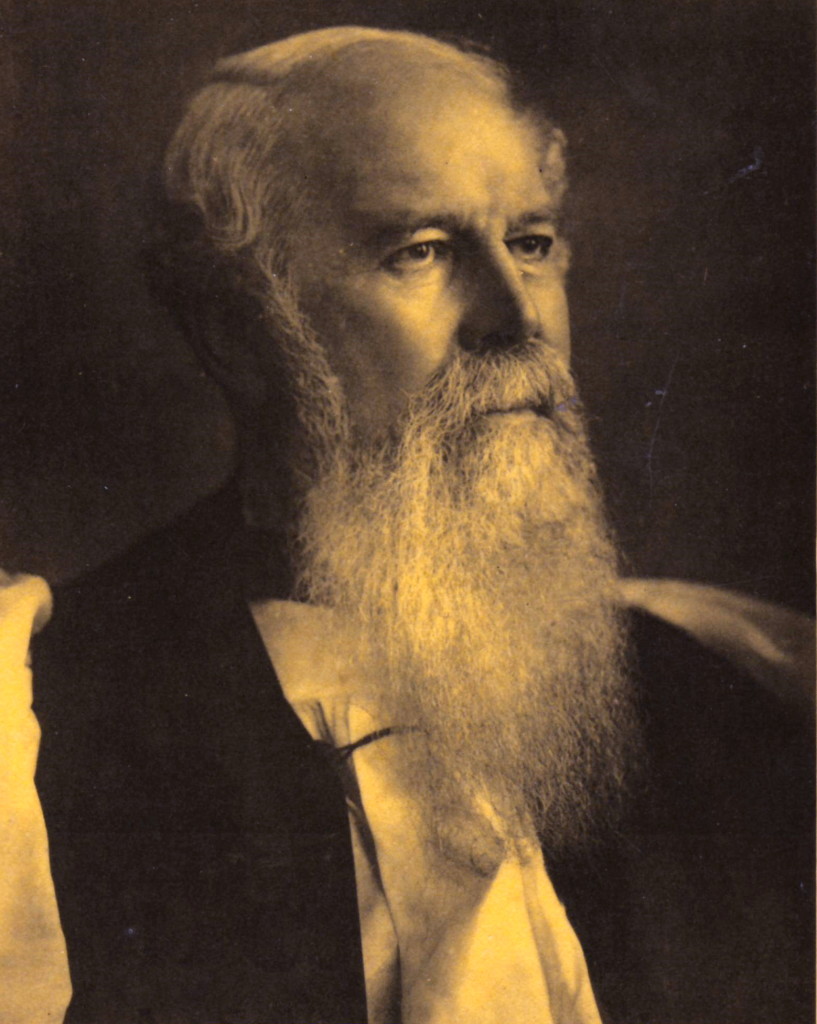
J.C. Ryle

Jelly-fish Christianity

2 Timothy 3:16-17; Psalm 119
J.C. Ryle September, 17 2013 Audio
0 Comments
Choice Puritan Devotional

In the sermon "Jelly-fish Christianity," J.C. Ryle addresses the dangers of a lack of defined biblical doctrine within contemporary Christianity, a phenomenon he describes as "jellyfish Christianity." He argues that this insipid form of belief leads to spiritual instability, producing Christians devoid of conviction or substantial understanding of theological truths. Ryle cites 2 Timothy 3:16-17 and Psalm 119 to illustrate the role of Scripture in equipping believers with sound doctrine, emphasizing that a haphazard approach to theology results in a distorted faith that cannot withstand trials or defend itself against false teachings. The doctrinal significance of Ryle's message underscores the importance of holding firm to distinct beliefs, arguing that strong, systematic theology is vital for the health of the church and individual believers, especially in a culture that often values cleverness over conviction.

Key Quotes

“It creates, fosters, and keeps up an immense amount of instability in religion... a Christianity without bone or muscle or power.”

“We have hundreds of ministers who seem not to have a single bone in their body of divinity.”

“They cannot discern things that differ any more than colorblind people can distinguish colors.”

“Never was it so important for believers to hold strong systematic views of truth, and for ministers to enunciate doctrine very clearly and distinctly in their teaching.”

What does the Bible say about distinct biblical doctrine?

The Bible emphasizes the importance of sound doctrine for spiritual maturity and stability.

The Scripture instructs us that all Scripture is inspired by God and is profitable for teaching, reproof, correction, and training in righteousness (2 Timothy 3:16-17). This underscores the necessity of sound doctrine. When believers lack distinct and definite beliefs, they become vulnerable to false teachings and unstable in their faith, akin to a jellyfish that lacks substance and power. The call for biblical truth is clear throughout the Bible as it equips believers to resist cultural pressures and remain grounded in their faith.

2 Timothy 3:16-17

How do we know sound doctrine is true?

Sound doctrine is affirmed through Scripture, the historical church confessions, and the transformative power it yields in believers' lives.

We ascertain the truth of sound doctrine through its alignment with Scripture, which serves as the ultimate authority for faith and practice. As stated in Psalm 119, God’s law is a lamp to our feet and a light to our path, illuminating the truth we are to embrace. Furthermore, historical confessions and catechisms, rooted in Scripture, provide a distilled understanding of Christian beliefs that have stood the test of time. The effects of sound doctrine also validate its truth; a transformed life, grounded faith, and a consistent witness among believers all testify to the reliability of biblical doctrine.

Psalm 119

Why is having distinct beliefs important for Christians?

Distinct beliefs provide a firm foundation that helps Christians withstand cultural pressures and false teachings.

Having distinct beliefs is crucial for Christians because it reflects a commitment to biblical truth, which fortifies their faith against the shifting tides of societal norms and doctrinal confusion. J.C. Ryle's depiction of 'jellyfish Christianity' captures the essence of this need perfectly; without firm beliefs, Christians risk becoming unstable and easily swayed by every new idea or trend. Distinct beliefs not only provide clarity and direction (Proverbs 4:7), but they also enable Christians to articulate their faith effectively, to defend against falsehoods, and to disciple others with confidence rooted in Scripture. Ultimately, true believers are called to discern doctrine and become steadfast in their understanding of God's Word.

Proverbs 4:7

Sermon Transcript

Auto-generated transcript • May contain errors

100%
. Jellyfish Christianity, J.C. Ryle. The consequences of this widespread dislike to distinct biblical doctrine are very serious. Whether we like it or not, it is an epidemic which is doing great harm, and especially among young people. It creates, fosters, and keeps up an immense amount of instability in religion, It produces what I must venture to call, if I may coin the phrase, a jellyfish Christianity in the land, that is, a Christianity without bone or muscle or power.

A jellyfish, as everyone who has been much by the seaside knows, is a pretty and graceful object when it floats in the sea, contracting and expanding like a little delicate transparent umbrella. Yet, the same jellyfish, when cast on the shore, is a mere helpless lump, without capacity for movement, self-defense, or self-preservation. Alas, it is a vivid type of much of the religion of this day, of which the leading principle is, no dogma, no distinct beliefs, no doctrine.

We have hundreds of ministers who seem not to have a single bone in their body of divinity. They have no definite opinions. They are so afraid of extreme views that they have no views at all. We have thousands of sermons preached every year which are without an edge or a point or a corner. They are as smooth as marble balls, awakening no sinner and edifying no saint. We have legions of young men annually turned out from our universities, armed with a few scraps of second-hand philosophy, who think it a mark of cleverness and intellect to have no decided opinions about anything in religion, and to be utterly unable to make up their minds as to what is Christian truth. Their only creed is a kind of nothingism. They are sure and positive about nothing.

And last and worst of all, we have myriads of respectable church-going people who have no distinct and definite views about any point in theology. They cannot discern things that differ any more than colorblind people can distinguish colors. They think everybody is right and nobody is wrong. Everything is true and nothing is false. All sermons are good and none are bad. Every clergyman is sound and no clergyman unsound. They are tossed to and fro like children by every wind of doctrine, often carried away by some new excitement and sensational movement, ever ready for new things because they have no firm grasp on the old, and utterly unable to render a reason of the hope that is in them.

All this and much more is the result of that effeminate dread of distinct doctrine which has been so strongly developed and has laid such hold on many pastors in these days. I turn from the picture I have exhibited with a sorrowful heart. I grant it is a gloomy one, but I am afraid it is only too accurate and true. Let us not deceive ourselves. Distinct and definite doctrine is at a premium just now. Instability and unsettled notions are the natural result, and meet us in every direction. Cleverness and earnestness are the favorite idols of the age. What a man says matters nothing, however strange and heterogeneous are the opinions he expresses. If he is only brilliant and earnest, he cannot be wrong. Never was it so important for believers to hold strong systematic views of truth, and for ministers to enunciate doctrine very clearly and distinctly in their teaching.
J.C. Ryle
About J.C. Ryle
John Charles Ryle (10 May 1816 — 10 June 1900) was an English evangelical Anglican bishop. He was the first Anglican bishop of Liverpool.
Broadcaster:

Comments

0 / 2000 characters
Comments are moderated before appearing.

Be the first to comment!

Joshua

Joshua

Shall we play a game? Ask me about articles, sermons, or theology from our library. I can also help you navigate the site.

0:00 0:00