Bootstrap
J.R. Miller

If you were to meet yourself on the street some morning

Ephesians 5; Romans 12
J.R. Miller May, 1 2010 Audio
0 Comments
Choice Puritan Devotional

J. R. Miller’s sermon, titled "If you were to meet yourself on the street some morning," focuses on the doctrine of human sinfulness and self-awareness in light of God's omniscience. The key argument made is that individuals often lack a clear understanding of their own sinfulness, which is not always detectable by personal conscience. Miller emphasizes that true self-examination must come through God's insight, citing Psalm 139:23-24 as a scriptural basis for seeking God’s evaluation of one's heart. Additionally, he references the story of King David and Nathan in 2 Samuel 12 to illustrate how people can be blind to their own faults while easily seeing the failings of others. Practically, Miller calls for humility and reliance on God’s perspective to gain authentic self-awareness, a crucial aspect of Reformed theology that stresses the necessity of grace and the need for divine revelation in understanding one’s sinful nature.

Key Quotes

“There are depths of our being into which our own eyes cannot pierce.”

“Our conscience is not the final court. It is not enough to have the approval of our own heart.”

“We are wonderfully patient with our own weaknesses. We are blind to our own blemishes.”

“If the true chronicle of your life were written in a book... you probably would not identify the story as your own.”

Sermon Transcript

Auto-generated transcript • May contain errors

100%
If you were to meet yourself
on the street some morning by J.R. Miller Search me, O God,
and know my heart. Test me and know my anxious thoughts. See if there is any offensive
way in me, and lead me in the everlasting way. Psalm 139, 23,
and 24. it will be worth our while to
think seriously of the things in us that only God can see. There are sins which are hidden
from ourselves, of which our conscious is not aware, our unknown
errors, the evil in us which lies too deep to be discovered. There is a self in us which even
we ourselves do not see. There are depths of our being
into which our own eyes cannot pierce. You may say that you
know of no sins, errors, or faults in yourself, and you may be sincere. Still, this is not evidence that
you are sinless. Our conscience is not the final
court. It is not enough to have the
approval of our own heart. There are errors and evils in
the holiest life on earth, which only God's eye can detect. We must ask God to search us
if we would be made clean. We cannot see our own faults,
even as our neighbors can see them. There is wisdom in our
wish that we might see ourselves as others see us, for it would
free us from many a blunder and foolish notion. We are prejudiced
in our own favor. We are disposed to be charitable
toward our own shortcomings. We make all sorts of allowances
for our own faults. We are wonderfully patient with
our own weaknesses. We are blind to our own blemishes. We look to our good qualities
through magnifying glasses and at our faults and errors with
the lenses reversed, making them appear very small. We see only
the best of ourselves. If you were to meet yourself
on the street some morning, that is, the person God sees you to
be, you would probably not recognize yourself. We remember the little
story that the prophet Nathan told King David about a rich
man's injustice toward a poor man, and how David's anger flamed
up. This man must die, cried the
king. He did not recognize himself
in the man he so despised, until Nathan quietly said, You are
the man. We are all too much like David. If the true chronicle of your
life were written in a book, in the form of a story, and you
were to read the chapters over, you probably would not identify
the story as your own. We do not know our real self.
We do not imagine there is so much about us that is morally
ugly and foul, that is positively wicked. But God searches and
knows the innermost and hidden things of our heart. Search me,
O God, and know my heart. Test me and know my anxious thoughts. See if there is any offensive
way in me, and lead me in the everlasting way.
J.R. Miller
About J.R. Miller
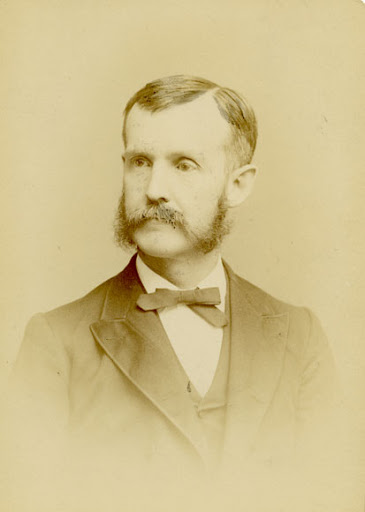
James Russell Miller (20 March 1840 — 2 July 1912) was a popular Christian author, Editorial Superintendent of the Presbyterian Board of Publication, and pastor of several churches in Pennsylvania and Illinois.
Broadcaster:

Comments

0 / 2000 characters
Comments are moderated before appearing.

Be the first to comment!

Joshua

Joshua

Shall we play a game? Ask me about articles, sermons, or theology from our library. I can also help you navigate the site.