Bootstrap
Charles Spurgeon

Our sins!

Hebrews 9:26
Charles Spurgeon September, 17 2009 Audio
0 Comments
Choice Puritan Devotional

In this sermon, C. H. Spurgeon addresses the grave nature of human sin and the profound solution provided through the atoning sacrifice of Christ. He emphasizes that sins are not only numerous and grievous but also persistent and defiant against God’s holiness. Spurgeon references Hebrews 9:26 to highlight that Jesus appeared to eliminate sin through His once-for-all sacrifice, thus taking upon Himself the penalty for all His people's sins—a theological assertion rooted in the Reformed doctrine of penal substitution. He articulates that no amount of suffering in hell can alleviate the burden of sin, stressing the necessity of Christ's atoning work. The practical significance of this message lies in the assurance of complete forgiveness and liberation from sin for those chosen by God, culminating in the doxology of praise to Christ.

Key Quotes

“Our sins trail their horrid length athwart many years. Our sins are aggravated, they are piled up sins.”

“Sin cannot be put away until the penalty is borne to the end, and that can never be by finite man.”

“All the sins of His people were made to meet in one tremendous mass. On the cross, Jesus endured the penalty due for all the sin of His people.”

“He has put away sin as a whole for His chosen ones. All praise to Him who loves us and has freed us from our sins by shedding His blood for us.”

What does the Bible say about sin and its consequences?

The Bible teaches that sin leads to death and separation from God; only Christ can atone for our sins.

Scripture reveals that the wages of sin is death (Romans 6:23), emphasizing the dire consequences of our sins. Sin is a serious offense against God's holy nature, and it accumulates throughout our lives, compounding our guilt. The depth of our sin is demonstrated by the fact that even after suffering, those in hell remain in their sinful state, indicating that eternal punishment does not absolve one from sin. Only the sacrifice of Jesus Christ has the power to bear the penalty for our sins, offering true redemption.

Romans 6:23, Hebrews 9:26

How do we know that Christ's sacrifice was sufficient for our sins?

Christ's sacrifice is sufficient because He bore the entirety of our sin, providing complete redemption.

According to Hebrews 9:26, Christ appeared once at the end of the ages to do away with sin by His sacrifice. This indicates that His atonement was not a temporary measure but a complete fulfillment of God's plan for redemption. All the sins of His people, regardless of their nature or severity, were laid upon Christ, and He made an end of them with His sacrifice. This totality assures us that His blood is enough to cleanse us from all unrighteousness, enabling our reconciliation with God.

Hebrews 9:26, Revelation 1:5-6

Why is understanding our sinfulness important for Christians?

Recognizing our sinfulness underscores our need for Christ's grace and the magnitude of His sacrifice.

Understanding our sinfulness is crucial for Christians because it highlights the necessity of Christ's redeeming work. Our sins are not merely missteps; they are grievous offenses against God, as Spurgeon notes, involving an accumulation that weighs upon our conscience. This realization fosters humility and a deeper appreciation for the grace bestowed upon us through Christ. By recognizing the horror of our sin, we can better grasp the depth of God's love in sacrificing His Son for our redemption, encouraging us to live in gratitude and obedience.

Romans 3:23, Ephesians 2:8-9

Sermon Transcript

Auto-generated transcript • May contain errors

100%
. Our Sins by Charles Spurgeon . He has appeared once for all at the end of the ages to do away with sin by the sacrifice of himself. Hebrews 9.26

Our sins trail their horrid length athwart many years. Our sins are aggravated, they are piled up sins. Our sins are against light and knowledge, against conscience, against vows and resolution. Our sins are sins repeated after we had tasted of their bitterness. Our sins are foul sins, sins it may be of the sort which brings the blush to the cheek. Our sins made us toss on our beds as we remembered them with dread, and yet sins that we return to as the dog returns to its vomit. Oh, our monster sins, our horrible sins, our damnable sins!

Hell itself cannot put our sins away. There are the devil and his angels for whom hell was made, for whom the fire was first kindled and its pit first digged. But they are as great sinners after these six thousand years as they were when first they were cast down from heaven. And so those lost ones whose spirits have been in hell since the time of Noah's flood They are still sinners, and after all the ages of suffering they have endured, not a sin less is upon them now than there was at first. Ah, dreadful thought! If you are ever cast into hell, though ages on ages may lapse, and the wrath of God be poured out upon you to the uttermost, there will never be the destruction of a single sin or particle of a sin by it all.

Sin cannot be put away until the penalty is borne to the end, and that can never be by finite man. What a work was here, then, for the only begotten Son of God to do! Speak of the labors of Hercules! They were nothing compared with the labors of Emmanuel. speak of miracles to tread the sea, to hush the billows, to heal the sick, to raise the dead. These are all bright stars, but their light is hidden when compared with this miracle of miracles, when the sun of Christ's righteousness arises with healing beneath His wings, and thick clouds of our sins are put away by Him.

All the sins of His people were made to meet in one tremendous mass. On the cross, Jesus endured the penalty due for all the sin of His people. He put away our sins, the whole mass, the whole mountainous mass of the sin of all those for whom He stood as a substitute and for whom He suffered the penalty. Our sins were completely put away, everlastingly put away. All of our sins, of every size, shape, form, hue, degree, or fashion, are altogether gone. Crimson sins, black sins, crying sins, every sort of iniquity from your childhood until now, and right on till you enter into the rest of the Beloved. They were all taken and laid upon Christ, and He made an end of them all when He offered up His great expiatory sacrifice.

He has put away sin as a whole for His chosen ones. All praise to Him who loves us and has freed us from our sins by shedding His blood for us. He has made us His kingdom and His priests who serve before God His Father. Give to Him everlasting glory. He rules forever and ever. Amen.

Revelation 1 5-6
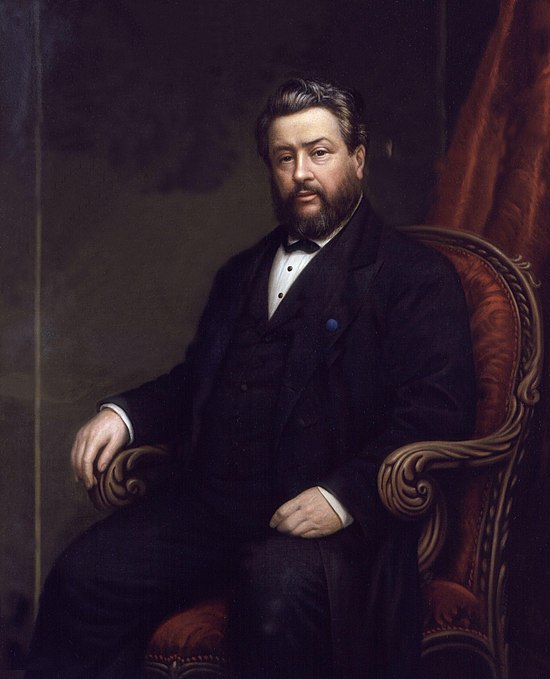
Charles Spurgeon
About Charles Spurgeon
Charles Haddon Spurgeon (19 June 1834 — 31 January 1892) was an English Particular Baptist preacher. His nickname is the "Prince of Preachers."
Broadcaster:

Comments

0 / 2000 characters
Comments are moderated before appearing.

Be the first to comment!

Joshua

Joshua

Shall we play a game? Ask me about articles, sermons, or theology from our library. I can also help you navigate the site.

0:00 0:00