Bootstrap
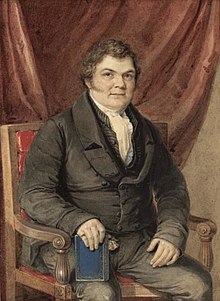
John Angell James

Is this your religion?

John Angell James September, 13 2008 Audio
0 Comments
Choice Puritan Devotional

The sermon "Is this your religion?" by John Angell James addresses the fundamental Christian doctrine of love as the essence of true faith and the manifestation of a renewed heart. James argues that love is the paramount characteristic of Christ's image within a believer and is essential for genuine Christianity; one must possess and practice this love to be considered a true follower of Christ. He supports his argument with references to 1 Corinthians 13, emphasizing that without love, all spiritual gifts and outward practices are meaningless. The practical significance of this message is clear: Christian love transcends mere doctrinal knowledge and rituals, serving as the primary evidence of one's faith and a true transformation through God's grace.

Key Quotes

“Love is a grace which many professing Christians think far too little about, but it is of infinite value in the eyes of God.”

“Unless this is your temperament, you are not Christians.”

“Nothing can be a substitute for love. Christianity is love, not a slavish attendance on ceremonies.”

“If an individual is destitute of love, he has no saving religion.”

Sermon Transcript

Auto-generated transcript • May contain errors

100%
If I have the gift of prophecy, and can fathom all mysteries and all knowledge, and if I have a faith that can move mountains, but have not love, I am nothing. Love is a grace which many professing Christians think far too little about, but it is of infinite value in the eyes of God.

Love is the most characteristic feature of Christ's image in a renewed man. Love is the most precious fruit of grace, and yet the fruit which too many of his professed followers seem to think themselves hardly under any obligation to cultivate.

Christian love is that benevolent disposition or kindness which consists in goodwill to all creatures and which leads us, as we have opportunity, to promote their happiness. The Apostle has given us a description of the exercises of this noble and God-like principle.

Love is patient. and forbearing under injuries and annoyances, and does not revile, revenge, or retaliate. Love is kind, not harsh or crude, but ever ready, willing, and pleased by looks, words, and actions, to promote the comfort of others.

Love does not envy. It does not pine and grieve at the sight of another's superior possessions, fame, happiness, or piety, or dislike him on that account. Love does not boast. Love is not proud. It neither boasts its own gifts, achievements, and possessions, nor despises others, nor makes insulting comparisons, but is humble and gentle.

Love does not behave unseemly. It modestly keeps its place and does nothing to offend by doing what is unfitting of its rank, station, or circumstances. Love seeks not her own. It does not selfishly want to have its own way or promote its own interest to the neglect of others.

Love is not easily provoked. It governs its temper, controls its passions, and is not soon or unreasonably irritable or petulant. Love thinks no evil. It is not censorious nor forward to impute a bad motive to a doubtful action, but is disposed to put the best construction on the actions and words of others.

Love rejoices not in iniquity, but rejoices in the truth. It does not delight in the sins, but in the excellences of an opponent. Love bears, or covers, all things. It does not divulge, proclaim, aggravate faults, but hides them as far as it can, and it is right to do so.

Love believes all things that are to the advantage of another. Love hopes all things where there is not sufficient evidence to authorize belief. Love endures all things, bears hardships, sustains labor, makes sacrifices, in order to accomplish its purposes of goodwill.

Such is love in exercise and act. This is benevolence. This is a regard to the happiness of others. Whoever acts thus must promote happiness. He must bless all around him. All things smile in his presence.

Beautiful description. Heavenly temper. God-like mind.

Now, dear friends, look at love. Gaze upon its lovely form, its beautiful countenance, its graceful actings. Observe its seraphic glow, its divine temper, until you are all enamored with its charms. but look at it not only as something to be admired, but to be possessed and practiced.

Unless this is your temperament, you are not Christians. I do not say you cannot be Christians unless you have love in perfection, but you must have the principle of love and must be living in its exercise. You are Christians, no further than you live under its influence. No matter what knowledge you may have of the doctrines of the gospel, what seeming faith you may possess, what zeal you may manifest, what liberality you may exercise, what regularity and punctuality and attendance upon the means of grace you may maintain, if love is lacking, all this is of no avail. Nothing can be a substitute for love. Christianity is love, not a slavish attendance on ceremonies, nor receiving the sacraments, not zeal for orthodoxy, not a form of church government, not belonging to any particular church.

God's eternal thoughts and purposes in election, Christ's redeeming work upon the cross, the Spirit's omnipotent agency in regeneration, are not merely to bring us under a particular ecclesiastical regimen, but to deliver us from the dominion of selfishness, and place us under the reign of love, and thus make us like God. If an individual is destitute of love, he has no saving religion. He may be zealous for the forms of Christianity, but he is destitute of its living spirit.

And now, my dear friends, let me entreat you to examine yourselves concerning this great essential of the Christian character. Are you experimentally acquainted with this disposition? Is this your religion? Is your temperament thus molded? Is that one word, love, characteristic of your spirit? Has God's love to you changed you into its own likeness? Do you know what it is to have pride, passion, envy, malice, selfishness, subdued, repressed, resisted by a meek, gentle, lowly, forgiving, forbearing, generous, self-denying temper? Are the harshness, hardness, asperity of the fallen nature displaced by the softness, sweetness and kindness of true love?

This Puritan devotional has been brought to you by Grace Gems, a treasury of ageless Sovereign Grace writings. Please visit our website at www.gracegems.org, where you can browse and freely download thousands of choice books, sermons, and quotes, along with select audio messages. No donations accepted. Thank you.
Broadcaster:

Comments

0 / 2000 characters
Comments are moderated before appearing.

Be the first to comment!

17
Joshua

Joshua

Shall we play a game? Ask me about articles, sermons, or theology from our library. I can also help you navigate the site.