Bootstrap
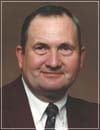
Carroll Poole

The Blessed Dead

Revelation 14:13
Carroll Poole December, 31 2017 Audio
0 Comments
Carroll Poole
Carroll Poole December, 31 2017

Sermon Transcript

Auto-generated transcript • May contain errors

100%
Blessed are the dead which die
in the Lord. Death is a most distasteful subject
to most people. It is an avoided subject, and
rightly so. For unbelievers, death is a hopeless
end. But for believers, Death is an
endless hope. Blessed are the dead which die
in the Lord. Were that statement made by anyone
other than he who made it, my reply would be, why do you
mock us? We live We love, we die, we grieve. We live, we love, we die, we
grieve. Day after day, year after year,
we live, we love, we die, and we grieve. Why do you mock us? How could you call death a blessing? But since it's the Lord himself
that says it and records it in Holy Scripture, we must take
God at his word. Blessed are the dead, not for
all, but for those which die in the
Lord. The Psalmist David spake of death.
as satisfaction. As for me, I will behold thy
face in righteousness, and I shall be satisfied when I awake with
thy likeness. Well, the New Testament says
that's going to be the very moment we leave here that we'll be in
his likeness. Job spake of it as a change. All the days of my appointed
time will I wait till my change come. Wise King Solomon said, it is
better to go to the house of mourning than to the house of
feasting. We don't quite understand that,
do we? The Apostle Paul said to young
Timothy in 2 Timothy 4, 7, I have fought a good fight. I have kept
the faith. Henceforth, there is laid up
for me a crown of righteousness, not a material crown of gold,
but a crown of righteousness. I'll be crowned with righteousness,
which the Lord, the righteous judge, shall give me at that
day. And not to me only, but of all
them also that love his appearing. Blessed are the dead which die
in the Lord. Paul called it his departure.
My departure is at hand. Not a departure into nothingness
or nowhere, but a departure from here with a destination. and that destination being the
presence of the Lord. The scripture speaking of Christ's
death called it an exodus, which means a moving out, just as the
Israelites moved out of Egypt. In the book of Joshua, death
is called a going the way of all the earth. When Jacob and others left here,
it's called being gathered to one's own people. He was gathered to his people.
In second Corinthians, it's called the dissolving of this earthly
tabernacle or tent. In Ecclesiastes, it's called
the body returning to the dust. The book of Acts is called the
giving up of the ghost. So since God's word is not silent
on the subject of death, I cannot be, regardless of the fact that
most people don't even want to think about it, let alone come
to church and hear about it. but you're already here. So we're
going to talk about it. And if you don't get anything
else out of what I say this morning, I want you to get this statement.
For the child of God, death is a friend. A friend. God loves us enough not to leave
us in these sin-cursed decaying, painful bodies forever. I want to read you something
from an old book by an old Scottish preacher named John Cumming. This was written in, this book
was printed in 1858. And he says, a Christian, who has learned Christ, death is not a catastrophe in
nature's hand. That's what a lot of people think. Death is not a catastrophe in
nature's hand, but an emancipation from the
hand that was nailed to the cross. To the believer, death has lost
its sting. And to his eye, the grave is
encircled and illuminated by a beam of heavenly light. Our friend. Our friend. I want to say, hurriedly if we
can, five things as clearly as I can say them
biblically Five things about death. And then I want to ask
you a question. And I want you to get these five
things. Number one, physical death is divinely appointed to
us. Divinely appointed. Hebrews 9,
27. And it is appointed unto men once to die. Now we know from our viewpoint
and from our understanding of things, there is what we call
accidental death. Not so with God. Because of sin, transgression, rebellion against
him, death is divinely appointed. The scripture says the wages
of sin is death. People think the body just winds
down and then dies. No, no. Some bodies wind down
at age 60 and they live to be 90. Others wind down at age 60 and
they die at age 60. Others at 30, 10. People die in infancy and even
in the womb. Only God knows when. But the when or the how is no
accident with God. It is divinely appointed. It shocks us to hear that someone
we've known and loved has died. It never shocks God. He knew it. He ordered it as
it was and when it was. And so that's the first thing.
Death is divinely appointed. The giver of life takes it back
at the moment of his choosing. Number two, death is not the
end of existence. There are those who would have
us believe that. The Bible teaches otherwise. The verse we just quoted from
Hebrews 9, 27, the first part says it is appointed unto men
once to die. But then those words are followed
by these words. And after this, the judgment. We're not preaching on the judgment
today, we will soon. But the point I'm making is that
death is not the end of our existence. After death comes the judgment. In Luke 16, our Lord tells about
a rich man and a beggar. He didn't say it was a parable,
so it's not a parable. I've heard men say the parable
of Luke 16, the parable of the rich man and the beggar. And
I've read it. We may have written it in books,
but the Bible don't say it's a parable. It's the truth a thousand
times over. A rich man and a beggar. And it was not the end of their
existence, either of them. The rich man, the Bible says,
lifted his eyes in hell. And the beggar was carried by
the angels. into Abraham's bosom. A rich
man and a beggar, the two opposite poles of society, high and low,
the well-to-do and the peasant. But at death, it was not the
end of existence for either. And it won't be for you. And
it won't be for me. Remember Christ told the thief
on the cross, Today, shalt thou be with me in paradise. He wasn't talking about them
breaking loose from those crosses and walking back into town together.
Oh no, he was talking about death. Today, shalt thou be with me
in paradise. Somewhere you haven't been, you'll
be with me. The emphasis is not on paradise,
the emphasis is on with me. That's all death is to those
who die in the Lord, is to go to be with Him. That's why it's
called blessing. That's heaven with Him. So physical
death is not the end of our existence. Number three, there are only
two conditions in which people die. These are basic principles,
you all know, but I'm reminding us of them. It's things not everybody
believes. And just because we believe something
don't mean we don't talk about it. We need to talk about it.
We don't need to just assume everybody knows the truth and
believes it. Most people don't know it and don't believe it. Number three, there are only
two conditions in which people die. The Bible teaches us that
some die in their sins. That does not mean that they
die in the very moment that they're committing some awful act of
sin. That's not what it means. But
the term die in their sins means that they die having never been
given a new nature in Christ. They die in the same old fallen
nature, sinful nature, in which they were born and lived in,
they died in. A nature in rebellion against
God. Many die in their sins. The other condition is this,
in which people die, is some die, in the words of our text,
in the Lord. Blessed are the dead which die
in the Lord. And the blessing is, part of
it at least, like Lazarus, we're carried into the Lord's presence
immediately. I remind us that the Apostle
Paul wrote to be absent from the body is to be present with
the Lord. Absent, present. There is no
intermediary. There is this body going back
to the dust until Christ returns and resurrects that body and
gives us a glorious body like unto His glorious body. Not corrupt
but incorrupt Yes, the body goes back to death,
but the person, the life, the spirit goes immediately into
the presence of the Lord. There is no interval. Some teach us soul sleep. Our
friends, the Adventists do. Some teach purgatory, that there
is a middle ground, a holding area. Or if the family or the loved
ones thinks enough of the person, they can pay enough, pray enough
to get them out of purgatory and on into heaven. No, there's
none of that. This Bible teaches that when
we exhale the last breath of polluted air here, immediately
we inhale the pure air of eternity. in the presence of our Lord. Two ways to die. In one's sins
or in the Lord. Number four, stay with me. For
those who die in their sins, death is payday. They're getting exactly what
they've earned. And if it's you who dies in your
sins, death is payday. You'll get exactly what you've
earned. It is your rightful wages. Romans 6, 23, for the wages of
sin is death. And that don't just mean physical
death. We've all got to do that. But
it means the second death in alienation from God. The wages
of sin is death. It's payday. Now there's a lot of fleshly
religionists I know and you know that talk about believers looking
forward to a payday. Oh no. They wrote songs about
it. Payday someday. Oh. No, that's all wrong. God's children,
and here's where that's wrong. God's children are not going
to get what we've earned. Thank God we're not. You see on every Friday or however
often you get paid on your job, that's payday. And that check is not a gift. It's yours because you earned
it. It's payday. And for those who
die in their sins, it's payday and payday forever. This Bible
teaches us that the lake of fire is forever. And one writer said, the hellishness
of hell is not the absence of God. It's the presence of God
with no mercy, no grace, forever. It's eternal because the wages
will never be fully paid. It's payday forever. It's eternal because God will
never forget. God will never change. God will never die. So those
who die in their sins, die in opposition to and in rebellion
to Almighty God, it's payday forever. In Psalm 73, the Psalmist Asaph
gives us a thought. He said, I was envious of the
foolish when I saw the prosperity of
the wicked. We've all been guilty of that
just a little bit. Look around and see people that
live like hell. Everything they touch turns to
gold. They're never sick, never have a problem. Asaph said,
I was envious of the foolish when I saw their prosperity.
And I said it was in vain for me to do right. And when he said, he said, when
I thought about the whole business, it was too painful for me. Until, until I went into the
sanctuary of God. He's not talking about the temple
or the church house, but the sanctuary, the secret place of
God. Then I understood their end. And he said then how very foolish
I was. This is Psalm 73. He said then
how foolish was I, how very, very foolish to ever Envy those
who are destined to die in their sins. Now the religious world around
us this morning, the Armenian world, says that nobody is destined
to die in their sin. Well, those who aren't predestinated
in Jesus Christ are. Those who aren't chosen in Christ
from the foundation of the world and predestinated under the adoption
of children by Jesus Christ to God himself, according to the
good pleasure of his will, their destiny is to die in their sins. And for them, death is payday. It's what they've earned. It's
rightfully theirs. And if you die in your sins,
it's payday. It's what's rightfully yours. And the fifth thing, number five,
for those who die in the Lord, it's not our payday. I know this crosses some of his
religious thinking. But for those who die in the
Lord, it's not what we've earned, thank God. It's what He earned for us. It's a gift. The gift of God. Romans 6.23, we quoted the first
part. The wages of sin is death. That's
what we've all earned for ourselves. But the rest of the verse says,
The gift of God is eternal life through Jesus Christ, our Lord.
That's what we didn't earn, but that's what we get when we
die in the Lord. To die in the Lord, 1 Corinthians
15, 55, Paul wrote, Where is thy steam? O grave,
where is thy victory? We're not going to get what we
deserve. We're going to get what Christ deserves. 2 Timothy 1.10, for God's people, Christ has
abolished death. I didn't look up that word abolished.
I think it means tore it all to pieces. Destroyed it. Conquered it. Took the keys. Abolished death. And for the Lord's people what
we call death is not really. It's just a transition. Christ has gone into the grave
for us and he's kicked both ends out. It's not a problem for us to
walk through it. That's all. He will wipe the
tears from our eyes. There's no more crying, neither
sickness nor pain. and certainly no more of what
we call death. It's eternal life beyond this,
that cannot be interrupted. It cannot be tempered with. If it could be, it wouldn't be
eternal, but it's eternal life. And Paul said in 2 Timothy 1
and 9, this eternal life we're talking about, was given us,
not Adam's race, but believers, God's elect. This eternal life
was given us in Christ Jesus before the world began. People who deny that and put
salvation in our hands instead of God's, Whether they're religious or
not makes no difference. Whether they're a preacher or
not makes no difference. For those who deny this, that
eternal life is given to God's elect in Christ before the world
began. People who deny that will die
shaking their fist in God's face. defying his sovereign authority.
And eternal damnation is their lot. There's more people going to
hell from a church pew than anywhere else in the world. And there's more preachers standing
in the pulpit, deceived, and on their way to eternal damnation
without realizing it. because they don't believe this
book about what God says about himself and about his son and
about us and that the only hope there is for any of us is what
he's done through his son. Don't believe that. Multiplied thousands will be
told this morning and have it entered their ears what you can
do To make God smile on you. No way. It's a million times worse for
eternity. than it's ever been for them
in this world. But for those who die in the Lord, death is
only a transition. And for eternity, it's a million
times better than it's ever been in this world. That's the difference.
That's the difference. For the past nine New Year's
Eve days, that's what the day is. For the past nine of them, since
2008, my precious wife June has faced
a new year with cancer in her body. But I'm happy to announce, as
of this past July 12th, She is cancer-free. We hear that statement, don't
we? And it's good news for people that are able to announce that
they've been helped by the doctors and by the treatment and by the
Lord, and to announce that they're now cancer-free, still living
in a body like this. But then there's always the possibility
of it coming back or happening again. But I'm happy to announce
this morning that my wife is cancer free forever. Forever. I'm happy about that. I really
am. I'm taking my time. Y'all just
hang around. So the five things are these. Death is divinely
appointed. Number two, death is not the
end of our existence. Number three, there are only
two conditions in which people die. Some die in their sins,
some die in the Lord. And number four, death is payday
for those who die in their sins. They get exactly what they deserve.
Number five, Death is simply a transition for those who die
in the Lord. Now for the question, and I'm
hearing, what is it to be in the Lord? Are you interested
in that? Blessed are the dead which die in the Lord. What is it to be in the Lord? It's not just because you made
a profession when you were five years old and got baptized and joined a church
and haven't known which way is up or down from the end of the
nail. That's not it. That's not it. What is it to
be in the Lord? Well, I feel condemned if I begin anywhere
other than the beginning. Most people don't. But I must. To begin with, it's not in time. It's in eternity. To be in the Lord, the Lord Jesus
Christ, is by an everlasting covenant. David said in his last words,
2 Samuel 23, He said, there's nobody in my family fit to be
God's king. He said, I haven't measured myself.
We're a pitiful lot. And then he said, but God hath
made with me an everlasting covenant. And what is meant was that Christ
is in his loins. There's one in my loins yet to
come that will qualify, that will meet God's standards. But before he was in me, before
he was in my loins, I was in him. An everlasting covenant. Hebrews
13, 20, now the God of peace that brought again from the dead
our Lord Jesus, that great shepherd of the sheep, through the blood
of an everlasting covenant. That's what it's about. A lot
of people thinks Christ's blood was shed just because men hated
him enough to nail him to a cross and beat the blood out of him.
No, no. Peter said we were redeemed by
his precious blood as of a lamb without blemish and without spot
who very was foreordained before the foundation of the world.
It's God it pleased God to bruise him. He had laid on him the iniquity
of all his people. On the basis of a covenant from
eternity past, dear old preacher Ray Long has been gone for many,
many years now. He said the Father and the Son
and the Holy Ghost agreed, covenanted, the eternal determinant counsel
and said we'll create man. And one said, if we do, he'll
fall. Not might, but will. And Christ said, when he falls,
I'll go and die for him. This is getting too deep for
me. He's still not talking about Adam's race. He's talking about
the man created in the image of God. What was the image of
God? Christ. The man created in Christ. And he did come and die before.
That was agreed upon in eternity. That he would shed his blood.
And that's what Christ said he came for and who he died for
in John 17. I've come to give eternal life
to as many as thou hast given me. That's what he said to his
father. He didn't say, I've come to give eternal life to all of
Adam's race, and the puppy dogs, and the kittens, and the chickens,
and the rats, and the frogs, and the snakes, no. I've come
to give eternal life to as many as thou hast given me. And by the way, he said in John
6, 37, all that the Father giveth me shall come to me. He's been in charge of this thing
the whole time. He's not trying to do any better
than He's doing. He's not trying to save any more
than He's saving. And hell is not going to get
one that He purposed from eternity to save. That's who our God is. I'm just not interested in worshiping
one any smaller than that. You're very quiet. I don't care.
All right. Everlasting covenant. Christ's
blood is the blood of the everlasting covenant. It began in eternity,
not time. Anything that originates in time
consummates in time. Only that which had its origin
in eternity will survive in eternity. So that's first, to be in the
Lord is to be in him by an everlasting covenant. Then to be in Christ
is to be in him by divine choice. The poet said, "'Twas not I that
did choose thee, for Lord, that could not be. This heart would
still refuse thee, hadst thou not chosen me. My heart owns
none before thee, for thy rich grace I thirst. This knowing,
if I love thee, thou must have loved me first. The divine choice
chosen in Christ. Then to be in the Lord is to
have our sin paid for by the shedding of Christ's blood. We've
already talked about that. There's no salvation but a bloody
salvation. First Peter 1 18 and 19 for as
much as you know that you were not redeemed with corruptible
things as silver and gold. It can't be bought with money. Silver or gold. Or from your vain conversation
received by tradition from your father. You're not redeemed by
all your religious pretense and practice as did your pa and grandpa. Redemption is not in none of
that. But with the precious blood of Christ as of a lamb without
blemish and without spot. What can wash away my sin? Nothing
but the blood of Jesus. What can make me whole again?
Nothing. but the blood of Jesus. To be in Christ is to possess
God-given saving faith. Not a natural faith. I'm not
talking about human mustered up confidence. Hell can knock
that out of you pretty quick. But I'm talking about the imputed
faith of the Son of God. This kind of faith believes God,
nothing else does. You say, I believe in God, so
do I. But apart from this gift, God given saving faith, neither
you or I can believe God. Believe God about what? Believe
God's testimony concerning his son, who he is and what he did. Hell is full of people that believed
in God. But hell has no one that believed
God. Big difference, big difference.
Abraham believed God and it was counted to him for righteousness.
To be in the Lord is first to be in the everlasting covenant.
Second, to be in the Lord is to be in Him by divine choice.
His choice preceded mine, His choice caused mine. Third, to
be in the Lord is to have my sin put on Christ and paid for
by His precious blood. And fourth, to be in the Lord
is to have had saving faith imputed to my heart. One more thing,
fifth, to be in the Lord is to walk in obedience to Him. Not in perfection, of course
not, but with desire for perfection. with striving for perfection,
with love and obedience to Him. Our text verse said, Blessed
are the dead which die in the Lord from henceforth. Yea, sayeth the Spirit that they
shall rest from their labors and their works do follow them. Believers do have good works
because and only because The Spirit of the Lord lives in us.
Galatians 5, 22 and 23. The fruit of the Spirit is this. Nine things. Love, joy, peace,
longsuffering, gentleness, goodness, faith, meekness, temperance.
That's the fruit of the Spirit. Notice the text. These works
do not precede us. We do not enter God's presence
by our own works. Christ has earned that for us.
We're made accepted in the blood in Christ. It's a done deal. But it says their works do follow
them. That is, they testify, not to
what we actually deserve, but to who we really are. God's children
in Christ. The Holy Spirit has had an effect. in our hearts and their lives.
These truths, and these alone, are what it is to die in the
Lord. And these truths, having been
experienced in my heart, are the only reason I can sing when
the role is called upon me. I'll be there. If you're going because of anything
you've done, you're going to the wrong place. John Newton, I'll say this and
I'll be through, writer of the most beloved hymn, Amazing Grace. He said, when I get to heaven,
I think I'll be surprised about three things. Some I expected to be there won't. Second, some I expected not to
be there will. And third, biggest surprise of
all, I'll be there. That's what Newton said. That's
what Newton said. The old poet said, I've got copies
of this back there. You need to pick one up. You
don't have it. "'Tis a point I long to know. I hope the Lord has put this longing
in your heart. "'Tis a point I long to know.
Oft it causes anxious thoughts. Do I love the Lord or no? Am I his or am I not? If I love, why am I thus? Why this dull, this lifeless
frame? Hardly sure can they be worse
who have never heard his name. Could my heart so hard remain
Prayer a task and burden prove. Every trifle give me pain, if
I knew a Savior's love. When I turn my eyes within, all
is dark and vain and wild, filled with unbelief and sin. Can I deem myself His child? If I pray or hear or read, sin
is mixed with all I do. You that love the Lord indeed,
tell me, is it thus with you? Yet I mourn my stubborn will,
find my sin a grief, a thrall. Should I grieve for what I feel
if I did not love at all? Could I joy his saints to meet? Choose the ways I once abhorred? Find at times the promise sweet,
if I did not love the Lord? Lord, decide the doubtful case. Thou who art thy people's son,
shine upon thy work of grace. if it be indeed begun. Let me
love thee more and more. If I love it all, I pray. If
I have not loved before, help me to begin today. Again, that's John Newton, writer
of Amazing Grace. He was not one of these idiotic,
fleshly, religionists of our day running around screaming,
bless God, I know that I know that I know. Just because I don't drink Pepsis
and smoke. No, no, he was dealing with an
inward conflict. Oh God, if I'm your child, why
am I as low down? and cold in heart and so plagued
with sin as I am. This is true to the conflict
of every single one of God's elect. Thank you for listening.
Carroll Poole
About Carroll Poole
Carroll Poole is Pastor of East Hendersonville Baptist Church, Hendersonville, NC. He may be reached via email at carrollpoole@bellsouth.net.
Broadcaster:

Comments

0 / 2000 characters
Comments are moderated before appearing.

Be the first to comment!

Joshua

Joshua

Shall we play a game? Ask me about articles, sermons, or theology from our library. I can also help you navigate the site.