Bootstrap
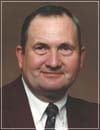
Carroll Poole

God's Salvation

Ephesians 1:1-14
Carroll Poole October, 29 2017 Audio
0 Comments
Carroll Poole
Carroll Poole October, 29 2017
Salvation by the Triune God, Planned by the Father, Purchased by the Son, Performed by the Holy Spirit

Sermon Transcript

Auto-generated transcript • May contain errors

100%
Well, it's certainly a joy to
be back this evening. I trust you've had a good day. We're
thankful for this time together, for the privilege to come. And
as I often say to our people, for being able to come, many
of us are to the age that it's not as easy to go as it once
was. But even better than that, even greater than the blessing
of being able physically to come is to have a desire in the heart
to come. And that we certainly should
thank God for constantly. I want us to turn this evening
to the book of Ephesians chapter one. Ephesians chapter one. I often hear preachers say, we're
turning to a familiar scripture. And I think, is there any such
thing? Yes and no. It's certainly inexhaustible. Ephesians chapter one. Paul, an apostle of Jesus Christ,
by the will of God, to the saints, which are at Ephesus, and to
the faithful in Christ Jesus. Grace be to you and peace from
God our Father and from the Lord Jesus Christ. Blessed be the
God and Father of our Lord Jesus Christ, who hath blessed us with
all spiritual blessings in heavenly places in Christ. According as he hath chosen us
in him before the foundation of the world, that we should
be holy and without blame before him, in love, having predestinated
us under the adoption of children by Jesus Christ to himself, according
to the good pleasure of his will, to the praise of the glory of
his grace, wherein he had made us accepted in the blood, in
whom we have redemption through his blood, the forgiveness of
sins, according to the riches of his grace, wherein he hath
abounded toward us in all wisdom and prudence, having made known
unto us the mystery of his will, according to his good pleasure,
which he hath purposed in himself, that in the dispensation of the
fullness of times, he might gather together in one all things in
Christ, both which are in heaven and which are on earth, even
in him, in whom also we have obtained an inheritance, being
predestinated according to the purpose of him who worketh all
things after the counsel of his own will, that we should be to
the praise of his glory, who first trusted in Christ, in whom
he also trusted after that you heard the word of truth, the
gospel of your salvation, in whom also after that you believed,
you were sealed with that Holy Spirit of promise, which is the
earnest of our inheritance until the redemption of the purchased
possession unto the praise of his glory. We'll stop our reading
there with these 14 verses. Let's bow once again. Our Father,
we pause in thy presence this evening Once more to thank you,
Lord, for this privilege, for this time together. Oh, how blessed
we are. We thank you, Lord. Forgive us
for our negligence. Forgive us for our taking so
much for granted. Forgive us for our ungrateful
spirit and heart unto you for all you've done. Lord, you've
been so good to us, and we thank you for that. We thank you for
this gathering this evening and for all you've brought this way. Make us conscious, dear Lord,
that we're not here by accident, but we're here by divine appointment.
Lord, you brought us this way and we thank you for it. We ask
that you would speak to our hearts through thy word and do for each
one this evening, Lord, that which we cannot do for ourselves.
We need a touch from heaven. Oh, dear Lord, how we need you
so greatly. We're no match for our adversary,
but you are. And we thank you. We thank you
tonight, dear Lord, that you're on top of everything. And we
ask you to have your way now in the furtherance of our worship
this evening. Lord, help us to see thy dear
son high and lifted up as he is exalted. seated at the right
hand of the majesty on high. Again, honor your word and we'll
praise you for it in Christ's name, amen. I was telling some at lunch of
my experience 27 years ago in 1990, when I first, for the first time,
met Brother Henry Mahan. And the first time he preached, we
were in a meeting together, Bible conference, and he preached from
this chapter, Ephesians 1. And it was so, so blessed, so
warm to my heart, And the Lord put it in my heart that night,
that if the things recorded in this passage are not true, I
have no hope. If the things said here don't
mean exactly what they say, I have no hope. I hear men explain sometimes
that it don't mean exactly what it says. Well, they're explaining
away my hope. Because my hope is in that God
has done exactly what he says in these verses that he's done.
My hope, my hope. Our God is sovereign here as
in all else. I'm hearing that word sovereign
more nowadays from men that don't believe God
is sovereign. They're saying it. The prefix Sov, S-O-V means highest,
above all else. And the suffix reign means to
rule. You know what reign means? To
rule. Sovereign then means the highest rule that answers to no one. God is absolutely sovereign and
we worship him as such. Paul, an apostle of Jesus Christ,
by the will of God. He is not bashful to say right
from the get-go here that I didn't choose this for myself. I'm an
apostle of Jesus Christ by the will of God. You remember the
history of this man. He was a young Pharisee called
Saul of Tarsus. A great reputation. among the
Jews and was quickly working his way to the top in the Jews'
religion. And he was quite content with
that. He was very zealous in that. And he never decided to rearrange
his whole life like it was rearranged. He tells us in three places what
happened. Acts chapter 9, Acts chapter
22, and Acts chapter 26. He says, I was on the road to
Damascus and you know why he was going. He was going to persecute
and to arrest and imprison and maybe even slaughter believers
in Jesus Christ. And he said, as I journeyed,
there appeared a light from heaven. It was about noon, but this light
was brighter than the noonday sun. and it was Christ in his
glory. And Paul was never the same thereafter. He began in that experience,
and you can read this in Acts 9 and 22 and 26. He began to call Jesus Lord.
Who art thou, Lord? What will you have me to do,
Lord? So, He says here that this change
in his life was God's doing. I am who I am. I am where I am
by the will of God. He said in Galatians 1.15, when
it pleased God, that's when it happened. It's not, as I hear many people
say, it's not when I decided to get my life straightened out.
Oh no. You'll never decide that. But it's when it pleased God,
that's when he did it. It was in the day of his power.
That's the words of Psalm 110 verse three. The father speaking
to the son, thy people shall be willing in the day of thy
power. That's the only time anybody's
willing. When it pleased God, to reveal his son in me." Here
in verse one, Paul says he's writing to the saints, which
are at Ephesus, and to the faithful in Christ Jesus. Not the faithful
to Christ Jesus, who would make that boast. and say, I'm faithful, completely
faithful to Him. Who would make that boast? We
strive for that, but we fail. We're not so faithful to Him.
But the text reads, faithful in Christ Jesus. And that we
are. That we are. It is very important to have
it fixed in your mind that none of the New Testament epistles
are written to Adam's race, to humanity in general. This will
help you in the New Testament, especially with some of the passages
when it's difficult to understand how this could refer to the unregenerate. So I repeat, none of the New
Testament epistles are written to Adam's race, humanity in general. They're all written to God's
people. All Paul's epistles were either written to local assemblies
or to individuals like Timothy, Titus, and Philemon, but it's
all written to the Lord's people in their day and by divine inspiration
to the Lord's people in this day. It is wrong to try and press
on this unbelieving world the things spoken to God's children
only. The personal pronouns Paul uses
here refer to God's children. Look at it, verse three, who
hath blessed us, not them, unbelievers, but us, believers. Verse four,
he hath chosen us that we should be holy. Verse five, having predestinated
us. Verse six, he's made us accepted. Verse seven, we have redemption. This is for the Lord's people. You can't apply this to the unbelieving
world. But if you are truly a believer
tonight in the Lord Jesus Christ, these things are for you. You
say, well, I am a believer, but I fear I don't believe enough.
Well, can anyone here tell me what it is to believe enough?
None of us believe enough. Just thank God you believe. You
believe. Grace be to you and peace from
God our Father and from the Lord Jesus Christ. Blessed be the
God and Father of our Lord Jesus Christ, who hath blessed us with
all spiritual blessings in heavenly places in Christ. It's strange to me that men talk
about certain spiritual blessings that we do not possess presently
due to our not having done this or that or the other. This verse
in the past tense says that we are blessed already right now
with how many? All spiritual blessings in Christ. I want to look at a few of these
blessings for a few minutes in the verses that follow. And I
guess we would just call this five great blessings for believers. There are more than five, many
more, but I'll mention five things. Number one, before creation,
Paul tells us here, before creation, before time, God purposed some
things, things involving choice on his part. He was not so unwise as to step
off the throne and let your choices and mine determine his glory
and his success. People would have us believe
that, but no, he's more God than that. He chose some things. The Bible calls it election,
election. The words elect, elects, elected
and election occur 27 times in the New Testament. It's always been strange to me,
a lot of fellas who hoot about believing the Bible cover to
cover, never in their preaching, or reading or conversation ever
come across one of these 27 mentions of election. But God's word is
clear on it. Verse four says, God chose that some of the human race he'd
create in spite of the fact that they'd fall He chose to fix it
so that forever they'd be holy and without blame in his sight. That's not something I did. That's
not something you did. That's something God did. He chose to do that. God could not declare this about
us just by looking at us. just looking at you and just
looking at me, God would have to lie and would have to cease
to be God to declare us holy and without blame. So he has
not purposed our holiness and our blamelessness as something in ourselves or
to be accomplished by ourselves. But it says, according as he,
God the Father have chosen us who believe in Him, in Christ. He did it before the foundation
of the world. So it's in Christ that we're
holy and without blame. Now this word should in verse
four. that we should be holy and without
blame. It does not mean we ought to. Yes, we ought to, of course,
but we're not holy and without blame in this flesh. The word
should here is in order that according as he hath chosen us
in him, before the foundation of the world in order that we
be holy and without blame before him in love. This is not a potential
blessing or a possible blessing. It is certain in Christ Jesus
election. Somebody says, well, I believe
God lets people make up their own mind and choose to accept
him or reject them. Well, he did that in our federal
head, Adam, and we all said no. We all said no. I have people ask me, why would
God hold us accountable for what Adam did? Because we are Adam. We're simply Adam reproduced.
It wouldn't be any difference if it had been you back there
and Adam up here with the rest of us. That's what we are. And we all said no to God when
Adam did. He said, we don't want God. We don't
need God. You were born saying that. And if he had left you alone,
you'd still be saying that tonight. So if God is to have any glory
and salvation, if there's even to be any salvation, God must
take the initiative and step into our lives. And yes, intrude, if you must
call it that, into our little individual worlds,
just like he did with Saul on the road to Damascus. I've heard people say, oh, God's
a gentleman. He will gently knock. He will gently knock. No, he'll
kick the door down. If you're one of his, that's
how it works. God could purpose to save or
he could leave us alone and we'd all perish. But this is so blessed before
creation, the triune God, Father, Son, and Holy Spirit, covenanted
that God the Son would come and die for the exact people his
father gave him. And God the Spirit would in time
regenerate those whom the father chose and the son died for. Verse
four says, all this was before the foundation of the world. Now, some men explain this away.
I read one the other day, he jumped over to 1 Peter 1, where
it says that we are elect according to the foreknowledge of God.
He said what that meant was that God looked down through the pages
of time and saw what you would do, that you would believe on
him and choose him and therefore he chose you. Well, that would
make it your election, not his. But this Bible talks about his.
So that's not it at all. When you think of foreknowledge,
don't think of God knowing what you'd do. That's no big deal. Of course he knows that. When
you think of foreknowledge, think of God knowing what he'd do. All he does, he's always been
gonna do. And that approach changes everything. He'll never do otherwise than
what in his foreknowledge he's purposed to do. So this is clear. God chose his people from eternity. Now you're not worth it. I'm
not worth it. We're no better or worse than the rest of fallen
humanity. But this fourth verse says that
God's choice is what made the difference. And it was not because of us
or in us, but in Christ, in Christ. Not only election, but the second
word, I wanna talk about a moment is predestinated. This is verse
five, having predestinated us under the adoption of children
by Jesus Christ. Everything's by Jesus Christ
that God does for us. Having predestinated us, don't
overlook the us, the Lord's people. Now this word predestinate, a
lot of people are scared to death of it. It is quite simple. Destination,
you know, is where you're going to arrive. You go to the airport, look on
the screen, it'll have departure. And then out from it, it'll have
destination. Plane don't just take off to
go nowhere. There's a destination. So destination means where you're
going to wind up, where you're going. Well, the prefix pre before
it means beforehand, pre. So to predestinate is to determine
beforehand the destination. If you're just going out for
a ride with no particular destination in mind, there is no predestination. You're just riding. But when
there's a determined place you're going, a destination, predetermined. I noticed what God's people are
predestinated unto, not just to be holy creatures like the
angels, but having predestinated us unto
the adoption of children by Jesus Christ to himself. How blessed that is, the adoption
of children. God said, I want a whole family
of children. And I want every one of them
to be just like my beloved. And we're predestinated, Romans
8 said, to be conformed to the image of His Son. About as far as most folks get
in religion is to try and believe God's not going to put them in
hell. That's about all they're concerned with. That is such an incomplete picture
of what God has done. He chose us and has adopted us
to be his children. I heard a story about a little
boy that had been adopted by a family and some of his classmates
had kind of made fun, you're adopted, you're adopted. And
the boy went home crying, told his parents, And they sat him
down and said, son, those children are cruel, but understand they
were born naturally to their parents. And that mother and dad, they didn't know if it was going
to be a boy or girl. They didn't know anything about
the child, but it was born to them. And they had to just take
what they got. But understand, son, your mother
and I went to that orphanage where you were. And out of more
than 100 children, we watched through a glass, watched you
out playing in the field. We watched you in the classroom. And we picked you out. We chose
you. You were special to us and we
adopted you. It's one thing to send a little
charity, a gift of kindness to an orphan. It's something else
to drive to the orphanage and say, I want that one to be my
own child. I'm adopting him or her. That's what God did for us. None of us by nature were born
children of God. I talked to a lady one time about
the Lord. She said, I've been a Christian all my life. Oh,
well, you're the only one. We're born children of Adam.
We're born children of disobedience. But being born again and adopted,
we're the children of God. How blessed, how blessed. The
third word I want to mention here in this text is accepted. Verse six, to the praise of the
glory of his grace, wherein he hath made us accepted in the
blood. Everyone wants acceptance. How vain do men in religion of
all sorts strive for acceptance. And many do it with God, strive
for acceptance with God apart from his son. They do so much
they feel is good. And they abstain from so much
they think is bad. Hoping their good will outweigh
their bad. We don't live there. That's vain
religion. We live in verse six, made accepted
in the beloved, wherein he, God, hath made us believers, accepted,
not acceptable, but accepted in the blood, in Christ. The whole business is in Christ. You can forget about acceptance
with God in what you are. It won't happen. We're accepted
in Christ. Beautiful story back in the book
of Genesis. We've been in that in our Bible
class back at the church. And Joseph, remember, told his
brethren when they came down there, said, now you, you tell
Pharaoh that cattle is your business. Because every shepherd is an
abomination in Egypt. When Pharaoh asked him, what
is your occupation? They just spit it out. They said,
we're shepherds. That's all we are. They were accepted in Joseph.
Didn't matter what they were. They were not accepted in themselves. They were accepted in spite of
themselves. And so are we accepted in Christ in spite of us. A fourth word, redemption, redemption. We're accepted in the merit of
Christ and his work of redemption. Verse seven, in whom we have
redemption through his blood. You know the word redemption
or to redeem means to buy back. Not just to buy, but to buy back
that which was lost. And it involves previous ownership. You can't redeem something that
never was yours. It's to buy back. Like the pawn
shop operates. You take an item in, a gun, piece
of jewelry or something and you pawn it and you get money for
it. And until that price of redemption
is paid, it's not yours. It's gone. But you go and pay
the price and redeem it back to yourself. That's what the
blood of Christ did for those God has chosen to be his own
children, redeemed, redeemed. Those whose names are in the
book of life from the foundation of the world. Often with that
thought of redemption, the subject of slavery comes up. No slave
can decide I want to switch plantations. I don't want to be this man's
slave any longer. I want to belong to that other
man. Well, the slave has no say in that. There must be a transaction
between the slave owners. And the slave will have no knowledge
of the transaction till the deal is made and the price is paid. And while we were slaves to sin,
in bondage to Satan, and had no knowledge of deliverance,
no hope of deliverance, and even no desire for deliverance, God in Christ accomplished redemption. Paul said, God commendeth his
love toward us. in that while we were yet sinners,
with no intention of being anything else, Christ died for us. How blessed. 1 Peter 3, 18, for Christ also
hath once suffered for sins. The just, or the just one, that's
him, for the unjust, that's us, that he might bring us to God,
being put to death in the flesh, but quickened by the Spirit. Did he suffer in the flesh? Yes. Did he die? Yes. Did he die, as the verse says,
to bring us to God? Yes. Did he bring us to God? Yes. then why do we believe we've
got to add something to what he did? His blood was not a down
payment and then you take it from there. No, his blood was
the whole price in whom we have redemption through
his blood. He bought us. Corinthians Paul
said, You're not your own, you're bought with a price. A little story I like to illustrate
redemption. A little boy who lived by a stream,
he carved him out a little boat out of a piece of wood, and he
painted it, he put a little sail on it, And every day he played
with that little boat. He'd put it in the stream, let
it float a little ways and follow it down and pick it up and carry
it back into the house. And one day after there'd been
some heavy, heavy rains and the stream was up and swift and the
little boat got away from him and just rushed on downstream
and plumb on out of sight and it was gone. He cried. and he grieved over it. Well,
several weeks later, he went to town with his mother. They
walked down the street, past the toy store, and looked in
the window, and there was his boat. And he pleaded with his
mother to stop and go in, so they did. And he told the storekeeper,
that's my boat. The man just laughed and said,
no son, it's my boat. I bought it, but it's for sale. And the little boy persuaded
his mother to give him the money to buy it. And when he paid the
man and had the boat in his hand, he said to it, I made you, you're
mine. And then I lost you. But then I bought you back again.
You're mine. That's redemption. That's redemption. That's the story of Hosea. Went
to the slave auction and bought the bride that was already his. And that's what Christ did. Went
to the cross and bought us. whom the father had already given
to him. Redemption, redemption. And the fifth thing I'm through,
the forgiveness of sins. This is also in verse seven.
In whom we have redemption through his blood, the forgiveness of
sin. This redemption is the accomplishment
of Christ's blood. That's the price. He died. And the forgiveness of sins is part of it, the fruit of it. As certain as Christ shed his
blood, all the sins of those for whom he shed it are forgiven. All God's children sin. Until we confess, we have unconfessed
sin, but not unforgiven. Our sins are forgiven in Christ.
We're forgiven. People say, if I could just know
for sure that my sins are forgiven, Well, if you don't believe that
Christ accomplished exactly what the scripture says he accomplished
by his death, including forgiveness of your sins, then you're not
really a believer in the Lord Jesus Christ, because this is
what he did. Revelation 1.5, he loved us and
washed us from our sins. in his own blood. We're forgiven. Somebody says, if I could just
forget my past, you don't have a past. God's people are a new creation
in Christ Jesus. One old preacher said, we're
neither men nor angels. We're a new creation. No one can bring anything to
the charge of God's elect. It is Christ that died, yea rather,
is risen again. We're forgiven, our sins are
gone. Years ago, June and I went down
to the coast of North Carolina at Southport for a few days.
Preachers don't go to the beach, we go to the coast. There's a
difference. And late one evening before dark, beautiful sunset, I was walking
along in the sand right beside the water and I was talking to
the Lord about what a wretch I am. And I just stopped and
I stooped down in the sand and with my finger, I wrote S, I-N-N-E-R, sinner. And I stood up and I looked up
and I said, Lord, that's me. That's me. And just then a little wave came
in, wet my feet, And when it went out, it sort of distorted
the letters. S-I-N-N-E-R. I could still read it. In a minute, another wave came. And when it went out, I couldn't
read it, but there were still marks in the sand that something
had been written there. And I waited a few moments and
a big wave came in. And when it went out, the sand
was smooth. There was no evidence that anything
had ever been written there. And when our adversary, the devil,
would accuse us before God, he would say, what sins are you
talking about? There are none. They're gone. They're gone. Forgiven. Forgiven. Men won't forgive. They never
forget. But God forgives. God forgives. Somebody said God forgives and
forgets. No. No. To forget is a fault. And God
has no faults. This book never says God forgets.
What he said is, I will remember their sins no more forever. That is so much better. Because
when you forget something, it might come back to you. after
a while. But only God can say, I will
remember their sins no more forever. Forgiven. Forgiven. So these five things, election,
predestination, acceptance, redemption, forgiveness. Don't live and die
in unbelief of these things. They're as certain, they're as
certain as anything can be certain. It's God talking to us. And they're
also in Christ Jesus, the one we believe in and trust in whom is all our hope. Let go of every other foolish
hope you might think you have. Not one of us here has lived
well enough to face our own mother, let alone God. My plea tonight is with Paul
in Philippians 3. to be found in Him, in Christ. He's an old man when
he said that. And he didn't go talking about
what all he'd done and accomplished and how faithful he'd been. He
said, no, none of that's good enough for me to bring up. But that I might be found in
Him, in Christ. not having mine own righteousness.
Don't even go there. It's filthy rags, but to be found
in the perfect righteousness of Christ. That was Paul's hope. And that's our hope tonight.
Bless his Holy name. Thank you dear brother. Come
on.
Carroll Poole
About Carroll Poole
Carroll Poole is Pastor of East Hendersonville Baptist Church, Hendersonville, NC. He may be reached via email at carrollpoole@bellsouth.net.
Broadcaster:

Comments

0 / 2000 characters
Comments are moderated before appearing.

Be the first to comment!

Joshua

Joshua

Shall we play a game? Ask me about articles, sermons, or theology from our library. I can also help you navigate the site.