Bootstrap
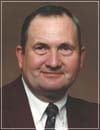
Carroll Poole

Definite Atonement

1 Peter 3:18
Carroll Poole May, 14 2017 Audio
0 Comments

Sermon Transcript

Auto-generated transcript • May contain errors

100%
My subject for a few minutes
is definite atonement, definite atonement. Now you're not going
to hear this message anywhere you'd go this morning, but I
ask for your attention just a few minutes and hear it here. And
this is what the gospel of Jesus Christ is about. This, this exposes
so much that goes on in the name of religion that does not honor
the Lord. But this honors the Lord, definite
atonement. It is a Bible doctrine, most
vital to a clear understanding of the gospel of Christ. It is
most necessary for God's glory in salvation. And it is most
valuable for the salvation of sinners. Now this doctrine, definite
atonement, it means nothing. It means nothing. to modern-day
religionists. Of course, nothing important
does matter to them. But God's Word is certainly way
down the list of most people's priorities. But it's precious
to me, precious to God's children. What does this mean? What do
I mean by definite atonement? Atonement is a word that can
be broken down into syllables to define it. At-one-ment. At-one-ment. Atonement is what
Christ did in behalf of his people to make things right with God
concerning our sin. Now all my life I've heard people
say, make it right with God. You need to make it right. I
cannot do that. You cannot do that. But Christ
did. And except he made it right for
us, it'll never be made right in us. He suffered on the cross. shed
his blood, atoning blood, to make atonement for the sins of
his people. And when we put that word definite
in front of the word atonement, definite atonement, we're talking
about a certain work. That is Christ atoning work and
atoning blood was a certain atonement. He never died to make anything
possible. If you listen around this country,
you'll hear Oh, Jesus died to make salvation possible. No,
no. He never died to make anything
possible. He died to make something certain. He never died to make salvation
possible for Adam's race. He died to make it certain to
all for whom he died. And he knows who they are. He
recovered. You see, we got in the shape
we're in. as sinful fallen creatures because
of our father Adam's action in the Garden of Eden. He disobeyed
God. He turned his back on God. You
say, well, now that was Adam. That wasn't me. No, we are Adam. He's a representative person.
All that he was, we are. All that we are, he was. He represented
us. And Adam sold himself and the
entire human family down the road to hell, rejecting God. But Christ came and recovered. He recovered all, all of his. There's a David in the Old Testament. David is a blessed, blessed picture
of Christ. You know that. And there was
a time when his family was taken captive. Kidnapped and carried
away and their homes was burned. The city was burned and David
inquired of the Lord. Shall I pursue after them? And that's what happened to the
Lord's people in the garden of Eden. We were kidnapped. We were taken captive by Satan. And what I'm referring to is
in first Samuel 30. And David asked the Lord, shall
I go after them? And God said to him three times,
pursue. Verse nine, thou shalt without
fail, recover all. Now that's what Christ did without
fail. He recovered all, not all of
Adam's race, but all that were given him before the foundation
of the world. John 17, nine, Christ said, I
pray not for the world. So I thought the Bible said,
God so loved the world. He loves the world that Christ
died for. He loved him enough to give his only begotten son.
That's what the verse says. But Christ said there in John
17, nine, I pray not for the world, this heathen unbelieving,
God hating world. but I pray for them which thou
hast given me out of the world." When were we given to Christ?
Paul tells us Ephesians 1-4 that we were chosen in Christ before
the foundation of the world. And so that's one of the errors
in that song we sung, that our names were not recorded the day
that we found out about it. Revelation 13, I believe it is,
says that our names were written in the Lamb's Book of Life before
the foundation of the world. And of course, there's all kinds
of songs now about that. And there's all kinds of statements
from preachers. Have you had your name written? Have you had
your name written? Too late. It's too late. All the names of God's elect
people were written in the Lamb's Book of Life before He made the
world. And Christ came to recover all.
And He told David back there, Thou shalt without fail recover
all. Again in verse 18, And David recovered all. Again in verse
19, David recovered all. All what? All that was his. All that was his. Satan did his
damage in the Garden of Eden. But Christ came and recovered
all. Get a hold of that. Get a hold
of that. The feeble, failing, embarrassed
Jesus that this generation talks about don't exist. He don't exist. He came and conquered death,
hell, and the grave and recovered all. This is mine. I'll take
it. That's who he is. Now opposing
this blessed doctrine of definite atonement, Is the popular belief
of universal atonement that Christ died for and actually paid for
all the sins of every individual of Adam's race. Well, you'd have to put with
that a universal election that God chose to save all people. He meant to and wanted to save
everybody. You'd have to put with that a
universal calling. that God has or will call upon
every person who's ever lived to be saved. And he'll call with
all his might and all his ability. If God chose all, Christ died
for all, the Holy Spirit is seeking to regenerate all. If that be
so in the first place, God is the biggest failure this world
has ever seen. Millions have perished in their
sin. and millions more are perishing as we speak. And if they're right, God can't
do anything about it. If that be so, the triune God,
Father, Son, and Holy Ghost has misjudged his power and authority
to be able to do what he wills to do. But it is not so. This Bible says, many, many,
many, many times over, that God rules in all and over all, that
He worketh all things after the counsel of His own will. He never
gives in. He never forfeits His will in
anything to anyone. He really is God in everything
all the time. The Scripture says in the Old
Testament, Prophet Nahum, chapter 1, verse 3, The Lord hath his
way in the whirlwind and in the storm. Well, nobody else does. Just in the last few days, they've
been trees blown down on people's houses. Well, do you think the
people don't know his house? You think that was their will?
No, but it was God's will. He has his way in the whirlwind. and in the storm. Didn't any
tree blow on my house? But it would have if he had ordered
it. Didn't any tree blow on your house? But it would have if he
had ordered it. He's God. He has his way in the
whirlwind and in the storm. All right, to this verse for
a few minutes. Look at it with me. 1 Peter 3, 18. For Christ
also hath once suffered for sins. Not his own sins, he didn't have
any. But this word wants, he hath
once suffered. This is emphasized in the book
of Hebrews where Christ's sacrifice is contrasted with the Old Testament
sacrifices. And you know, back there in the
Old Testament, there were many, many on a daily basis, blood
offerings, animals slain, their blood shed in sacrifice to God. But in contrast to those many
offerings, Hebrews 10 and 12 says, but this man, speaking
of Christ, after he had offered one sacrifice for sins forever,
sat down on the right hand of God. He suffered once. He will
suffer no more. He paid for all the sins he'll
ever pay for in that one time suffering, one time offering. Now look at the next statement.
The just or the just one, that's Christ Jesus. For the unjust,
that's his people. The just for the unjust. You say, well, all Adam's race
is unjust. How do you know this is referring
only to God's elect? Because of the next statement,
the just for the unjust, that he might bring us to God. That does not say Christ suffered
that he might possibly bring us to God. He hopes to bring
us to God. If you'd cooperate, he'd bring
us to God. No, he did it before we got here. 2000 years ago on the cross,
he suffered the just for the unjust that he might bring us
to God. And the word might here does
not mean maybe. We use the word might in that
sense, a lot of times to mean, maybe it don't mean that here,
but that he might certainly in order that he should bring us
to God. He did it. He suffered in order
to bring us to God. Now this bringing to God does
not just refer to our knowledge of it. When we learned about
it, when we're regenerated, when we're born again, But Christ
actually brought us to God when he died, rose again, and ascended. We died with him. We died in
him. We were buried, rose again, and ascended. And according to
the book of Ephesians, we're seated with him positionally
in the heavens right now. Not bodily. We're here bodily.
But positionally, we're there in him. 2,000 years ago now, John the apostle
on the Isle of Patmos, he saw us there. What? Yeah, he saw
us there. Revelation 5, 9, and they sung
a new song saying, thou art worthy to take the book and to open
the seals thereof for thou was slain and has redeemed us to
God by thy blood. Us who? Us out of ever kindred
and tongue and people and nation. John saw us with the Lord in
heaven 2000 years ago. And the us here that he might
bring us to God. Peter is talking to the same
audience that he addressed in chapter one in verse two, elect
according to the full knowledge of God. He's not speaking to
Adam's race. And when he says Christ suffered
once, that he might bring us to God, he's not talking about
Adam's race. This little word for, the just
for the unjust. I hope you're listening now.
The just for the unjust. That little word for means in
the stead of. In the stead of. Christ suffered
for in the stead of his people. That means if he paid it, I can't. And if he didn't, I must. It's
a definite atonement. One time payment. It's called
a ransom. It's called a purchase. It's
called a redemption. Once Christ suffered and said,
it is finished. It is finished. Now, if you had
a friend that went to the electric company, Most of you would like
a friend like this that went to Duke Power and said, I want
to pay my friend's bill this month. And they paid it. And they brought the receipt
back and give it to you. It said paid in full. Now, what
are you going to do? You going to argue? Well, I don't
know. I know this says it's paid, but
I don't really know. And I'm going to go find out.
And you go to the electric company? And you try to pay it again,
greedy as they are, greedy as they are. Here's what they'll
say. You don't have any balance. Your
bill is paid. It's been paid. They won't let
you pay it again. And yet it will be preached all
over this country this morning that Christ died for the sins
of the world. He paid for the sins of all Adam's
race. But if when something is done, there's
no, if there's no, if Christ paid the debt in full for his
people, he never made a down payment. He paid the entire bill. If you go somewhere and make
a purchase and you agree to pay on an installment plan, monthly
payments, you might can say, I made my
payment. Yeah, this month, but it'll be due again next month.
What Christ did for us was not an installment. It's not like
cutting your grass. It'll need it again next week.
No, it's a one-time deal. It's done. forever. Now, I know
my time is about gone. Let me show you something in
John chapter 10. This very, very blessed chapter, John chapter
10. Christ said in John 10, 11, I
am the good shepherd. The good shepherd giveth his
life for. That is, in the stead of the
sheep. Not goats, but sheep. John 10, 15, I lay down my life
for, in the stead of, the sheep. He suffered the wrath of God
so I wouldn't have to. Not so I might not have to, may
not have to, but so I wouldn't have to. He did that for me,
in the stead of me. There's not room for my sin debt
to be paid again. There's no way for it to be paid
again. There's no balance. It's paid in full. Paid in full. Other sheep I have which are
not of this fold. He's talking to his disciples
about Gentiles. Other sheep I have which are
not of this fold, them also I must bring and they shall hear my
voice and there shall be one fold and one shepherd. Then talking
to unbelievers, he said in that same chapter, John 10, 26, but
he believed not because you are not of my sheep. Goats don't believe it's worth
anything to follow the shepherd and they don't, but sheep do. My sheep hear my voice and I
know them and they follow me. Verse 28. And I asked them if
they'd like to be saved. No, that's not what it says.
And I give unto them eternal life. And they shall never perish. Neither shall any man pluck them
out of my hand. He's not talking about Adam's
race. He's talking about his sheep. And he uses those same
symbols in Matthew 25 when he returns in glory. and makes that
great separation for all eternity. And he sets the sheep on his
right hand, but the goats on his left. And to the sheep, he'll
say, come, you blessed of my father, inherit the kingdom prepared
for you from the foundation of the world. I've been working
on this a long, long time for you. But to the goats, he'll say,
depart from me, you cursed into everlasting Punishment. Now, I know many would say, well,
now what about those that verse which says Christ is the savior
of the world? He's the savior of the world,
not in the sense that Christ died to save all men, but he's
the savior of the world in the sense that he's the only savior
the world has. Apart from him, there's no one
say there is no other. He's the only Savior. He's not
the Savior of anyone that's not saved. They don't have a Savior.
But He's the Savior of His people. You say, what about 1 John 2.2?
I hope you're listening to me. Some of you never heard this
before. What about 1 John 2.2? And He is the propitiation for
our sins. That word propitiation means
satisfying the justice of God. He is the propitiation for our
sins. And not for ours only, but also for the sins of the
whole world. Well, John is writing to his
Jewish brethren, knowing their prejudice against Gentiles. And
he says, Christ is not just the savior of Jews, but of Gentiles
also of the whole world of every kindred nation and tongue. He's the only savior that anybody
has. Christ is not the Savior of all
men without exception. He's the Savior of all men without
distinction. He saves Jews, Gentiles, of every
kindred, nation, and tongue. You say, what about that verse,
1 Corinthians 15, 22? For as in Adam all die, we know
that's true. Even so, in Christ shall all
be made alive. There's a universal atonement.
No, no. How many die? All that are in
Adam. How many are made alive? All
that are in Christ. It's definite in Christ. You say, well, what about John
3.16? For God so loved the world. You reckon that's the same world
he told us not to love? 1 John 2.15, love not the world. You reckon the world God so loved
is the same world Christ refused to pray for? I pray not for the
world. Oh no, oh no. God so loved the
world of his people that he gave his son to die for them. Now you might ask, well, what's
so important about believing and preaching this definite atonement
that Christ died for a specific people? Well, here's what's so
important about it. Here's what's so necessary about
it, that it gives God credit for being 100% successful. The false, the belief in a universal
atonement It's to say that God wanted to save everybody, but
millions have slipped through his fingers and he just couldn't
do it. They just wouldn't let him. Then they were God, not him. It's to say that Christ shed
his blood partly in vain. He paid the debt. He paid it
in full, but men decided to go to hell anyway. That's what they're
saying. Oh no, no, no. Not one, not one that Christ
paid for can possibly go to hell. This is precious, precious, precious
to God's children, but it's despised by the religious world this morning.
Not the heathen world, they don't know and don't care, but by the
religious world. They've got to have an opportunity,
equal opportunity, God. They've got to have a God that
needs us more than we need him. That's not who he is. That's
not who he is. Universal atonement says that
God, the Holy Spirit is not able to convince everybody. God wants
to convince. He's not able to persuade everybody
Christ died for. He's doing his best. But many, many perish in spite
of the united effort of God, the father to choose them. God,
the son to die for them and God, the Holy ghost to plead with
them. God done his best, but he's failed. It's not so it's
not so. Belief in a universal atonement
is to label God the biggest failure in history. He misjudged his power. He just
can't convince all men. He misjudged the value of Christ's
blood. He just didn't do the job after
all. He misjudged the convicting and drawing power of his spirit. He can't convince people after
all. Belief in a universal atonement
finally charges God with being unjust, requiring double payment. Christ paid for your sin, but
you wouldn't have it, so you're going to have to go pay. No,
God only requires payment once. And if you go to hell and pay
forever, then Christ didn't pay for your sin. Because he didn't
fail. He's no failure. He's no failure. Now the truth, a definite atonement
is in accordance with the scriptures. All whom the father chose and
gave to his son in eternity past, that exact number Christ came
into the world and died for and paid the sin debt. And that exact
number, God, the Holy Spirit, will cause to hear the gospel
and hear it affectionately and believe on Christ. Some of them never see the light
of day. They go into eternity from the
mother's womb. Some in their infancy. But they're
saved by grace just the same. They're saved by what Christ
did, not by what they can do. This crowd that wants to preach
this junk, I don't know why they don't say to the dear lady that
lost her baby, well, I'm so sorry that baby couldn't have lived
long enough to make a decision for Jesus. Or dies in infancy. I'm so sorry
that young one never lived long enough to be baptized or make
a decision for Christ. What about what Christ did? He
did it. He took care of it. He took care
of it. That infant that dies, that unborn
child that is lost in a miscarriage or is deliberately murdered by
an abortion is saved by the same grace that
all the rest of us are saved by what God decreed for eternity,
by what Christ did on the cross. It's a done deal. This is the
gospel. This is the gospel. You say, well, I still feel sorry
for them people way yonder in the jungles of Africa that have
never heard the name of Jesus. Well, don't feel sorry for them.
You didn't deserve to hear it. You didn't deserve to hear it.
And if God don't change your heart, it didn't do you any good
to hear it. It's not about you and I. It's about what he's done. He's done. Many never hear. You've been in our country, in
the big cities, in the country, and even around this part of
the world, even in Hendersonville, they don't hear about the Lord
Jesus Christ. Oh, no. Never hear. That brings us to
the question, wonder why God has you right here this morning. It's His doing, not yours. You say, well, it's Mother's
Day, I've been I'd been planning to come. Yeah, but a million
things could happen that you wouldn't have come. It's his
doing. It's his doing. And I want to
tell you, you're here this morning for one of two reasons. One of
two. Now this is, this is not difficult.
This two, just two, one of two reasons. You're either here for
the Holy Spirit of God to tender and break your heart and remind
you of what you are. and who He is and bring you to
repentance of your sin and faith in the Lord Jesus Christ. That's
the one. Or the other reason is you're
here for your heart to be hardened,
harder than it already is, and to shake your fist in God's face
once more and say, I don't need Him. I
don't want Him. At least not now. And that hardening
is to justify God even more. He's already justified, but that
hardening is to justify God even more for putting you in hell. It's a fact. That's what the
gospel does, softens or hardens. Nobody sits under the sound of
the gospel of Jesus Christ and leaves neutral. No. It softens
or hardens. It brings us to confess. Oh,
I need him every hour. I need him or to confess at least
silently. I don't need him. He would be so wise on your part.
It would be so gracious on God's part to put a desire in your
heart. a desire that you can't shake.
Unless the Holy Spirit does it, you'll forget all of this before
you get through the red light out yonder. But oh, how merciful if God would
put it in your heart, a desire you cannot shake to know Him
and to know that you're part of His family. There was a bunch
of religious folk came to Christ in the Gospel of Matthew. And
they said, Lord, Lord, you won't believe all the wonderful things
we've done. Don't you know all the good we've
done? And Christ said, I never knew you. I never knew you. It was all
about you. It was none about me. If the Father had given you to
me, I'd know you. If I died for you, you'd know
me. Depart from me, ye that work iniquity. These were religious
folks he's talking to. You that work iniquity. Your
religion is out of hell. I never knew you. What does all this mean to God's
people? It means we don't try to add to what he's done. It means we just believe on him
this morning and worship him. for who he is and for what he's
done, as many of you have testified to this morning. He's a wonderful,
wonderful savior. And we praise his wonderful name
today. And I'm glad you're here. Let's stand.
Carroll Poole
About Carroll Poole
Carroll Poole is Pastor of East Hendersonville Baptist Church, Hendersonville, NC. He may be reached via email at carrollpoole@bellsouth.net.
Broadcaster:

Comments

0 / 2000 characters
Comments are moderated before appearing.

Be the first to comment!

Joshua

Joshua

Shall we play a game? Ask me about articles, sermons, or theology from our library. I can also help you navigate the site.