Bootstrap
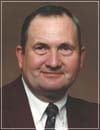
Carroll Poole

A Definite Atonement For A Definite People

Romans 5:6-11
Carroll Poole September, 13 2015 Audio
0 Comments
Carroll Poole
Carroll Poole September, 13 2015

Sermon Transcript

Auto-generated transcript • May contain errors

100%
Romans chapter five. And. To save time, we'll pick up with
verse six for when we were yet without strength. In due time,
Christ died for the ungodly. That was you. And that was me. For scarcely for a righteous
man will one die, yet peradventure for a good man some would even
dare to die. But God commended his love toward
us in that, while we were yet sinners, Christ died for us. Much more then, being now justified
by his blood, we shall be saved from wrath through him. For if
when we were enemies we were reconciled to God by the death
of his Son, much more being reconciled, we shall be saved by his life.
And not only so, but we also joy in God through our Lord Jesus
Christ. By whom we have now received
the atonement, we'll stop reading right there in these verses and
back it up to the first chapter of the apostle Paul has spoken
of our being just before God justified. our having peace with
God, our having access to God, our hope in God. He has spoken
here in verse 10 of being reconciled to God by Christ's death. And then the certainty that we
shall be saved by His life, His resurrection life. In other words,
He will make full collection of all he purchased by his debt.
He will have what he paid for. Verse 11, the verse we're coming
to, and not only so, Paul says this is not all, there's more.
Not only so, but we also joy in God through our Lord Jesus
Christ by whom we have now received the atonement. I'm interested
in the last word of this verse 11, atonement. And the title
of our message is a definite atonement for a definite people. You might ask exactly what is
meant by the term atonement. What is it to atone? Well, it
is to pay a debt that is owed. It is to Satisfy justice. To settle a claim. The word atonement
occurs 81 times in the scriptures. And of course, the debt to be
settled is the debt of sin. And while the word is used over
and over in the Old Testament, concerning what man does in obedience
to God to make an atonement. We understand that all that in
the Old Testament is typical, it's symbolic, and that the actual
atoning for sin is not man's work, it's God's work. None could
pay the debt we owe to God except God himself. And that he did by sending his
son into the world to live sinless and to die in our sins. Not to
die in his sins, he never had any, but to die in our sins. Charged with our sin. Made sin
for us, Paul said. Made a curse for us. Christ alone
could and did satisfy God's justice concerning sin. But for whom? For whom? If you ask the average
professing believer that question, for whom did Christ die? The
answer you would get more than any other is everybody. That he died for all men's sins.
And all we have to do is respond to what he did. Now what they're
referring to is a potential salvation that Christ potentially atoned
for all men's sins. That is, He might have. He potentially
atoned for sins, but not actually. not definitely
atone for any man's sins. Well, that's not very encouraging. They will explain that it becomes
actual and definite only if you accept what Christ did. In other
words, that what he did on the cross is absolutely worthless
apart from your approval. That's what that's saying. In
other words, he started the work of salvation. You finish it. But that is not true. The work
of Jesus Christ was a finished work. It was a completed work
on the cross. He said when he died, it is finished. Not I am finished, but it is
finished. He accomplished it full atonement. for those for whom he died. Now,
what does the word atonement mean? First, it means to cover
over, as in pay a debt. Not cover over in the sense of
a camouflage, no. But rather to put away, to cover
the cost of something, just like y'all did a few moments ago,
but with that money. To cover. to put away, to expiate,
to cancel, to eliminate entirely. Now, we never raised $200, $500,
$700. We just a few moments ago raised
$1,000. Full, complete, total, entirely. And that's what Christ did in
His atoning work for all for whom He died. Now, this this
meaning to cover over reminded me of back in Genesis. And some of you may not know
this. The Hebrew word that is used in Genesis six in God's
instruction to Noah concerning building the ark, the word back
there is translated pitch. It's this same Hebrew word atonement. And I want to read you that what
the Lord said to Noah about the ark. And he used that word pitch,
which is the same word as atonement. This is in Genesis chapter 6
and verse 14. Make thee an ark of gopher wood,
rooms shalt thou make in the ark and shall pitch it within
and without with pitch. That is to seal it up. something like a stucco, a mud
type, gooey type something, substance, to seal it up, to waterproof
it, to leak proof it, cover it over, inside and out. In other words, do away with
every opening, every crack between the boards, every crack in the
boards. In other words, Eliminate entirely the possibility
of a leak. Pitch it. Cover it. The Hebrew word for atonement
further means to bear away, to carry away. To the extent that
something ceases to exist, bear it or carry it out of existence. That's what Christ did. with
the sins of those for whom he died. He bore it out of existence,
not just out of sight, but buried away to extinction. Of course,
the subject under consideration is sin. This word atonement in
the Old Testament, it's back there 80 times, by the way. It's
only once in the New Testament where we just read it here in
Romans 5.11, but 80 times in the Old Testament, the word atonement.
And it's used mostly in relation to animal sacrifices, the blood
sacrifices under the Old Testament economy, which was given by God,
which was instituted by God, commanded by God. The Israelites
were instructed to observe and practice the offering of these
sacrifices. And the word atonement is often
attached. These offerings were to symbolize
the bearing away of sins. Now they never did bear one single
sin. The book of Hebrews said it was
not possible that the blood of bulls and goats should take away
sins. All that back there was symbolic. Those animal sacrifices,
those blood offerings, they were offered by faith in God. who would in his time bear away
sins. So when a person offered an offering,
they brought a lamb or a bullock or whatever in the Old Testament,
they brought it not with their faith in the offering itself.
They did, it was not accepted. But when they offered it in obedience
to God, as a token of what God himself would do, about our sin,
offered with faith, not in the animal, but faith in God, then
it was accepted. The most important day in the
entire year of Old Testament Israelite society was a day appointed
by God called the Day of Atonement. And God's instruction for that
day is laid out clearly and extensively in the book of Leviticus chapter
16. I want us to turn back there
just a moment. And for those of you that are
not turning or don't have your Bible and all of you to do, I
want you to make a note, go home and read Leviticus 16. You see, throughout the Old Testament,
The Levitical priests were active and they were busy on a daily
basis, ministering in and around the tabernacle and later the
temple. The priests were responsible for numerous duties and chores
to be done on a daily basis, not to mention preparing for
and carrying out the numerous special occasions. feasts and
ceremonies throughout the year. But on this particular day, the
day of atonement, this is a very important point. All the ordinary
priest had the day off. Usually around the tabernacle,
later the temple, it was busy as a bee with priests moving
in and around and doing their jobs. But on this one day a year,
Nobody did anything except one man. And that was the high priest. You understand in the Old Testament
priestly order, the priest came out of the families of the Levites. But there was only one high priest.
And those normal priests, I forget how many served in order, when
we come to the New Testament, Zacharias, father of John the
Baptist was serving in his order. In other words, they had so many
served at a time and then they would rotate off and then others
would be on duty to serve. But there was only one high priest.
And of course, here in this time, it was Aaron, Moses' brother. And he's the only one that did
anything on this day of atonement. Aaron is a picture of our great
high priest, the Lord Jesus Christ, who did it all. Nobody else did
anything concerning the work of atonement. This goes right
along with what we're talking about in the class concerning
the Roman religion. Nobody did anything but the high
priest, the great high priest, Jesus Christ. Now, prophetically,
In Isaiah 63, 3, Christ says, I have trod the winepress alone. I did it all. Hebrews 1, 3 says
that Christ by himself purged our sins. He did it all. Well, now what did the high priest
do on that day of atonement? Why was it called the day of
atonement? It was called the day of atonement
because of the work the high priest did on that day, atoning
for the sins of the people for one year. It was not permanent. The only permanent atonement,
full atonement, is the Lord Jesus Christ when he came. But this
was all symbolic. And along with the other things,
he would offer a bullet for his own sins first. But much of this
chapter, Leviticus 16, has to do with the fact that it involved
two goats. And I'll read just a little about
what the high priest did, Leviticus 16 verse 7. And he shall take
the two goats and present them before the Lord at the door of
the tabernacle of the congregation. And Aaron shall cast lots upon
the two goats, one lot for the Lord, that is to be sacrificed
and the other lot for the scapegoat. And Aaron shall bring the goat
upon which the Lord's lot fell and offer him for a sin offering. But the goat on which the lot
fell to be the scapegoat shall be presented alive before the
Lord to make an atonement with him. See, there's our word to
make an atonement with him and to let him go for a scapegoat
into the wilderness. Now dropping down to verse 20.
And when he hath made an end of reconciling the holy place,
and the tabernacle of the congregation, and the altar, he shall bring
the live goat. And Aaron shall lay both his
hands upon the head of the live goat, and confess over him all
the iniquities of the children of Israel, and all their transgressions,
and all their sins, putting them upon the head of the goat and
shall send him away by the hand of a fit man into the wilderness. And the goat shall bear upon
him all their iniquities unto a land not inhabited. And he
shall let go the goat in the wilderness." Now, every part
of this points forward to Christ, our Redeemer. The goat that was
sacrificed and slain and bloodshed offered unto the Lord, that is
Christ crucified. And the goat bearing the sins
of the people representatively into the wilderness is Christ
who bore our sins away. And the high priest himself presiding
over the work representing the people, interceding with God
for the people. That is Christ, who is our great
high priest, whom the book of Hebrews says, he ever liveth
to make intercession for us. See, Christ is all of this. Christ
is the offering and Christ is the offerer. It's all Christ. Not only that, but Christ is
the fit man. that was to lead the scapegoat
into the wilderness. This had to be a man fit, a man
who was as able to lead that goat far enough away till it
would never return to the camp of Israel. Well, Christ is all
these things. He's the one that bore our sin
far away, out of existence even. The Bible has numerous terms
for that. into the midst of the sea. The sea of God's forgetfulness,
people talk about. Only God don't forget. As far
as the East is from the West. All of these terms are used.
But He bore them out of existence. They're gone. Our sins are gone. Now, our title was A Definite
Atonement for a Definite People. And with these things we've talked
about in mind, we understand that what the high
priest did on that day of atonement was a definite work. And it was
done in its order. It was done in obedience to God.
It atoned for the sins of the people for a full year, then
had to be repeated the next year. The people's acceptance with
God never depended on what they did that day, but on what the
high priest did that day. And may I say that the atonement
for our sins, our acceptance with God is not dependent on
what we did on any day, but on what Christ, our sacrifice, our
great high priest has done on the cross and sins. The people
never did anything, depending on what the high priest did.
And what he did was not a potential work that was made actual by their
response. No, it was an actual work regardless
of their response. It was a definite work. And in
like manner, when Christ went to the cross, he went to accomplish
a definite atonement. It had nothing to do with what
men thought about it or did with it. It was between God and his
son. The debt was paid in full. And most people will say, oh,
amen to that. And we saying Jesus paid it all. Oh yes, he did. But then they'll
turn around and say what he did is worthless unless he talks
us into accepting it. It was potential. We make it
actual. It was indefinite. We make it
definite. No. The Old Testament high priest,
he never did all that work and then said, I sure hope the people
accept it. I sure hope it wasn't in vain.
No, it was between Him and God for the people. And what Christ
did was between Him and God for His people. What Christ did on the cross
did not need man's approval and acceptance for it to be effectual. It was effectual. definite atoning
work between the father and the son, definite. What did he do? Acts 20, 28 calls it a purchase,
which he had purchased, talking about his people, with his own
blood. We read this in the text, Romans
5, 9, being justified by his blood. Ephesians 1.7, we have redemption
through His blood. Nothing to do with your profession,
your deceit. No. Through His blood. Ephesians
2.13, made nigh by His blood. Colossians 1.20, we have peace
with God through the blood of His cross. Revelation 1.5, He
has washed us from our sins. when we accepted Jesus? No. He
washed us from our sins in His own blood. Hebrews 10.14, how
much more? The blood of Christ purged our
conscience from dead works. Hebrews 10.19, we have boldness
to enter into the holiest by the blood of Jesus. 1 John 1.7,
the blood of Jesus Christ cleanseth us from all sins. Not all the
confessions to the priest, not all the penance, not all the
indulgence, not all of that, but the blood of Jesus Christ
cleanseth from all sin. Isaiah 53, 5, and with His stripes
we are healed. Healed from what? Well, he told
us in the earlier part of that verse, he was wounded for our
transgressions. He was bruised for our iniquities. He's talking about a spiritual
healing, transgressions, iniquities. You turn on your TV and you'll
hear these birds quote that part of a verse. They won't quote
the whole verse. They'll just quote that part of the verse.
And with his stripes, we are healed. And with his stripes,
we are healed. And they're talking about physical
healing, bodily healing. Now we believe as much as anybody
that God does, has, and can heal physically according to His will. We praise His name for that.
We've seen it right here in this assembly. But that verse, Isaiah
53, 5, He was not wounded for our arthritis or our backache. He was not bruised for our rheumatism
or sore knee. No, he was wounded for our transgressions,
sins. He was bruised for our iniquities,
sins. And with his stripes, that is
his suffering, his death, we are healed. Our sins are gone. That's what he's talking about.
Exactly. All right. I just gave you 10
scriptures, by the way, that state the work of Christ as a
definite atonement, not potential. Our salvation, and one of them
was purchased, our salvation not purchased by our profession,
but by his blood. Our redemption is not by our
profession, but with his precious blood. We're brought nigh by
the blood. We're at peace with God through
the blood. We're washed from our sins in his own blood. We
read that. That's over and over and over
through the scripture. Men can say it's only potential
all they want to, and they are saying it all over this country
today. But God's Word says Christ did the job. He did it all, and
He did it well. My believing it adds nothing
to it. My believing it puts no value on it. The value is already
on it. My believing it is God's work
in me changing me. It was a definite atonement for
a definite people. I stopped at a fruit stand the
other day to buy a bag of apples. They had lots of apples. I mean,
several varieties and plenty of them. And I never went over
to the man and said, I want to pay for all the apples here.
And then I'll pick me out a bag. That would have been kind of
stupid, wouldn't it? I didn't do that. Picked out
a bag and I paid only for that bag. Well, God's not stupid either. He picked out what he'd pay for and he paid for what he had picked
out. That's the gospel. After I paid for that bag of
apples, I somehow got distracted a little bit and I like to walked
off without my apples. Well, not God, not God. What He picked out, what He paid
for, He will have. And He'll have it all. I took my apples home with me.
I took my apples home with me. Christ never paid for anyone's
sins and then let the devil take them home with him. This pretty, pretty plain doctrine,
strong doctrine. Christ is not a loser. You not get half of what he paid
for or just a little of what he paid for. He'll have what
he paid for. Now this word atonement in our
text here, Romans five 11, it's the only occurrence in the new
Testament. Every other place in the Old Testament, it's the
payment itself. But here it's bigger than that.
It includes the effect of the payment. And the effect of it
is expressed in verse 10 by the word reconciled, restored, brought
back together. In other words, to pay a debt
and remain enemies doesn't afford much satisfaction. But the beauty
of the payment is that reconciliation is made. And the reason verse 11 uses
the Old Testament word atonement rather than the word reconcile,
reconciled, reconciliation, as in verse 10, is this. In the
Old Testament, it was man paying the price. In those offerings,
a man had to raise or buy an animal. He had to inspect it,
make sure it wasn't diseased or scratched up or anything,
had to be in good shape. He had to provide that animal
sacrifice. It was man's doing to offer that. Also, a place or two in the Old
Testament, the term atonement is used concerning money for
the upkeep of things. Exodus 30 and 16, the atonement
money, and men had to pay it. People had to pay it. This was
men paying, men providing. In 2 Samuel 7, the word atonement
is used. Seven sons of Saul's descendants
were to be hanged to satisfy the Gibeonites, to make an atonement
for how the Israelites had treated the Gibeonites. Men had to pay,
and it was called an atonement, those seven men. But in each
case, it's men paying, men providing, men dying. But in the New Testament,
this one occurrence, right here, Romans 5.11, watch it carefully.
Paul does not say, we pay the atonement. But we have received
the atonement. Wow, how blessed that is. The ones who owed the debt is
us. The one who paid the debt is
God in Christ. It was paid for us by the very
one we owed it to. A definite atonement for a definite
people. Now, Revelation 13, 8, their
names, who are these definite people? Revelation 13, 8, their
names are written in the Lamb's book of life. The Lamb is the
Lord Jesus, who in the mind and purpose and decree of God, this
Lamb was slain from the foundation of the world. Names were in the book of life
and the price was paid before he made the world. You see, what
happened 2,000 years ago on the cross was determined and was
decreed and was certain before God ever hung the stars. Do you
believe that? Yeah. Yeah. So why are these definite people
Who are these definite people whose names were written in the
Lamb's Book of Life from the foundation of the world? Well, Paul tells us in Ephesians
1-4, according as He, God the Father, hath chosen us who believe
in Him, Christ Jesus, before the foundation of the world. that we should be accounted,
considered, holy and without blame before Him in love. According as He hath chosen us
in Him. We're not saved because we believe. We believe because we were chosen
in the eternity past, paid for on the cross, and in God's time
the blessed Holy Spirit quickens the life and brought us to believe. Having predestinated us, Ephesians
1.5, that is declared beforehand. The little
prefix pre, you all know what that means. It means before.
And you know what a destination is. That means where you're headed,
where you're going to wind up. Pre-destination simply means
that God decreed and declared beforehand where you'd wind up. Having predestinated us, under the adoption of children
by Jesus Christ to himself, according to the good pleasure of his will. God said, I'm going to have me
a family. And just to you play on that
term, adoption, as it were in eternity past, God went to the
orphanage. and looked us over and he picked
out some of the fallen, helpless, hopeless race of Adam to be his
children. And if you despise that truth,
you're not one of them. Oh, to adopt them into his family
forever. He gave them hope. We had no
hope. One of the main things in adoption
is the financial. Can you afford this? Well, our
God checked his finances. He could afford it. He afforded
it by his own blood. Shedded Calvary. predestinated us in the adoption
of children by Jesus Christ Himself according to the good pleasure
of His will. Now what inheritance could He
possibly give a big family like this? What inheritance could
He promise us? Titus 1-2, in hope of eternal
life, which God that cannot lie promised. before the world began. This will blow your mind. This
will teach you something about this book. If you'll note all
those places, all those things he did before the world began.
From the foundation of the world. In other words, before we got
here to impress him, he did it. If he'd have waited on your impression,
you'd be in hell. Because you sure never have impressed
him. You sure never have turned him on. If you could turn him
at all, you'd turn him off. How certain is it? Here's how
certain. Second Timothy 1.9, he hath saved
us and called us with a holy calling, not according to our
works, but according to his own purpose and grace, which was
given us in Christ Jesus before the world began. It was a done
deal before you hung out the stars. I want to tell you sinful,
selfish, rotten flesh don't like this that God was able to do
anything without our approval. Oh my, everything God does is
without our approval. But thank God some things He
brings us to approve of. And if you're one of His, He's
brought you to approve of what He did. We got here too late to decide
to be God's children. You say, I don't like that. There's
a lot of people that don't. That's why these pews are not
all full this morning. But Brother Jonah understood
it. Salvation is of the Lord. Brother Jeremiah understood it.
God told him before I formed thee in the belly, I knew thee
and ordained thee a prophet. You were mine and your appointment
and your position, your job description was all determined before you
were anything. David understood it. Thou has
possessed my reigns, Psalm 139. Thou has covered me, atoned for
me in my mother's womb. My substance was not hid from
thee. In thy book, all my members were written, which in continuance
were fashioned, when as yet there was none of them. Lord, you knew
all about me before there was anything about me to know. Paul understood it. Galatians
115, when it pleased God, who separated me from my mother's
womb, he called me by his grace, revealed his son in me. All of
these are talking about a definite atonement for a definite people
accomplished before we got here. You hadn't added anything to
it. You hadn't made it effectual. This is God's doing. What about
Peter? He said, we're redeemed by the precious blood of Christ
as of a lamb without blemish and without spot who verily was
foreordained before the foundation of the world. Wow. On and on and on. I'll just say
it like this. I want no part of a salvation
that originated with you. since you've been here, by what
you have or have not done, that won't do for me. That won't do
for me. I need a savior older than time. Time has messed me up. I'm not just talking about since
I've been in the world. I'm talking about plumb back to pappy Adam. Time has messed me up. I need
a savior older than time. And I have one. I need a savior
bigger than sin. And I have one. I need a savior that cannot fail.
And I have one. A definite atonement for a definite
people. You ask, well, now how can I
know if I'm one of those definite people? Well, if you're not,
you'll not be too interested in it. The first wind that blows, you'll
forget all about this and go another direction. You'll swallow
another do it yourself scheme. DIY. God's elect. Just don't get over
crying for mercy and acknowledging his mercy and grace. That's how
you know. If you've never really cried
to God for mercy, if you get over crying to God
for mercy, you're sunk. It's in the nature and it keeps
working. It keeps working. God's atonement
through the blood of his son is a definite atonement for a
definite people. He's a God of certainties, not
possibilities. He's a God of positives, not
potentials. We can say with Paul in Romans
3.24, we are justified freely by his grace through the redemption
that is in Christ Jesus. Amen. And if you can't say that
this morning, I exhort you, I challenge you, I plead with you to embrace
Christ with all your heart. Forget all about your religion.
Forget all about the good you've done. Forget all about the bad
that you see in others that you hadn't done. Anything on earth
to praise yourself for, get rid of it. And embrace Christ and what He
did with all your heart and never let go. Live to honor Him. Hope
in Him. Worship Him and come what may,
don't ever let go. A definite atonement for a definite
people. Stand with me.
Carroll Poole
About Carroll Poole
Carroll Poole is Pastor of East Hendersonville Baptist Church, Hendersonville, NC. He may be reached via email at carrollpoole@bellsouth.net.
Broadcaster:

Comments

0 / 2000 characters
Comments are moderated before appearing.

Be the first to comment!

Joshua

Joshua

Shall we play a game? Ask me about articles, sermons, or theology from our library. I can also help you navigate the site.