Bootstrap
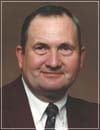
Carroll Poole

A Peculiar People

1 Peter 2:1-10
Carroll Poole June, 21 2015 Audio
0 Comments
Carroll Poole
Carroll Poole June, 21 2015

Sermon Transcript

Auto-generated transcript • May contain errors

100%
1 Peter chapter 2. We read these words, Wherefore,
laying aside all malice, and all guile, and hypocrisies, and
envies, and all evil speakings, as newborn babes desire the sincere
milk of the word, that ye may grow thereby, if so be ye have
tasted that the Lord is gracious. To whom coming as unto a living
stone, disallowed indeed of men, but chosen of God and precious,
ye also as lively stones are built up a spiritual house and
holy priesthood to offer up spiritual sacrifices acceptable to God
by Jesus Christ. Wherefore, also it is contained
in the Scripture, Behold, I lay in Zion a chief cornerstone,
elect, precious. He that believeth on him shall
not be confounded. Unto you therefore which believe,
he is precious. But unto them which be disobedient,
the stone which the builders disallowed, the same is made
the head of the corner, and a stone of stumbling, and a rock of offense,
even to them that stumble at the word, being disobedient,
whereunto also they were appointed. But ye are a chosen generation,
a royal priesthood, and holy nation, a peculiar people, that
ye should show forth the praises of him who hath called you out
of darkness into his marvelous light, which in time past were
not a people, but are now the people of God, which had not
obtained mercy, but now have obtained mercy." That's reading
down through verse 10. I want to take for our subject
this morning one statement in there, a peculiar people, a peculiar
people. Now, backing up to verse one,
notice we'd like to say having laid aside. In other words, a
done deal, but the apostle Peter reminds us that it's a continual
thing to lay aside. Wherefore, laying aside present
tense. Long as we're in this body of
flesh, it will be a constant need. I don't like being around
religious folks who would have me believe that they've arrived
and have conquered all the sin possible. You know, no, no. Wherefore, laying aside, as we
go along, all along this life. And then in verse 4, the tense
is also present. To whom coming. To whom coming. People say, well, have you come
to Christ? Oh yeah, I come to Christ years ago. No, this is
talking about a continual. This is talking about life. A
continual coming. To whom coming. Now here in verse
2, Peter refers to believers as newborn babes. And in verse
5, as lively or living stones. I remind us often that it's important
in reading the scripture to know who the writer is talking to
specifically. So he's writing to believers,
the redeemed children of God. And backing up to chapter 1 in
verse 2, at the very introduction, he makes this claim. And Peter asserts the work of
the Holy Trinity in the work of our salvation, Father, Son,
and the Holy Ghost. First, he said in that verse,
chapter 1, verse 2, elect according to the foreknowledge or foreordination
of God the Father. Also in that verse, through sanctification
or setting apart of the Holy Spirit. In other words, from
all the untold millions that have ever lived in the history
of the world and all who are living now and all who shall
yet be born, God the Father chose from eternity A definite number
to save by His grace and for His glory, and to give eternal
life to them for the glory of Himself. If He's trying to save
all Adam's race, He's a pathetic failure, but such is not the
case when you understand this Bible. He's saving His people. And so then the Holy Spirit,
who is one with the Father, has sanctified, that is, set aside,
marked off from the rest, every single one the Father chose. Then in that same verse, we find
that God the Son is in on it. Father, Spirit, and the Son.
Unto obedience. And this is not our obedience.
We're not saved by our obedience. We're saved by Christ's obedience.
We're elected by the Father, we're set apart by the Spirit
unto the obedience of Jesus Christ and the sprinkling of the blood
of Jesus Christ. We're redeemed by His obedience
and His blood. So Peter is writing to the Lord's
people. Now back in chapter 2 and verse
9, it's the verse we want to get to, Peter makes four distinct
statements describing the Lord's people. The first he says is
this, but he are a chosen generation. Now works religionists don't
like this. They, they prefer to say that
God chooses those who qualify, but the truth is none qualify.
There's none good. No, not one. The truth is, He qualifies those
He's chosen. From eternity, Ephesians 1-4
says, before the foundation of the world. And unless you rewrite the Bible,
as many have, that'll still be in there the next time you read
it. According as He, God the Father, hath chosen us, sinners,
in Him, Christ, before the foundation of the world. You see people
are mad at God because he did something before we got here.
That's the bottom line. But he chose his people from
eternity. A chosen generation. Now the
word generation here is not used in the sense that we use the
word when we speak of generations. It's not a period of years, like
40 years or 50 years, not that kind of generation. But rather,
Peter is saying that all God's children have our origin in the
same generating power, the quickening power of God Himself. through His Son, Jesus Christ.
We're begotten of God. Born again from above. Born of
the Spirit. God is our Father. One generation. Chosen generation
from the same generating power. You see, we read in the book
of Genesis, chapter 5 and verse 1, this line. This is the book
of the generations, plural, of Adam. A lot of generations in
time. But we turn to the New Testament,
Matthew 1.1, and you read this line. The book of the generation,
singular, of Jesus Christ. Just one generation. One generating
power. All the Lord's people are part
of this, a chosen generation. The second thing Peter says in
this verse, is a royal priesthood. Now that could not be said of
men in the Old Testament. Most of you know this. Royalty
came from the tribe of Judah. The kings in Israel were to be
from the tribe of Judah. But the priests were from the
tribe of Levi. Two different tribes. That's
how it was. So if you weren't from one of these
two tribes, you couldn't be either king or a priest. But I could
imagine every little boy in Judah imagining, dreaming of the possibility
of being king. And every little boy in the tribe
of Levi thinking about someday I might be, I could be, I'd like
to be a priest. It was possible. But no man could
be both, see? But Christ is both. He is our King, the Lion of the
tribe of Judah. And He is our Great High Priest,
Hebrews says, that is passed into the heavens. He's not a
priest after the order of Aaron, because he wasn't of the tribe
of Levi, he's the tribe of Judah. But he's a priest forever after
the order of Melchizedek. He's God the Son. He has a right
to represent men before God. And he has the righteousness
in himself to represent men before God. So he is both our king and
our great high priest. And in him, in Christ, Revelation
1.6 says that we're both. He hath made us kings and priests. God's people are a royal priesthood,
Peter says. And then the third descriptive
statement that he makes in this verse, chapter 2, verse 9, is
an holy nation. Not holy in ourselves, but holy
in Christ. In the body of His flesh through
death, Paul said to present you holy and unblameable and unreprovable
in God's sight. That is a present reality as
I speak. And it's true in Christ's flesh. not in yours and mine. People
want to put everything in the future. Well, you know, someday
I'm going to be holy. Someday I'm going to be unblameable.
Someday I'm going to be unreprovable in God's sight because of what
Christ has done for me. Christ has already ascended.
He's already there. We're already represented in
Him. And Paul says right now for God's
children, we've been presented holy, unblameable, unreprovable
in God's sight. That's a present reality in Christ's
flesh, not ours. A holy nation, Peter says. Now,
what does he mean by nation? A holy nation. He refers not
to a nation as we know it, with geographical boundaries and borders, but a nation in that all the
saints have one and the same origin, the choice of a sovereign
God in eternity past. And we're a nation in that we
all fly the same flag. The Lord is our banner, the psalmist
said. That verse in Psalm 33, 12, which
I have heard so abused and misused, blessed is the nation whose God
is the Lord. I hear men, I hear men quote
that pleading with America to turn back to God, you know, and
be a Christian nation. That's not what he's talking
about at all. The heathen, the unregenerate,
even if they are Americans. have never been a holy nation.
Holiness only is in Christ. A holy nation. What the psalmist
was talking about, see they never read all the verse. The verse
in its entirety says this, blessed is the nation whose God is the
Lord and the people whom he hath chosen for his inheritance. They don't read that part of
it. He's talking about the redeemed whom Peter calls here an holy
nation. And then the fourth thing he
says in this verse, this distinct statement, a peculiar people. And this is the one I want to
get to for a few minutes, a peculiar people. The peculiar people is
the Lord's redeemed people. That's who it is. Somebody says, well, didn't God
call Israel in the Old Testament, His peculiar people? With a condition
He did, but with a condition. Let me read it to you. It's a
condition which Israel never met. Now, therefore, if you will
obey my voice indeed and keep my covenant, then you shall be
a peculiar treasure unto me above all people, for all the earth
is mine. If you'll be my peculiar people,
you'll be my treasure, you'll be special, you'll be my elect. You obey My voice and keep My
covenant. Well, they didn't do it. They
didn't do it. But God's Son did it. He said,
I do always those things which please My Father. He obeyed.
He kept the covenant. That covenant made in eternity
that He would come and die for those whom the Father gave Him.
And here in Peter's words, there's no if. There's no if. He don't say to us this morning,
if you obey God's Word perfectly, if you keep His law perfectly,
then you'll be His peculiar people. Oh no, in Christ, it's a reality. There's no if here. It's just
a peculiar people. But what is meant by this term,
a peculiar people? What's he talking about exactly? Well, some words in our vocabulary
are quite confusing when they tend to take on a different meaning
as we commonly use them, a meaning that's different from what the
word actually means. And when we hear the word peculiar,
We think about something strange, odd, weird. Somebody will say, so-and-so
is a very peculiar person. And what all is being implied,
nobody really knows except the person that's speaking. And people say, so-and-so acts
peculiar. So-and-so talks peculiar. So-and-so looks peculiar. Well,
granted, God's children are a peculiar people, but not so much in the
sense that we're describing there. I did read something this week,
somebody wrote, and I'll just read this and then move on. This
fellow's talking about people in the church being peculiar. And he said, some are like wheelbarrows.
they need to be pushed. Some are like canoes, they need
to be paddled. Some are like kites, you have
to keep them on a string or they'll fly away. Some are like kittens, most contented
when petted. Some are like footballs, You
don't know which way they'll bounce next. I've met a lot of
those footballs. Some are like balloons full of
hot air and likely to blow up unless handled carefully. This
is funny. Y'all that have a sense of humor,
laugh. It's okay. Some are like trailers. If you're
going to get them anywhere, you'll have to pull them. And here's the last one. Some
are like buzzards. They'll come to church only if
there's a big stink. I've met a few of those. Now
that's not the kind of peculiar Peter is talking about. He's
talking about the Lord's people being a peculiar people. And I tried to look this word
up some. In the Hebrew, the word means shut up or locked up. as in a safe, referring to wealth
or referring to a precious treasure. In the Greek usage, the word
means over and above. It means that portion set aside,
specially selected as one's own, not to be for anything else.
And one writer asserted that the meaning extends to the spoils
of war. We read of this often in the
Old Testament. When there'd be a war, whichever
side won, they'd just go ahead and take whatever they wanted
of the other's goods for their own. And one writer asserted
that this meaning extends to that taking of spoils. And the
peculiar portion of it That's to be set aside for the king
himself, his peculiar treasure. But this word peculiar coming
from the Latin, it derives from the meaning as associated
with slavery during the Roman Empire. Let me just read you this about
that. When a man became a slave, he
lost everything. Everything belonged to his master. However, if a man served faithfully,
the law allowed him to work for someone else on the side. After
he paid his master a part of what he had earned, he was allowed
to keep the rest for himself. Some slaves have become so successful
in doing this, they saved enough to purchase their freedom. The savings of a slave over and
above what his master required of him was called his peculium,
P-E-C-U-L-I-U-M, peculium. It was his very own, and no one
else had any claim on it. He prized it. highly, and it
was very dear to him. And from that word, peculium,
the prized treasure, we get the word peculiar. Well, the church, the redeemed,
is God's peculium. He's worked for it. He's paid
the price. She's precious. his prized possession,
his purchased possession, a peculiar people. The word further means
having obtained. In other words, it's a past tense
transaction. I John 3, 2 says, Beloved, now
are we the sons of God. Yes, now. God in Christ has already
accomplished our redemption. He's already done the work and
we've already obtained and have eternal life in Him. And then this word peculiar,
it extends yet further. It means to set at one again. God in Christ hath reconciled
us to Himself. And again, it means, finally,
to bring to one mind in the end. Now that's something. To bring to one mind in the end. To think exactly like God thinks. Can you even imagine that? To agree perfectly with God. in everything he's ever done
in the history of this world. I think we'd all be liars if
we said that now. There's a whole lot of things
I wish he'd do differently and would have done differently,
but he's God. But our destination is this,
our being fully completely and perfectly conformed to the image
of Christ, will think just like God thinks, will agree perfectly
with Him in everything about everybody. Now how are God's people a peculiar
people in this world? Peculiar to Him because of were
his property, his possession, his prized possession, his purchased
possession. But I want to quickly give you
seven things about the Lord's people in this world. And it's
not that we've made ourselves peculiar. That's not what he's
talking about. That kind of peculiarity won't do. And it's usually quite
hellish. But it's talking about a peculiar
people whom God has made peculiar. different in God's way, different
by God's doing, His elect children. First of all, peculiar in our
direction, and all seven of these bear digging into, and I'm not
going to do that, I'm just going to mention them and move swiftly
along for a few moments this morning. Peculiar in our direction,
contrary to those all around us who are yet dead in trespasses
and sin, who, as Paul said, walk according to the course of this
world. They float downstream with the current just like a
dead fish. And by nature are the children of wrath. By nature,
because of what we are, God has every right to hate us. An outsider
Christ would have to hate us. By nature, the children of wrath.
But God's children in Christ are not dead in sin. We've been
quickened. We've been made alive, dead to
sin and alive to God. That is, dead to the bondage
of sin, dead to our being in slavery to sin, and alive to
God who walked not after the flesh. who don't do everything
according to what's comfortable, who do not walk by the world's
cliché, if it feels good, do it. Oh no, God's children walk
not after the flesh, but after the Spirit. The light's been
turned on in our heart, or in our tunnel, we could say. Dark
was seemingly, well, the light's been turned on. We have a teacher,
a guide, a direction, not like the rest of this world. Peculiar
people. Number two, peculiar in our dialogue,
if I could use that term, or conversation. You see, this God-hating
world, and you don't have to go down Skid Row to find this,
All you got to do is turn on your TV, read your newspaper.
This God-hating world, educated or uneducated, makes no difference.
Whether it's a so-called scholar or an ignoramus, makes no difference.
Cultured or uncultured, rich or poor, famous or unheard of,
makes no difference. They all have their conversation
in the lust of their flesh. Out of whose mouth, God says,
proceed evil communications and foolish talking. But the words of God's children
are different. Seasoned with grace. Some of us learn a little bit,
I hope, before we leave this life, like Job did. Yes, I have
babbled in the past, but it's time. I keep my mouth shut. Proverbs said, a word fitly spoken,
how precious. The words of God's children,
seasoned with grace, not so quick to condemn, not so quick to crucify
people that are not so different from ourselves, really. I can cuss you because you wear
a blue shirt. You can cuss me because I got
a little white shirt. Well, who's the winner? Nobody's the winner. It doesn't make any difference.
If it's sinful to wear a shirt, wear a shirt, period. We're both
guilty, right? See? And so we like to, religious
people like to pick out little nitpicky things. So-and-so's
guilty on that, guilty on that. And I don't do those kind of
things. No, but if I go over there and talk to them, They
can come up with a list about you that they're not guilty of.
See? It's not about all that. Let me hurry. Three, peculiar in our destination. You remember the story, Luke
16, the rich man in hell, lift up his eyes. And don't miss the
point here. It's not about riches. He never
went to hell because he was rich in money. No. He went to hell
because he was rich in self-righteousness. He didn't need Christ. So he
thought. And such is the destination of
all who do not totally abandon their so-called worth and goodness
and totally abandon any hope they have in themselves. People who plan to face God with
a little list of things they've done right are in a mess. People who intend to face God
with a little comparison of what they're not guilty of that they
know a lot of people that are, that person's in a mess. You
must abandon any hope in self and cling to Christ only. or the awful destination of those
whose hope is not in Christ. But you see, for this peculiar
people, the Lord's redeemed. We confess it's not in us. And we're but strangers and pilgrims
here. We're citizens of another country, not because we've earned
it. Not because we've applied for it and been accepted in our
persons, but because we're accepted in the beloved. We're citizens
in Christ. Number four, this people are
peculiar in our diet. Paul talked about those whose
God is their belly. And I've always kind of voted
that verse because I've always kind of felt like I was guilty.
Well, if you're going to talk about literal biscuits and gravy,
it's a fact. But you see, it's not just about
that. Christ said, man shall not live by bread alone, but
by every word that proceeded out of the mouth of God. God's
word is milk for the babe. God's word is meat. for the strong. This is the diet of this peculiar
people that they love to come to church. They love to hear
God's word. They love to fellowship with
God's people. They love to talk about the goodness
of God and about his word. Different diet from the world,
peculiar in that. And then the fifth thing, peculiar
in our dress. And I'm not talking about cloth
garments either. Again, spiritual. Before the
Lord found us, we were all clothed in filthy rags. Spiritual lepers
with no acceptance and no hope. But now in Christ, We're clothed
in His righteousness, pure and white. If God looked at you outside
of His Son, He'd have to damn you because of what you are. You'd confess that, wouldn't
you? But He don't look at us outside of His Son. He looks
at us in His Son, clothed in His perfect righteousness. Bless his holy name. And then
the next thing, number six, peculiar in our defense. The weapons of
our warfare are not carnal. We don't fight like the world
fights. I've had people tell me, I'd
do something about that. I'd get on the phone, I'd write
letters, I'd sue somebody, I'd do all... No, no, no. The weapons
of our warfare are not carnal. We don't fight like that. Our weapons are the Word of God,
not to beat somebody else over the head with, but to apply to
our own hearts. Our weapons are the Word of God
and prayer. And that's all you need. And
Paul said these weapons are mighty, mighty through God to the pulling
down of strongholds. And number seven, peculiar in
our desires. Isaiah 26, three, that will keep
him in perfect peace, whose mind is stayed on thee, because he
trusted in thee. Colossians 3 and 1, Paul said,
if ye then be risen with Christ, seek those things which are above,
where Christ sitteth on the right hand of God. Set your affection
on things above, not on things on the earth. So those seven
things certainly describe God's children as being a peculiar
people. It's not about religion, this
is about life. Maybe somebody here this morning
says, well, you know, I'd like to know for sure that I'm one
of God's peculiar people. I'd like to know my destination,
I'd like to know my direction to be right. I'd like my desires
to be right. Let me tell you what Christ our
Lord said. He said, my sheep hear my voice. When I speak, they're going to
hear me. They're going to respond in their
hearts to my words. Now, how's it going to affect
everybody else? It's going to run off like water off a duck's
back. And they're going to forget it before they get to the house.
But when God speaks to one of his own, it'll live. It'll live. My sheep hear my
voice, and I know them. I quicken them, and they follow
me. They'll leave their own pursuits. The world will lose its attraction.
And they'll follow me. And this morning, if it's in
your heart to follow him and seek after him. You certainly
can. And we'll. And if it's if it's
not in your heart. If you just want me to hurry
up and finish. So you can get on out of here and get on with
your self-centered life, then you cannot and will not come
to Christ. But I challenge you this morning,
hear His voice. The prophet said, seek the Lord
while He may be found. Walk with Him every day. I'm thankful to be one of God's
peculiar people. Stand together.
Carroll Poole
About Carroll Poole
Carroll Poole is Pastor of East Hendersonville Baptist Church, Hendersonville, NC. He may be reached via email at carrollpoole@bellsouth.net.
Broadcaster:

Comments

0 / 2000 characters
Comments are moderated before appearing.

Be the first to comment!

Joshua

Joshua

Shall we play a game? Ask me about articles, sermons, or theology from our library. I can also help you navigate the site.