Bootstrap
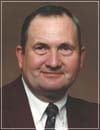
Carroll Poole

Humility

John 1:19-28
Carroll Poole March, 15 2015 Audio
0 Comments
Carroll Poole
Carroll Poole March, 15 2015

Sermon Transcript

Auto-generated transcript • May contain errors

100%
John chapter 1, and we'll pick
up reading with verse 19. And this is the record of John. When the Jews sent priests and
Levites from Jerusalem to ask him, who art thou? And he confessed
and denied not, but confessed, I am not the Christ. And they
asked him, what then, art thou Elias? That's New Testament spelling
of the Old Testament Elijah, the prophet Elijah. Art thou
Elias? And he saith, I am not. Art thou
that prophet? And he answered, no. Then said
they unto him, who art thou? That we may give an answer to
them that sent us. What sayest thou of thyself?
He said, I am the voice of one crying in the wilderness. Make
straight the way of the Lord, as said the prophet Esaias. That's Isaiah. They which were
sent were of the Pharisees. And they asked him and said unto
him, why baptizest thou then, if thou be not that Christ, nor
Elias, neither that prophet? John answered them, saying, I
baptize with water, but there standeth one among you whom you
know not. He it is who coming after me
is preferred before me, whose shoes latch it I am not worthy
to unloose. These things were done in Bethabara,
beyond Jordan, where John was baptizing. We'll stop our reading
there with those 10 verses. beginning in verse 19 through
verse 28. The first 18 verses of John chapter
one are really a prologue or a compacting of the entire book
of John. In these first 18 verses, Christ
is introduced as the word with a capital W, you know, who in
the beginning was with God and was God he's called Word in verse
1. Eternal in verse 2. Creator in
verse 3. Life in verse 4. Light in verse
9. He was made flesh in verse 14. He's the only begotten of the
Father, full of grace and truth, verse 14. He's the embodiment of grace
and truth, verse 17. And he is the revelation of the
eternal God, in verse 18. And so with that 18-verse prologue
given, verse 19 begins the actual historical narrative, and it's
called The Record of John. And this is John the Baptist.
It's his testimony of how things actually happened there on those
days. The writer of this book, of course,
is the Apostle John, the brother of James, one of the 12. And
with the record of John the Baptist, John the Beloved, years later
now, is writing this, a long time after John the Baptist has
been beheaded by Herod the King. And we note that in the first
18 verses, this prologue we called it, this man, John the Baptist,
is given very honorable mention. Verse six said, there was a man
sent from God whose name was John. The same came for a witness to
bear witness of the light with a capital L that's the Lord Jesus. And then verse eight, he that
is John was not that light, but was sent to bear witness of that
light. Then verse 15, John bear witness of him and cried saying,
this was he of whom I spake. He that cometh after me is preferred
before me for he was before me. Christ was not before John in
his humanity in age, but he was before John in that he's the
eternal son of God. So this man, John the Baptist.
Mentioned very honorably here, he's a very blessed man, a chosen
man appointed from eternity and commissioned in time as the voice,
he says, of one crying in the wilderness, prepare ye the way
of the Lord. And it is his great privilege
to introduce the Lord Jesus to this world. In verse 29, John,
the next day, John, seeth Jesus coming unto him and saith, behold,
the lamb of God, which taketh away the sin of the world. Now this whole story, this whole
picture is so broad. I've got to narrow it down here
because I want to talk about a specific thing. I want to talk
about humility. humility. And that's something
I'm sure all of you have plenty of and nobody needs any, but
that's what we want to talk about, humility. Other than the Lord
Jesus Christ himself, there is no man in all the Bible or in
all history that demonstrates true humility like this man,
John the Baptist. Great old writer, by the name
of J.C. Ryle, he said, I want to read
you this. He said, humility is the grace
with which all must begin who would be saved. We have no true
religion about us until we cast away our high thoughts of ourselves
and feel ourselves sinners. This is the grace which all saints
may follow after. and which none have any excuse
for neglecting. This is the grace above all,
which will appear most beautiful in our latter end. Never shall
we feel the need of humility so deeply as when we lie upon
our deathbeds. Our whole lives will then appear
a long catalog of imperfections, ourselves nothing and Christ
all. how true that is. The dictionary
said that humility is the absence of pride and the absence of self-assertion. In my own words, I would define
humility as the heartfelt sense of being at the mercy of God
in all things. How the heartfelt conscious sense
of being at the mercy of God in all things. Of course, this is only possible
with a conscious reality of what wretched and vile sinners we
really are. And that's what Raoul was saying
there. What a good day it is. in the
life of any believer, your life, my life, the life of any believer.
What a good day when we're so overwhelmed with the experience of divine
love until it really, really sinks in. I don't have to be
Mr. or Miss important anymore. I don't have to fight my own
battles anymore. I don't have to live my life
trying to get even with everybody, for every time I've been hurt,
I can just rest in the love and the wisdom and the care of my
Heavenly Father. The person who truly has humility
fears they have none. That's how it is. W.A. Criswell, longtime pastor
of the First Baptist Church of Dallas, Texas. The story is told
that upon entering his office study there in the waiting room
office, he had on the coffee table a book that he kept there
all the time, a beautifully bound hardback book. And the title
on the front was My Humility and How I Achieved It. And the story was most everybody
who came in would pick that book up. Out of curiosity, they would
pick it up and open it. And to their surprise, it contained
several hundred blank pages. Blank. And so that's the story,
my humility and how I achieved it. So from these 10 verses we've
read this morning here in John 1, verses 19 through 28, I want
to just consider three things for a few moments. First of all,
The interrogation that we read about here, verse 19 tells us
that the Jews at Jerusalem had sent a delegation of priests
and Levites out of town, down into the Jordan Valley, where
John was preaching and was baptizing. The Jews sent these guys and
the term Jews in this verse. We need to understand this. It
does not so much mean, does not so much refer to nationality
as it does to religious society. And the term Jews is used in
that capacity some 70 times in this book of John. So they sent
these priests and Levites to check out this wild man, I'm
sure some of them called him a wild man, that's holding these
beatings and is baptizing people down there in the Jordan Valley
and baptizing in the Jordan River. Verse 24 goes on to tell us that
these who were sent were of the Pharisees, sent no doubt by the
Sanhedrin court, whose concern it was to deal with any man that
they suspected of being a false prophet. And it appears that
these ask him if he was one of three people. They at least implied
first that he must be the Christ. And John emphatically answers
in verse 20, no. And we see the emphasis here
in his answer. And he confessed and denied not,
but confessed, I am not the Christ. This emphasis is like he's saying,
get this clear, understand this clearly. I am not. the Christ. And secondly, in verse 21, they
ask him, are thou Elias? Are you Elijah? And he said,
I am not. And then thirdly, they ask, are
thou that prophet? And he answered, no. Well, after this very serious
interrogation, the second thought, we have John's explanation And,
uh, in other words, after they'd finished their guessing game,
John kept saying, no, no, no. Finally, in verse 22, they asked,
well, who are you? If we can't guess, you'll have
to tell us what sayest thou of thyself. John speaks in verse 23. This is a quotation from Isaiah
40, verse 3. He said, I am the voice of one
crying in the wilderness. Now just that much of the statement
is very rich in content. First, the word voice. We have the implication that
John here is saying, I'm not here to be seen. disheard. This is, this is humidity. He will make other statements
later, but here he's saying, don't fix your eyes on me. Just
fix your ears on what I'm saying. I'm just a voice. And then the
word crying, I am the voice of one crying. The emphasis is on
the seriousness and the urgency of the message John is giving. And the word crying, it's another
evidence of humility. He claims not to be an eloquent
speaker or even an able expositor, as seems to mean so much to people
in our day. But he said, I'm just a voice
crying, that's all. Crying out the message God gave
me. And then the word wilderness.
The voice of one crying in the wilderness. Of course, the first
thought is that he's not in town, he's not in Jerusalem preaching,
he's not at the temple or on the street, but he's down in
the Judean Valley, a wilderness area. But I believe the term
wilderness here is bigger than that. The wilderness, you know,
in the Old Testament, it represents the struggle between Egypt and
Canaan. Across the Red Sea, but not into
Canaan. Out of slavery, but not into
a satisfaction. And the emphasis of John here
is that we're still in the wilderness, but we're getting close. And
it's not that we're about to reach Canaan land, But Canaan
land is about to reach us. We're not about to find any rest
on our own, but he who is rest is coming. We cannot go to him, but he will
come to us. And John's cry continues in verse
23, make straight the way of the Lord. As said the prophet
Isaiah, which is Isaiah, make straight the way of the Lord. What does that mean? Well, they
say in the time of Christ, most roads in Palestine were not really
roads at all. They were just pads, not well
maintained, not very wide, not very straight, uh, crooked. full of rocks and sticks and
garbage that people had disposed of. But if the king decided to
visit a certain province or city, that was a big occasion. That
was big news. And so then that city or that
province, they would quickly organize a cleanup campaign.
And they'd do a lot of work. And they'd clean up the streets
of the city, they'd clean up the road coming to the place.
Maybe straighten it some, maybe widen it. Make it presentable,
more comfortable for travel. More fitting for a king to approach
the city. And so John says this is the
announcement. The king is coming. Make straight. the way of the Lord. And they
ask him then in verse 25, what is your authority to baptize? If you're not Christ, if you're
not Elijah, if you're not that prophet, how is it that you're
baptized? And John answered in verse 26,
I baptize with water. And Matthew's account goes on
to say, but there cometh one after me that will baptize you
with the Holy Ghost. and with fire. John says here,
there standeth one among you whom ye know not. John is now expressing humility. He is promoting the one of whom
he said later, he must increase but I must decrease. I don't
hear many people saying that nowadays, do you? He must increase,
I must decrease. John is not trying to promote
himself. If you'll read the accounts of
the Gospels, John's ministry, I mean success, is an understatement.
People are coming from everywhere. The Bible said they came out
of Jerusalem and from all the regions round about Judea, coming
out to his meetings down there in the Jordan Valley. I mean,
it's something. Success. John the Baptist, he does not get the big head. He does not yield to the temptation
of saying, I'm number one. No. He says in verse 26, baptized with water, but there
standeth one among you whom you know not. He it is who coming
after me." See right then, they preferred
John. They had all come out here to
hear John. Instead of him being eaten up
with flattery, he said there is one preferred before me. You don't need to look at me
any longer. I'm on the way out, but there's
one on the way in. And from here on, it's not about
me. It's about Him. That brings me to the third thought
this morning. We'll talk about this a few minutes
and be done. What he says here in verse 27,
the exemplification, the example of humility. John gives something
here that we can trace through the Old Testament. Look what
he says. He says in the latter half of
verse 27, this one that's coming is preferred before me. And John
says, I'll say this about him, whose shoes latch it, I am not
worthy. to unloose. Now what does that
mean? What does that mean? I'm not
worthy to untie his shoes. Well, it meant much more than
we would think right off. Turn with me quickly back to
the Old Testament, the book of Deuteronomy, chapter 25. Deuteronomy, chapter 25. And this is part of a civil law
in Old Testament Israel. And we'll learn something here.
John 25 and verse 5. If brethren dwell together and
one of them die. In other words, if it's two brothers,
one of them dies. and this one that died has no
child, then the wife of the dead shall not marry without unto
a stranger. Her husband's brother shall go
in unto her, and take her to him to wife, and perform the
duty of a husband's brother unto her. And it shall be that the
firstborn which she beareth shall succeed in the name of his brother,
which is dead, that his name be not put out of Israel." In other words, I mean, that's
clear enough. If a man dies, his brother takes
his widow to wife. The first child they have is
to be named after and to be considered the son of the brother that died. Now, if this living brother don't
want to do this, here's the rest of the story. Verse seven. And
if the man like not to take his brother's wife, then let his
brother's wife go up to the gate under the elders. This is where
the legal business was. Go up to the court and say, my
husband's brother refuses to raise up under his brother, a
name in Israel. He will not perform the duty
of my husband's brother. Then the elders of his city shall
call him and speak unto him, and if he stand to it, that is,
if he holds his ground and he says, that's right, I don't want
to marry her, and say, I like not to take her, then shall his
brother's wife come unto him in the presence of the elders,
look at this now, and loose his shoe from off his foot, and spit
in his face, and shall answer and say, So shall it be done
unto the man that will not build up his brother's house. His name
shall be called in Israel the house of him that hath his shoe
loosed." Now this was a law This business of removing the
shoe, it was a symbol. In this case, it was a sign of
shame personally and legally. It was a man forfeiting his right
to marry his brother's widow. It signified his loss of right no longer a say in the matter. His forfeiting, his helplessness
was a symbol. It's also a symbol of submission, of weakness, of helplessness.
And we see this same thing several times throughout the Old Testament.
You remember in the book of Exodus chapter three, when the Lord
called Moses, He's a grown man now. He's full of 40 years old.
Well, no, he's now 80 years old. He's been here taking care of
his father-in-law's flocks for 40 long years on the backside
of the desert out in the middle of nowhere. He hadn't been around
people. He don't want to be around people. And the Lord shows up one day. He sees a bush on fire. And the bush is burning, but
it don't burn up. Burns is not consumed. And the
Bible says that Moses turned aside to see what was going on. And the Lord spoke to him from
out of that bush. You remember what the Lord told
him? He said, Moses, take your shoes off. Because the place
where in you're standing is holy ground. In other words, Mr. Moses, you come to years, 40
years old, you slew that Egyptian, you dealt with your own people
and you was going to do it your way and you had to flee for your
life. And now you've been out here
40 years, a shepherd. You think you can just always
have it your way and You're in control of things, and you're
doing what you want to do. The Lord said, take your shoes
off. From this point on, you forfeit
your Mr. Big and Mr. Know-how. And I'm going to do the talking
from here on. And the Lord did. He commissioned
Moses. and changed his heart and sent
him then to be that great leader to lead the people out of Egypt
and through the wilderness. Upon Moses' death at the beginning of the book
of Joshua, the Lord has prepared Joshua to be the leader when
Moses died. And here's the Joshua and the
people. Here they are crossed over the
Jordan. Here they are facing an enemy. And it's a serious
time. These people, they've been in
the wilderness for 40 years. A new generation rose up. They
don't know about nothing. They're not prepared for war.
But here Joshua is doing everything he can to get ready. And he sees
this one standing with a sword drawn, ready to fight. And Joshua went over and said
to him, who are you? Are you for us? Are you against
us? Whose side are you on? And he didn't get an answer.
The answer was nay. No. I'm not, it's not a matter of
you asking which side I'm on. I am captain of the Lord's host. I'm not here to take sides, I'm
here to take over. And he said, Joshua, take your
shoes off. Here's the leader of the nation
of Israel, here on official business now, getting ready to face an
enemy, and he's told to take his shoes off. For the place you're standing
is holy ground. The Lord said, I'll take it from
here. We come on over. A few chapters
and a few books to the book of Ruth. You remember this? Most of you know the story of
Ruth. She's the widow that came with her mother-in-law Naomi
from Moab back to Bethlehem. And, uh, in God's providence
meets this. wealthy businessman, Boaz, and
he wants to marry her. But there's a newer kinsman.
Boaz don't have the right. This other kinsman has the first
right. But Boaz calls him on the carpet,
so to speak. Again, goes to the gate and sits
down with the elders. It's a legal matter. He says,
look, Naomi has come back. This estate that was a limolex
needs to be settled. Are you going to, are you going
to redeem it? Are you going to, you're going to do it? You're
going to buy it? Pell said, yeah, I'll do it. I have the right. And Boaz reminds him, said, if
you do that, you're also obligated to marry this widow. that she brought back from Moab
named Ruth. And the fellow said, oh, I can't
do that. Lest I mar my own inheritance. I'd never do that. I'd never,
I'd never marry anybody that wasn't a Jew. And Boaz said,
I'll do it. And so He's to draw off his shoe. He
drew off his shoe, forfeiting his right. See, that's what this
means. Come on a little ways to the
book of Samuel, 2 Samuel 15. Many of you know this story.
David is the king. His own son Absalom has revolted. He has won the hearts of the
young men of Israel and his father David has to flee for his life. David and just a few of his faithful
followers go with him. The Bible says that he went down through that valley, Kedron Valley,
crossed the brook, same way our Lord went out of town that night. He's crucified. David left and
went down across that and ascended the Mount of Olives on the other
side. The Bible said that he He went barefoot, barefoot. Now don't you reckon King David,
he's the king, don't you reckon he had about the best shoes that
could be had in that day? But he went barefooted. And he
wept. The Bible said till he had no
more power to weep. What does that barefootedness
represent? He's saying, Lord, They may call
me the king, but I'm not in charge here. I can't handle things. Oh, it's
a picture of submission. It's a picture of great humility. And with all those pictures,
then we come to the New Testament and find what we read here that
John the Baptist said. There's one coming after me.
who is preferred before me. I'm not number one, he is. And
John said, he's one whose shoes latch it. I'm not worthy to unloose. I'll never take his shoe off
and him bow to me. It's going to be the other way
around. I must decrease. He must increase. True humility. Humility. And so it is. And John even points his two
of his disciples, go with him, follow Jesus. Abode with him
that day. A little time passed. The Lord's
fame begin to spread. Followers begin to increase.
Oh, Brother John the Baptist, He
gets in trouble in the ministry. He nails Herod concerning his
neighbor's wife, brother's wife, and they throw him in prison.
And he's fixing to get his head chopped off and does. History says the ministry of
John the Baptist was just about six months is all it was. People say, Oh, what a shame?
No, it wasn't a shame. He did everything the God of
eternity had ordained that he accomplished in his life in that
time period. Such a picture of humility in
the Christ sees our, he didn't point to Jesus and say, he's
okay. He deserves a lot of credit,
but don't forget who I am. No, he didn't say that. He said,
forget who I am. I'm nothing. Christ is all. And that's the story of humility.
That's the story of humility. No wonder Dr. Criswell's book
was full of blank pages. Oh my, what about my book and
your book? Lord, make it blank. Let Christ
be all. Amen. All right.
Carroll Poole
About Carroll Poole
Carroll Poole is Pastor of East Hendersonville Baptist Church, Hendersonville, NC. He may be reached via email at carrollpoole@bellsouth.net.
Broadcaster:

Comments

0 / 2000 characters
Comments are moderated before appearing.

Be the first to comment!

Joshua

Joshua

Shall we play a game? Ask me about articles, sermons, or theology from our library. I can also help you navigate the site.