Bootstrap
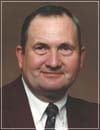
Carroll Poole

( But thou art rich )

Revelation 2:8-11
Carroll Poole June, 30 2013 Audio
0 Comments
Carroll Poole
Carroll Poole June, 30 2013

Sermon Transcript

Auto-generated transcript • May contain errors

100%
And we read four verses beginning in verse
8, Revelation chapter 2 verse 8. And unto the angel of the church
in Smyrna write, These things saith the first and the last,
which was dead and is alive. I know thy works, and tribulation
and poverty, but thou art rich. And I know the blasphemy of them
which say they are Jews and are not, but are the synagogue of
Satan. Fear none of those things which
thou shalt suffer. Behold, the devil shall cast
some of you into prison, that you may be tried, and you shall
have tribulation ten days. Be thou faithful unto death,
and I will give thee a crown of life. He that hath an ear,
let him hear what the Spirit saith unto the churches. He that
overcometh shall not be hurt of the second death. In our Sunday morning Bible class,
we're doing an overview of this last book of the Bible. And this
morning we began with the second division of the book, chapters
4 through 7. Last week we concluded the first
division, chapters 1 through 3, which contains these seven
letters to seven local assemblies, churches of Asia Minor. And in these seven messages to
the churches, We're told of prevailing conditions in the church of Jesus
Christ throughout history, from his first coming until he returns. The messages to the seven churches
do not present a chronological history, as some believe. That
is, that any specific one of the seven is limited to a specific
period of time, but rather the conditions described in all seven
letters are conditions prevailing in the church continuously all
the time. To six of the seven, the Lord
had a word of commendation, something good to say, some things to commend
them for. Only to the church at Laodicea
is there no compliment. To five of the seven, the Lord
had a word of complaint. Some charge or charges were brought
against them. It is only to two, to Smyrna,
which we read about this morning, and to the church of Philadelphia
in chapter three, no charges are mentioned. And it's this
church in the city of Smyrna that we want to talk about this
morning. I titled the message four little
words found in brackets in verse 9 but thou art rich but thou
art rich. In chapter 1 John had seen a
vision of the risen Christ in His glory. And in those verses,
chapter 1, 12 through 18, they are packed with descriptive
statements about Christ in His glory. And then in chapters 2
and 3, each of these seven letters begins with a statement of Christ
identifying Himself to that specific church, and
he mentions something that John saw in that initial vision in
chapter 1. And his identifying statement
here to the church at Smyrna in verse 8, these things saith
the first and the last, which was dead and is alive. That had already been stated
in chapter 1 in that vision, verses 17 and 18, Fear not, I
am the first and the last, I am he that liveth and was dead,
and behold, I am alive forevermore. These are identifying statements
of the Lord Jesus Christ. Now it's no coincidence that
Christ makes these statements about himself to this church
at Smyrna. I was dead and behold I'm alive
forevermore. Smyrna too had been an ancient
city, perhaps a thousand years BC, but then after a few hundred
years had died. It became a ghost town. There
was nothing But then in the time before Christ, Alexander the Great, it had been
rebuilt, built with the purpose to be a center of trade and commerce
in that part of the world, along with a great monument to culture
and art, its architecture, its museums, its statues and buildings. It was built with a temple erected
to the goddess Roma, Rome. And this city was noted for great
allegiance to Rome. Cicero at Rome called Smyrna
one of our most faithful and most ancient allies. It was a city that was admired
in every way by the world at large, by all who visited, by
all who heard about it and learned about it. There was one exception. There
was this faithful assembly, the Church of Jesus Christ. The pagan world had no kind words
for followers of Christ. just as they don't today. And
in verse 9, Christ says to them, I know thy works. He says that to each of the seven
churches. I know thy works. And tribulation. The Greek word used here for
tribulation is thalipsis. It refers not to an occasional
trial, that we're accustomed to, but it refers to a constant
pressure, a pressing upon one's spirit. The enemies of Christ,
the public abuse and bitterness toward these believers, it was
constant. And how beautiful are Christ's
words to his people here, I know. I know. None of it is unknown
to me. When you and I are in distress,
we're in trouble. We fear we're all torn up about
something. If we could but hear the Lord
say, I know. He does know. I know thy tribulation. None of it is unknown to me. And poverty. I know that. I know about your poverty. In
the Greek there are two words for poverty. One is to describe
the state of a person who is not wealthy. One who has to labor
with his hands to get by. Well, that's not really so bad.
But the other word describes absolute poverty and means completely
destitute. And in this church at Smyrna,
many had, studying the history, many had lost their jobs and
homes and were not able to do business for their testimony
of Jesus Christ. One writer said sometimes mobs
would attack and wreck their homes and take anything of value
that they wanted. And the so-called law did nothing
because these Christians, these followers of Christ, they were
considered rebels against the government. because they would
not bow to the Caesar. They were lower than dogs to
the citizens of Smyrna. So these believers in Smyrna
were extremely poor. And then there was imprisonment.
Again, Christ says, I know. As we read on, He said, I know
the blasphemy of them which say they are Jews and are not. but
are the synagogue of Satan. The Jews were exempt from bowing
to Caesar, but they antagonized, they acted on that these believers
in Jesus Christ be dealt with and be punished and be eliminated
because they would not bow to the Roman Emperor. imprisonment. They are of the
synagogue of Satan. When the Jews assembled, they
loved calling themselves the assembly of the Lord. But Christ
says you call yourselves the assembly of God when in fact
you're the assembly of the devil. You're the synagogue of Satan.
They hated believers for numerous reasons. They mocked at the Lord's Supper.
Accusing believers of being cannibals. Actually partaking of the body
and blood of Christ. Of course, you study Roman religion
and that's still there. Number two, because when believers
were rejected and disowned by their own families, they were
accused of being the ones of breaking up their homes. They
were the troublemakers. Another reason, because believers
had no images or outward statues to say was their God, they were
accused of and called atheists. Because our God is not visible through any statue or man-made
idol. They said, if we can't see your
God, then you have no God. Your atheist was the charge. Another thing, they were accused
of being politically disloyal because they would not say Caesar
is Lord. What a very undesirable situation
to be in. They were despised. destitute. And the Lord said they'll cast
some of you into prison. Verse 10, that you may be tried
and you shall have tribulation ten days. This is not literal
ten days. Ten days was an expression for
a short time which will soon come to an end. It does not mean
at the end of ten days They'd quit persecuting them, they'd
turn them loose, and at the end of ten days, they'd kill them.
I mean, in ancient times, they never kept people in prison for
years at the taxpayer's expense like they do nowadays. They went
to prison for just a short time until arrangements could be made
for execution, and that is the end of it. But Christ says something
here in verse 9, I know thy works and tribulation
and poverty, your destitute condition. I know your poverty. Then the
next four words that are in brackets, but thou art rich. I know that poverty, but thou
art rich. Materially, you're destitute,
you're very, very poor. Spiritually, you're rich. Now, the city of Smyrna itself
was very rich materially. But only believers, only the
Church of Jesus Christ, because of the persecution, the injustice,
were very poor. Christ could say, I know this
about you. I know this. And all the bigness
of those words of our Lord, I know, would that they would get big
to me and to you in our struggles of life. I know, I know. He says, I know this about you,
not just by observing from afar, no, but he can say to them, I
know because I've been there. 2 Corinthians 8 verse 9, For ye
know the grace of our Lord Jesus Christ, that though he was rich, yet for your sakes he became
poor, that ye through his poverty might be rich. Christ says, I
know right where you are, your tribulation, your poverty, your
imprisonment, Your martyrdom. But now here's what Christ does
not say. He does not say to them, here's
what I'm going to do about it right now. He is silent as to any immediate
relief. I want to read you what one dear
writer said. He says, Dear child of God, You
that are overwhelmed with great and crushing sorrows and longing
for the sound of His voice and there is nothing but silence.
It may be that that silence is a sign not of disapproval but
of approval. Do not be cast down if in the
midst of tribulation and suffering there is no voice may be that
the silence of the Lord is his highest commendation. To endure suffering, trials,
abuse, criticism, persecution for Christ's sake, with no wrong
spirit, with no critical spirit, with no complaining spirit, What
great wealth that is! I'll have to confess, I'm not that wealthy. I do have a complaining spirit
very often. Even Moses, that faithful servant
of God that he was, the scripture says in Psalm 106, They angered him also at the
waters of strife, so that it went ill with Moses for their
sakes, because they provoked his spirit, so that he spake
unadvisedly with his lips." Even Moses. And yet Christ watched
these saints at Smyrna and had no fault to find with them. They were so like Christ, when
they were reviled, they reviled not again. They had no spirit of bitterness
or retaliation at all. What tremendous wealth that is. Oh, what is that worth? To count suffering for Christ
such a privilege, such an honor. Someone said it's as if Christ
bent over them and whispered this great truth, but thou art
rich. Proud Smyrna counts thee poor.
I count thee rich. The blasphemy of the Jews and
the persecution of the pagans has robbed you of everything.
But in reality, You haven't lost anything. You're rich. I cannot help but think of the spiritual poverty of the
materially rich fool in Luke 12, who had it all planned out. I will say to my soul, So thou
hast much goods laid up for many years. Take thine ease, eat,
drink, and be merry. There's one problem. He didn't
have many years. He didn't even have another day. God said unto him, Thou fool,
this night thy soul shall be required of thee. though materially
rich, how spiritually poor he was. Can I say to us this morning,
material wealth is not a bad thing, but it can be a very dangerous
thing. It can prove a great obstacle
in seeing oneself helpless and totally dependent upon God. It cannot buy peace with God.
That's the one thing none of us can afford to leave this world
without. Money can't buy it. Some of what this letter to Smyrna
didn't say is as big as what it does say. For instance, there is not a
single promise telling them God will put a stop to your suffering. If you'll just pray, put your
hand on that radio, put your hand on that TV, God will put
a stop to your suffering. No, you've got to turn your TV
on to get that message. There's not a word here telling
them to check the mailbox every day.
They're going to be financially secure in just a few days. No, you've got to turn your TV
on to get that message. Christ didn't give that message.
Here's what He does tell them. Verse 10, Fear none of those
things which thou shalt suffer. Don't miss what He said. Fear
none of those things which thou shalt suffer. It's going to continue. He didn't say fear none of those
things which thou hast suffered, but fear none of those things
which thou shalt suffer. I know what you've borne in the
past, and I know what lies ahead. There's no comfort for flesh
in this message. Only true believers can find
any consolation in the omniscience of our Lord here. Whatever is next in this old
world, our Lord has said, I know about it, and He's told us not
to fear about it. I often have the thought concerning
my own life, my own future, my own age, my own failing health,
my own family. What are you going to do when?
What are you going to do when such and such? What are you going
to do when this? What are you going to do when...
I don't know what I'm going to do. But I want to tell you this,
I'm trusting the one who does know. And here's the instruction, verse
10. Be thou faithful unto death, whether it be a heart attack,
a car wreck, or where the Roman government
cuts your head off. And you today, in 2013, June
30th, I say to you, whether it be infection from
some awful disease, whether it be some terrorist
knock your door down and shoot you and all your family, whatever
it be, our Lord said, I know the things which thou shalt suffer. Future. and fear none of these
things. He is not saying, when He says,
Be thou faithful unto death, He is not saying, now you be
determined, you make up your mind, you're going to stand firm
and you're going to endure to the end. No, that's not it. That's
a pitiful way to try to face tribulation and trouble. Just
pick yourself up beyond bootstraps. Tighten the belt. Hang in there. No, no. What does this mean? Be thou faithful in a debt. The word faithful here is from
a root word meaning to be convinced. To be persuaded. To be a believer. To be sure of what? Convinced
of what? Believer of what? Of Christ and His fidelity and
His faithfulness and His victory. He said, I am He which was dead
and am alive. I've done been there. I've done been there. Remain strongly convinced of
this, in me you live forever. They might cut your head off,
but in me you cannot die. They might burn you at the stake,
but in me you cannot die. Christ says, trust me, I've done
men there. I've been through that thing
that y'all call death. And I've come out on the other
side. Behold, look, I'm alive forevermore. There is no death that I've not
fathomed. There is no darkness I've not
penetrated. Be thou faithful unto death. It's the pathway from here to
where I am. Come on. Come on. Believing me. Believing me. And what's the
promise? I will give thee a crown of life. Not a crown of gold, but a crown of life. Everlasting
life is the crown of the believer. You say, oh, but I wanted a crown
of gold and a mansion over the hilltop. Well, you ought to go
try to win the lottery. That's what you want. Crown, crown. There's not but one part of the
body that wears a crown. That's the head. In Christ, is the head of the
body. Now looking at the big picture,
the pressure, trials and tribulations, it's not accidental. This is
the providential rule of a sovereign God in our lives, in this generation,
in our country. Out of tribulation comes triumph. And Christ says, I've been where
you are. He reflects on his own tribulation
and says, I know your tribulation. How did he know? Been there. He reflects on his own poverty. The birds of the air have nest,
and the foxes have holes, but the Son of Man hath not where
to lay his head. I know your poverty. How do you
know? I've been there. He thinks of his own treatment.
And he says they'll do it to you. But, fear none of those things. I've
passed through it. You'll pass through it. Christ
is saying, I am your comrade in distress. I am your comrade
in darkness. I am your comrade in difficulty
and disappointment and depression and heartache in this world.
I walked that path alone, but I'll walk it again with you.
And He does. He does. Another added promise
latter part of verse 11, he that overcometh shall not be hurt
of the second death. Now all the rest of humanity
passes through physical death, then another death, eternal death. But the saints of God pass through
spiritual death to another life, eternal life. And this is what
is meant by Paul writing of Timothy when he said, Our Savior Jesus
Christ who hath abolished death. Well, abolish is to totally annihilate. It's to do away with entirely.
And Paul said that Christ our Lord abolished death. Now we still must die physically.
He didn't abolish that. We'd be fools to want to live
in these sin-cursed bodies forever anyhow. He never abolished physical
death. But for his people. That second
death, that eternal death has been abolished, annihilated,
done away with. One writer said, He will meet
us at the portal of death and crown us with life. That's the
story. That's what we have to look forward
to. Christ said to John in the vision of chapter 1, I have the
keys of death and of hell. Can I say to you, those keys
are not borrowed. They belong to Him. He is saying, I own these keys.
I own these places. Death, Hades, the grave, He said to the church of Philadelphia
in chapter 3, I've got the keys to open doors, and when I do,
no man can shut them. And I've got the keys to shut
doors, and when I do, no man can open them. The keys are mine. You won't go wrong trusting me. Be thou faithful unto death. Don't be afraid of any of it. Now this morning, as parents, grandparents, adults,
friends, we might would tell a little child, now don't be
afraid of such and such. And at the very same time, deep
in our own hearts, we may be a little afraid. See? But our Lord would never do that. When He says to His children,
don't be afraid, it's because there's nothing for His children
to be afraid of. He wouldn't lie to us. He wouldn't
deceive us like that. I know thy poverty, but thou
art rich. Oh my, you that trust in Me,
stay true to Me, with no bitterness, no retaliating spirit against
those who despise you and would destroy you. Religious Smyrna says you're
destitute. Political Smyrna says you're
destitute. Cultured Smyrna says you're destitute. I know thy poverty. I know what
they say. but thou art rich. That's what
I say. Oh, precious words from Christ
our Lord. I would conclude with a contrast. This one church, Smyrna, one
of the two that Christ never charged with wrong. And then there's Laodicea, the
only one of the seven Christ never commended. Laodicea was one of the wealthiest
cities in the world, a great banking and financial center.
In AD 61 Laodicea was devastated by an earthquake and history
says so rich and independent were its citizens that they refused
any help from the Roman government out of their own resources, rebuilt
their houses and their city. They were so rich, they thought,
they didn't need anybody, even God. But listen to the words
of Christ as He addressed them. That church at Laodicea in chapter
3 in verse 17, Thou sayest, I am rich and increased with goods and
have need of nothing. Oh, you say you've got it made. And knowest not that thou art
wretched and miserable and poor and blind and naked. I counsel thee to buy of me gold
tried in the fire." Gold tried in the fire cannot be bought
with money. Peter said concerning the faith
of God's elect, precious faith tried in the fire is more precious
than gold. It's not something that can be
bought. It's the gift of God. It's the faith of God's elect.
The church at Laodicea said, we're rich. Christ said, no, you're destitute. The church at Smyrna said, we're
destitute. Christ said, no, you're rich. I know thy poverty. but thou
art rich." How rich are we this morning? I would just say this, he who
is not rich in faith is destitute and without hope for all eternity. And yet, he who sits by the highway
side begging Bartimaeus, don't know where
his next meal is coming from, destitute in the eyes of the
world, and yet he is able to cry out, Jesus, thou son of David,
have mercy on me. That fellow is rich. He's very,
very rich. If you're so well off this morning,
that you feel really no need of the Lord in your heart and
in your life. You're to be pitied. You're poor. You're destitute. You'd be better
off barefooted with no shoes and no shirt to put on your back
and have a heart for God. You'd be better off. You'd be
better off. I know thy poverty, but thou
art rich. Stand with me.
Carroll Poole
About Carroll Poole
Carroll Poole is Pastor of East Hendersonville Baptist Church, Hendersonville, NC. He may be reached via email at carrollpoole@bellsouth.net.
Broadcaster:

Comments

0 / 2000 characters
Comments are moderated before appearing.

Be the first to comment!

Joshua

Joshua

Shall we play a game? Ask me about articles, sermons, or theology from our library. I can also help you navigate the site.