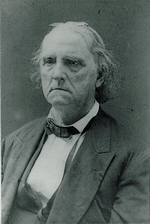
Gilbert Beebe addresses how God's sovereignty extends to controlling evil spirits without compromising His holiness, using 1 Samuel 8:10 (the evil spirit sent upon Saul) as a case study. He argues that God's omniscience, omnipotence, and immutability logically necessitate His providential governance over all beings and events—including Satan and demons—without these entities originating from or residing in God's pure nature, drawing parallels to how God sent lying spirits to Ahab's prophets and delusions to the lost. Beebe illustrates God's comprehensive control through creation analogies, concluding that denying divine sovereignty over evil would undermine the doctrines of God's foreknowledge and the certainty of His redemptive purposes in Christ.
What does the Bible say about God's control over evil spirits?
The Bible indicates that all spirits, including evil ones, are under God's control and serve His purposes.
1 Samuel 8:10, Romans 8:28
How do we know that God is omnipotent and controls all events?
Scriptural assertions confirm that God declares the end from the beginning and controls all events according to His will.
Isaiah 46:10, Acts 2:23
Why is the concept of God's sovereignty important for Christians?
God's sovereignty assures Christians of His ultimate control and purpose in their lives, providing comfort and security.
Romans 8:28, Psalm 115:3
Sister Blake, of South Carolina, desires our views on the passage referred to, which reads thus: "And it came to pass on the morrow, that the evil spirit from God came upon Saul, and he prophesied in the midst of the house," &c.
It seems to be a hard matter with many to comprehend how God can govern, restrain and direct the evil spirits which are abroad in the earth, without being in some way, or to some extent, associated in his nature with them. How an evil spirit from God could operate on a wicked king, unless that wicked spirit had first existed in the being of God, and had emanated from him.
Whatever difficulty we may have in comprehending the Scriptures of truth, two things are certain. First, that no portion of the divine record is the less true because of our want of capacity to understand it; and second, that God is a Spirit of infinite and eternal purity, that nothing impure or unholy ever did belong to his nature. Yet, with these two points fully conceded, no one can reasonably doubt that the sovereign government of God extends to all beings, all worlds and all events. We are compelled to believe that God’s providential government extends to the controlling of all things, or otherwise that his government is far more contracted than any of us are ready to admit. We ask, Upon what principle could he declare the end from the beginning, and from ancient times the things which are not yet developed, saying, My counsel shall stand, and I will do all my pleasure, if he did not hold in his hand the controlling power to govern and direct all things? We must confess that, to us, there is great consolation in the contemplation of the universal providential dominion of the Lord God Almighty. Were we compelled to believe that wicked men, evil spirits or devils, could possibly thwart his purpose, or devise or execute any purpose or plan without his knowledge, permission or decree, we should be unable to defend the doctrine of his omniscience. If it be admitted that God has a perfect knowledge of all that transpires in heaven, earth and hell, it must also be admitted that he always had that knowledge, as well before he created the world as at the present moment, or otherwise we must deny his immutability. If he is in possession of knowledge now that he did not always possess, that would involve a change; it therefore cannot be. Knowing all things then, by his omniscience, from everlasting, can any doubt that he had power to determine whether they should or should not transpire? To deny that he had that power, is to deny his omnipotence, it is to deny that he is truly the Almighty God. Can we, without impeaching his eternal wisdom, believe there is a single wheel in all the vast and complicated machinery of this world, or any other world, that he did not supply, or that fails to operate as he designed that it should? If so, may we not fear that all his purposes in Christ Jesus, of grace and salvation, may also fail? We may look at any piece of machinery that we do not understand, and mark the numerous wheels revolving, to our limited judgment in direct opposition to each other, it may look to the novice as though it must be destroyed as soon as it is set in motion. This only proves that we not understand the machine. Let us see it operate, and to our astonishment the design of the machinist is carried out perfectly, and we are instructed those parts of the whole, which look to us as though they could not work in harmony with the other parts are so essential to the whole, that the machine would be useless without them. What then? We marvel at the wisdom of the machinist. Even so we wonder, gaze and admire the supreme wisdom of God, who has displayed his handiwork in the creation of the world. But let us for a moment look at the complicated parts of this great and wonderful machinery of nature. Can any man comprehend it? Certainly not. What an endless variety of living creatures, from soaring angels near his throne, to groveling reptiles, crawling on the ground, and myriads of insects too minute in size for our perception. Which of them all could be withdrawn from the whole, without impairing the machine? The novice can perceive no use for all the little wheels and screws connected with the machine prepared by man, but let him remove any of them, and the whole is out of order. Which, then, permit us to inquire, of all the minute parts of the wonderful creation of God, ahs he supplied in vain? Two sparrows are sold for a farthing; can half a farthing’s worth of God’s creation be removed or withdrawn without impairing the whole? A lifetime of any one of us would scarcely afford opportunity to count the hairs upon our head; but can one of them fall to the ground or change from the precise position which infinite wisdom has assigned them? This question is already settled by him who made the world, and by whom all things were made that was made. When we contemplate the wonderful works of God in the creation of the world, when we consider the heavens, the workmanship of his hands, are we not constrained to exclaim with the enraptured psalmist, "Lord, what is man, that thou art mindful of him?"
Having briefly glanced at the wonderful works of God in creation, let us now inquire, Is it rational for us to conclude that do is less wise or provident in governing than he was in creating? He has told us that for his pleasure all things were and are created. Is his pleasure then of so little consequence to him that he would allow causes uncontrolled by him to effect he end and design he had in its creation? Will any dare to say that men or devils have power to prevent ends which God designed, or cause that his pleasure shall not be done in heaven above and among the inhabitants of the earth? Shall we not rather say with the sublime poet,
"Chained to his throne a volume lies,
With all the fates of men;
With every angel’s form and size,
Drawn by the eternal pen.
His providence unfolds the book,
And makes his counsel shine;
Each opening leaf and every stroke,
Fulfills some deep design."
To return to the inquiry of sister Blake: Saul was a king, and God claims the power and the right to turn the hearts of kings as the rivers of water are turned, and thus he dealt with Saul, with Pharaoh, with Cyrus and Nebuchadnezzar, and thus he deals with all kings and with all the other powers of the earth. In the case of Saul, none can dispute that God’s design was to supersede him in the government of Israel, and to raise up David to the throne in is stead; and as in all his providential dealings with the children of men, so in this case, his footsteps are in the great deep, and his ways are past finding out. He controlled the peace or the agitation of the mind of Saul, giving him at times peace and tranquillity, and then anon he sends an evil spirit to trouble him. God could not be baffled in any of his designs or acts; all that he designed, and all that he did, had its effect just as he designed, and eventually the grand design was accomplished, and David was exalted, and Saul abased.
Whether by the evil spirit, we are to understand, a devil, or a spirit of depression, trouble, confusion or madness, we will not attempt to define; but to our mind it is clear that all spirits, good and bad, are under the control of God. He sends them where he pleases, and never fails to accomplish the very purpose for which he sends them. He commissioned a lying spirit to go and be a lying spirit in the mouths of all of Ahab’s prophets. He sends strong delusions to them which perish, that they may believe a lie, that they all may be damned who receive not the love of the truth that they may be saved. His complete control over evil spirits was very clearly exemplified by our Lord when he commanded them to come out of the man that raved among the tombs, and sent them, at their request, into an herd of swine; and in many other instances which are recorded in the New Testament. But that they are subject to his government, and go where he sends them, no more proves that they had their original existence in the purity of his divine nature, than the fiery serpents which he sent into the camp of Israel were partakers of the divine nature. David speaks of his enemies, as the Lord’s hand, and his sword, and he makes use of them to chastise the wicked. So he made use of them to bring about his purpose in the case of Joseph, and so also in the crucifixion of our Lord Jesus Christ. They came together for to do whatsoever his hand and his counsel before determined to be done. And him being delivered up by the determinate counsel and foreknowledge of God, they crucified with wicked hands.
In conclusion, permit us to say, these views of the universal government of God, over all beings and all events, afford the greatest assurance of safety to the saints who put their trust alone in God. It is their unspeakable privilege to know that he has all power, that all principalities and powers, thrones and dominions, things visible and invisible, things present or to come, all are subject to his decrees, and are all bound by an irrevocable decree to work together for good to them that love God, to them who are the called according to his purpose. Let us then rejoice while we sing,
"Life, death and hell, and worlds unknown
Hang on his firm decree;
He sits on no precarious throne,
Nor borrows leave to be."
If any child of God feels alarmed at the doctrine of God’s unlimited government and universal providence, let such ask themselves how much less power they would wish for him to possess, than we have attempted to ascribe to him. Would he appear any more glorious to any heaven- born child, were he less omniscient, omnipotent, or immutable? Would it contribute to their sense of his greatness, goodness or majesty, if it could be proved that devils and wicked men were beyond his controlling power, and able to thwart his purposes, or act independent of him? However this subject may appear to others, we confess that to us there is something inexpressibly consoling the faith and assurance that
"Death and hell can do no more,
Than what our Father please."
Middletown, N.Y., October 15, 1856
Elder Gilbert Beebe

Comments
Your comment has been submitted and is awaiting moderation. Once approved, it will appear on this page.
Be the first to comment!