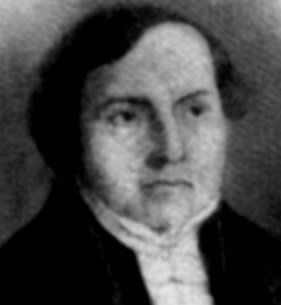
In "Adversity No Evidence of Providential Disapprobation," Alexander Carson addresses the theological doctrine surrounding divine providence and the misinterpretation of success and failure as indicators of God's approval or disapproval. He argues that while success can be a sign of God’s providence, it should not be considered an absolute measure of truth. Carson supports his claims with Scriptural examples, including the crucifixion of Christ, where outward failure led to the ultimate victory over sin and death, demonstrating that God's plans transcend immediate circumstances. He emphasizes that Christians should base their understanding of truth solely on Scripture rather than worldly success, which can mislead believers into false conclusions about divine endorsement. This has significant implications for how believers engage with and interpret the challenges of their faith in a worldly context.
Key Quotes
“Success of itself cannot prove any cause to be of God yet success in certain circumstances may prove this as convincingly as demonstration.”
“Men are still proceeding in error on the same principle and truth and error are estimated by the census.”
“Christianity may be true though at some times and in some places it may fail of success.”
“Let not the Christian doubt that God will look to his own cause.”
What does the Bible say about success and failure in relation to God's approval?
The Bible teaches that success is not always indicative of God's approval, as temporary triumphs of error can occur for divine purposes.
John 16:33, 2 Corinthians 4:8-9
How do we know the gospel is true despite its opposition?
The success of the gospel amidst opposition serves as evidence of its truth, grounded in the nature of its message and purpose.
Romans 1:16, 1 Corinthians 1:18
Why is understanding God's providence important for Christians?
Understanding God's providence reassures Christians that He sovereignly governs all things, including their trials and triumphs.
Romans 8:28, Ephesians 1:11
Success is usually interpreted as the divine approbation of any cause. The bulk of mankind are affected with this kind of evidence more than with any other. It is obvious, then, that there must be some point of view in which the argument is good. The argument is to be approved, as being honourable to God, and an acknowledgment of his particular Providence, as well as that he is the author of truth. These are two grand fundamental points which deserve entire approbation. But when it is inferred, that because God directs all things, and is the author of truth, therefore success must always be the test of truth, the conclusion is not warranted. It is possible that, in the sovereign wisdom of God, it may be for his glory to give a temporary triumph to error; success, therefore, is not a test of truth. And that God actually in his Providence proceeds on this principle, the Scriptures leave us no room to doubt. But in certain circumstances the argument is good. Though success of itself cannot prove any cause to be of God, yet success in certain circumstances may prove this as convincingly as demonstration. The success of the gospel is proof of the truth of the gospel, not from the evidence of simple success, but from that success in connexion with the nature of the gospel, and with the opposition which it is calculated every where to provoke, and which, as a matter of fact, every where it met. In this light, we contend that the success of the gospel is proof of the gospel; while we deny that the success of Mahomet is proof of his doctrine, or the success of antichristian apostacy is evidence that it is of God.
As men are prone to interpret simple success as proof of divine approbation, so they are equally prone to consider failure as indicative of the disapprobation of Providence. But as God, in his sovereign wisdom, may give a temporary triumph to error, so may he give temporary failure to truth. The advocate of error may be hailed by the cheering voices of the people, while the advocate of truth may be put to death, or afflicted. The Jews now triumphed when they had Christ on the cross; but it was on the cross that he defeated the powers of darkness, and all the enemies of his people. They thought that if God was on his side, he could not suffer him to be crucified. In their opinion, God had determined the controversy between them and Jesus in their favour. Men are still proceeding in error on the same principle; and truth and error are estimated by the census. Every party is prone to rely on its success as evidence of the divine approbation. Whereas success can be evidence of truth, only when the nature of the thing is considered in relation to the people with whom it is successful, and the means employed in its support. Christianity may be true, though at some times, and in some places, it may fail of success. Socialism may be false, though it should spread for a time over the world. Has not idolatry spread over the world? A French Atheist thought, as by a demonstration, to settle the question with respect to the existence of God, by appealing to his own life. He considered it proof that there is no God, because he did not destroy him who denied him. Some atheistic Socialists, we are told, have made the same appeal, and has challenged God, if he exists, to destroy them. And if God were such a one as themselves, he would be provoked to destroy them at the moment. But he is wise, and is not in haste. His enemies cannot fly and escape from him; and he has eternity before them for their punishment. They will find it will reach them time enough. It would not suit the purposes of God to cut off by visible judgment all his enemies. In that case they would be deterred from manifesting the wickedness that is in their hearts, while they would continue equally his enemies. By giving them a stage and free scope to exhibit themselves, the guilt of human nature is practically proved.
Let not the Christian doubt, that God will look to his own cause. But let him ground his belief of all revealed truth on the word of God. The cause of God, no doubt, will in all things ultimately triumph; but God may give Satan a temporary victory, and suffer him to trample on his cause and on his people. Success, when men use nothing but means appointed by God, without any mixture of their own wisdom, is evidence of the cause of God. But the friends of truth, like their Master, may suffer shame, and loss, and death.

Comments
Your comment has been submitted and is awaiting moderation. Once approved, it will appear on this page.
Be the first to comment!