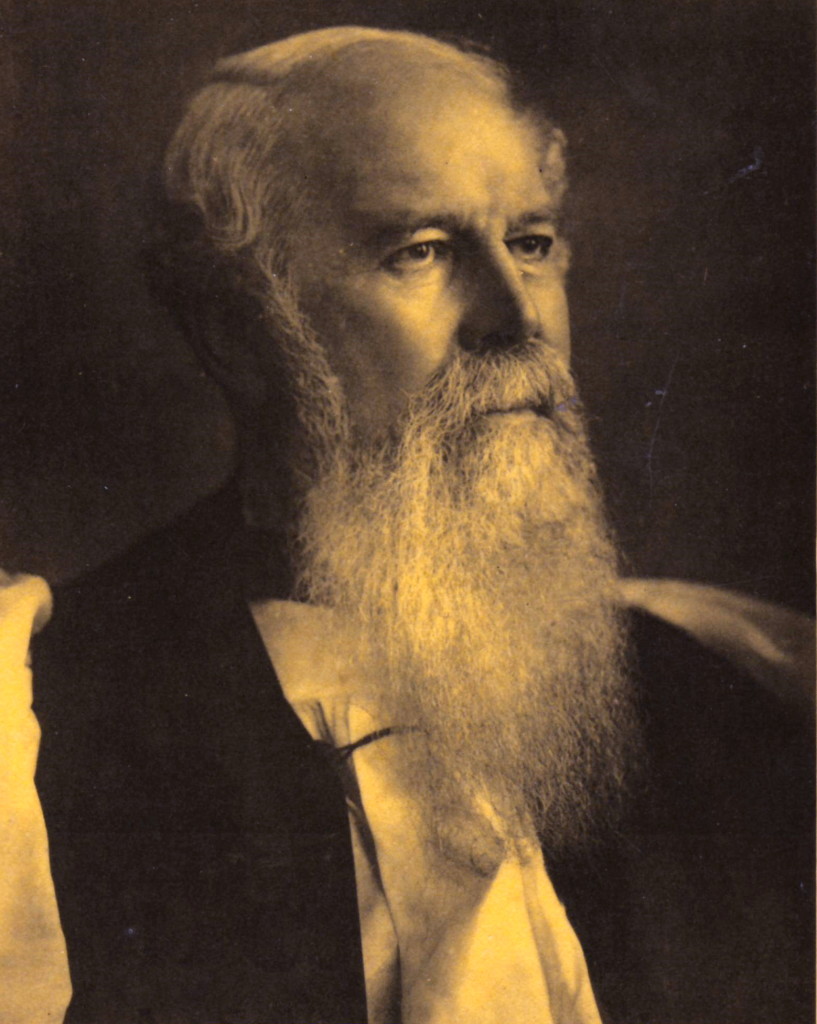
In J.C. Ryle's "Expository Thoughts on Luke 8:1-3," the main theological topic is the diligence of Christ in His ministry and the consequent call for believers to engage in active service. Ryle emphasizes Christ's unwavering commitment to preaching the Gospel despite widespread unbelief, illustrating this through references to 1 John 2:6, which exhorts believers to walk as Christ walked. The article highlights the transformative grace of God evidenced in the women who followed Jesus, serving as models of faithfulness and perseverance amidst societal challenges. This doctrinal exposition serves as both a motivation for personal evangelism and a reminder of the privilege and responsibility Christians have to minister to others in their times on earth, underscoring the eternal significance of faithful service in the light of impending judgment (Matthew 25:42).
Key Quotes
“Let the diligence of Christ be an example to all Christians... Like Him let us labor to do good in our day and generation and to leave the world a better world than we found it.”
“Great indeed is the power of the grace of God... With Christ nothing is impossible.”
“True love will count it a pleasure to give anything to the object loved.”
“While we live we are all upon our trial... Our lives are continually showing whose we are and whom we serve.”
What does the Bible say about the diligence of Christ?
The Bible depicts Christ as unwearied in doing good, constantly engaged in preaching the good news of the kingdom of God.
1 John 2:6
Why is the grace of God important for Christians?
The grace of God empowers believers, enabling them to faithfully follow Christ and endure trials.
How do we know the importance of ministering to Christ?
Ministering to Christ demonstrates true love and commitment, essential for genuine faith.
Matthew 25:42
Let us mark, in these verses, our Lord Jesus Christ's unwearied diligence in doing good. We read that "He went throughout every city and village, preaching and proclaiming the good news of the kingdom of God." We know the reception that He met with in many places. We know that while some believed, many believed not. But man's unbelief did not move our Lord, or hinder His working. He was always "about His Father's business." Short as His earthly ministry was in point of duration, it was long when we consider the work that it comprised.
Let the diligence of Christ be an example to all Christians. Let us follow in His steps, however far we may come short of His perfection. Like Him, let us labor to do good in our day and generation, and to leave the world a better world than we found it. It is not for nothing that the Scripture says expressly—"He that abides in him ought himself also so to walk even as he walked." (1 John 2:6.)
Time is undoubtedly short. But much is to be done with time, if it is well economized and properly arranged. Few have an idea how much can be done in twelve hours, if men will stick to their business and avoid idleness and frivolity. Then let us, like our Lord, be diligent, and "redeem the time."
Time is undoubtedly short. But it is the only season in which Christians can do any active work of mercy. In the world to come there will be no ignorant to instruct, no mourners to comfort, no spiritual darkness to enlighten, no distress to relieve, no sorrow to make less. Whatever work we do of this kind must be done on this side of the grave. Let us awake to a sense of our individual responsibility. Souls are perishing, and time is flying! Let us resolve, by God's grace, to do something for God's glory before we die. Once more let us remember our Lord's example, and, like Him, be diligent and "redeem the time."
Let us mark, secondly, in these verses, the power of the grace of God, and the constraining influence of the love of Christ. We read that among those who followed our Lord in his journeyings, were "certain women who had been healed of evil spirits and infirmities."
We can well imagine that the difficulties these holy women had to face in becoming Christ's disciples were neither few nor small. They had their full share of the contempt and scorn which was poured on all followers of Jesus by the Scribes and Pharisees. They had, besides, many a trial from the hard speeches and hard usage which any Jewish woman who thought for herself about religion would probably have to undergo. But none of these things moved them. Grateful for mercies received at our Lord's hands, they were willing to endure much for His sake. Strengthened inwardly, by the renewing power of the Holy Spirit, they were enabled to cleave to Jesus and not give way. And nobly they did cleave to Him to the very end!
It was not a woman who sold the Lord for thirty pieces of silver. They were not women who forsook the Lord in the garden and fled. It was not a woman who denied Him three times in the high priest's house. But they were women who wailed and lamented when Jesus was led forth to be crucified. They were women who stood to the last by the cross. And they were women who were first to visit the grave "where the Lord lay." Great indeed is the power of the grace of God!
Let the recollection of these women encourage all the daughters of Adam who read of them, to take up the cross and to follow Christ. Let no sense of weakness, or fear of falling away, keep them back from a decided profession of religion. The mother of a large family, with limited means, may tell us that she has no time for religion. The wife of an ungodly husband may tell us that she dares not take up religion. The young daughter of worldly parents may tell us that it is impossible for her to have any religion. The maid-servant in the midst of unconverted companions, may tell us that in her place a person cannot follow religion.
But they are all wrong, quite wrong. With Christ nothing is impossible. Let them think again, and change their minds. Let them begin boldly in the strength of Christ, and trust Him for the consequences. The Lord Jesus never changes. He who enabled "many women" to serve Him faithfully while He was on earth, can enable women to serve Him, glorify Him, and be His disciples at the present day.
Let us mark lastly, in these verses, the peculiar privilege which our Lord grants to His faithful followers. We read that those who accompanied Him in His journeyings, "ministered to him of their substance." Of course He needed not their help. "All the beasts of the forest were his, and the cattle upon a thousand hills." (Psalm 50:10.) That mighty Savior who could multiply a few loaves and fish into food for thousands, could have called forth food from the earth for His own sustenance, if He had thought fit. But He did not do so, for two reasons.
One reason was, that He would show us that He was man like ourselves in all things, sin only excepted, and that He lived the life of faith in His Father's providence. The other reason was, that by allowing His followers to minister to Him, He might prove their love, and test their regard for Himself. True love will count it a pleasure to give anything to the object loved. False love will often talk and profess much, but do and give nothing at all.
This matter of "ministering to Christ" opens up a most important train of thought, and one which we shall do well to consider. The Lord Jesus Christ is continually providing His Church at the present day. No doubt it would be easy for Him to convert the Chinese or Hindoos in a moment, and to call grace into being with a word, as He created light on the first day of this world's existence. But He does not do so. He is pleased to work by means. He condescends to use the agency of missionaries, and the foolishness of man's preaching, in order to spread His Gospel. And by so doing, He is continually proving the faith and zeal of the churches. He lets Christians be fellow workers with Him, that He may prove who has a will to "minister" and who has none. He lets the spread of the Gospel be carried on by subscriptions, contributions, and religious Societies, that He may prove who are the covetous and unbelieving, and who are the truly "rich towards God." In short, the visible Church of Christ may be divided into two great parties, those who "minister" to Christ, and those who do not.
May we all remember this great truth and prove our own selves! While we live we are all upon our trial. Our lives are continually showing whose we are, and whom we serve, whether we love Christ or whether we love the world.
Happy are they who know something of "ministering to Christ of their substance!" It is a thing which can still be done, though we do not see Him with our eyes. Those words which describe the proceedings of the Judgment day are very solemn, "I was an hungry and you gave me no food, I was thirsty and you gave me no drink." (Matt. 25:42.)

Comments
Your comment has been submitted and is awaiting moderation. Once approved, it will appear on this page.
Be the first to comment!