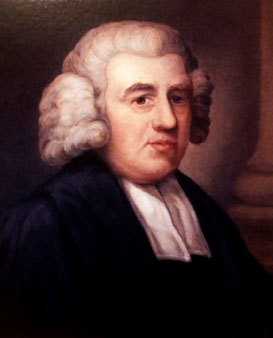
John Newton's article "Our Life Is a Warfare" delves into the theological doctrine of the Christian life as a spiritual battle against sin and the flesh. Newton argues that Christians are engaged in a "good warfare" under the leadership of Christ, who ensures victory and promises an eternal reward (a crown of life). He references Scripture, notably Galatians 5:17, to illustrate the internal conflict between the sinful nature and the indwelling Holy Spirit, highlighting how grace combats sin. The significance of this warfare is both practical and doctrinal, reminding believers of their dependence on Christ for strength and victory, while also cautioning against complacency in spiritual growth and self-sufficiency.
Key Quotes
“Our life is a warfare... the Apostle calls it a good warfare.”
“One glance of Jesus will convey more effectual assistance than poring upon our own hearts for a month.”
“As grace resists sin so sin resists grace.”
“Grace shall prevail. The evil nature is already enervated and before long it shall die the death.”
What does the Bible say about spiritual warfare?
The Bible describes our life as a warfare, emphasizing the struggle against sin and spiritual enemies.
Furthermore, the Apostle Paul describes the internal conflict every believer faces in Galatians 5:17. Here, he details the struggle between our sinful nature and the Spirit, outlining a personal warfare that is intrinsic to our faith journey. While we encounter wounds in these conflicts, we are also provided with the means of healing through Christ, who directs our focus upwards, enabling us to overcome these challenges effectively. The essence of this warfare lies not only in the struggle against external forces but also in understanding and addressing our indwelling sin, which remains a continual source of conflict in this spiritual battle.
1 Timothy 1:18, 2 Timothy 4:7-8, Galatians 5:17
How do we know that God's grace is sufficient in our struggles?
God's grace is sufficient because it empowers us to overcome our weaknesses and spiritual battles.
Additionally, Scripture affirms that grace actively works against sin within us. Romans 5:20 states that where sin abounds, grace abounds all the more. This illustrates that even in our most significant struggles, God's grace is not only sufficient but abundant. Through the indwelling of the Holy Spirit, we find that grace resists sin and empowers us to pursue holiness. Thus, our battles serve to showcase God’s power working through our weaknesses, leading us to triumph and conformity to Christ's image.
2 Corinthians 12:9, Romans 5:20
Why is understanding the nature of sin important for Christians?
Understanding the nature of sin is crucial for recognizing our need for God's grace and growth in holiness.
Moreover, understanding sin's pervasive influence encourages believers to pursue greater dependence on God's grace. This dialectical relationship between grace and sin reminds us that our victory comes not from our abilities but from our reliance on Christ. By grasping the gravity of sin, we learn to approach our flaws with humility and a desire for repentance, recognizing our need for ongoing sanctification. Therefore, an honest appraisal of sin allows us to cultivate spiritual maturity and a deeper dependence on our Savior, leading to increased holiness and conformity to His image.
Romans 7:18
March, 1779.
Dear Madam,
Our experiences pretty much tally. They may be drawn out into books—but the sum total may be comprised in a short sentence; "Our life is a warfare." For our encouragement, the Apostle calls it a good warfare. We are engaged in a good cause, fight under a good Captain, the victory is sure beforehand, and the prize is a crown—a crown of eternal life. Such considerations might make even a coward bold. But then we must be content to fight; and, considering the nature, number, situation, and subtlety of our enemies, we may expect sometimes to receive a wound. But there is a medicinal tree, the leaves of which are always at hand to heal us.
We cannot be too attentive to the evil which is always working in us, or to the stratagems which are employed against us; yet our attention should not be wholly confined to these things. We are to look upwards likewise to him, who is our head, our life, our strength. One glance of Jesus will convey more effectual assistance—than poring upon our own hearts for a month! The one is to be done—but the other should upon no account be omitted. It was not by counting their wounds—but by beholding the brazen serpent, the Lord's instituted means of cure—that the Israelites were healed. That was an emblem for our instruction.
One great cause of our frequent conflicts is, that we have a secret desire to be rich—and it is the Lord's design to make us poor. We want to gain an ability of doing something—and He suits his dispensations, to convince us that we can do nothing. We want a stock of power in ourselves—and He would have us absolutely dependent upon Him. So far as we are content to be weak—that His power may be magnified in us—so far we shall make our enemies know that we are strong, though we ourselves shall never be directly sensible that we are so. Only by comparing what we are, with the opposition we stand against—we may come to a comfortable conclusion, that the Lord works mightily in us. Psa. 41:11.
If our views are simple, and our desires towards the Lord—it may be of use to consider some of your faults and mine, not as the faults of you and me in particular—but as the fault of that depraved nature, which is common with us to all the Lord's people, and which made Paul groan as feelingly and as heartily as we can do. But this consideration, though true and Scriptural, can only be safely applied when the mind is sincerely and in good earnest devoted to the Lord. There are too many unsound and half-professors, who eagerly catch at it, as an excuse for those evils they are unwilling to part with. But I trust I may safely recommend it to you.
This evil nature, this indwelling sin, is a living principle, an active, powerful cause; and a cause that is active will necessarily produce an effect. Sin is the same thing in believers as in the unregenerate; they have, indeed, a contrary principle of grace, which counteracts and resists it, which can prevent its out breaking—but will not suppress its rising. As grace resists sin, so sin resists grace, "For the sinful nature desires what is contrary to the Spirit, and the Spirit what is contrary to the sinful nature. They are in conflict with each other, so that you do not do what you want." Gal. 5:17. The proper tendency of each is mutually weakened on both sides; and between the two, the poor believer, however blameless and exemplary in the sight of men, appears in his own view the most inconsistent character under the sun! He can hardly think it is so with others, and judging of them by what he sees, and of himself by what he feels—in humility he esteems others better than himself.
This is the warfare. But it shall not always be so. Grace shall prevail. The evil nature is already enervated, and before long it shall die the death. Jesus will make us more than conquerors!

Comments
Your comment has been submitted and is awaiting moderation. Once approved, it will appear on this page.
Be the first to comment!