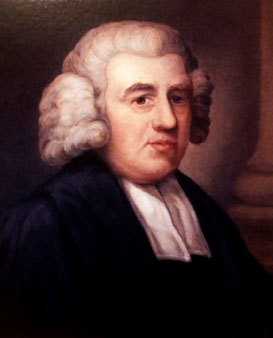
In "The Heavenly Builder," John Newton addresses the doctrine of God's sovereignty in the believer's sanctification and the assurance of His promises. He emphasizes that believers often lean too heavily on tangible comforts instead of relying wholly on God's grace and power. Newton draws extensively from Philippians 1:6 to illustrate that God, as the "heavenly Builder," initiates and completes the good work within believers, despite their shortcomings and failures. The significance of the article lies in its message that believers must remain humble and patient, trusting in God's faithfulness to carry out His plans, even when progress seems invisible or slow.
Key Quotes
“A good hope springs from such a sense of our needs and such a persuasion of his power and grace—as engages the heart to venture upon the warrant of his promises.”
“It is our part to be abased before him and quietly to hope and wait for his salvation in the use of his appointed means.”
“Nothing can disappoint the heavenly Builder nor will he ever be reproached with forsaking the work of his own hands.”
“Let us therefore be thankful for beginnings and patiently wait the outcome.”
What does the Bible say about God's grace and our dependence on Him?
The Bible emphasizes that our hope and salvation depend entirely on God's grace, not on our own efforts.
Ephesians 2:8, Philippians 1:6
How do we know that God will complete His work in us?
We know God will complete His work in us based on His promises in Scripture, specifically Philippians 1:6.
Philippians 1:6
Why is patience important for Christians in their spiritual journey?
Patience allows Christians to wait for God's timing and trust in His faithful work in their lives.
James 1:2-4, Romans 8:28
November 11, 1775.
My dear Miss M,
Our last visit was very pleasant to myself; if anything that passed was of service to you, we know to whom the thanks are due; for we can neither communicate nor receive anything—but so far as he is pleased to enable us. One reason why he often disappoints us—is that we may learn to depend on him alone. We are prone, as you observe, to rest too much upon sensible comforts—yet they are very desirable, only as to the measure and seasons. It is well to be submissive to his will; to be thankful for them when we have them, and humbly waiting for them when we have them not. They are not, however, the proper ground of our hope; a good hope springs from such a sense of our needs, and such a persuasion of his power and grace—as engages the heart to venture, upon the warrant of his promises, to trust in him for salvation.
In a sense, we are often hindering him by our impatience and unbelief. But, strictly speaking, when he really begins the good work, and gives us a desire which will be satisfied with nothing short of himself—he will not be hindered from carrying it on; for he has said, I will work, and none shall hinder it. Ah! had it depended upon myself, upon my wisdom or faithfulness, I would have hindered him, and ruined myself long ago! How often have I grieved and resisted his Spirit! But hereby I have learned more of his patience and tenderness, than I could otherwise have known.
He knows our frame, and what effects our evil nature, fermented by the artifices of Satan, will have; he sees us from first to last. A thousand evils arise in our hearts, a thousand wrongnesses in our conduct, which, as they do arise, are new to ourselves, and perhaps at some times we are ready to think we were incapable of such things; but none of them are new to him, to whom past, present, and future are the same. The foresight of them did not prevent his calling us by his grace. Though he knew we were vile, and would prove ungrateful and unfaithful—yet he would be found of us; he would knock at the door of our hearts, and gain himself an entrance. Nor shall they prevent his accomplishing his gracious purpose. It is our part to be abased before him, and quietly to hope and wait for his salvation in the use of his appointed means. The power, success, and blessing—are wholly from himself.
To make us more sensible of this, he often withdraws from our perceptions; and as, in the absence of the sun, the wild beasts of the forest roam abroad; so, when Jesus hides himself, we presently perceive what is in our hearts, and what a poor shift we can make without him. When he returns, his light chases the evils away, and we are well again.
It is your great and singular mercy, my dear Miss, that he has taught you to seek him so early in life. You have entered in the way of salvation—but you must not expect all at once. The work of grace is compared to the corn, and to a building; the growth of the one, and the carrying forward of the other, are gradual. In a building, for instance, if it is large, there is much to be done in preparing and laying the foundation, before the walls appear above ground; much is doing within, when the work does not seem perhaps to advance without; and when it is considerably forward—yet, being encumbered with scaffolds and rubbish—a bystander sees it at a great disadvantage, and can form but an imperfect judgment of it. But all this while the architect himself, even from the laying of the first stone, conceives of it according to the plan and design he has formed; he prepares and adjusts the materials, disposing each in its proper time and place—and views it, in idea, as already finished. In due season it is completed—but not in a day. The top-stone is fixed, and then, the scaffolds and rubbish being removed—it appears to others as he intended it should be.
Men, indeed, often plan what, for want of skill or ability, or from unforeseen disappointments, they are unable to execute. But nothing can disappoint the heavenly Builder; nor will he ever be reproached with forsaking the work of his own hands, or beginning that which he could not or would not accomplish; Phi. 1:6. Let us therefore be thankful for beginnings, and patiently wait the outcome. His enemies strive to retard the work, as they did when the Jews, by his order, set about rebuilding the Temple. Yet it was finished, in defiance of them all.

Comments
Your comment has been submitted and is awaiting moderation. Once approved, it will appear on this page.
Be the first to comment!