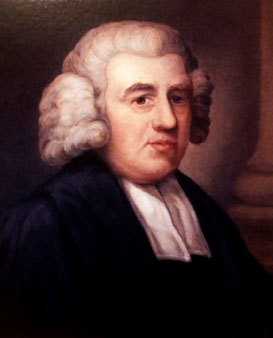
John Newton's article "Combating Worldliness" addresses the theological issue of maintaining a heart devoted to God in a world filled with distractions and temptations. Newton argues that while individuals possess knowledge of godly practices, the true impediment lies in the sinful inclinations of the heart which resist faithfulness to God. He supports his points with Scripture, particularly referencing Psalm 119:9 to underscore that obedience to God's Word is crucial for purity and spiritual integrity. The article emphasizes the practical significance of humility, prayer, and attentiveness to Scripture as means to combat worldliness, ultimately highlighting that reliance on God's providence and continual self-awareness are essential for true godly living.
Key Quotes
“I could only attempt to answer it from the Bible which lies open to you likewise.”
“It must be as I said from a real and sensible conviction of our weakness and vileness which we cannot learn... merely from books or preachers.”
“The precepts of the Word are our rule and delight; the promises our strength and encouragement.”
“There is none who teaches like him.”
What does the Bible say about combating worldliness?
The Bible emphasizes the importance of staying close to God to resist worldly temptations, specifically through prayer, scripture, and self-reflection.
Newton also highlights the necessity of humility in maintaining this commitment. Recognizing one's inherent weakness encourages dependence on God's strength. Prayer is foundational, as believers should petition for humility, understanding that it guards other graces. Finally, recollecting past temptations can help one prepare for the trials of the day, reinforcing the need for vigilance in faith and practice.
How do we know that prayer is essential for Christians?
Prayer is essential as it cultivates humility and dependence on God, guarding and nurturing spiritual growth.
Newton emphasizes that praying for humility is particularly crucial, as it is the soil from which all other graces grow. Without such humility, believers may become self-sufficient and vain, exposing themselves to spiritual danger. Regular prayer fosters a continual awareness of one’s weakness and reliance on God’s sustaining grace, making it indispensable in the Christian life.
Why is studying the Scripture important for Christians?
Studying Scripture provides guidance, strength, and encouragement for Christians to resist worldly temptations.
Newton underscores the importance of both learning from the lives of the saints and understanding the overarching narrative of Gospel salvation. These stories not only provide encouragement but serve as warnings against potential pitfalls. As believers grow in their understanding of the Gospel, the transient allure of worldly distractions will diminish, revealing their empty nature in the light of God’s truth.
October 3, 1778.
Dear Madam,
You would have me tell you what are the best means to be used by a young person, to prevent the world, with all its seductive and insnaring scenes, from drawing the heart aside from God. It is an important question; but I apprehend your own heart will tell you, that you are already possessed of all the information concerning it which you can well expect from me. I could only attempt to answer it from the Bible, which lies open to you likewise.
If your heart is like mine, it must confess, that when it turns aside from God it is seldom through ignorance of the proper means or motives which should have kept us near him—but rather from an evil principle within, which prevails against our better judgment, and renders us unfaithful to light already received.
I could offer you rules, cautions, and advises in abundance; for I find it comparatively easy to preach to others. But if you should farther ask me, how you shall effectually reduce them to practice; I feel that I am so deficient, and so much at a loss in this matter myself, that I know not well what to say to you. Yet something must be said.
In the first place, then, I would observe, that though it is our bounded duty, and the highest privilege we can propose to ourselves, to have our hearts kept close to the Lord; yet we must not expect it absolutely or perfectly, much less all at once. We shall keep close to him in proportion as we are solidly convinced of the infinite disparity between him and the things which would presume to stand in competition with him, and the folly, as well as ingratitude, of departing from him. But these points are only to be learned by experience, and by smarting under a series of painful disappointments in our expectations from creatures. Our judgments may be quickly satisfied that his favor is better than life, while yet it is in the power of a mere trifle to turn us aside.
The Lord permits us to feel our weakness, that we may be sensible of it; for though we are ready in words to confess that we are weak, we do not so properly know it, until that secret, though unallowed, dependence we have upon some strength in ourselves is brought to the trial, and fails us. To be humble, and, like a little child, afraid of taking a step alone, and so conscious of snares and dangers around us, as to cry to him continually to hold us up that we may be safe—is the sure, the infallible, the only secret of walking closely with him.
But how shall we attain this humble frame of spirit? It must be, as I said, from a real and sensible conviction of our weakness and vileness, which we cannot learn (at least I have not been able to learn it) merely from books or preachers. The providence of God concurs with his Holy Spirit in his merciful design of making us acquainted with ourselves. It is indeed a great mercy to be preserved from such declensions as might fall under the notice of our fellow-creatures; but when they can observe nothing of consequence to object to us, things may be far from right with us, in the sight of Him who judges not only actions—but the thoughts and first motions of the heart. And indeed could we for a season so cleave to God as to find little or nothing in ourselves to be ashamed of, we are such poor creatures, that we should presently grow vain and self-sufficient, and expose ourselves to the greatest danger of falling.
There are, however, means to be observed on our part; and though you know them, I will repeat the principal, because you desire me. The first is Prayer; and here, above all things, we should pray for humility. It may be called both the guard of all other graces, and the soil in which they grow.
The second, Attention to the Scripture. Your question is directly answered in Psa. 119:9, "How can a young person stay pure? By obeying your word and following its rules." The precepts of the Word are our rule and delight the promises our strength and encouragement. The good recorded of the saints is proposed for our encouragement; their miscarriages are as land-marks set up to warn us of the rocks and shoals which lie in the way of our passage.
The study of the whole scheme of Gospel salvation, respecting the person, life, doctrine, death, and glory of our Redeemer, is appointed to form our souls to a spiritual and divine taste. And so far as this prevails and grows in us, the trifles which would draw us from the Lord, will lose their influence, and appear, divested of the glare with which they strike the senses—as mere vanity and emptiness.
The third grand means is, Consideration or Recollection; a careful regard to those temptations and snares, to which, from our tempers, situations, or connections, we are more immediately exposed, and by which we have been formerly hindered. It may be well in the morning, before we leave our chambers, to forecast, as far as we are able, the probable circumstances of the day before us. Yet the observance of this, as well as of every rule that can be offered, may dwindle into a mere form. However, I trust the Lord, who has given you a desire to live to him, will be your guard and teacher. There is none who teaches like him.

Comments
Your comment has been submitted and is awaiting moderation. Once approved, it will appear on this page.
Be the first to comment!