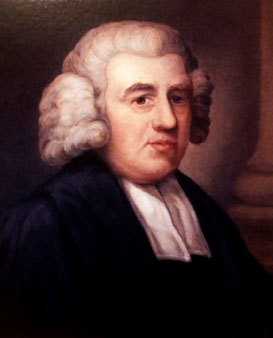
John Newton's article "Theological Systems" explores the complexities of doctrinal belief within the Christian faith, emphasizing the need for candor and humility when engaging with differing theological systems. Newton articulates that while he has been shaped by respected theological voices, he ultimately seeks to ground his convictions in Scripture above human authority. He mentions key biblical passages such as Galatians 6:1 and Galatians 2:5 to highlight the importance of meekness in truth advocacy and the steadfastness one should maintain in essential doctrines. The significance of this discussion rests in the call for unity and patience among Christians, as well as the courage to uphold the central tenets of the faith against a backdrop of doctrinal disagreement.
Key Quotes
“He is a debtor to the mercy of God and lives upon his multiplied forgiveness.”
“Toleration is a Christian grace. It differs much from that tame unfeeling neutrality between truth and error which is so prevalent in this present day.”
“He dares not handle the Word of God deceitfully... He disdains the thought.”
“The one principle which he assumes for granted and which he is certain cannot be disproved is That the Bible is a revelation from God.”
What does the Bible say about toleration?
The Bible presents toleration as a Christian grace, urging believers to maintain meekness and gentleness towards others while upholding the truth.
Jesus taught His disciples to bear with one another's imperfections and errors, highlighting the importance of mutual understanding and compassion within the body of Christ. In the face of differing opinions, it is vital to approach others with tender-heartedness, remembering our own fallibility. This disposition helps mitigate division and fosters a healthy environment for discussion, where the truth of the Gospel can be shared in love, without fear of contention. Indeed, the goal is not merely tolerance but a gracious acceptance that allows for differences while striving towards a common understanding of God’s truth.
Galatians 6:1, 2 Corinthians 4:2, Ephesians 4:21
How do we know that the Bible is a revelation from God?
The Bible is known to be a revelation from God through its divine origin, transformative power, and the historical fulfillment of its prophecies.
Additionally, the fulfillment of prophecies contained in Scripture serves as a testament to its divine authorship. Specific predictions, such as the coming of the Messiah, which were realized in the person of Jesus Christ, strengthen the argument for the Bible’s revelation. As believers, we are invited to evaluate the Bible's claims and judge them against our own experiences and understanding. Ultimately, the conviction that the Bible is a revelatory text leads to accountability before God and shapes our understanding of His will for our lives.
1 Corinthians 4:3
Why is it important for Christians to hold to the doctrines of grace?
Holding to the doctrines of grace is essential for Christians as it affirms God’s sovereignty, grace, and the believer's reliance on Christ alone for salvation.
Understanding these doctrines fosters a profound sense of gratitude in believers, as they recognize their dependence on God’s mercy. It emphasizes that God alone is the initiator of salvation, ensuring that no one can boast in their own righteousness. Furthermore, the assurance that one's salvation is secure in Christ encourages Christians to live out their faith with boldness and assurance. By holding fast to these doctrines, believers can withstand trials and challenges, confident in God's promises and the complete sufficiency of Christ's work on their behalf.
Ephesians 1:4-5, Romans 8:28-30
John Newton, 1786
(From the preface of his fifty expository discourses on the MESSIAH)
From those Readers, whose habits of thinking on religious subjects, are formed by a close attachment to particular systems of divinity, the Author requests a candid construction of what he advances, if he ventures, in some instances, to deviate a little from the more beaten track. If he is, sometimes, constrained to differ from the judgment of wise and good men, who have deserved well of the Church of God, he would do it modestly. Far from depreciating their labors, he would be thankful for the benefit which he hopes he has received from them. It is a great satisfaction to him, that in all doctrinal points of primary importance, his views are confirmed by the suffrage of writers and ministers eminent for genuine piety, and found learning; who assisted him in his early enquiries after truth, and at whose feet he is still willing to sit. And yet, remembering that he is authorized and commanded to call no man master, so as to yield an implicit and unqualified submission to human teachers; while he gladly borrows every help he can, from others, he ventures, likewise, to think for himself.
His leading sentiments concerning the grand peculiarities of the Gospel, were formed many years since, when he was in a state of almost entire seclusion from society; when he had scarcely any religious book, but the Bible, within his reach; and had no knowledge, either of the various names, parties, and opinions, by which, Christians were distinguished and divided, or of the controversies which existed among them. He is not conscious, that any very material difference has taken place in his sentiments, since he first became acquainted with the religious world; but, after a long course of experience and observation, he seems to possess them in a different manner. The difficulties, which, for a season, perplexed him, on some points, are either removed, or considerably abated. On the other hand, he now perceives difficulties, that constrain him to lay his hand upon his mouth, in subjects, which, once appeared to him obvious and plain. Thus, if he mistakes not himself, he is less troubled with skepticism, and at the same time, less disposed to be dogmatic, than he formerly was. He feels himself unable to draw the line, with precision, between those essential points, which ought to be earnestly contended for (in a spirit of meekness) as for the faith once delivered to the saints; and certain secondary positions, concerning which, good men may safely differ, and wherein, perhaps, we cannot reasonably expect them to be unanimous, during the present state of imperfection. But if the exact boundary cannot be marked with certainty, he thinks it both desirable and possible, to avoid the extremes, into which men of warm tempers have often been led.
Not that the Author can be an advocate for that indifference to truth, which, under specious semblance of toleration and candor, offers a comprehension, from which none are excluded—but those who profess, and aim, to worship God in the Spirit, to rejoice in Christ Jesus, and to renounce all confidence in the flesh. Toleration is a Christian grace. It differs much from that tame, unfeeling neutrality between truth and error, which is so prevalent in this present day. As the different rays of light, which, when separated by a prism exhibit the various colors of the rainbow, form, in their combination, a perfect and resplendent white, in which every color is incorporated; so, if the graces of the Holy Spirit were complete in us, the result of their combined effect, would be a truly candid, moderate, and liberal spirit towards our brethren.
The Christian, especially he who is advanced and established in the life of faith, has a fervent zeal for God, for the honor of His name, His law, and His Gospel. The honest warmth which he feels, when such a law is broken, when such a Gospel is despised, and when the great and glorious name of the Lord his God is profaned; would, by the occasion of his infirmities, often degenerate into anger or contempt, towards those who oppose themselves, if he was under the influence of zeal alone. But his zeal is blended with benevolence and humility; it is softened by a consciousness of his own frailty and fallibility. He is aware that his knowledge is very limited in itself, and very faint in its efficacy; that his attainments are weak and few, compared with his deficiencies; that his gratitude is very disproportionate to his obligations, and his obedience unspeakably short of conformity to his prescribed rule; that he has nothing but what he has received, and has received nothing—but what, in a greater or less degree, he has misapplied and misimproved. He is therefore a debtor to the mercy of God, and lives upon his multiplied forgiveness.
He makes the gracious conduct of the Lord towards himself, a pattern for his own conduct towards his fellow-creatures. He cannot boast, nor is he forward to censure. He considers himself, lest he also be tempted (Galatians 6:1); and thus he learns tenderness and compassion to others, and to bear patiently with those mistakes, prejudices, and errors in them, which once belonged to his own character; and from which, as yet, he is but imperfectly freed. But then, the same considerations, which inspire him with meekness and gentleness, towards those who, oppose the truth, strengthen his regard for the truth itself, and his conviction of its importance. For the sake of peace, which he loves and cultivates, he accommodates himself, as far as he lawfully can—to the weakness and misapprehensions of those who mean well; though he is thereby exposed to the censure of bigots of all parties, who deem him flexible and wavering, like a reed shaken with the wind.
But there are other points, nearly connected with the honor of God, and essential to the life of faith, which are the foundations of his hope, and the sources of his joy. For his firm attachment to these, he is content to be treated as a bigot himself. For here, he is immovable as an iron pillar, nor can either the fear, or the favor of man—prevail on him to give place, no not for an hour! (Galatians 2:5). Here his judgment is fixed; and he expresses it, in simple and unequivocal language, so as not to leave, either friends or enemies, in suspense, concerning the side which he has chosen, or the cause which is nearest to his heart.
The minister who possesses a candor, thus enlightened, and thus qualified, will neither degrade himself to be the instrument, nor aspire to the head, of a party. He will not servilely tread in the paths prescribed him by men, however respectable. He will not multiply contentions, in defense, either of the shibboleths of others, or of any hobby-horse of his own, under the pretense that he is pleading for the cause of God, and truth. His attention will not be restrained to the interest of any detached denomination of Christians—but extended to all who love the Lord Jesus Christ, in sincerity.
On the other hand, knowing that the Gospel is the wisdom and power of God, and the only possible mean, by which, fallen man can obtain either peace or rectitude, he most cordially embraces and avows it. Far from being ashamed of it, he esteems it his glory. He preaches Christ Jesus the Lord, and Him crucified. He dares not handle the Word of God deceitfully (2 Corinthians 4:2), disguise, or soften the doctrines of the grace of God, to render them more palatable to the depraved taste of the times. He disdains the thought! And he will no more encounter the prejudices, and corrupt maxims and practices of the world, with any weapon—but the truth as it is in Jesus (Ephesians 4:21), than he would venture to fight an enraged enemy, with a paper sword.
Such is the disposition which the Author wishes for himself, and which, he would endeavor to cultivate in others. He hopes that nothing, of a contrary tendency, will be found in the volumes now presented to the Public. The MESSIAH is the leading and principal subject of every sermon. His person, grace, and glory; His matchless love to sinners; His humiliation, sufferings, and death; His ability and willingness to save to the uttermost; His kingdom, and the present and future happiness of His willing people; are individually considered, according to the order suggested by the series of texts. Nearly connected with these topics, are the doctrines of the fall and depravity of man; the agency of the Holy Spirit; the nature and necessity of regeneration, and of that holiness, without which, no man shall see the Lord. On these subjects, the Author is not afraid of contradictions, from those who are taught of God.
With respect to some other points which incidentally occur, he has endeavored so to treat them, as to avoid administering fuel to the flame of angry controversy. He is persuaded himself, and shall be happy to persuade his readers, that the remaining differences of opinion, among those who truly understand, and cordially believe the declarations of Scripture, on the preceding articles—are neither so wide, nor so important, as they have sometimes been represented. Many of these differences are merely verbal, and would cease, if due allowance was made for the imperfection of human language, and the effects of an accustomed phraseology, which often lead people to affix different ideas to the same expressions, or to express the same ideas in different words.
And if, in some things, we cannot exactly agree, since we confess that we are all weak and fallible, mutual patience and forbearance, would be equally befitting the acknowledgements we make, and the Gospel which we profess. We should, thereby, act in character, as the followers of Him who was compassionate to the infirmities and mistakes of His disciples, and taught them—not every thing at once—but gradually, as they were able to bear.
The Author ought not to be very solicitous, upon his own account, what reception his writings may meet with. The fashion of this world is passing away. The voice, both of applause and of censure, will soon be stifled in the dust. It is, therefore—but a small thing to be judged of man's judgment (1 Corinthians 4:3). But conscious of the vast importance of the subject, which he thus puts into the Reader’s hands, he cannot take leave of him, without earnestly entreating his serious attention.
The one principle, which, he assumes for granted, and which, he is certain cannot be disproved, is, That the Bible is a revelation from God. By this standard, he is willing, that whatever he has advanced, may be tried. If the Bible is true, we must all give an account, each one of himself, to the great and final Judge. That when we shall appear before His solemn tribunal, we may be found at His right hand, accepted in the Beloved, is the Author's fervent prayer, both for his Readers and for himself.

Comments
Your comment has been submitted and is awaiting moderation. Once approved, it will appear on this page.
Be the first to comment!