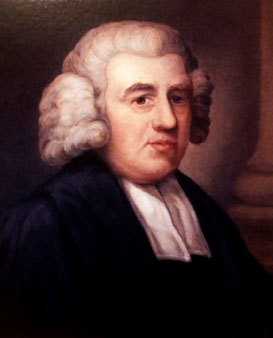
In "Four Letters to a Widow," John Newton addresses the profound themes of suffering, divine consolation, and the believer's hope in Christ amidst loss. Newton offers key insights on the nature of grief, encouraging the widow to focus not on her loss but on the unshakeable promises of God, emphasizing His goodness and the consolation He provides during trials (2 Corinthians 1:5). He reflects on biblical truths such as God's grace being sufficient (2 Corinthians 12:9) and the assurance of eternal reunion with believers in glory (Revelation 21:4), highlighting that earthly afflictions serve a greater purpose in refining faith. The significance of the letters lies in their pastoral concern and doctrinal precision, providing comfort rooted in Reformed theology's understanding of God's sovereignty and grace, ultimately calling the widow—and readers—to a patient trust in God's providence and faithfulness.
Key Quotes
“Indeed I can sympathize with you...he could be content to lose a son every day.”
“Your God whom you serve continually—he will deliver you... My grace shall be sufficient for you and as your day is—so shall your strength be.”
“Though every stream must fail, the fountain is still full and still flowing.”
“I cannot consent that you should seriously appoint me to examine and judge of your state... To be conscious of them and humbled for them—is one of the surest marks of grace.”
What does the Bible say about comfort in suffering?
The Bible assures that God's grace is sufficient for us and that our sufferings yield the peaceable fruits of righteousness (2 Corinthians 12:9-10).
2 Corinthians 12:9-10, Romans 8:28
How do we know God's promises are true?
God's promises are substantiated by His faithfulness and the historical fulfillment of His word, as documented throughout scripture (Hebrews 10:23).
Hebrews 10:23
Why is hope important for Christians?
Hope sustains Christians through trials, reminding them of God's goodness and eternal promises (Romans 15:13).
Romans 15:13
Letter 1
March 12, 1774.
My dear Madam,
My heart is full, yet I must restrain it. Many thoughts which crowd my mind, and would have vent were I writing to another person, would to you be unseasonable. I write not to remind you of what you have lost—but of what you have, which you cannot lose. May the Lord put a word into my heart that may be acceptable; and may his good Spirit accompany the perusal, and enable you to say with the Apostle, that, as sufferings abound, consolations also abound by Jesus Christ. Indeed I can sympathize with you. I remember too the delicacy of your frame, and the tenderness of your natural spirits; so that were you not interested in the exceeding great and precious promises of the Gospel—I would be ready to fear you must sink under your trial. But I have some faint conceptions of the all-sufficiency and faithfulness of the Lord, and may address you in the king's words to Daniel, "Your God whom you serve continually—he will deliver you."
Motives for resignation to his will abound in his Word; but it is an additional and crowning mercy, that he has promised to apply and enforce them in time of need. He has said, "My grace shall be sufficient for you;" and "as your day is—so shall your strength be." This I trust you have already experienced. The Lord is so rich, and so good, that he can by a glance of thought compensate his children for whatever his wisdom sees fit to deprive them of. If he gives them a lively sense of what he has delivered them from—and prepared for them—or of what he himself submitted to endure for their sakes—they find at once light springing up out of darkness—hard things become easy—and bitter sweet.
I remember to have read of a good man in the last century (probably you may have met with the story), who, when his beloved and only son lay ill, was for some time greatly anxious about the event. One morning he staid longer than usual in his closet. while he was there his son died. When he came out his family were afraid to tell him; but, like David, he perceived it by their looks; and when upon inquiry they said it was so, he received the news with a composure that surprised them. But he soon explained the reason, by telling them, that for such discoveries of the Lord's goodness as he had been favored with that morning—he could be content to lose a son every day.
Yes, Madam, though every stream must fail, the fountain is still full and still flowing. All the comfort you ever received in your dear husband was from the Lord, who is abundantly able to comfort you still. Your husband has gone but a little before you. May your faith anticipate the joyful and glorious meeting you will shortly have in the heavenly world. Then your worship and converse together will be to unspeakable advantage, without imperfection, interruption, abatement, or end! Then all tears shall be wiped away, and every cloud removed; and then you will see, that all your concernments here below (the late afflicting dispensation not excepted), were appointed and adjusted by infinite wisdom and infinite love!
The Lord, who knows our frame, does not expect or require that we should aim at a stoic indifference under his visitations. He allows, that afflictions are at present not joyous—but grievous; yes, he wept with his mourning friends when Lazarus died. But he has graciously provided for the prevention of that anguish and bitterness of sorrow, which is, upon such occasions, the portion of such as live without God in the world; and has engaged, that all shall work together for good, and yield the peaceable fruits of righteousness. May he bless you with a sweet serenity of spirit, and a cheerful hope of the glory that shall shortly be revealed.
I intimated, that I would not trouble you with my own sense and share of this loss. If you remember the great kindness I always received from your husband and yourself, as often as opportunity afforded; and if you will believe me possessed of any sensibility or gratitude, you will conclude that my concern is not small. I feel likewise for the public. Will it be a consolation to you, madam, to know, that you do not mourn alone? A character so exemplary as a friend, a counselor, a Christian, and a minister, will be long and deeply regretted; and many will join with me in praying, that you, who are most nearly interested, may be signally supported.
We join in most affectionate respects and condolence. May the Lord bless you and keep you, lift up the light of his countenance upon you, and give you peace!
Letter 2
April 8, 1775.
My dear Madam,
I have long and often purposed waiting upon you with a second letter, though one thing or other still caused delay; for though I could not but wish to hear from you, I was far from making that a condition of my writing. If you have leisure and desire to favor me with a line now and then, it will give us much pleasure; but if not, it will be a sufficient inducement with me to write, to know that you give me liberty, and that you will receive my letters in good part. At the same time I must add, that my various engagements will not permit me to break in upon you so often as my sincere affection would otherwise prompt me to do.
I heartily desire to praise the Lord on your behalf. I am persuaded that his goodness to you in supporting you under a trial so sharp in itself, and in the circumstances that attended it—has been an encouragement and comfort to many. It is in such apparently severe times, that the all-sufficiency and faithfulness of the Lord, and the power and proper effects of his precious Gospel, are most eminently displayed. I would hope, and I do believe, that the knowledge of your case has animated some of the Lord's people against those anxious fears which they sometimes feel when they look upon their earthly comforts with too careful an eye, and their hearts are ready to sink at the thought. What should I do, and how should I behave, were the Lord pleased to take away my desire with a stroke? But we see he can supply their absence, and afford us superior comforts without them.
The Gospel reveals one thing needful—the pearl of great price; and supposes, that they who possess this are provided for, against all events, and have ground of unshaken hope, and a source of never-failing consolation under every change they can meet with during their pilgrimage state. When his people are enabled to set their seal to this, not only in theory, when all things go smooth—but practically, when called upon to pass through the fire and water—then his grace is glorified in them and by them. Then it appears, both to themselves and to others, that they have neither followed cunningly devised fables, nor amused themselves with empty notions. Then they know in themselves, and it is evidenced to others—that God is with them in truth.
In this view a believer, when in some good measure divested from that narrow selfish disposition which cleaves so close to us by nature, will not only submit to trials—but rejoice in them, notwithstanding the feelings and reluctance of the flesh. For if I am redeemed from misery by the blood of Jesus; and if he is now preparing me a mansion near himself, that I may drink of the rivers of pleasure at his right hand for evermore; the question is not (at least ought not to be), "how may I pass through life with the least inconvenience?" but, "how may my little span of life be made most subservient to the praise and glory of Him who loved me, and gave himself for me?"
Where the Lord gives this desire—he will gratify it; and as afflictions, for the most part, afford the fairest opportunities of this kind, therefore it is, that those whom he is pleased eminently to honor are usually called, at one time or another, to the heaviest trials; not because he loves to grieve them—but because he hears their prayers, and accepts their desires of doing him service in the world.
The post of honor in war is so called, because attended with difficulties and dangers which but few are supposed equal to; yet generals usually allot these hard services to their favorites and friends, who on their parts eagerly accept them as tokens of favor and marks of confidence. Should we, therefore, not account it an honor and a privilege, when the Captain of our salvation assigns us a difficult post? He can and does (which no earthly commander can) inspire his soldiers with wisdom, courage, and strength, suitable to their situation. 2Co. 12:9-10. I am acquainted with a few who have been led thus into the forefront of the battle. They suffered much; but I have never heard them say they suffered too much; for the Lord stood by them and strengthened them. Go on, my dear madam. In a little while Jesus will wipe away all tears from your eyes; you will see your beloved husband again, and he and you will rejoice together forever!
Letter 3
October 24, 1775.
My dear Madam,
The manner in which you mention my Omicron's letters, I hope, will rather humble me, than puff me up. Your favorable acceptance of them, if alone, might have the latter effect; but alas! I feel myself so very defective in practicing those things, the importance of which I endeavored to point out to others, that I almost appear to myself to be one of those who do not practice what I preach. I find it much easier to speak to the hearts of others—than to my own. Yet I have cause beyond many—to bless God, that he has given me some idea of what a Christian ought to be, and I hope a real desire of being one myself; but truly I have attained but a very little way.
A friend hinted to me, that the character I have given of "C", or "Grace in the full ear", must be from my own experience, or I could not have written it. To myself, however, it appears otherwise; but I am well convinced, that the state of "C" is attainable, and more to be desired than mountains of gold and silver! But I find you complain likewise; though it appears to me, and I believe to all who know you, that the Lord has been peculiarly gracious to you, in giving you much of the Spirit in which He delights, and by which His name and the power of His Gospel are glorified. It seems, therefore, that we are not competent judges either of ourselves or of others.
I take it for granted, that they are the most excellent Christians—who are most abased in their own eyes. But lest you should think upon this ground that I am something, because I can say so many humiliating things of myself, I must prevent your over-rating me, by assuring you, that my confessions rather express what I know I ought to think of myself, than what I actually do think of myself.
Naturalists suppose, that if the matter of which the earth is formed were condensed as much as it is capable of, it would occupy but a very small space. In proof of which they observe, that pane of glass, which appears smooth and impervious to us, must be exceedingly porous in itself; since in every point it receives and transmits the rays of light; and yet gold, which is the most solid substance we are acquainted with, is but about eight times heavier than glass, which is made up (if I may so say) of nothing but pores. In like manner I conceive, that inherent grace, when it is dilated, and appears to the greatest advantage in a sinner, would be found to be very small and inconsiderable, if it was condensed, and absolutely separated from every mixture.
The highest attainments in grace in this life are very inconsiderable, compared with what should properly result from our relation and obligations to a God of infinite holiness. The nearer we approach to him—the more we are sensible of this. While we only hear of God as it were by the ear—we seem to be something. But when, as in the case of Job, he reveals himself more sensibly to us, Job's language becomes ours, and the height of our attainment is, to "abhor ourselves in dust and ashes!"
There certainly is a real, though secret, a sweet, though mysterious, communion of saints, by virtue of their common union with Jesus. Feeding upon the same bread, drinking of the same fountain, waiting at the same mercy-seat, and aiming at the same ends, they have fellowship one with another, though at a distance. Who can tell how often the Holy Spirit, who is equally present with them all, touches the hearts of two or more of his children at the same instant, so as to excite a sympathy of pleasure, prayer, or praise, on each other's account? It revives me sometimes in a dull and dark hour to reflect, that the Lord has in mercy given me a place in the hearts of many of his people; and perhaps some of them may be speaking to him on my behalf—when I have hardly power to utter a word for myself. For kind services of this sort, I persuade myself I am often indebted to you. O that I were enabled more fervently to repay you in the same way! I can say, that I attempt it. I love and honor you greatly, and your concernments are often upon my mind.
We spent most of a week with Mr. B. since we returned from London, and he has been once here. We have reason to be very thankful for his connection. I find but few like minded with him, and his family is filled with the grace and peace of the Gospel. I never visit them—but I meet with something to humble, quicken, and edify me. O! what will heaven be, where there shall be all who love the Lord Jesus, and they alone; where all imperfection, and whatever now abates or interrupts their joy in their Lord and in each other, shall cease forever! There at least I hope to meet you, and spend an eternity with you, in admiring the riches and glory of redeeming love!
Letter 4
October 28, 1777.
My dear Madam,
What can I say for myself, to let your compelling letter remain so long unanswered, when your kind solicitude for us induced you to write? I am ashamed of the delay. You would have heard from me immediately, had I been at home. But I have reason to be thankful that we were providentially called to London a few days before the fire; so that my wife was mercifully preserved from the alarm and shock she must have felt, had she been upon the spot. Your letter followed me hither, and was in my possession more than a week before my return. I purposed ti write to you every day—but indeed I was much hurried and engaged. Yet I am not excused. I ought to have saved time from my meals or my sleep, rather than appear negligent or ungrateful.
The fire devoured twelve houses—and it was a mercy, and almost a miracle, that the whole town was not destroyed; which must, humanly speaking, have been the case, had not the night been calm, as two thirds of the buildings were thatched. No lives were lost; no person considerably hurt; and I believe the contributions of the benevolent will prevent the loss from being greatly felt. It was at the distance of a quarter of a mile from my house.
Your letter points out a subject for me to address. Yet at the same time, you lay me under a difficulty. I would not willingly offend you, and I hope the Lord has taught me not to aim at saying flattering things. I deal not in flattery, and religious flattery is the most inappropriate of any.
But why might I not express my sense of the grace of God, manifested in you as well as in another? I believe our hearts are all alike—destitute of every good, and prone to every evil! Like money from the same mint—they bear the same impression of total depravity; but grace makes a difference, and grace deserves the praise. Perhaps it ought not greatly to displease you, that others do, and must, and will think better of you than you do of yourself. If I do, how can I help it, when I form my judgment entirely from what you say and write? I cannot consent, that you should seriously appoint me to examine and judge of your state. I thought you knew, beyond the shadow of a doubt, what your views and desires are. Yes, you express them in your letter, in full agreement with what the Scripture declares of the principles, desires, and feelings of a Christian. It is true that you feel contrary principles, that you are conscious of defects and defilements; but it is equally true, that you could not be right, if you did not feel these things. To be conscious of them, and humbled for them—is one of the surest marks of grace; and to be more deeply sensible of them than formerly—is the best evidence of growth in grace. But when the enemy would tempt us to doubt and distrust, because we are not perfect—then he fights, not only against our peace—but against the honor and faithfulness of our dear Lord. Our righteousness is in Jesus; and our hope depends, not upon the exercise of grace in us—but upon the fullness of grace and love in him, and upon his obedience unto death.
There is, my dear madam, a difference between the holiness of a sinner—and that of an angel. The angels have never sinned, nor have they tasted of redeeming love. they have no inward conflicts, no law of sin warring in their members; their obedience is perfect; their happiness is complete. Yet if I be found among redeemed sinners, I need not wish to be an angel. Perhaps God is not less glorified by your obedience, and, not to shock you, I will add by mine, than by Gabriel's. It is a mighty manifestation of his grace indeed—when it can live, and act, and conquer in such hearts as ours; when, in defiance of an evil nature and an evil world, and all the force and subtlety of Satan—a weak worm is still upheld, and enabled not only to climb—but to thresh the mountains; when a small spark is preserved through storms and floods. In these circumstances, the work of grace is to be estimated, not merely from its imperfect appearance—but from the difficulties it has to struggle with and overcome. And therefore our holiness does not consist in great attainments—but in spiritual desires, in hungering, thirstiness, and mournings; in humiliation of heart, poverty of spirit, submission, meekness; in hearty admiring thoughts of Jesus, and dependence upon him alone for all we need. Indeed these may be said to be great attainments; but they who have most of them are most sensible that they, in and of themselves, are nothing, have nothing, can do nothing—and see daily cause for abhorring themselves and repenting in dust and ashes!
Our view of death will not always be alike—but in proportion to the degree in which the Holy Spirit is pleased to communicate his sensible influence. We may anticipate the moment of dissolution with pleasure and desire in the morning—and be ready to shrink from the thought of it before night! But though our frames and perceptions vary, the report of faith concerning it is the same. The Lord usually reserves dying strength for a dying hour! When Israel was to pass Jordan, the Ark was in the river; and though the rear of the army could not see it, yet as they successively came forward and approached the banks, they all beheld the Ark, and all went safely over. As you are not weary of living, if it be the Lord's pleasure, so I hope, for the sake of your friends and the people whom you love—he will spare you among us a little longer; but when the time shall arrive which he has appointed for your dismissal—I make no doubt but he will overpower all your fears, silence all your enemies, and give you a comfortable, triumphant entrance into his kingdom.
You have nothing to fear from death; for Jesus, by dying, has disarmed it of its sting, has perfumed the grave, and opened the gates of glory for his believing people! Satan, so far as he is permitted, will assault our peace—but he is a vanquished enemy. Our Lord holds him with a chain, and sets him bounds which he cannot pass. He provides for us likewise the whole armor of God, and has promised to cover our heads himself in the day of battle, to bring us honorably through every skirmish, and to make us more than conquerors at last.
If you think my short unexpected interview with Mr. C. may justify my wishing he should know that I respect his character, love his person, and rejoice in what the Lord has done and is doing for him and by him, I beg you to tell him so—but I leave it entirely to you.
Letter 1
May, 1774.
My dear Madam,
We are glad to hear that you had a safe though perilous journey. I hope I shall be always mindful to pray, that the Lord may guide, bless, and comfort you, and give you such a manifestation of his person, power, and grace, as may set you at liberty from all fear, and fill you with abiding peace and joy in believing. Remember that Jesus has all power, the fullness of compassion, and embraces with open arms all that come to him for life and salvation.
Through mercy, Mrs. **** is better again; and I remain so, though death and illness are still walking about the town. O for grace to take warning by the sufferings of others—to set loose to the world, and so number our days as to incline our hearts to the one thing needful. Indeed that one thing includes many things, sufficient to engage the best of our thoughts and the most of our time—if we were duly sensible of their importance. But I may adopt the Psalmist's expression, "My soul cleaves to the dust!" How is it that the truths of which I have the most undoubted conviction, and which are, of all others, the most weighty—should make so little impression upon me? O I know the cause! It is deeply rooted. An evil nature cleaves to me; so that when I would do good—evil is present with me.
It is, however, a mercy to be made sensible of it, and in any measure humbled for it. Before long, this evil nature will be dropped into the grave—then all hindrances shall cease. This thought gives relief—I shall not always live this poor dying life. When I shall see the Redeemer as he is—I shall be like him. This will be a heaven indeed, to behold his glory without a veil, to rejoice in his love without a cloud, and to sing his praises without one jarring or wandering note, forever!
In the mean time, may He enable us to serve him with our best. O that every power, faculty, and talent, were devoted to him! He deserves all we have, and ten thousand times more if we had it; for he has loved us, and washed us from our sins in his own blood. He gave himself for us. In one sense we are well suited to answer his purpose; for if we were not vile and worthless beyond expression, the exceeding riches of his grace would not have been so gloriously displayed. His glory shines more in redeeming one sinner—than in preserving a thousand angels!
Poor Mr.**** is still in the dark valley—but we trust prayer shall yet bring him out. Mighty things have been done in answer to prayer; and the Lord's arm is not shortened, neither is his ear heavy. It is our part to wait until we have an answer. One of his own hymns says,
The promise may be long deferred,
But never comes too late.
The sudden death of our friend is a heavy blow. He was an amiable, judicious, candid man, and an excellent preacher in a great sphere of usefulness; and his age and constitution gave hopes that he might have been eminently serviceable for many years. How often does the Lord write vanity upon all our expectations from men! He visited a person ill of a putrid fever, and carried the seeds of infection with him to London, where he died. His wife is a very excellent and accomplished woman—but exceedingly delicate in her frame and spirits. How can she bear so sudden and severe a stroke! But yet I hope she will afford a proof of the Lord's all-sufficiency and faithfulness.
O madam, the Lord our God is a great God! If he frowns, the smiles of the whole creation can afford no comfort; and if he is pleased to smile, he can enable the soul under the darkest dispensations to say, "All is well." Yet the flesh will feel, and it ought. Otherwise the exercise of faith, patience, and resignation, would be impracticable. I have lost in him one of my most valued and valuable friends—but what is my loss to that of his people!
May the Lord bless you and keep you. May the Lord increase you more and more, you and your children. May the Lord lift up the light of his countenance upon you, and give you his peace. I thank him for leading you to us—but especially for making your visit here in any measure agreeable and profitable to yourself. If I have been an instrument in his hand for your comfort, I have reason to remember it among the greatest favors he has conferred upon me. And now, dear madam, once more farewell. If the Lord spares our lives, I hope we shall see each other again upon earth. But above all, let us rejoice in the blessed Gospel, by which immortality is brought to light, and a glorious prospect opened beyond the grave!
There sits our Savior enthroned in light,
Clothed with a body like our own.
There at least, after all the changes and trials of this earthly state, we shall meet to part no more.
Letter 2
1775.
My dear Madam,
If the Lord favors Miss M**** with a taste for the library of my proposing, she will be like the merchant-man seeking goodly pearls—and will count all other books but pebbles in comparison of those four volumes, which present us with something new and important whenever we look into them. I shall be much obliged to her if she will commit the third chapter of Proverbs to her memory, and I shall pray the Lord to write it in her heart.
You surprise me when you tell me, that my birthday was noticed by those I never saw. Be so good as to return my thanks to my unknown friends, and tell them, that I pray that our common Lord and Savior will bless them abundantly. His people while here are scattered abroad, and separated by hills and rivers, and too often by denominations and prejudices—but by and by we shall all meet where we shall all know and acknowledge each other, and rejoice together for evermore! I have lately read with much pleasure, and I hope with some profit, the history of the Greenland Mission. Upon the whole, it is a glorious work. None who love the Lord will refuse to say—it is the finger of God indeed. For my own part, my soul rejoices in it; and I honor the instruments, as men who have hazarded their lives in an extraordinary manner for the sake of the Lord Jesus. I am sure that none could have sustained such discouragements at first, or have obtained such success afterwards, unless the Lord had sent, supported, and owned them.
I hope we shall have an interest in your prayers. I trust the Lord is yet with us. We have some ripe for the sickle, and some just springing up; some tokens of his gracious presence among us—but sin and Satan cut us out abundance of work as individuals, though through mercy as a church, we walk in peace.
The "toad and spider" are an exhibition of my daily experience. I am often wounded—but the Lord is my health. Still I am a living monument of God's mercy; and I trust that word, "Because I live you shall live also," will carry me to the end. I am poor, weak, and foolish—but Jesus is wise, strong, and abounding in grace. He has given me a desire to trust my all in his hands, and He will not disappoint the expectation which he himself has raised. At present I have but little to say, and but little time to say it in. When you think of this place, I hope you will think and believe, that you have friends here most cordially interested in your welfare, and often remembering you in prayer. May the Lord be your guide and shield, and give you the best desires of your heart. I pray him to establish and settle you in the great truths of his Word. I trust he will. We learn more, and more effectually, by one minute's communication with God through the medium of His Word—than we could from an assembly of theologians, or a library of books!
Letter 3
August, 1775.
My dear Madam,
It is not owing to forgetfulness that your letter has been thus long unanswered. It has lain within my view this two weeks, demanding my first leisure hour—but affairs of daily occurrence have been so many and so pressing, that I have been constrained to put it off until now. I trust the Lord, by his Spirit and providence, will direct and prosper the settlement of your children. Give my love to your daughter, Miss M****. My idea of her enlarges. Methinks I see her aspiring to be as tall as her mamma. I hope likewise, that she increases in grace and wisdom, as in years and stature; and that hearing our Lord's flock is a little flock, she feels a thirst to be one of the happy number which constitutes his fold. If she has such a desire, I can tell who gave it her, for I am persuaded it was not born with her; and where the good farmer sows, there will he also reap. Therefore, dear Miss M****, press forward—knock, and it shall be opened unto you, for yet there is room. O what a fold! O what a pasture! O what a Shepherd! Let us love, and sing, and wonder!
I hope the godly people are praying for our sinful, troubled land, in this dark day. The Lord is angry, the sword is drawn, and I am afraid nothing but the spirit of wrestling prayer can prevail for the returning it into the scabbard. Could things have proceeded to these extremities, except the Lord had withdrawn his beneficial blessing? It is a time of prayer. We see the beginning of trouble—but who can foresee the possible consequences? The fire is kindled—but how far it may spread, those who are above may perhaps know better than we.
I do not meddle with the disputes of party, nor concern myself with any political quarrels—but such as are laid down in Scripture. There I read that righteousness exalts a nation, and that sin is the reproach, and, if persisted in, the ruin of any people. Some people are startled at the enormous sum of our national debt. Those who understand spiritual arithmetic may be well startled if they sit down and compute the debt of national sin. Item, The profligacy of manners. Item, Perjury. Item, The cry of blood, the blood of thousands, perhaps millions, from the East Indies. It would take sheets, yes quires of paper, to draw out the particulars under each of these heads—and even then, much would remain untold. What can we answer, when the Lord says, "Shall not I visit you for these things? Shall not my soul be avenged on such a nation as this?"
Since we received the news of the first hostilities in America, we have had an additional prayer-meeting. Could I hear that professors in general, instead of wasting their breath in censuring men and political measures, were plying the Throne of Grace, I would still hope for a respite. Poor New England! once the glory of the earth, now likely to be visited with fire and sword. They have left their first love, and the Lord is sorely contending with them. Yet surely their sins as a people are not to be compared with ours. I am just so much affected with these things as to know, that I am not affected enough. Oh! my spirit is sadly cold and insensible, or I would lay them to heart in a different manner. Yet I endeavor to give the alarm as far as I can. There is one political maxim which comforts me. "The Lord reigns!" His hand guides the storm; and he knows those who are his—how to protect, support, and deliver them. He will take care of his own cause; yes, he will extend his kingdom, even by these formidable methods. Men have one thing in view; He has another—and his counsel shall stand!
The chief piece of news since my last is concerning B.A. She has finished her course, and is now with the great multitude who have overcome by the blood of the Lamb, and by the Word of his testimony. Tuesday the 1st of February she was in our assembly, was taken ill the next day, and died while we were assembling the Tuesday following. She had an easy death, retained her senses and her speech until the last minute, and went without a struggle or a sigh. She was not in raptures during her illness—but was composed, and maintained a strong and lively faith. She had a numerous gathering about her bed daily, who were all witnesses to the power of faith, and to the faithfulness of the Lord, enabling her to triumph over the approaches of death; for she was well known and well respected. She will be much missed—but I hope He will answer the many prayers she put up for us, and raise up others in her place. "Blessed are the dead who die in the Lord." Blessed are they who know whom they have believed, and when death comes can cheerfully rest their hopes on him who died that we might live. She had been long a precious and honorable woman—but her hope in the trying hour rested not in what she had done for the Lord—but upon what he had done for her; not upon the change his grace has wrought in her—but upon the righteousness he had wrought out for her by his obedience unto death. This supported her; for she saw nothing in herself but what she was ashamed of. She saw reason to renounce her own goodness, as well as her own sins—as to the point of acceptance with God, and died, as Paul lived, determined to know nothing but Jesus Christ and him crucified.
Our friends, Mr. and Mrs. C**** are moving to Scotland soon. All beneath the moon (like the moon itself) is subject to incessant change. Alterations and separations are graciously appointed of the Lord, to remind us that this world is not our rest, and to prepare our thoughts for that approaching last change, which shall fix us forever in an unchangeable state! O Madam! What shall we poor worms render to him who has brought life and immortality to light by the Gospel, taken away the sting of death, revealed a glorious prospect beyond the grave, and given us eyes to see it? The reflection, that we must, before long, take a final farewell of all that is most capable of pleasing us upon earth, is not only tolerable—but pleasant. For we know we cannot fully possess our best friend, our chief treasure, until we have done with all below. Nay, we cannot until then, properly see each other. We are cased up in vehicles of clay, and converse together as if we were in different coaches with the blinds close drawn round. We see the carriage, and the voice tells us that we have a friend within it. But we shall know each other better, when death shall open the coach-doors, and bring out the company, and lead them into the glorious apartments which the Lord has appointed to be the common residence of those who love him. What an assembly will that be! What a constellation of glory, when each individual shall shine like the sun in the kingdom of their Father! No sins, sorrows, temptations; no veils, clouds, or prejudices, shall interrupt us then! All names of vain distinction (the fruits of present remaining darkness, the channels of bigotry, and the stumbling-block of the world), will be at an end.
The description you give of your present residence pleases me much, and chiefly because it describes and manifests to me something still more interesting, I mean the peaceable situation of your mind. Had he placed you in an Eden some months ago, it would hardly have awakened your descriptive talent. But he whom the winds and seas obey has calmed your mind, and I trust will go on to fill you with all joy and peace in believing. It is no great matter where we are, provided we know that the Lord has placed us there, and that he is with us!
Letter 4
1776.
My dear Madam,
We take it for granted that you will now most certainly make us a visit. Do come as soon, and stay as long, as you possibly can. Methinks you will be glad to get out of the smell and noise of London, as soon as possible. If we did not go to London now and then, we would perhaps forget how people live there. Especially I pity professors—they are exposed to as many dangers as people who live in the coal mines; chilling damps, scorching blasts, epidemic disorders, owing to the impure air. Such are the winds of false doctrines, the explosions of controversy, the blights of worldly conversation, the contagion of evil custom. In short, a person had need have a good constitution of grace, and likewise to be well supplied with antidotes, to preserve a tolerable share of spiritual health in such an ungodly situation.
And now, how shall I fill up the rest of the paper? It is a shame for a Christian and a minister to say he has no subject at hand, when the inexhaustible theme of redeeming love is ever pressing upon our attention. I will tell you then, though you know it—that the Lord reigns! He who once bore our sins, and carried our sorrows—is seated upon a throne of glory, and exercises all power in heaven and on earth. Thrones, principalities, and powers, bow before him. Every event in the kingdoms of providence and of grace—are under his rule. His providence pervades and manages the whole universe, and is as minutely attentive to every part—as if there were only a single object in his view. From the tallest archangel to the smallest ant or fly—all depend on him for their being, their preservation, and their powers. He directs the sparrows where to build their nests, and where to find their food. He over-rules the rise and fall of nations; and bends, with an invincible energy and unerring wisdom—all events to his sovereign will! So that while many intend other outcomes—their designs all concur and coincide in the accomplishment of his holy will.
He restrains with a mighty hand—the still more formidable efforts of the powers of darkness. Satan with all his hosts cannot exert their malice a hair's-breadth beyond the limits of his permission. This omnipotent Savior is the head and husband of His believing people. How happy are those whom it is his good pleasure to bless! How safe are they whom he has engaged to protect! How honored and privileged are they to whom he is pleased to manifest himself, and whom he enables and warrants to claim him as their friend and eternal potion! Having redeemed them by his own blood—he esteems them as his treasure, his jewels, and protects them as the pupil of his eye. They shall not lack any good thing. They need not fear. His unerring eye is upon them in every situation; His ear is always open to their prayers; and His everlasting arms are under them for their sure support! On earth he guides their steps, controls their enemies, and directs all his dispensations for their spiritual good. While in heaven he is pleading their cause, preparing a glorious home for them, and communicating down to them reviving foretastes of the glory which they shall shortly enter into. "The Lord reigns! Let the earth rejoice!" Psalm 97:1 "Hallelujah! For the Lord our God, the Almighty, reigns!" Revelation 19:6.
O how is this mystery hidden from an unbelieving world! Who can believe it, until it is made known by personal experience, what an fellowship is maintained in this land of shadows between the Lord of glory—and sinful worms! How should we praise him that he has visited us! For we were once blind to his beauty, and insensible to his love, and would have remained so to the last, had he not revealed his goodness and grace to us, and been found by us when we sought him not.
Mrs. **** presents her love. The bite of the leech, which I mentioned to you, has confined her to the house ever since—but I hope she will be able to go out tomorrow. We were for a while apprehensive of worse consequences—but the Lord is gracious. He shows us in a variety of instances what dependent creatures we are, how blind to events, and how easily the methods which we take to relieve ourselves from a small inconvenience may plunge us into a greater trouble. Thus we learn (happy indeed if we can effectually learn it) that there is no safety—but in his protection, and that nothing can do us good—but by his blessing. As for myself, I see so many reasons why he might contend with me, that I am amazed that he affords me and mine so much peace, and appoints us so few trials. We live as upon a field of battle. Many are hourly suffering and falling around us; and I can give no reason why we are preserved—but that he is God, and not man. What a mercy that we are only truly known to him, who is alone able to hear us!
May the Lord bless you, comfort you, guide you, and guard you!
Letter 1
March 18, 1767.
Dear friend,
I can truly say, that I bear you upon my heart and in my prayers. I have rejoiced to see the beginning of a good and gracious work in you; and I have confidence in the Lord Jesus, that he will carry it on and complete it; and that you will be among the number of those who shall sing of "redeeming love" to all eternity. Therefore fear none of the things appointed for you to suffer by the way—but gird up the loins of your mind, and hope to the end. Be not impatient—but wait humbly upon the Lord.
You have one hard lesson to learn, that is—the evil of your own heart. You know something of it—but it is needful that you should know more; for the more we know of ourselves, the more we shall prize and love Jesus and his salvation. I hope what you find in yourself by daily experience will humble you—but not discourage you. Humble you it should, and I believe it does. Are not you amazed sometimes that you should have so much as a hope, that, poor and needy as you are, the Lord thinks of you? But let not all you feel discourage you; for if our Physician is almighty, our disease cannot be desperate; and if he casts none out who come to him, why should you fear? Our sins are many—but his mercies are more. Our sins are great—but His righteousness is greater. We are weak—but he is power.
Most of our complaints are owing to unbelief, and the remainder of a legal spirit; and these evils are not removed in a day. Wait on the Lord, and he will enable you to see more and more of the power and grace of our High Priest. The more you know him—the better you will trust him. The more you trust him—the better you will love him. The more you love him—the better you will serve him. This is God's way. You are not called to buy—but to beg; not to be strong in yourself—but in the grace that is in Christ Jesus. He is teaching you these things, and I trust he will teach you to the end.
Remember, the growth of a believer is not like a mushroom—but like an oak, which increases slowly indeed—but surely. Many suns, showers, and frosts, pass upon it before it comes to perfection; and in winter, when it seems to be dead—it is gathering strength at the root. Be humble, watchful, and diligent in the means, and endeavor to look through all, and fix your eye upon Jesus—and all shall be well. I commend you to the care of the good Shepherd, and remain, for his sake.
Letter 2
May 31, 1769.
Dear friend,
I was sorry I did not write as you expected. Indeed I have not forgotten you; you are often in my thoughts, and seldom omitted in my prayers. I hope the Lord will make what you see and hear while abroad profitable to you, to increase your knowledge, to strengthen your faith, and to make you from henceforth, well satisfied with your situation. If I am not mistaken, you will be sensible, that though there are some desirable things to be met with in London preferable to any other place—yet, upon the whole, a quiet situation in the country, under one stated ministry, and in connection with one people—has the advantage. It is pleasant now and then to have opportunity of hearing a variety of preachers—but the best and greatest of them are no more than instruments in God's hands. Some preachers can please the ear better than others—but none can reach the heart any farther than the Lord is pleased to open it. This he showed you upon your first going up; and I doubt not but your disappointment did you more good than if you had heard with all the pleasure you expected.
The Lord was pleased to visit me with a slight illness in my recent journey. I was far from well on the Tuesday—but supposed it owing to the fatigue of riding, and the heat of the weather—but the next day I was taken with a shivering, to which a fever followed. I was then near sixty miles from home. The Lord gave me much peace in my soul, and I was enabled to hope he would bring me safely home, in which I was not disappointed. And though I had the fever most of the way, my journey was not unpleasant. He likewise strengthened me to preach twice on Sunday; and at night I found myself well, only very weary, and I have continued well ever since.
I have reason to speak much of his goodness, and to kiss the rod, for it was sweetened with abundant mercies. I thought that had it been his pleasure I would have continued sick at Oxford, or even have died there, I had no objection. Though I had not that joy and sensible comfort which some are favored with—yet I was quite free from pain, fear, and care, and felt myself sweetly composed to his will—whatever it might be. Thus he fulfils his promise in making our strength equal to our day; and every new trial gives us a new proof how happy it is to be enabled to put our trust in Him.
I hope, in the midst of all your engagements, you find a little time to read his good Word, and to wait at his mercy-seat. It is good for us to draw near to Him. It is an honor that He permits us to pray; and we shall surely find he is a prayer-hearing God.
Endeavor to be diligent in the means—yet watch and strive against a legal spirit, which is always aiming to represent him as a hard master—watching, as it were, to take advantage of us. But it is far otherwise. His name is Love. He looks upon us with compassion; He knows our frame, and remembers that we are but dust; and when our sins prevail, He does not bid us to despond—but reminds us that we have an Advocate with the Father, who is able to pity, to pardon, and to save to the uttermost. Think of the names and relations he bears. Does he not call himself a Savior, a Shepherd, a Friend, and a Husband? Has he not made known unto us his love, his blood, his righteousness, his promises, his power, and his grace—and all for our encouragement? Away then with all doubting, unbelieving thoughts; they will not only distress your heart—but weaken your hands.
Take it for granted upon the warrant of his Word, that you are his, and he is yours; that he has loved you with an everlasting love, and therefore in loving-kindness has drawn you to himself; that he will surely accomplish that which he has begun, and that nothing which can be named or thought of shall ever be able to separate you from him. This persuasion will give you strength for the battle! This is the shield which will quench the fiery darts of Satan! This is the helmet which the enemy cannot pierce! Whereas if we go forth doubting and fearing, and are afraid to trust any farther than we can feel, we are weak as water, and easily overcome. Be strong, therefore, not in yourself—but in the grace that is in Christ Jesus. Pray for me.
Letter 3
March 14.
Dear friend
I think you would hardly expect me to write—if you knew how I am forced to live at London. However, I would have you believe I am as willing to write to you, as you are to receive my letters.
I have been visiting Mrs. ****. She is a woman of a sorrowful spirit—she talks and weeps. I believe she would think herself happy to be situated as you are, notwithstanding the many advantages she has at London. I see daily, and I hope you have likewise learned, that places, and outward circumstances cannot, of themselves, either hinder or help us in walking with God. So far as he is pleased to be with us, and to teach us by his Spirit, wherever we are—we shall be happy and content. And if he does not bless us and water us every moment, the more we have of our own wishes and wills—the more unhappy we will be.
One thing is needful—a humble, dependent spirit, to renounce our own wills, and give up ourselves to his disposal without reserve. This is the path of peace—and it is the path of safety. For he has said, "He guides the humble in what is right and teaches them his way." I hope you will fight and pray against every rising of a murmuring spirit, and be thankful for the great things which he has already done for you It is good to be humbled for sin—but not to be discouraged; for though we are poor creatures, Jesus is a complete Savior; and we bring more honor to God by believing in his name, and trusting his Word of promise, than we could do by a thousand outward works.
I pray the Lord to shine upon your soul, and to fill you with all joy and peace in believing. Remember to pray for us, that we may be brought home to you in peace.
Letter 4
London, Aug. 19, 1775.
Dear friend,
You see I am mindful of my promise; and glad would I be to write something that the Lord may be pleased to make a word in season. I went yesterday into the pulpit very dry and heartless. I seemed to have fixed upon a text—but when I came to the pinch, it was so shut up that I could not preach from it. I had hardly a minute to choose, and therefore was forced to snatch at that which came first upon my mind, which proved "I know whom I have believed, and am convinced that he is able to guard what I have entrusted to him for that day." 2 Timothy 1:12. Thus I set off at a venture, having no resource but in the Lord's mercy and faithfulness; and indeed what other can we wish for? Presently my subject opened, and I know not when I have been favored with more liberty.
Why do I tell you this? Only as an instance of his goodness, to encourage you to put your strength in him, and not to be afraid, even when you feel your own weakness and insufficiency most sensibly. We are never more safe, and never have more reason to expect the Lord's help—than when we are most sensible that we can do nothing without him. This was the lesson Paul learned—to rejoice in his own poverty and emptiness, that the power of Christ might rest upon him. Could Paul have done anything, Jesus would not have had the honor of doing all. This way of being saved entirely by grace, from first to last, is contrary to our natural pride. It mortifies self, leaving it nothing to boast of; and, through the remains of an unbelieving, legal spirit, it often seems discouraging. When we think ourselves so utterly helpless and worthless, we are too ready to fear that the Lord will therefore reject us; whereas, in truth, such a poverty of spirit is the best mark we can have of a saving interest in his promises and care.
How often have I longed to be an instrument of establishing you in the peace and hope of the Gospel! and I have but one way of attempting it, by telling you over and over of the power and grace of Jesus. You need nothing to make you happy—but to have the eyes of your understanding more fixed upon the Redeemer, and more enlightened by the Holy Spirit to behold his glory. Oh, he is a suitable Savior! He has power, authority, and compassion to save to the uttermost! He has given his Word of promise, to engage our confidence; and he is able and faithful to make good the expectations and desires he has raised in us. Put your trust in him; believe (as we say) through thick and thin, in defiance of all objections from within and without. For this, Abraham is recommended as a pattern to us. He overlooked all difficulties. He ventured and hoped even against hope, in a case which, to appearance, was desperate; because he knew that He who had promised—was also able to perform.
Your sister is much upon my mind. Her illness grieves me. Were it in my power I would quickly remove it. The Lord can, and indeed will remove it—when it has answered the end for which he sent it. I trust he has brought her to us for good, and that she is chastised by him—that she may not be condemned with the world. I hope, though she says little, she lifts up her heart to him for a blessing. I wish you may be enabled to leave her, and yourself, and all your concerns, in his hands. He has a sovereign right to do with us as he pleases; and if we consider what we are, surely we shall confess we have no reason to complain. To those who seek him, his sovereignty is exercised in a way of grace. All shall work together for good. Everything which he sends is needful; nothing can be needful which he withholds. Be content to bear the cross; others have borne it before you. You have need of patience; and if you ask, the Lord will give it to you—but there can be no settled peace until our will is in a measure subdued. Hide yourself under the shadow of his wings; rely upon his care and power; look upon him as a physician who has graciously undertaken to heal your soul of the worst of sicknesses, sin! Yield to his prescriptions, and fight against every thought that would represent it as desirable to be permitted to choose for yourself. When you cannot see your way—be satisfied that he is your leader. When your spirit is overwhelmed within you—he knows your path. He will not leave you to sink. He has appointed seasons of refreshment, and you shall find that he does not forget you. Above all, keep close to the Throne of Grace. If we seem to get no good by attempting to draw near him—we may be sure we shall get none by keeping away from him!
Letter 5
Dear friend,
I promised you another letter, and now for the performance. If I had said, It may be, or, perhaps I will, you would be in suspense—but if I promise, then you expect that I will not disappoint you, unless something should render it impossible for me to make my word good. I thank you for your good opinion of me, and for thinking I mean what I say; and I pray that you may be enabled more and more to honor the Lord, by believing his promise. For he is not like a man, that would fail or change, or be prevented by anything unforeseen from doing what he has said. And yet we find it easier to trust to worms than to trust the God of truth! Is it not so with you? And I can assure you it is often so with me. But here is the mercy, that his ways are as high above ours—as the heavens are higher than the earth. Though we are foolish and unbelieving, he remains faithful. He will not deny himself.
I recommend to you especially that promise of God, which is so comprehensive that it takes in all our concerns, I mean, that "all things shall work together for good." How hard is it to believe, that not only those things which are grievous to the flesh—but even those things which draw forth our corruptions, and reveal to us what is in our hearts, and fill us with guilt and shame—should in the outcome, work for our good! Yet the Lord has said it. All your pains and trials, all that befalls you in your own person, or that affects you upon the account of others—shall in the end prove to your advantage. And your peace does not depend upon any change of circumstances which may appear desirable—but in having your will bowed to the Lord's will, and made willing to submit all to his disposal and management. Pray for this, and wait patiently for him, and he will do it.
Do not be surprised to find yourself poor, helpless, and vile. All whom God favors and teaches—will find themselves so. The more grace increases—the more we shall see to abase us in our own eyes! This will make the Savior and his salvation more precious to us. He takes his own wise methods to humble you, and to prove you; and I am sure he will do you good in the end.
Letter 6
September 16, 1775.
Dear friend,
When you receive this, I hope it will give you pleasure to think, that, if the Lord is pleased to favor us with health, we shall all meet again in a few days. I have met with much kindness at London, and many comforts and mercies. However, I shall be glad to return home. There my heart lives, let my body be where it will. I long to see all my dear people, and I shall be glad to see you. I steal a little time to write another line or two, more to satisfy you than for anything particular I have to say.
"Here on earth you will have many trials and sorrows. But take heart, because I have overcome the world!" John 16:33. I doubt not but the Lord is bringing you forward, and that you have a good right to say to your soul, "Why are you cast down and disquieted? Hope in God—for I shall yet praise him!" An evil heart, an evil temper, and the many crosses we meet with in passing through an evil world—will bring us many troubles. But the Lord has provided a balm for every wound, and a cordial for every care. The fruit of all trials—is to purge away sin, and the end of all will be eternal life in glory. Think of eternal glory—put it in the balance of the sanctuary; and then throw all your trials into the opposite scale, and you will find there is no proportion between them! Say then, "Though he slays me—yet I will trust in him;" for, when he has fully tried me, I shall come forth like gold.
You would have liked to have been with me last Wednesday. I preached at Westminster Bridewell. It is a prison and house of correction. The bulk of my congregation were robbers, highwaymen, pick-pockets, and poor unhappy women, such as infest the streets of this city, sunk in sin, and lost to shame. I had a hundred or more of these before me. I preached from 1Ti. 1:15; and began With telling them my own testimony. This gained their attention more than I expected. I spoke to them nearly an hour and a half. I shed many tears myself, and saw some of them shed tears likewise. Ah! had you seen their present condition, and could you hear the history of some of them, it would make you sing, "O to grace how great a debtor!" By nature they were no worse than the most moral people; and there was doubtless a time when many of them little thought what they should live to do and suffer. I might have been, like them, in chains—and one of them have come to preach to me, had the Lord so pleased.
Letter 7
Oct. 10, 1777.
Dear friend,
I have just come from seeing N**** in the hospital. The people told me she is much better than she was—but she is far from being well. She was brought to me into a parlor, which saved me the painful task of going to inquire and seek for her among the patients. My spirits always sink when I am within those mournful walls, and I think no money could prevail on me to spend an hour there every day. Yet surely no sight upon earth is more suited to teach one thankfulness and resignation. Surely I have reason, in my worst times, to be thankful that I am out of hell, out of Bedlam, out of Newgate! If my eyes were as bad as yours, and my back worse, still I hope I should set a great value upon this mercy, that my senses are preserved. I hope you will think so too. The Lord afflicts us at times—but it is always a thousand times less than we deserve, and much less than many of our fellow-creatures are suffering around us. Let us therefore pray for grace to be humble, thankful, and patient.
This day last year, I was under the surgeon's knife. There is another cause for thankfulness, that the Lord inclined me to submit to the operation, and brought me happily through it. In short, I have so many reasons for thankfulness, that I cannot count them. I may truly say they are more in number than the hairs of my head! And yet, alas! how cold, insensible, and ungrateful I am! I find no good by complaining, except to him who is able to help me. It is better for you and me to be admiring the compassion and fullness of grace that is in our Savior—than to dwell and pore too much upon our own poverty and vileness. He is able to help and save to the uttermost. There I desire to cast anchor, and wish you to do so likewise. Hope in God—for you shall yet praise him!

Comments
Your comment has been submitted and is awaiting moderation. Once approved, it will appear on this page.
Be the first to comment!