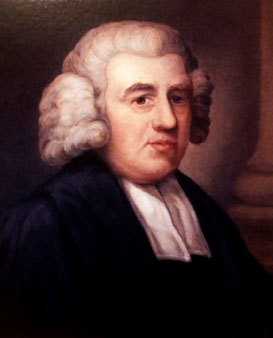
John Newton's "Four Letters to a Christian Friend" addresses the importance of faith, perseverance, and the reliance on God's sovereignty in the life of a believer. Key points include the assurance of God's providential care, the transformative nature of genuine conversion, and the significance of Gospel ministry. Newton emphasizes that every conversion is a miraculous act of divine power, underscoring the futility of doubt in the face of God's faithfulness. Throughout, he references Scripture, including Proverbs 31 and 2 Corinthians 4, to reinforce the call to trust in God's promises and to recognize His active role in both trials and blessings. The letters serve to encourage believers to rejoice in their labor for Christ while remaining hopeful and grateful for God's continued work within their community and personal lives.
Key Quotes
“It is more honorable and important to be an instrument of saving one soul than to rescue a whole kingdom from temporal ruin.”
“Let us therefore beware of giving way to such thoughts of him as we could hardly forgive in our dearest friends if they should harbor the like of us.”
“Men are but children of a larger growth.”
“The kingdom of God is not in word—but in power.”
What does the Bible say about God's sovereignty?
The Bible teaches that God is sovereign over all creation, exercising authority and control over every aspect of life.
Isaiah 46:10, Romans 8:28
How do we know the doctrine of election is true?
The doctrine of election is grounded in Scripture, affirming that God chooses individuals for salvation based on His grace and purposes.
Ephesians 1:4-5, Romans 9:11-12
Why is grace important for Christians?
Grace is essential for Christians as it is the unearned favor of God that allows for salvation and transformation.
Ephesians 2:8-9, Romans 6:14
What does the Bible say about conversion?
The Bible describes conversion as a miraculous work of God where an individual turns from sin to faith in Christ.
Acts 3:19, 2 Corinthians 5:17
LETTER 1
April 17, 1776.
Dear Sir,
By this time I hope you are both returned in peace, and happy together in your stated favored tract; rejoicing in the name of Jesus yourselves, and rejoicing to see the savor of it spreading like a precious perfume among the people. Every day I hope you find the prejudices of the people wearing off, and more disposed to hear the words of life. The Lord has given you a fine first-fruits, which I trust will prove the pledge of a plentiful harvest. In the mean time he will enable you to sow the seed in patience, leaving the event in his hands. Though it does not spring up visibly at once, it will not be lost. I think He would not have sent you—if He had not a people there to call; but they can only come forth to view as He is pleased to bring them. Satan will try to hinder and disturb you; but he held by a chain which he cannot break, nor go a step farther than he is permitted.
And if you have been instrumental to the conversion of but a few, in those few you have an ample reward already for all the difficulties you have or can ever meet with. It is more honorable and important to be an instrument of saving one soul, than to rescue a whole kingdom from temporal ruin! Let us therefore, while we earnestly desire to be more useful, not forget to be thankful for what the Lord has been pleased already to do for us; and let us expect, knowing whose servants we are, and what a Gospel we preach, to see some new miracles wrought from day to day. For indeed, every real conversion may be accounted miraculous, being no less than an immediate exertion of that power which made the heavens, and commanded the light to shine out of darkness.
I wish I had more of that clear air and sunshine you speak of, that with you I might have more distinct views of the land of promise. I cannot say my prospect is greatly clouded by doubts of my reaching it at last; but then there is such a languor and deadness hangs upon my mind, that it is almost amazing to me how I can entertain any hopes at all. It seems, if doubting could ever be reasonable, there is no one who has greater reason for doubting than myself. But I know not how to doubt—when I consider the faithfulness, grace, and compassion of Him who has promised. If it could be proved that Christ had not died, or that he did not speak the words which are ascribed to him in the Gospel, or that he is not able to make them good, or that his word cannot safely be taken—in any of these cases I would doubt—and lie down in despair.
LETTER 2
July 15, 1777.
My dear Sir,
I begin with congratulations first to you and your wife on your safe journey and good passage over the formidable Humber River. Your wife has another river to cross (may it be many years before she approaches the bank), over which there is no bridge. Perhaps at seasons she may think of it with that reluctance which she felt before she saw the Humber; but as her fears were then agreeably disappointed, and she found the experiment, when called to make it, neither terrifying nor dangerous, so I trust she will find it in the other case.
We should reason: God guides and guards me through life; he gives me new mercies, and new proofs of his power and care every day; and, therefore, when I come to die he will forsake me, and let me be the sport of winds and waves. Indeed, the Lord does not deserve such hard thoughts at our hands, as we are prone to form of him. But notwithstanding we make such returns, he is and will be gracious, and shame us out of our unkind, ungrateful, unbelieving fears at last.
If, after my repeated kind reception at your house, I should always be teasing your wife with suspicions of her goodwill, and should tell everybody I saw, that I truly believed the next time I went to see her she would shut the door in my face and refuse me admittance—would she not be grieved, offended, and affronted? Would she not think, "What reason can he assign for this treatment? He knows I did everything in my power to assure him of a welcome, and told him so over and over again. Does he count me a deceiver? Yes, he does! I see his friendship is not worth preserving; so farewell! I will seek friends among such as believe my words and actions." Well, my dear madam, I make no doubt but you will treat me kindly next time, as you did the last. But think—is not the Lord as worthy of being trusted as yourself? and are not his invitations and promises as hearty and as honest as yours? Let us, therefore, beware of giving way to such thoughts of him, as we could hardly forgive in our dearest friends, if they should harbor the like of us!
Our friend is very busy seeking that precious piece of furniture, called a wife. May the Lord direct and bless his choice. "Who can find a virtuous and capable wife? She is worth more than precious rubies!" Proverbs 31:10. In Captain Cook's voyage to the South Sea, some fish were caught which looked as well as others—but those who ate of them were poisoned! Alas! for the poor man who catches a poisonous wife! There are many such to be met with in the matrimonial seas, who look passing well to the eye. But a marriage to them proves baneful to domestic peace, and hurtful to the life of grace.
I know several people, including myself, who have great reason to be thankful to Him who sent the fish, with the money in its mouth, to Peter's hook. He has secretly instructed and guided us where to angle; and if we have caught prizes, we owe it not to our own skill, much less to our deserts—but to His goodness! "Charm is deceptive, and beauty is fleeting; but a woman who fears the Lord is to be praised!" Proverbs 31:30
LETTER 3
July 4, 1777.
My dear Sir,
Your poor little boy! It is mercy indeed, that he recovered from such a severe mishap. The Lord wounded—and the Lord healed. I ascribe, with you, what the world calls accidents to Him, and believe, that without His permission, for wise and good ends—a child can no more pull a bowl of boiling water on itself—than it could pull the moon out of its orbit!
Why does God permit such things? He does these things—to remind us of the uncertainty of life and all creature-comforts; to make us afraid of cleaving too close to pretty toys, which are so precarious, that often while we look at them they vanish; to lead us to a more entire dependence upon himself; that we might never judge ourselves or our concerns safe from outward appearances only—but that the Lord is our keeper, and were not His eye upon us—a thousand dangers, and painful changes, which we can neither foresee nor prevent—are lurking about us every step, ready to break in upon us every hour!
"Men are but children of a larger growth." How many are laboring and planning in the pursuit of things, the outcome of which, if they obtain them, will be but like pulling scalding water upon their own heads! They must have the bowl by all means—but they are not aware what is in it—until they feel it!
LETTER 4
September 7, 1777.
Dear Sir,
I hope that your minister will be restored to you again before long, and that he and many of your place will rejoice long in each other. Those are favored places which are blessed with a sound and faithful Gospel ministry, if the people know and consider the value of their privileges, and are really desirous of profiting by them; but the kingdom of God is not in word—but in power.
I hope those who profess the Gospel with you—will wrestle in prayer for grace to walk worthy of it. A minister's hands are strengthened when he can point to his people as so many living proofs that the doctrines he preaches are doctrines according to godliness; when they walk in mutual love; when each one, in their several places, manifests a humble, spiritual, upright, conduct; when they are Christians, not only at church—but in the family, the shop, and the field; when they fill up their relations in life, as husbands or wives, masters or servants, parents or children, according to the rule of the Word; when they are evidently a people separated from the world while conversant in it, and are careful to let their light shine before men, not only by talking—but by acting as the disciples of Christ; when they go on steadily, not by fits and starts, prizing the means of grace without resting in them. When it is thus, we can say, "Now we really live—if you stand fast in the Lord. Then we come forth with pleasure, and our service is our delight, and we are encouraged to hope for an increasing blessing!"
But if the people in whom we have rejoiced sink into formality or a worldly spirit; if they have dissensions and jealousies among themselves; if they act improperly—then our hearts are wounded and our zeal damped, and we know not how to speak with liberty. It is my heart's desire and prayer for you, that, whether I see you, or else be absent from you, I may know that you stand fast in one spirit and one mind, striving together for the faith of the Gospel.

Comments
Your comment has been submitted and is awaiting moderation. Once approved, it will appear on this page.
Be the first to comment!