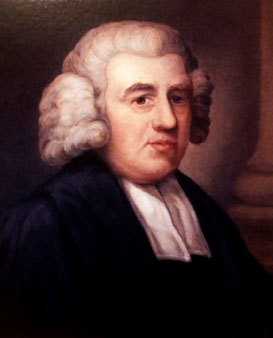
John Newton's letter addresses the theological question of whether the sins of believers will be publicly declared at the judgment day, engaging specifically with the implications of 2 Corinthians 5:10. Newton argues that while believers’ sins are forgiven and will not lead to condemnation, there remains a distinction in understanding the stated judgment alongside the assurance of God's grace. He emphasizes the harmonious nature of Scripture, pointing out that other verses clearly assert the complete forgiveness of sin for believers, such as Romans 8:1. Practical significance lies in the comfort and assurance believers derive from knowing that while God sees their sins, they are ultimately washed clean and destined for glory. Newton's nuanced explanation points to the reconciling nature of God's justice and mercy, suggesting that a faithful understanding of Scripture allows believers to embrace both the reality of their sin and the totality of their forgiveness.
Key Quotes
“The difficulties we meet with are wholly owing to the narrowness of our faculties and the ignorance which in some degree is inseparable from our present state of imperfection.”
“The sins of a believer are so effectually removed that even when they are sought for they cannot be found; for Jesus has borne them away.”
“None can suppose that the Lord will or can forget the sins of his people or that they can be ever hidden from his all-comprehending view.”
“When we arrive in glory, unbelief and fear will cease forever; our nearness to God and communion with him will be unspeakably beyond what we can now conceive.”
What does the Bible say about the judgment of believers?
The Bible teaches that all believers will stand before the judgment seat of Christ to receive what is due for their actions, whether good or bad (2 Corinthians 5:10).
2 Corinthians 5:10, Isaiah 43:25
How do we know that the sins of believers are forgiven?
The forgiveness of sins for believers is assured through the atoning work of Christ, who bore their sins, as indicated in multiple Scripture passages (1 John 1:9, Colossians 2:13-14).
1 John 1:9, Colossians 2:13-14
Why is it important for Christians to understand their justification?
Understanding justification is crucial for Christians as it assures them of their acceptance before God, freeing them from guilt and motivating holy living.
Romans 5:1, Romans 8:1
A letter to a friend, on the question, whether the sins of believers shall be publicly declared at the great day? Or, how are we to understand the apostle's assertion, "We must all appear before the judgment-seat of Christ, that every one mall receive the things done in his body, according to what he has done, whether it be good or bad?" 2Co. 5:10. compared with Rom. 14:12.
My dear Sir,
My heart congratulates you. What changes and events many in younger life may be reserved to see, who can tell? but your pilgrimage is nearly finished. You stand upon the river's brink, with the city full in view, waiting and wishing for the appointed hour: you need not be anxious concerning your passage; for every circumstance attending it is already adjusted by Infinite Wisdom and Love, and the King himself will be ready to receive you. While you continue here, I am glad to hear from you, and would be glad to contribute in any way or degree to your satisfaction, or even to show my willingness, if I can do no more. I can propose little more than the latter, by offering my thoughts on the subject you propose from 2Co. 5:10, and the apparent difficulty of understanding that passage in full harmony with the many texts which seem expressly to assert, that the sins of believers are so forgiven as to be remembered no more.
There is doubtless (as you observe) a perfect consistence in every part of the word of God: the difficulties we meet with are wholly owing to the narrowness of our faculties, and the ignorance which in some degree is inseparable from our present state of imperfection. And we may, in general, rest satisfied with the thought that there is a bright moment approaching, when the veil shall be wholly taken away. It is the part of faith to rest upon the plain declarations of Scripture, without indulging a blamable curiosity of knowing more than is clearly revealed; yet while we humbly depend upon Divine teaching, it is right to aim at as enlarged a sense of what is revealed as we can attain to. Every acquisition of this kind is more valuable than gold, especially respecting those points which have an immediate tendency to comfort and support us under the view of an approaching dissolution: the question you have proposed is undoubtedly of this nature.
May the Lord direct my thoughts and pen that I may not "darken counsel by words without knowledge!" I have been looking over the passage you refer to in Dr. Ridgley, and think I might be well excused from saying anything further on the subject, as he has briefly and fully stated all the arguments that have occurred to me on either side of the question, and closes with a proper caution not to be peremptory in determining, lest by attempting to be wise above what is written, I should betray my own folly. Yet as you desire to have my thoughts, I must say something. I wish I may not give you reason to think that this caution has been lost upon me.
I think all the great truths in which we are concerned, are clearly and expressly laid down, not only in one, but in many places of Scripture; but it sometimes happens, that here and there we meet with a text, which, in the first and obvious sound of the words, seems to speak differently from what is asserted more largely elsewhere; which texts, singly taken, afford some men their only ground for the hypothesis they maintain. Thus the Arians lay a great stress on Joh. 14:28, and the Arminians on Jam. 2:24, &c. But their true interpretation is to be sought according to the analogy of faith. They are capable of a sense agreeable to the others, though the others are not intelligible in the sense they would fix upon these. In like manner I would say, whatever may be the precise meaning of 2Co. 5:10, we are sure it cannot be designed to weaken what we are taught, in almost every page, of the free, absolute, and unalterable nature of a believer's justification; the benefit of which, as to the forgiveness of sin, is signified by the phrases of "blotting out," "not remembering," "casting behind the back," and "into the depths of the sea." The sins of a believer are so effectually removed, that, even when they are sought for, they cannot be found. For Jesus has borne them away: believers are complete in him, and clothed in his righteousness. They shall stand before God without spot or wrinkle. Who shall lay anything to their charge?
But it is probable that these expressions, chiefly, if not entirely, respect the guilt, imputation, and deserved consequences of sin. None can suppose that the Lord will or can forget the sins of his people, or that they can be ever hidden from his all-comprehending view. Neither can I think they themselves will forget them. Their song is founded upon a recollection of their sins and their circumstances in this life, Rev. 5:9; and their love, and consequently their happiness, seems inseparably connected with the consciousness of what they were, and what they had done. Luk. 7:47. And I think those are the sweetest moments in this life, when we have the clearest sense of our own sins, provided the sense of our acceptance in the Beloved is proportionally clear, and we feel the consolations of his love, notwithstanding all our transgressions. When we arrive in glory, unbelief and fear will cease forever: our nearness to God, and communion with him, will be unspeakably beyond what we can now conceive. Therefore the remembrance of our sins will be no abatement of our bliss, but rather the contrary. When Pharaoh and his army were alive, and pursuing them, the Israelites were terrified: but afterwards, when they saw their enemies dead upon the shore, their joy and triumph were not abated, but heightened by the consideration of their number.
With respect to our sins being made known to others, I acknowledge with you, that I could not now bear to have any of my fellow-creatures made acquainted with what passes in my heart for a single day; but I apprehend it is a part and a proof of my present depravity, that I feel myself disposed to pay so great a regard to the judgment of men, while I am so little affected with what I am in the sight of the pure and holy God. But I believe that hereafter, when self shall be entirely rooted out, and my will perfectly united to the Divine will, I would feel no reluctance, supposing it for the manifestation of his glorious grace—that men, angels, and devils, should know the very worst of me. Whether it will be so or no, I dare not determine.
Perhaps the difficulty chiefly lies in the necessity of our being at present taught heavenly things, by earthly things. In the descriptions we have of the great day, allusion is made to what is most solemn in human transactions. The ideas of the judgment-seat, the great trumpet, of the books being opened, and the pleadings, Mat. 25:37-44, seem to be borrowed from the customs of men, to help our weak conceptions, rather than justly and fully to describe what will be the real process. Now, when we attempt to look into the unseen world, we carry our ideas of time and place, and sensible objects, along with us; and we cannot divest ourselves of them, or provide ourselves with better: yet perhaps they have as little relation to the objects we aim at, as the ideas which a man born blind acquires from what he hears and feels have to the true nature of light and colors. Mr. Locke mentions one, who, after much thought and conversation, supposed he had got a tolerable notion of scarlet, and that it was something nearly resembling the sound of a trumpet. Perhaps this is no improper emblem of the utmost we call attain to, when we are endeavoring to realize the solemnities of the judgment-day. What we mean by memory and reasoning, may possibly have no place in the world of spirits. We guess at something more suitable, perhaps, when we use the term intuition. But I apprehend we must die before we can fully understand what it signifies: perhaps thoughts may be as intelligible there, as words are here.
In a word, my dear sir, if l have not given you satisfaction (I am sure I have not satisfied myself), accept my apology in the words of a much wiser, and an inspired man: "Such knowledge is too wonderful for me: it is high, I cannot attain unto it." Before long we shall know: in the mean while our cause is in sure hands; we have a Shepherd who will guide us below, an Advocate who will receive and present us before the Throne above. I trust we meet daily before the Throne of Grace: hereafter we shall meet in glory.
Sir,
A neglect of family prayer is, I am afraid, too common among professors in this day. I am glad that you consider it both as a duty and a privilege, and are by grace determined, that, when you shall commence as the head of a family, you will worship God with all your house. It was Abraham's commendation, that he not only served the Lord himself, but was solicitous that his children and household might serve him likewise. I trust that he who inclines your heart to walk in the footsteps of faithful Abraham, will bless you in the attempt, and give you peace in your dwelling; a mercy which is seldom enjoyed, which indeed can hardly be expected, by those families which call not upon the Lord.
Though I readily comply with your request, and would be glad if I can offer anything that may assist or animate you in your good purpose, I am afraid I shall not answer your expectations with regard to the particulars of your inquiry, concerning the most proper method of conducting family worship. The circumstances of families are so various, that no determinate rules can be laid down: nor has the word of God prescribed any; because, being of universal obligation, it is wisely and graciously accommodated to suit the different situations of his people. You must, therefore, as to circumstantials, judge for yourself. You will do well to pursue such a method as you shall find most convenient to yourself and family, without scrupulously binding yourself, when the Scripture has left you free.
We have no positive precept enjoining us any set time for prayer, nor even how often we should pray, either in public or private; though the expressions of "continuing instant in prayer," "praying without ceasing," and the like, plainly intimate that prayer should be frequent. Daniel prayed three times a day; which the Psalmist speaks of as his practice likewise; and in one place declares his purpose of praising God seven times a day. This last expression is perhaps indefinite, not precisely seven times—but very often. Indeed, a person who lives in the exercise of faith and love, and who finds by experience that it is good for him to draw near to God, will not need to be told how often he must pray, any more than how often he must converse with an earthly friend. Those whom we love, we love to be much with. Love is the best casuist, and either resolves or prevents a thousand scruples and questions, which may perplex those who only serve God from principles of constraint and fear. A believer will account those his happiest days, when he has most leisure and most liberty of spirit for the exercise of prayer.
However, I think family should be performed at least daily, and, when unavoidable hindrances do not prevent, twice a day. Though all times and seasons are alike to the Lord, and his ear is always open whenever we have a heart to call upon him; yet to us there is a peculiar suitableness in beginning and closing the day with prayer: in the morning, to acknowledge his goodness in our preservation through the night, and entreat his presence and blessing on our families and callings in the course of the day; and at night, to praise him for the mercies of the day past, to humble ourselves before him for what has been amiss, to wait on him for a renewed manifestation of his pardoning love, and to commit ourselves and our concerns to his care and protection while we sleep.
You will, of course, choose those hours when you are least liable to be interrupted by the calls of business, and when the family can assemble with the most convenience: only I would observe, that it greatly preserves regularity and good order in a house, to keep constantly to the same hours when it is practical; and likewise, that it is best not to defer evening prayer until late, if it can be well avoided; lest some who join in the exercise, and perhaps the person himself who leads in it, should be too weary or sleepy to give a due attention. On this account, I would advise to have family prayer before supper, where people have the choice and disposal of their own hours.
I think, with you, that it is very expedient and proper that reading a portion of the word of God should be ordinarily a part of our family worship; so likewise to sing a hymn or psalm, or part of one, at discretion; provided there are some people in the family who have enough of a musical ear and voice to conduct the singing in a tolerable manner: otherwise, perhaps, it may be better omitted. If you read and sing, as well as pray, care should be taken that the combined services do not run into an inconvenient length.
The chief thing to be attended to is, that it may be a spiritual service; and the great evil to be dreaded and guarded against in the exercise of every duty that returns frequently upon us, is formality. If a stated course of family prayer is kept up as constantly in its season as the striking of the clock, in time it may come to be almost as mechanically performed, unless we are continually looking to the Lord to keep our hearts alive.
It most frequently happens, that one or more members of a family are unconverted people. When there are such present, a great regard should be had to them, and everything conducted with a view to their edification, that they may not be disgusted or wearied, or tempted to think that it is little more than the fashion or custom of the house; which will probably be the case, unless the master of the family is lively and earnest in performance of the duty, and likewise circumspect and consistent in every part of his behavior at other times. By leading in the worship of God before children or strangers, a man gives bond (as it were) for his behavior, and adds strength to every other motive which should engage him to abstain from all appearance of evil. It should be a constant check upon our language and tempers in the presence of our families, to consider that we began the day, and propose to end it, with them in prayer. The Apostle Peter uses this argument to influence the conduct of husbands and wives towards each other; and it is equally applicable to all the members of a family; "That your prayers be not hindered," that is, either prevented and put off, or despoiled of all life and efficacy, by the ferment of sinful passions.
On the other hand, the proper exercise of family prayer, when recommended by a suitable deportment, is a happy means of instructing children in the great truths of religion, of softening their prejudices, and inspiring them with a temper of respect and affection, which will dispose them to cheerful obedience, and make them unwilling to grieve or offend.
In this instance, as in every other, we may observe, that the Lord's commands to his people are not arbitrary appointments; but that, so far as they are conscientiously complied with, they have an evident tendency and suitableness to promote our own advantage. He requires us to acknowledge him in our families, for our own sakes; not because he has need of our poor services, but because we have need of his blessing, and without the influence of his grace (which is promised to all who seek it) are sure to be unhappy in ourselves and in all our connections.
When husband and wife are happily partakers of the same faith, it seems expedient, and for their mutual good, that, besides their private devotions, and joining in family prayer, they should pray together. They have many needs, mercies, and concerns, in common with each other, and distinct from the rest of the family. The manner in which they should improve a little time in this joint exercise cannot well be prescribed by a third person: yet I will venture to suggest one thing; and especially, as I do not remember to have met with it in print. I conceive that it may prove much to their comfort to pray alternately, not only the husband with and for the wife, but the wife with and for the husband. The Spirit of God, by the Apostle, has expressly restrained women from the exercise of spiritual gifts in public; but I apprehend the practice I am speaking of can no way interfere with that restriction. I suppose them in private together, and then I judge it to be equally right and proper for either of them to pray with the other. Nor do I meet anything in Paul's writings to prevent my thinking, that if he had been a married man, he would, though an Apostle, have been glad for the prayers of his wife. If you ask, how often they should pray together? I think the oftener the better, provided it does not break in upon their duties; once a day at least; and if there is a choice of hours, it might be as well at some distance from their other seasons of worship. But I would observe, as before, that in matters not expressly commanded, prudence and experience must direct.
I have written upon a supposition that you use extemporaneous prayer; but as there are many heads of families who fear the Lord, and have not yet attained liberty to pray extemporaneously before others, I would add, that their inability in this respect, whether real, or whether only proceeding from fear, and an undue regard to self, will not justify them in the omission of family prayer. Helps may be procured. Mr. Jenks's Devotions are in many hands; and I doubt not but there are other excellent books of the same kind, with which I am not acquainted. If they begin with a form, not with a design to confine themselves always to one, but make it a part of their secret pleading at the Throne of Grace, that they may be favored with the gift and spirit of prayer; and accustom themselves, while they use a form, to intersperse some petitions of their own; there is little doubt but they will in time find a growth in liberty and ability, and at length lay their book entirely aside. For it being every believer's duty to worship God in his family, his promise may be depended upon, to give them a sufficiency in all things, for those services which he requires of them.
Happy is that family where the worship of God is constantly and conscientiously maintained. Such houses are temples in which the Lord dwells, and castles garrisoned by a Divine power. I do not say, that, by honoring God in your house, you will wholly escape a share in the trials incident to the present uncertain state of things. A measure of such trials will be necessary for the exercise and manifestation of your graces; to give you a more convincing proof of the truth and sweetness of the promises made to a time of affliction; to mortify the body of sin; and to wean you more effectually from the world. But this I will confidently say, that the Lord will both honor and comfort those who thus honor him. Seasons will occur in which you shall know, and probably your neighbors shall be constrained to take notice, that he has not bid you seek him in vain. If you meet with troubles, they shall be accompanied by supports, and followed by deliverance; and you shall upon many occasions experience, that God is your protector, preserving you and yours from the evils by which you will see others suffering around you.
I have rather exceeded the limits I proposed; and therefore shall only add a request, that in your addresses at the Throne of Grace you will remember me.
Dear Sir,
I am glad to hear that the Lord is about to fix you in a place where there is a prospect of your being greatly useful. He has given you the desire of your heart; and I hope he has given you likewise a heart to devote yourself, without reserve, to his service, and the service of souls for his sake. I willingly comply with your request; and shall without ceremony, offer you such thoughts as occur to me upon this occasion.
You have, doubtless, often anticipated in your mind the nature of the service to which you are now called, and made it the subject of much consideration and prayer. But a distant view of the ministry is generally very different from what it is found to be, when we are actually engaged in it. The young soldier, who has never seen an enemy, may form some general notions of what is before him: but his ideas will be much more lively and different when he comes upon the enemy in the field of battle.
If the Lord was to show us the whole of the work beforehand, who that has a due sense of his own insufficiency and weakness, would venture to engage? But he first draws us by a constraining sense of his love, and by giving us an impression of the worth of souls, and leaves us to acquire a knowledge of what is difficult and disagreeable by a gradual experience. The ministry of the Gospel, like the book which the Apostle John ate, is a bitter sweet; but the sweetness is tasted first, the bitterness is usually known afterwards, when we are so far engaged that there is no going back.
Yet I would not discourage you: it is a good and noble cause, and we serve a good and gracious Master; who, though he will make us feel our weakness and vileness, will not allow us to sink under it. His grace is sufficient for us: and if he favors us with a humble and dependent spirit, a single eye, and a simple heart; he will make every difficulty give way, and mountains shall sink into plains before his power.
You have known something of Satan's devices while you were in private life; how he has envied your privileges, assaulted your peace, and laid snares for your feet: though the Lord would not allow him to destroy you, he has permitted him to sift, and tempt, and shoot his fiery arrows at you. Without some of this discipline, you would have been very unfit for that part of your office which consists in speaking a word in season to weary and heavy laden souls. But you may now expect to hear from him, and to be beset by his power and subtlety in a different manner. You are now to be placed in the forefront of the battle, and to stand as it were as his main target. So far as he can prevail against you now, not yourself only, but many others will be affected. Many eyes will be upon you; and if you take a wrong step, or are ensnared into a wrong spirit, you will open the mouths of the adversaries wider, and grieve the hearts of believers more sensibly, than if the same things had happened to you while you were a layman. The work of the ministry is truly honorable; but, like the post of honor in a battle, it is attended with peculiar dangers: therefore the Apostle cautions Timothy, "Take heed to yourself, and to your doctrine." To yourself in the first place, and then to your doctrine; the latter without the former would be impracticable and vain.
You have need to be upon your guard in whatever way your first attempts to preach the Gospel may seem to operate. If you should (as may probably be the case, where the truth has been little known) meet with much opposition, you will perhaps find it a heavier trial than you have anticipated; but I speak of it only as it might draw forth your corruption's, and give Satan advantage against you: and this may be two ways; first, by embittering your spirit against opposers, so as to speak in anger, to attack them in defiance, or retaliate upon them in their own way; which, besides bringing guilt upon your conscience, would of course increase your difficulties, and impede your usefulness. A violent opposition against ministers and professors of the Gospel is sometimes expressed by the devil's roaring, and some people think no good can be done without it. It is allowed, that men who love darkness will show their dislike of the light; but, I believe, if the wisdom and meekness of the friends of the Gospel had been always equal to their good intentions and zeal, the devil would not have had opportunity of roaring so loud as he has sometimes done.
The subject-matter of the Gospel is offense enough to the carnal heart; we must therefore expect opposition: but we should not provoke or despise it, or do anything to aggravate it. A patient continuance in well-doing, a consistency in character, and an attention to return kind treatment for hard treatment, will, in a course of time, greatly soften the spirit of opposition; and instances are to be found of ministers, who are treated with some respect even by those people who are most averse to their doctrine. When the Apostle directs us, "If it be possible, and as much as in us lies, to live peaceably with all men," he seems to intimate, that, though it be difficult, it is not wholly impracticable. We cannot change the rooted prejudices of their hearts against the Gospel; but it is possible, by the Lord's blessing, to stop their mouths, when they behold our holy lives in Christ. And it is well worth our while to cultivate this outward peace, provided we do not purchase it at the expense of truth and faithfulness; for ordinarily we cannot hope to be useful to our people, unless we give them reason to believe that we love them, and have their interest at heart.
Again; opposition will hurt you, if it should give you an idea of your own importance, and lead you to dwell with a secret self-approbation upon your own faithfulness and courage in such circumstances. If you are able to stand your ground, uninfluenced either by the favor or the fear of men, you have reason to give glory to God; but remember, that you cannot thus stand an hour, unless he upholds you. It shows a wrong turn of mind, when we are very ready to speak of our trials and difficulties of this kind, and of our address and resolution in encountering them. A natural stiffness of spirit, with a desire to have self taken notice of, may make a man willing to endure those kind of hardships, though he has but little grace in exercise. But true Christian fortitude, from a consciousness that we speak the truths of God, and are supported by his power, is a very different thing.
If you should meet with but little opposition, or if the Lord should be pleased to make your enemies your friends, you will probably be in danger from the opposite quarter. If opposition has hurt many, popularity has wounded more. To say the truth, I am in some concern for you. Your natural abilities are considerable; you have been diligent in your studies; your zeal is warm, and your spirit is lively. With these advantages, I expect to see you a popular preacher. The more you are so, the greater will your field of usefulness be. But, alas! you cannot yet know what dangers popularity will expose you. It is like walking upon ice. When you shall see an attentive congregation hanging upon your words: when you shall hear the well-meant, but often injudicious commendations, of those to whom the Lord shall make you useful: when you shall find, upon a notice of your preaching in a different place, people thronging from all parts to hear you—how will your heart feel?
It is easy for me to advise you to be humble, and for you to acknowledge the propriety of the advice; but, while human nature remains in its present state, there will be almost the same connection between popularity and pride—as between fire and gunpowder: they cannot meet without an explosion, at least not unless the gunpowder is kept very damp. So, unless the Lord is constantly moistening our hearts (if I may so speak) by the influences of his Spirit, popularity will soon set us in a blaze! You will hardly find a person, who has been exposed to this fiery trial, without suffering loss. Those whom the Lord loves, he is able to keep, and he will keep them upon the whole; yet by such means, and in a course of such narrow escapes, that they shall have reason to look upon their deliverance as no less than miraculous.
Sometimes, if his ministers are not watchful against the first impressions of pride, he permits it to gather strength; and then it is but a small thing that a few of their admirers may think them more than men in the pulpit, if they are left to commit such mistakes, when out of it, as the weakest of the flock can discover and pity. And this will certainly be the case, while pride and self-sufficiency have the ascendant. Beware, my friend, of mistaking the exercise of gifts for the exercise of grace. The minister may be assisted in public for the sake of his hearers; and there is something in the nature of our public work, when surrounded by a concourse of people, which is suited to draw forth the exertion of our abilities, and to engage our attention in the outward services—when the frame of the heart may be far from being right in the sight of the Lord.
When Moses smote the rock, the water followed; yet he spoke unadvisedly with his lips, and greatly displeased the Lord. However, the congregation was not disappointed for his fault, nor was he put to shame before them; but he was humbled for it afterwards. They are blessed, whom the Lord preserves in some degree humble, without leaving them to expose themselves to the observation of men, and to receive such wounds as are seldom healed without leaving a deep scar. But even these have much to suffer.
Many distressing exercises you will probably meet with upon the best supposition, to preserve in you a due sense of your own unworthiness, and to convince you, that your ability, your acceptance, and your usefulness, depend upon a Power beyond your own. Sometimes, perhaps, you will feel such an amazing difference between the frame of your spirit in public, and in private when the eyes of men are not upon you, as will make you almost ready to conclude, that you are no better than an hypocrite, a mere stage-player, who derives all his pathos and exertion from the sight of the audience! At other times, you will find such a total emptiness and indisposition of mind, that former seasons of liberty in preaching will appear to you like the remembrance of a dream, and you will hardly be able to persuade yourself you shall ever be capable of preaching again: the Scriptures will appear to you like a sealed book, and no text or subject afford any light or opening to determine your choice: and this perplexity may not only seize you in the study, but accompany you in the pulpit!
If you are enabled, at some times, to speak to the people with power, and to resemble Samson, when, in the greatness of his strength, he bore away the gates of the city; you will perhaps, at other times, appear before them like Samson when his locks were shorn, and he stood in fetters. So that you need not tell the people you have no sufficiency in yourself; for they will readily perceive it without your telling them. These things are hard to bear; yet successful popularity is not to be preserved upon easier terms: and if they are but sanctified to mortify your pride, you will have reason to number them among your choicest mercies.
I have but just made a beginning upon the subject of the difficulties and dangers attending the ministry. But my paper is full. If you are willing I should proceed, let me know, and I believe I can easily find enough to fill another sheet. May the Lord make you wise and watchful! That he may be the light of your eye, the strength of your arm, and the joy of your heart, is my sincere prayer.
Sir,
In a late conversation, you desired my thoughts concerning a scriptural and consistent manner of addressing the consciences of unawakened sinners in the course of your ministry. It is a point on which many eminent ministers have been, and are, not a little divided; and it therefore becomes me to propose my sentiments with modesty and caution, so far as I am constrained to differ from any from whom in general I would be glad to learn.
Some think, that it is sufficient to preach the great truths of the word of God in their hearing; to set forth the utterly ruined and helpless state of fallen man by nature, and the appointed method of salvation by grace, through faith in the Lord Jesus Christ; and then to leave the application entirely to the agency of the Holy Spirit, who alone can enlighten the dark understandings of sinners, and enable them to receive, in a due manner, the doctrines either of the Law or the Gospel. And they apprehend, that all exhortations, arguments, and motives, addressed to those who are supposed to be still under the influence of the carnal mind, are inconsistent with the principles of free grace, and the acknowledged inability of such people to perform any spiritual acts; and that, therefore, the preachers, who, avowing the doctrines of free grace, do notwithstanding plead and expostulate with sinners, usually contradict themselves, and retract in their application, what they had labored to establish in the course of their sermons.
There are others, who, though they would be extremely unwilling to derogate from the free grace and sovereign power of God in the great work of conversion, or in the least degree to encourage the mistaken notion which every unconverted person has of his own power; yet think it their duty to deal with sinners as rational and moral agents: and as such, besides declaring the counsel of God in a doctrinal way, to warn them by the terrors of the Lord, and to beseech them by his tender mercies, that they receive not the grace of God, in a preached Gospel, in vain. Nor can it be denied, but that some of them, when deeply, affected with the worth of souls, and the solemn importance of eternal things, have sometimes, in the warmth of their hearts, dropped unguarded expressions, and such as have been justly liable to censure.
If we were to decide to which of these different methods of preaching the preference is due, by the discernible effects of each, it will perhaps appear in fact, without making any invidious comparisons, that those ministers whom the Lord has honored with the greatest success in awakening and converting sinners, have generally been led to adopt the more popular way of exhortation and address; while they who have been studiously careful to avoid any direct application to sinners, as unnecessary and improper, if they have not been altogether without seals to their ministry, yet their labors have been more owned in building up those who have already received the knowledge of the truth, than in adding to their number.
Now, as "he who wins souls is wise," and as every faithful laborer has a warm desire of being instrumental in raising the dead in sin to a life of righteousness, this seems at least a presumptive argument in favor of those, who, besides stating the doctrines of the Gospel, endeavor, by earnest persuasions and expostulations, to impress them upon the hearts of their hearers, and entreat and warn them to consider "how they shall escape, if they neglect so great salvation." For it is not easy to conceive, that the Lord should most signally bear testimony in favor of that mode of preaching which is least consistent with the truth, and with itself.
But, not to insist on this, nor to rest the cause on the authority or examples of men, the best of whom are imperfect and fallible, let us consult the Scriptures, which, as they furnish us with the whole subject-matter of our ministry, so they afford us perfect precepts and patterns for its due and orderly dispensation. With respect to the subject of our inquiry, the examples of our Lord Christ, and of his authorized ministers, the Apostles, are both our rule and our warrant. The Lord Jesus was the great preacher of free grace, "who spoke as never any man spoke;" and his ministry, while it provided relief for the weary and heavy laden, was eminently designed to stain the pride of all human glory. He knew what was in man, and declared, that "none could come unto him, unless drawn and taught of God;" John 6:44-46. And yet he often speaks to sinners in terms which, if they were not known to be his, might perhaps be censured as inconsistent and legal; John 6:27; Luke 13:24-27; John 12:35. It appears, both from the context and the tenor of these passages, that they were immediately spoken, not to his disciples, but to the multitude.
The Apostles copied from their Lord: they taught that we have no sufficiency of ourselves, even to think a good thought; and that "it is not of him who wills, or of him who runs, but of God, who shows mercy," yet they plainly called upon sinners (and that before they had given evident signs that they were pricked to the heart, as Act. 2:37), "to repent, and to turn from their vanities to the living God;" Act. 3:19, and Acts 14:15, and Acts 17:30. Peter's advice to Simon Magus is very full and express to this point; for though he perceived him to be "in the very gall of bitterness, and in the bond of iniquity," he exhorted him "to repent, and to pray, if perhaps the thought of his heart might be forgiven." It may be presumed, that we cannot have stronger evidence that any of our hearers are in a carnal and unconverted state, than Peter had in the case of Simon Magus; and therefore there seems no sufficient reason why we should hesitate to follow the Apostle's example.
You have been told, that repentance and faith are spiritual acts, for the performance of which a principle of spiritual life is absolutely necessary; and that, therefore, to exhort an unregenerate sinner to repent or believe, must be as vain and fruitless as to call a dead person out of his grave. To this it may be answered, that we might cheerfully and confidently undertake even to call the dead out of their graves—if we had the command and promise of God to warrant the attempt; for then we might expect his power would accompany our word.
The vision of Ezekiel, chapter thirty seven, may be fitly accommodated to illustrate both the difficulties and the encouragement of a Gospel minister. The deplorable state of many of our hearers may often remind us of the Lord's question to the Prophet, "Can these dry bones live?" Our resource, like that of the Prophet, is entirely in the sovereignty, grace, and power of the Lord: "O Lord, you know: impossible as it is to us, it is easy for you to raise them unto life: therefore we renounce our own reasoning; and though we see that they are dead, we call upon them at your bidding, as if they were alive, and say, O you dry bones, hear the word of the Lord! The means is our part, the power is yours, and to you be all the praise." The dry bones could not hear the Prophet; but while he spoke, the Lord caused breath to enter into them, and they lived; but the word was spoken to them, considered as dry and dead.
It is true, the Lord can, and I hope he often does, make that preaching effectual to the conversion of sinners, wherein little is said expressly to them, only the truths of the Gospel are declared in their hearing. But he, who knows the frame of the human heart, has provided us with a variety of topics which have a moral suitableness to engage the faculties, affections, and consciences of sinners—so far at least as to leave themselves condemned if they persist in their sins, and by which he often effects the purposes of his grace; though none of the means of grace by which he ordinarily works, can produce a real change in the heart, unless they are accompanied with the efficacious power of his Spirit. Should we admit, that an unconverted person is not a proper subject of ministerial exhortation, because he has no power in himself to comply, the just consequence of this position would perhaps extend too far, even to prove the impropriety of all exhortation universally: for when we invite the weary and heavy laden to come to Jesus, that they may find rest; when we call upon backsliders to remember from whence they are fallen, to "repent, and to do their first works;" yes, when we exhort believers to "walk worthy of God, who has called them to his kingdom and glory:" in each of these cases, we press them to acts for which they have no inherent power of their own; and, unless the Lord the Spirit is pleased to apply the word to their hearts, we do but speak into the air; and our endeavors can have no more effect in these instances, than if we were to say to a dead body, "Arise, and walk!" For an exertion of Divine power is no less necessary to the healing of a wounded conscience, than to the breaking of a hard heart; and only he who has begun the good work of grace, is able either to revive or to maintain it.
Though sinners are destitute of spiritual life, they are not therefore mere machines. They have a power to do many things, which they may be called upon to exert. They are capable of considering their ways: they know they are mortal; and the bulk of them are persuaded in their consciences, that after death there is an appointed judgment. They are not under an inevitable necessity of living in known and gross sins; that they do so, is not for lack of power, but for lack of will. The most profane swearer can refrain from his oaths, while in the presence of a person whom he fears, and to whom he knows it would be displeasing. Let a drunkard see poison put into his liquor, and it may stand by him untasted from morning to night. And many would be deterred from sins to which they are greatly addicted, by the presence of a child, though they have no fear of God before their eyes.
They have a power likewise of attending upon the means of grace; and though the Lord alone can give them true faith and evangelical repentance, there seems no impropriety to invite them, upon the ground of the Gospel promises, to seek to him who is exalted to bestow these blessings, and who is able to do that for them, which they cannot do for themselves; and who has said, "Him who comes unto me, I will in never cast out." Perhaps it will not be easily proved, that entreaties, arguments, warnings, formed upon these general principles, which are in the main agreeable and adequate to the remaining light of natural conscience, are at all inconsistent with those doctrines which ascribe the whole of a sinner's salvation, from first to last, to the free sovereign grace of God.
We should undoubtedly endeavor to maintain a consistency in our preaching; but unless we keep the plan and manner of the Scripture constantly in view, and attend to every part of it, a design of consistency may fetter our sentiments, and greatly preclude our usefulness. We need not wish to be more consistent than the inspired writers, nor be afraid of speaking as they have spoken before us. We may easily perplex ourselves and our hearers, by acute reasoning on the nature of human liberty, and the Divine agency on the hearts of men; but such disquisition's are better avoided. We shall, perhaps, never have full satisfaction on these subjects, until we arrive in the world of light. In the mean time, the path of duty, the good old way, lies plainly before us.
If, when you are in the pulpit, the Lord favors you with a lively sense of the greatness of the trust, and the worth of the souls committed to your charge, and fills your heart with his constraining love, many little curious distinctions, which amused you at other times, will be forgotten. Your soul will go forth with your words; and while your affections yearn over poor sinners, you will not hesitate a moment, whether you ought to warn them of their danger or not. That great champion of free grace, Dr. Owen, has a very solemn address to sinners; the running title to which is, "Exhortations unto believing." It is in his Exposition of the 130th Psalm, from p. 242 to p. 247, which I recommend to your attentive consideration.
Sir,
I readily offer you my thoughts on 1Jo. 26 5:10; "He who believes on the Son of God, has the witness in himself;" though, perhaps, you will think I am writing a sermon, rather than a letter. If we believe in the Son of God, whatever trials we may meet with in the present life, our best concerns are safe, and our happiness is sure. If we do not, whatever else we have, or seem to have, we are in a state of condemnation; and, living and dying so, must perish. Thousands, it is to be feared, persuade themselves that they are believers, though they cannot stand the test of Scripture. And there are many real believers, who, through the prevalence of remaining unbelief, and the temptations of Satan, form hard conclusions against themselves, though the Scripture speaks peace to them. But how does this correspond with the passage before us, which asserts universally, "He who believes has the witness in himself?" for can a man have the witness in himself, and yet not know it? It may be answered, the evidence, in its own nature, is sufficient and infallible; but we are very apt, when we would form a judgment of ourselves, to add additional rules and marks of trial, which are not given us (for that purpose) in the Bible. That the word and Spirit of God do witness for his children, is a point in which many are agreed, who are far from being agreed as to the nature and manner of that witness. It is, therefore, very desirable, rightly to understand the evidence by which we are to judge whether we are believers or not.
The importance and truth of the Gospel salvation is witnessed to in heaven, by "the Father, the Word, and the Spirit." It is witnessed to on earth, by "the Spirit, the water, and the blood," 1Jo. 26 5:7-8. The spirit, in 1Jo. 26 5:8, (I apprehend) denotes a Divine light in the understanding, communicated by the Spirit of God, enabling the soul to perceive and approve the truth. The water seems to intend the powerful influence of this knowledge and light in the work of sanctification. And the blood, the application of the blood of Jesus to the conscience, relieving it from guilt and fear, and imparting a "peace which passes all understanding." And he who believes has this united testimony of the Spirit, the water, and the blood; not by hearsay only, but in himself. According to the measure of his faith (for faith has various degrees), he has a living proof that the witness is true, by the effects wrought in his own heart.
These things, which God has joined together, are too often attempted to be separated. Attempts of this kind have been a principal source and cause of most of the dangerous errors and mistakes which are to be found among professors of religion. Some say much concerning the Spirit; and lay claim to an inward light, whereby they think they know the things of God. Others lay great stress upon the water; maintaining a regular conversation, abstaining from the defilement's of the world, and aiming at a mastery over their natural desires and tempers. But neither the one nor the other appear to be duly sensible of the value of the blood of atonement, as the sole ground of their acceptance, and the spring of their life and strength. Others, again, are all for the blood; can speak much of Jesus, and his blood and righteousness; though it does not appear that they are truly spiritually enlightened to perceive the beauty and harmony of Gospel truths, or that they pay a due regard to that "holiness without which no man can see the Lord."
But Jesus came, not by water only, or by blood only, but by water and blood; and the Spirit bears witness to both, because the Spirit is truth. The water alone affords but a cold, starched form of godliness, destitute of that enlivening power which is derived from a knowledge of the preciousness of Jesus, as the Lamb who was slain. And if any talk of the blood without the water, they do but turn the grace of God into licentiousness: so, likewise, to pretend to the Spirit, and at the same time to have low thoughts of Jesus, is a delusion and vanity; for the true Spirit testifies and takes of his glory, and presents it to the soul. But the real believer receives the united testimony, and has the witness in himself that he does so.
To have the witness in ourselves, is to have the truths that are declared in the Scripture, revealed in our hearts. This brings an experimental conviction, which may be safely depended on, "that we have received the grace of God in truth." A man born blind may believe that the sun is bright, upon the testimony of another; but, if he should obtain his sight, he would have the witness in himself. Believing springs from a sense and perception of the truths of the Gospel; and whoever has this spiritual perception is a believer. He has the witness in himself. He has received the Spirit: his understanding is enlightened, whereby he sees things to be as they are described in the word of God, respecting his own state by sin, and the utter impossibility of his obtaining relief by any other means than those proposed in the Gospel. These things are hidden from us by nature.
He has likewise received the blood. The knowledge of sin, and its demerits, if alone, would drive us to despair; but by the same light of the Spirit, Jesus is apprehended as a suitable and all-sufficient Savior. All that is declared concerning his person, offices, love, sufferings, and obedience, is understood and approved. Here the wounded and weary souls find healing and rest. Then the Apostle's language is adopted, "Yes, doubtless, and I count all things but loss for the excellency of the knowledge of Christ Jesus my Lord."
He has likewise received the water, considered as the emblem of sanctification. To a believer, all that the Scripture teaches concerning the nature, beauty, and necessity of holiness—as a living principle in the heart—carries conviction and evidence. A deliverance from the power, as well as from the guilt of sin, appears to be an important and essential part of salvation. He sees his original and his proper happiness, that nothing less than communion with God and conformity to him, is worth his pursuit. And therefore he can say, "My soul thirsts for you: I delight in the law of God after the inward man." In a word, his judgment and his choice are formed upon a new spiritual taste, derived from the written word, and correspondent with it, as the musical ear is adapted to relish harmony: so that what God has forbidden, appears hateful; what he has commanded, necessary; what he has promised, desirable; and what he has revealed, glorious. Whoever has these perceptions, has the witness in himself, that he has been taught of God, and believes in his Son.
If you think this explanation is agreeable to the Scripture, you will be satisfied that the witness spoken of in this passage, is very different from what some people understand it to be. It is not an impulse, or strong persuasion, impressed upon us in a way of which we can give no account, that "we are the children of God," and that our sins are freely forgiven: nor is the powerful application of a particular text of Scripture necessary to produce it: neither is it always connected with a very lively sensible comfort. These things, in some people and instances, may accompany the witness or testimony we are speaking of, but do not properly belong to it: and they may be, and often have been, counterfeited.
But what I have described is inimitable and infallible; it is indubitably, as the magicians confessed of the miracles of Moses—the finger of God; as certainly the effect of his Divine power as the creation of the world. It is true, many who have this witness walk in darkness, and are harassed with many doubts and perplexities concerning their state: but this is not because the witness is not sufficient to give them satisfaction, but because they do not account it so: being misled by the influence of self-will and a legal spirit, they overlook this evidence as too simple, and expect something extraordinary; at least, they think they cannot be right unless they are led in the same way in which the Lord has been pleased to lead others with whom they may have conversed.
But the Lord the Spirit is sovereign and free in his operations; and though he gives to all who are the subjects of his grace—the same views of sin, of themselves, and of the Savior; yet, with respect to the circumstantial of his work, there is, as in the features of our faces, such an amazing variety, that perhaps no two people can be found whose experiences have been exactly alike: but as the Apostle says, That "he who believes," that is, whoever believes (without exception), "has this witness in himself;" it must consequently arise from what is common to them all, and not from what is peculiar to a few.
Before I conclude, I would make two or three observations. In the first place, I think it is plain, that the supposition of a real believer's living in sin, or taking encouragement from the Gospel so to do, is destitute of the least foundation in truth, and can proceed only from an ignorance of the subject. Sin is the burden under which he groans; and he would account nothing short of a deliverance from it worthy the name of salvation. A principal part of his evidence that he is a believer, arises from that abhorrence of sin which he habitually feels. It is true, sin still dwells in him; but he loathes and resists it: upon this account he is in a state of continual warfare; if he was not so, he could not have the witness in himself, that he is born of God.
Again: From hence arises a solid evidence, that the Scripture is indeed the word of God, because it so exactly describes what is exemplified in the experience of all who are subjects of a work of grace. While we are in a natural state, it is to us as a sealed book: though we can read it, and perhaps assent to the facts, we can no more understand our own concernments in what we read, than if it was written in an unknown tongue. But when the mind is enlightened by the Holy Spirit, the Scripture addresses us as it were by name, explains every difficulty under which we labored, and proposes an adequate and effectual remedy for the relief of all our needs and fears.
Lastly: It follows, that the hope of a believer is built upon a foundation that cannot be shaken, though it may and will be assaulted. It does not depend upon occasional and changeable frames, upon any that is precarious and questionable, but upon a correspondence and agreement with the written word. Nor does this agreement depend upon a train of labored arguments and deductions, but is self-evident, as light is to the eye, to every person who has a real participation of the grace of God. It is equally suited to all capacities. By this the unlearned are enabled to know their election of God, and "to rejoice with a joy unspeakable and full of glory." And the wisest, if destitute of this perception, though they may be masters of all the external evidences of Christianity, and able to combat the cavils of infidels, can see no real beauty in the truths of the Gospel, nor derive any solid comfort from them.
I have only sent you a few hasty hints: it would be easy to enlarge; but I sat down, not to write a book, but a letter. May this inward witness preside with power in our hearts, to animate our hopes, and to mortify our corruptions!
Dear Sir,
Your letter breathes the spirit of a Christian, though you say you are not a Calvinist. I would have still confined myself, in my letters, to the great truths in which we are agreed, if you had not invited me to touch upon the points wherein we differ. If you were insistent in your present sentiments, I would not think it my duty to debate with you: in that case, we might contend as much for victory as for truth. But as you profess yourself an inquirer, and are desirous of forming your judgment agreeably to the word of God, without being influenced by the authority of names and parties, I willingly embrace the occasion you offer me.
You say, that though you are not prejudiced against the doctrines of election and perseverance of the saints, they appear to you attended with such difficulties, that you cannot yet heartily and fully assent to them. May the Lord the Spirit, whose office it is to guide his people into all truth, dictate to my pen, and accompany what I shall write with his blessing. It is not my intention to prove and illustrate these doctrines at large, or to encounter the various objections that have been raised against them. So much has been done in this way already, that I could only repeat what has been said to greater advantage by others. Nor need I refer you to the books which have been professedly written upon this argument. In a letter to a friend, I shall not aim at the exactness of a disputant, but only offer a few unpremeditated hints, in the same manner as if I had the pleasure of personally conversing with you.
Permit me to remind you, in the first place, of that important aphorism, John 3:27, (which seems to speak strongly in favor, of the doctrines in question): "A man can receive nothing, except it be given him from Heaven." If you should accede to my opinions upon my persuasion only, you would be little benefited by the exchange. The Lord alone can give us the true, vital, comfortable, and useful knowledge of his own truths. We may become wise in notions, and so far masters of a system, or scheme of doctrine, as to be able to argue, object, and fight, in favor of our own hypothesis, by dint of application, and natural abilities; but we rightly understand what we say, and whereof we affirm, no farther than we have a spiritual perception of it wrought in our hearts by the power of the Holy Spirit. It is not, therefore, by noisy disputation, but by humble waiting upon God in prayer, and a careful perusal of his holy word, that we are to expect a satisfactory, experimental, and efficacious knowledge of the truth as it is in Jesus. I am persuaded that you are seeking in this way: if so, I am confident you shall not seek in vain. The Lord teaches effectually, though for the most part gradually. The path of the just is compared to the light, which is very faint at the early dawn, but shines more and more to the perfect day.
If you sincerely seek the Lord's direction by prayer, you will of course make use of his appointed means of information, and search the Scriptures. Give me leave to offer you the following advises, while you are reading and comparing spiritual things with spiritual. First, Not to lay too great stress upon a few detached texts, but seek for that sense which is most agreeable to the general strain of the Scripture. The infallible word of God must, doubtless, be consistent with itself: if it does not appear so to us, the obscurity and seeming inconsistency must be charged to the remaining darkness and ignorance of our minds. As many locks, whose wards differ, are opened with equal ease by one master-key; so there is a certain comprehensive view of scriptural truth, which opens hard places, solves objections, and happily reconciles, illustrates, and harmonizes many texts, which to those who have not this master-key, frequently styled the analogy of faith, appear little less than contradictory to each other. When you obtain this key, you will be sure that you have the right sense.
Again: You will do well to consult experience as you go along. For though this is not to be depended upon in the first instance, but must itself be subjected to the rule of the written word, yet it is a good subordinate help. Consider which sense is most agreeable to what passes within you and around you, and which best answers to the dealings of God with yourself, and to what you can observe of his dealings with others.
Farther: When you are led (as I think you will be, if you are not already) to view the Calvinist doctrines in a favorable light, be not afraid of embracing them, because there may be perhaps some objections which, for lack of a full possession of the key I mentioned, you are not able to clear up; but consider if there are not as strong or stronger objections against the other side. We are poor weak creatures; and the clearing up of every difficulty is not what we are immediately called to, but rather to seek that light which may strengthen and feed our souls.
Lastly: Compare the tendency of different opinions. This is an excellent rule, if we can fairly apply it. Whatever is from God, has a sure tendency to ascribe glory to him, to exclude boasting from the creature, to promote the love and practice of holiness, and increase our dependence upon his grace and faithfulness. The Calvinists have no reason to be afraid of resting the merits of their cause upon this issue; notwithstanding the unjust misrepresentations which have been often made of their principles, and the ungenerous treatment of those who would charge the miscarriages of a few individuals, as the necessary consequence of embracing those principles.
But I must check myself, or I shall finish my letter before I properly begin my subject. You have objections to the doctrine of election. You will however agree with me, that Scripture does speak of it, and that in very strong and express terms, particularly Paul. I have met with some sincere people, as I believe, who have told me, they could not bear to read his 9th chapter to the Romans, but always passed it over: so that their prejudices against election prejudiced them against a part of the Scripture likewise. But why so, unless because the dreaded doctrine is maintained too plainly to be evaded? But you will say, that some writers and preachers attempt to put an easier sense upon the Apostle's words. Let us judge then, as I lately proposed, from experience.
Admitting, what I am sure you will admit, the total depravity of human nature, how can we account for the conversion of a soul to God, unless we likewise admit an election of grace? The work must begin somewhere. Either the sinner first seeks the Lord, or the Lord first seeks the sinner. The former is impossible, if by nature we are dead in trespasses and sins; if the god of this world has blinded our eyes, and maintains the possession of our hearts; and if our carnal minds, so far from being disposed to seek God, are enmity against him.
Let me appeal to yourself. I think you know yourself too well to say, that you either sought or loved the Lord first: perhaps you are conscious, that for a season, and so far as in you lay, you even resisted his call; and must have perished, if he had not made you willing in the day of his power, and saved you in defiance of yourself. In your own case, you acknowledge that he began with you; and it must be the case universally with all who are called, if the whole race of mankind are by nature enemies to God. Then, farther, there must be an election, unless all are called. But we are assured that the broad road, which is thronged with the greatest multitudes, leads to destruction. Were not you and I in this road? Were we any better than those who continue in it still? What has made us differ from our former selves? Grace! What has made us differ from those who are now as we once were? Grace! Then this grace, by the very terms, must be differencing, or distinguishing grace; that is, in other words, electing grace.
And to suppose that God would make this election or choice only at the time of our calling, is not only unscriptural, but contrary to the dictates of reason, and the ideas we have of the Divine perfections, particularly those of omniscience and immutability. Those who believe there is any power in man by nature, whereby he can turn to God, may contend for a conditional election upon the foresight of faith and obedience: but while others dispute, let you and I admire, for we know that the Lord foresaw us (as we were) in a state utterly incapable either of believing or obeying, unless he was pleased to work in us to will and to do according to his own good pleasure.
As to final perseverance, whatever judgment we form of it in a doctrinal view, unless we ourselves do so persevere, our profession of religion will be utterly vain; for only "those who endure to the end shall be saved." It would seem that whoever believes this, and is duly apprised of his own weakness, the number and strength of his spiritual enemies, and the difficulties and dangers arising from his situation in this evil world, will at least be desirous to have (if possible) some security that his labor and expectation shall not be in vain. To be at an uncertainty in a point of so great importance; to have nothing to trust to for our continuance in well-doing, but our own feeble efforts, our partial diligence and shortsighted care; must surely be distressing, if we rightly consider how unable we are in ourselves to withstand the forces of the world, the flesh, and the devil, which are combined against our peace.
In this view I would expect, that the opposers of this doctrine, if thoroughly sensible of their state and situation, upon a supposition, that they should be able to prove it unscriptural and false, would weep over their victory, and be sorry that a sentiment, so apparently suited to encourage and animate our hope, should not be founded in truth. It is not to be wondered at, that this doctrine, which gives to the Lord the glory due to his name, and provides so effectually for the comfort of his people, should be opposed and traduced by men of corrupt hearts. But it may well seem strange, that those who feel their need of it, and cannot be comfortable without it, should be afraid or unwilling to receive it. Yet many a child of light is walking in darkness upon this account. Either they are staggered by the sentiments of those whom they think wiser than themselves, or stumbled by the falls of professors who were once advocates for this doctrine, or perplexed because they cannot rightly understand those passages of Scripture which seem to speak a different language. But, as light and knowledge increase, these difficulties are lessened. The Lord claims the honor; and he engages for the accomplishment of a complete salvation, that no power shall pluck his people out of his hand, or separate them from his love.
Their perseverance in grace, besides being asserted by many express promises, may be proved with the fullest evidence from the unchangeableness of God, the intercession of Christ, the union which exists between him and his people, and from the principle of spiritual life he has implanted in their hearts, which in its own nature is connected with everlasting life; for grace is the seed of glory. I have not room to enlarge on these particulars, but refer you to the following texts, from which various strong and invincible arguments might be drawn for their confirmation: Luke 14:28-30, compared with Phi. 1:6; Heb. 7:25, with Rom. 8:34-39; John 14:19, with John 15:1-2; John 4:14. Upon these grounds, my friend, why may not you, who have fled for refuge to the hope set before you, and committed your soul to Jesus, rejoice in his salvation; and say, "While Christ is the foundation, root, head, and husband of his people, while the word of God is Yes and Amen, while the counsels of God are unchangeable, while we have a Mediator and High Priest before the throne, while the Holy Spirit is willing and able to bear witness to the truths of the Gospel, while God is wiser than men, and stronger than Satan—so long the believer in Jesus is and shall be safe? Heaven and earth must pass away; but the promise, the oath, the blood, on which my soul relies, affords me a security which can never fail."
As the doctrines of election and perseverance are comfortable, so they cut off all pretense of boasting and self-dependence when they are truly received in the heart, and therefore tend to exalt the Savior. Of course they stain the pride of all human glory, and leave us nothing to glory in but the Lord. The more we are convinced of our utter depravity and inability from first to last, the more excellent will Jesus appear. The whole may give the physician a good word, but the sick alone know how to prize him. And here I cannot but remark a difference between those who have nothing to trust to but free grace, and those who ascribe a little at least to some good disposition and ability in man. We assent to whatever they enforce from the word of God on the subject of sanctification. We acknowledge its importance, its excellency, its beauty; but we could wish they would join more with us in exalting the Redeemer's name. Their experience seems to lead them to talk of themselves, of the change that is wrought in them, and the much that depends upon their own watchfulness and striving. We likewise would be thankful if we could perceive a change wrought in us by the power of grace; we desire to be found watching likewise. But when our hopes are most alive, it is less from a view of the imperfect beginnings of grace in our hearts, than from an apprehension of him who is our all in all. His person, his love, his sufferings, his intercession, his compassion, his fullness, and his faithfulness—these are our delightful themes, which leave us little leisure, when in our best frames, to speak of ourselves. How do our hearts soften, and our eyes melt, when we feel some liberty in thinking and speaking of him! For we had no help in time past, nor can have any in time to some, but from him alone.
If any people have contributed a mite to their own salvation, it was more than we could do. If any were obedient and faithful to the first calls and impressions of his Spirit, it was not our case. If any were prepared to receive him beforehand, we know that we were in a state of alienation from him. We needed sovereign, irresistible grace to save us, or we would be lost forever! If there are any who have a power of their own, we must confess ourselves poorer than they are. We cannot watch, unless he watches with us; we cannot strive, unless he strives with us; we cannot stand one moment, unless he holds us up; and we believe we must perish after all, unless his faithfulness is engaged to keep us. But this we trust he will do, not for our righteousness, but for his own name's sake, and because, having loved us with an everlasting love, he has been pleased in loving kindness to draw us to himself, and to be found by us when we sought him not.
Can you think, dear Sir, that a person who lives under the influence of these sentiments, will desire to continue in sin because grace abounds? No! you are too candid an observer of men and manners, to believe the calumnies which are propagated against us. It is true, there are too many false and empty professors among us; but are there none among those who hold the opposite sentiments? And I would observe, that the objection drawn from the miscarriages of reputed Calvinists is quite beside the purpose. We maintain, that no doctrines or means can change the heart, or produce a gracious conversation, without the efficacious power of Almighty grace: therefore, if it is found to be so in fact, it should not be charged against our doctrine, but rather admitted as a proof and confirmation of it. We confess, that we fall sadly short in everything, and have reason to be ashamed and amazed that we are so faintly influenced by such animating principles; yet, upon the whole, our consciences bear us witness, and we hope we may declare it both to the church and to the world without just fear of contradiction, that the doctrines of grace are doctrines according to godliness.
"For our rejoicing is this, the testimony of our conscience, that in simplicity and godly sincerity, not with fleshly wisdom, but by the grace of God, we have conducted ourselves in the world." 2 Corinthians 1:12
Dear Sir,
It would be a happy time if all professors of the Gospel could, with the Apostle, rejoice in the testimony of their consciences, that they lived in simplicity and godly sincerity. How many evils and scandals would be then prevented! But, alas! too many who name the name of Christ, seem to have hardly any idea of this essential part of the Christian character. A few thoughts upon a subject so little attended to, may not be unseasonable. The most advanced in the Christian life have something of this lesson yet to learn; and the greater proficiency we make in it, the greater will be our inward peace, and the more will our light shine before men, to the glory of our Heavenly Father.
Simplicity and sincerity, though inseparable, may be distinguished. The former is the principle from which the latter is derived. Simplicity primarily respects the frame of our spirit in the sight of God; sincerity more directly regards our conduct as it falls under the observation of men. It is true, the terms are frequently used interchangeably for each other, and may be so without occasioning any considerable mistake; but as they are not precisely the same, it may be proper, if we would speak accurately, to keep this distinction in view.
Some people, who have been more enamored with the name of simplicity than acquainted with its nature, have substituted in its stead a childishness of language and manners; as if they understood the word simple only in the mere vulgar sense, as equivalent to foolish. But this infantile softness gives just disgust to those who have a true taste and judgment of Divine things. An artificial or pretended simplicity is a contradiction in terms, and differs as much from the simplicity of the Gospel as paint does from beauty.
The true simplicity, which is the honor and strength of a believer, is the effect of a spiritual perception of the truths of the Gospel. It arises from, and bears a proportion to, the sense we have of our own unworthiness, the power and grace of Christ, and the greatness of our obligations to him. So far as our knowledge of these things is vital and experimental, it will make us simple-hearted. This simplicity may be considered in two respects, —a simplicity of intention, and a simplicity of dependence. The former stands in opposition to the corrupt workings of self, the latter to the false reasoning of unbelief.
Simplicity of intention, implies that we have but one leading aim, to which it is our deliberate and unreserved desire that everything else in which we are concerned may be subordinate and subservient—in a word, that we are devoted to the Lord, and have by grace been enabled to choose him, and to yield ourselves to him, so as to place our happiness in his favor, and to make his glory and will, the ultimate scope of all our actions. He well deserves this from us. He is the all-sufficient good. He alone is able to satisfy the vast capacity he has given us; for he formed us for himself: and those who have tasted he is gracious, know that "his loving-kindness is better than life;" and that his presence and fullness can supply the lack, or make up the loss, of all creature-comforts.
So likewise he has a just claim to us that we should be wholly his: for, besides that, as his creatures, we are in his hand as clay in the hands of the potter, he has a redemption-title to us: He loved us, and bought us with his own blood. He did not hesitate or halt between two opinions, when he engaged to redeem our souls from the curse of the law and the power of Satan. He could, in the hour of his distress, have summoned legions of angels (had that been needful) to his assistance, or have destroyed his enemies with a word or a look; he could easily have saved himself; but how then could his people have been saved, or the promises of the Scripture have been fulfilled? Therefore he willingly endured the cross, he gave his back to the smiters, He poured out his blood, he laid down his life. Here was an adorable simplicity of intention in him!
"And shall we not, O Lover of souls! be simply, heartily, and wholly yours? Shall we refuse the cup of affliction from your hand, or for your sake? Or shall we desire to drink of the cup of sinful pleasure, when we remember what our sins have cost you? Shall we wish to be loved by the world which hated you, or to be admired by the world which despised you? Shall we be ashamed of professing our attachment to such a Savior? No, Lord, forbid it. Let your love constrain us; let your name be glorified, and your will be done, by us and in us. Let us count all things dross and dirt for the excellency of the knowledge of Christ Jesus our Lord. Let us not desire anything which you see fit to withhold, nor repine to part with what you call for; nor even take pleasure in what you bestow, unless we can improve it for you; and ever prefer your love above our chief temporal joy!"
Such is the language of the heart that is blessed with Gospel simplicity. It was once the strong-hold of sin, the throne of self; but now self is cast down, and Jesus rules by the golden scepter of love. This principle preserves the soul from low, sordid, and idolatrous pursuits; will admit of no rival near the Beloved, nor will it yield either to the bribes or threats of the world.
There is likewise a simplicity of dependence. Unbelief is continually raising objections, magnifying and multiplying difficulties. But faith in the power and promises of God inspires a noble simplicity, and casts every care upon him, who is able and has engaged to support and provide.
Thus, when Abraham, at the Lord's call, forsook his country and his father's house, the Apostle observes, "he went out, not knowing where he went." It was enough that he knew whom he followed: the all-sufficient God was his guide, his shield, and his exceeding great reward. So, when exercised with long waiting for the accomplishment of a promise, he staggered not—he did not dispute or question—but simply depended upon God, who had spoken, and was able also to perform. So likewise, when he received that hard command to offer up his son, of whom it was said, "in Isaac shall your seed be called," he simply obeyed, and depended upon the Lord to make good his own word: Heb. 11:18-19.
In this spirit David went forth to meet Goliath, and overcame him. And thus the three worthies were unawed by the threats of Nebuchadnezzar, and rather chose to be cast into a burning furnace than to sin against the Lord. And thus Elijah, in a time of famine, was preserved from concern and need, and supported by extraordinary methods; 1Ki. 31 1:14 In these times we do not expect miracles, in the strict sense of the word; but those who simply depend upon the Lord, will meet with such tokens of his interposition in a time of need, as will, to themselves at least, be a satisfying proof that he cares for them. How comfortable is it to us, as well as ornamental to our profession, to be able to trust the Lord in the path of duty! to believe that he will supply our needs, direct our steps, plead our cause, and control our enemies! Thus he has promised, and it belongs to Gospel simplicity to take his word against all discouragements. This will animate us in the use of all lawful means, because the Lord has commanded us to wait upon him in them: but it will likewise inspire confidence and hope when all means seem to fail, Hab. 3:17, Hab. 3:18.
For lack of this dependence many dishonor their profession, and even make shipwreck of the faith. Their hearts are not simple; they do not trust in the Lord, but lean unto their own understandings, and their hopes or fears are influenced by worms like themselves. This causes a duplicity of conduct. They fear the Lord—and serve other gods. By their language, at some times, one would suppose they desire to serve the Lord only; but, as if they feared that he was not able to protect or provide for them, they make a league with the world, and seek either security or advantage from sinful compliances. These cannot rejoice in the testimony of a good conscience. They must live miserably. They are attempting to reconcile, what our Lord has declared to be utterly incompatible, the service of God and Mammon. They have so much sense of religion as embitters their worldly pursuits; and so much regard to the world as prevents their receiving any real comfort from religion. These are the lukewarm professors, neither hot nor cold; neither approved of men, nor accepted of God. They can attend upon ordinances, and speak like Christians; but their tempers are unsanctified, and their conduct irregular and blamable. They are not simple; and therefore they cannot be sincere.
I need not take time to prove, that the effect of simplicity will be sincerity. For those who love the Lord above all, who prefer the light of his countenance to thousands of gold and silver, who are enabled to trust him with all their concerns, and would rather be at his disposal than at their own, will have but little temptation to insincerity. The principles and motives upon which their conduct is formed, are the same in public as in private. Their behavior will be all of one piece, because they have but one design. They will speak the truth in love, observe a strict punctuality in their dealings, and do unto others as they would others should do unto them; because these things are essential to their great aim of glorifying and enjoying their Lord. A fear of dishonoring his name, and of grieving his Spirit, will teach them not only to avoid gross and known sins, but to abstain from all appearance of evil. Their conduct will therefore be consistent; and they will be enabled to appeal to all who know them, "that in simplicity and godly sincerity, not in fleshly wisdom, but by the grace of God, they have conducted themselves in the world."
To a sincere Christian, that deceit and cunning which passes for wisdom in the world, appears to be not only unlawful but unnecessary. He has no need of the little reserves, evasions, and disguises, by which designing men endeavor (though often in vain) to conceal their proper characters, and to escape deserved contempt. He is what he seems to be, and therefore is not afraid of being found out. He walks by the light of the wisdom that is from above, and leans upon the arm of Almighty Power; therefore he walks at liberty—trusting in the Lord, whom he serves with his spirit in the Gospel of his Son.
Dear Sir,
The Apostle having said, "Marvel not, my brethren, if the world hates yon," immediately subjoins, "We know that we have passed from death unto life, because we love the brethren." By the manner of his expression, he sufficiently intimates, that the lack of this love is so universal, until the Lord plants it in the heart, that if we possess it, we may thereby be sure he has given us of his Spirit, and delivered us from condemnation. But as the heart is deceitful, and people may be awfully mistaken in the judgment they form of themselves, we have need to be very sure that we rightly understand what it is to love the brethren, before we draw the Apostle's conclusion from it, and admit it as an evidence in our own favor, that we have passed from death unto life. Let me invite you, reader, to attend with me a little to this subject.
There are some COUNTERFEITS of this love to the brethren, which it is to be feared have often been mistaken for it, and have led people to think themselves something, when indeed they were nothing. For instance:
1. There is a natural love of the brethren. People may sincerely love their relations, friends, and benefactors, who are of the brethren, and yet be utter strangers to the spiritual love the Apostle speaks of. So Orpah had a great affection for Naomi, though it was not strong enough to make her willing with Ruth to leave her native country, and her idol-gods. Natural affection can go no farther than to a personal attachment; and those who thus love the brethren, and upon no better ground, are often disgusted with those things in them, for which the real brethren chiefly love one another.
2. There is likewise a love of convenience. The Lord's people are gentle, peaceful, benevolent, swift to hear, slow to speak, slow to wrath. They are desirous of adorning the doctrine of God their Savior, and approving themselves followers of him who pleased not himself, but spent his life in doing good to others. Upon this account, those who are full of themselves, and love to have their own way, may like their company, because they find more compliances and less opposition from them, than from such as themselves. For a while Laban loved Jacob; he found him diligent and trustworthy, and perceived that the Lord had prospered him upon Jacob's account; but when he saw that Jacob flourished, and apprehended he was likely to do without him, his love was soon at an end; for it was only founded in self-interest.
3. A party-love is also common. The objects of this are those who are of the same sentiment, worship in the same way, or are attached to the same minister. Those who are united in such narrow and separate associations, may express warm affections, without giving any proof of true Christian love; for upon such grounds as these, not only professed Christians, but Jews and Turks, may be said to love one another: though it must be allowed, that, believers being renewed but in part, the love which they bear to the brethren is too often debased and alloyed by a mixture of selfish affections.
The principle of true love to the brethren, is the love of God—that love which produces obedience: 1Jo. 5:2; "By this we know that we love the children of God, if we love God, and keep his commandments." When people are free to form their connections and friendships, the ground of their communion is in a sameness of inclination. Christian love is spiritual. The children of God, who therefore stand in the relation of brethren to each other, though they have too many unhappy differences in points of smaller importance, agree in the supreme love they bear to their heavenly Father, and to Jesus their Savior; of course they agree in disliking and avoiding sin, which is contrary to the will and command of the God whom they love and worship. Upon these accounts they love another, they are like-minded; and they live in a world where the bulk of mankind are against them, have no regard to their Beloved, and live in the sinful practices which his grace has taught them to hate. Their situation, therefore, increases their affection to each other. They are washed by the same blood, supplied by the same grace, opposed by the same enemies, and have the same heaven in view: therefore they love one another with a pure heart fervently.
The properties of this love, where its exercise is not greatly impeded by ignorance and bigotry, are such as prove its heavenly original. It extends to all who love the Lord Jesus Christ in sincerity, cannot be confined within the pale of a denomination, nor restrained to those with whom it is more immediately connected. It is gentle, and not easily provoked; hopes the best, makes allowances for infirmities, and is easily entreated. It is kind and compassionate; and this not in words only, but sympathizes with the afflicted, and relieves the indigent, according to its ability; and as it primarily respects the image of Christ in its objects, it feels a more peculiar attachment to those whom it judges to be the most spiritual, though without undervaluing or despising the weakest attainments in the true grace of the Gospel.
They are happy who thus love the brethren They have passed from death unto life; and may plead this gracious disposition, though not before the Lord as the ground of their hope, yet against Satan, when he would tempt them to question their right to the promises.
But, alas! as I before hinted, the exercise of this love, when it really is implanted, is greatly obstructed through the remaining depravity which cleaves to believers. We cannot be too watchful against those tempers which weaken the proper effects of brotherly love, and thereby have a tendency to darken the evidence of our having passed from death unto life.
We live in a day when the love of many (of whom we would hope the best) is at least grown very cold. The effects of a narrow, a suspicious, a censorious, and a selfish spirit, are but too evident among professors of the Gospel. If I were to insist at large upon the offenses of this kind which abound among us, I would seem almost reduced to the necessity, either of retracting what I have advanced, or of maintaining that a great part (if not the greatest part) of those who profess to know the Lord, are deceiving themselves with a form of godliness, destitute of the power: for though they may abound in knowledge and gifts, and have much to say upon the subject of Christian experience, they appear to lack the great, the inimitable, the indispensable criterion of true Christianity, a love to the brethren; without which, all other seeming advantages and attainments are of no avail. How is this disagreeable dilemma to be avoided?
I believe those who are most under the influence of Divine love, will join with me in lamenting their deficiency. It is well that we are not under the law, but under grace; for on whatever point we try ourselves by the standard of the sanctuary, we shall find reason to say, "Enter not into judgment with your servant, O Lord." There is an amazing and humbling difference between the conviction we have of the beauty and excellence of Divine truths, and our actual experience of their power ruling in our hearts. In our happiest hours, when we are most affected with the love of Jesus, we feel our love fervent towards his people. We wish it were always so; but we are poor inconsistent creatures, and find we can do nothing as we ought, but only as we are enabled by his grace. But we trust we do not allow ourselves in what is wrong; and, notwithstanding we may in particular instances be misled by ignorance and prejudice, we do in our hearts love the brethren, account them the excellent of the earth, and desire to have our lot and portion with them in time and in eternity. We know that the love we bear them is for his sake; and when we consider his interest in them, and our obligations to him, we are ashamed and grieved that we love them no better.
If we could not conscientiously say thus much, we should have just reason to question our sincerity, and the safety of our state; for the Scriptures cannot be broken, nor can the grace of God fail of producing in some degree its proper fruits. Our Savior, before whom we must shortly appear as our judge, has made love the characteristic of his disciples; and without some evidence that this is the prevailing disposition of our hearts, we could find little comfort in calling him God. Let not this be accounted legality, as if our dependence was upon something in ourselves. The question is not concerning the method of acceptance with God, but concerning the fruits or tokens of an accepted state. The most eminent of these, by our Lord's express declaration, is brotherly love. "By this shall all men know that you are my disciples, if you love one another."
No words can be plainer; and the consequence is equally plain, however hard it may bear upon any professors, that, though they could speak with the tongues of angels, had the knowledge of all mysteries, a power of working miracles, and a zeal prompting them to give their bodies to be burned in defense of the truth; yet if they love not the brethren, they are but as sounding brass or tinkling cymbals: they may make a great noise in the church and in the world; they may be wise and able men, as the words are now frequently understood; they may pray or preach with great fluency; but in the sight of God their faith is dead, and their religion is vain.
(Definition: Openness of heart; frankness; ingenuousness of mind; a disposition to treat subjects with fairness; freedom from tricks or disguise; sincerity.)
Dear Sir,
I am, with you, an admirer of candor; but let us beware of counterfeits. True candor is a Christian grace, and will grow in none but a believing heart. It is an eminent and amiable property of that love which bears, believes, hopes, and endures all things. It forms the most favorable judgment of people and characters, and puts the kindest construction upon the conduct of others that it possibly can, consistent with the love of truth. It makes due allowances for the infirmities of human nature, will not listen with pleasure to what is said to the disadvantage of any, nor repeat it without a justifiable cause. It will not be confined within the walls of a party, nor restrain the actings of benevolence to those whom it fully approves; but prompts the mind to an imitation of Him who is kind to the unthankful and the evil, and has taught us to consider every person we see as our neighbor.
Such is the candor which I wish to derive from the Gospel; and I am persuaded those who have imbibed most of this spirit, will acknowledge that they are still defective in it. There is an unhappy propensity, even in Christian men, to a selfish, narrow, censorious turn of mind; and the best are more under the power of prejudice than they are aware. A lack of candor among the professors of the same Gospel, is too visible in the present day. A truly candid person will acknowledge what is right and excellent in those from whom he may be obliged to differ: he will not charge the faults or extravagances of a few--upon a whole party or denomination: if he thinks it his duty to point out or refute the errors of any people, he will not impute to them such consequences of their tenets as they expressly disavow; he will not willfully misrepresent or aggravate their mistakes, or make them offenders for a word: he will keep in view the distinction between those things which are fundamental and essential to the Christian life, and those concerning which a difference of sentiment may and often has obtained among true believers. Were there more candor among those who profess to love the Lord Jesus Christ in sincerity, the emotions of anger or scorn would not be so often felt or excited by pronouncing or hearing the words Churchman, or Dissenter, or Calvinist, or even Arminian.
Let us, my friend, be candid: let us remember how totally ignorant we ourselves once were; how often we have changed our sentiments in one particular or other, since we first engaged in the search of truth; how often we have been imposed upon by appearances; and to how many different people and occurrences we have been indebted, under God, for the knowledge which we have already attained. Let us likewise consider what treatment we like to meet with from others; and do unto them as we would they should do unto us. These considerations will make the exercise of candor habitual and easy.
But there is a candor, falsely so called, which springs from an indifference to the truth, and is governed by the fear of men and the love of praise. This pretended candor depreciates the most important doctrines of the Gospel, and treats them as points of speculation and opinion. It is a temporizing expedient to stand fair with the world, and to avoid that odium which is the unavoidable consequence of a steadfast, open, and hearty adherence to the truth as it is in Jesus. It aims to establish a fellowship between light and darkness, Christ and Belial; and, under a pretense of avoiding harsh and uncharitable judgments, it introduces a mutual connivance in principles and practices which are already expressly condemned by clear decisions of Scripture. Let us not listen to the advocates for a candor of this sort; such a lukewarm temper, in those who would be thought friends of the Gospel, is treason against God, and treachery to the souls of men.
It is observable, that those who boast most of this candor, and pretend to the most enlarged and liberal way of thinking, are generally agreed to exclude from their comprehension all whom they call bigots; that is, in other words, those who, having been led by Divine grace to build their hopes upon the Foundation which God has laid in Zion, are free to declare their conviction, that other foundation can no man lay; and who, having seen that the friendship of the world is enmity with God, dare no longer conform to its leading maxims or customs, nor express a favorable judgment of the state or conduct of those who do. Those with this false candor, know not how to be candid to those who are truly godly; their singularity and importunity are offensive; and it is thought no way inconsistent with the specious boast of benevolence and moderation to oppose, hate, and revile them. A sufficient proof, that the candor which many plead for is only a softer name for that intolerant spirit of the world which opposes itself to the truth and obedience of the Gospel.
If a person be an avowed Socinian or Deist, I am still to treat him with candor; he has a right from me, so far as he comes in my way, to all the kind offices of humanity. I am not to hate, reproach, or affront him; or to detract from what may be valuable in his character, considered as a member of society. I may avail myself of his talents and abilities in points where I am not in danger of being misled by him. He may be a good lawyer, or historian, or physician; and I am not to lessen him in these respects, because I cannot commend him as a divine. I am bound to pity his errors, and to pray if perhaps God will give him repentance to the acknowledgment of the truth; and if I have a call to converse with him, I should speak with all gentleness and meekness, remembering that grace alone has made me to differ. But I am not to compliment him, to insinuate, or even to admit, that there can be any safety in his principles. Far be that candor from us, which represents the Scripture as a nose of wax, so that a person may reject or elude the testimonies there given to the Deity and atonement of Christ, and the all-powerful agency of the Holy Spirit, with impunity.
On the other hand, those who hold the Head, who have received the record which God has given of his Son; who have Scriptural views of sin and grace, and fix their hopes for time and eternity upon the Savior; in a word, all who love the Lord Jesus Christ in sincerity—these, I apprehend, if they are prevented from receiving, acknowledging, and loving each other--as he has received, owned, and loved them--are justly chargeable with a lack of candor. Shall I be cold to those whom Jesus loves? Shall I refuse them whom he has accepted? I find perhaps that they cannot rightly understand, and therefore cannot readily embrace, some points of doctrine in which the Lord has been pleased to enlighten me; that is, I (supposing my knowledge to be real and experimental) have received five talents, and they have as yet obtained but two; must I for this estrange myself from them? Rather let me be careful lest they be found more faithful and exemplary in the improvement of two talents, than I am in the management of five.
Again: why should some of those who know, or might know, that my hope, my way, my end, and my enemies, are the same with theirs, stand aloof from me, and treat me with coldness and suspicion, because I am called a Calvinist? I was not born a Calvinist, and possibly they may not die opposed to Calvinism. However that may be, if our hearts are fixed upon the same Jesus, we shall be perfectly of one mind before long; why should we not encourage and strengthen one another now? O that the arm of the Lord might be revealed, to revive that candor which the Apostle so strongly enforces both by precept and example! Then the strong would bear the infirmities of the weak, and believers would receive each other without doubtful disputation.
Once more: However sound and orthodox (as the phrase is) professors may be in their principles, though true candor will make tender allowances for the frailty of nature, and the power of temptation; yet neither candor nor charity will require us to accept them as real believers, unless the general strain and tenor of their deportment be as becomes the Gospel of Christ. It is to be lamented that too many judge rather by the notions which people express, than by the fruits which they produce; and as they judge of others, so they often judge of themselves. We cannot have opportunity to say all we could wish, and to all to whom we would wish to say it, upon this subject, in private life. Therefore it is the wisdom and duty of those who preach, and of those who print, to drop a word of caution in the way of their hearers and readers, that they may not mistake notion for spiritual life, nor a form of godliness for the power.
"When he arrived and saw the evidence of the grace of God, he was glad and encouraged them all to remain true to the Lord with all their hearts." Acts 11:23 The grace of God is an operative principle; and where it really has place in the heart, the effects will be seen; effects so uniform and extensive, that the Apostle James makes one single branch of conduct, and that such a one as is not usually thought the most important, a sufficient test of our state before God; for he affirms universally, that "if any man seems to be religious, and bridles not his tongue, his religion is vain." And again he assures us, that "whoever will be a friend of the world, is the enemy of God." And to the same purpose Paul expresses himself on the subject of love (that love which he describes so accurately, that none can mistake it, unless they willingly deceive themselves): he declares, that, without this love, the brightest knowledge, the warmest zeal, and the most splendid gifts, are nothing worth.
It is to be feared these decisions will bear hard upon many who have a name to live among the churches of Christ. They are hearers and approvers of the Gospel, express a regard to those who preach it; they will stickle and fight for the doctrines, and know not how to bear those who fall a hair's breadth short of their standard; and yet there is so much levity or pride, censoriousness or worldliness, discoverable in their general behavior, that their characters appear very dubious; and though we are bound to wish them well, candor will not oblige or warrant us to judge favorably of such conduct; for the unerring word of God is the standard to which our judgments are to be referred and conformed.
In the sense, and under the limitations, which I have expressed, we ought to cultivate a candid spirit, and learn, from the experience of our own weakness, to be gentle and tender to others; avoiding at the same time that indifference and cowardice, which, under the name of candor, countenances error, extenuates sin, and derogates from the authority of Scripture.
Dear Sir,
I trust the difference of our sentiments, since we are agreed in the one thing needful, will no more interrupt our union and fellowship, than the difference of our features, or the tone of our voices. I wish you to believe that I would be no advocate for carelessness or formality. I hope my conscience bears me witness, that, besides trusting in the letter of the Scripture, I likewise desire an increase of that inward and comfortable sense of Divine things in which I believe you are happy; and that I wish not only to be a subject of the kingdom of Jesus, but likewise to have that kingdom powerfully set up in my heart—which consists of righteousness, peace, and joy in the Holy Spirit.
Indeed, I see not how these can be distinguished, or what ground I could have to think myself a subject of his kingdom, unless I earnestly desired to have that kingdom in all its branches and blessings flourishing in my soul. I do not know that I live in the neglect of any means appointed of God for my growth in these blessings, or willingly allow myself in what is inconsistent with them; I think my heart is habitually in the pursuit of them, and that there is seldom an hour in any day when lively communion with my God, in Christ, is not present to my view as the chief good. To this purpose, through grace, I can venture to express myself to man, though still it is true, when I come before the Lord, notwithstanding the diligence and circumspection I would aim at, I see myself a poor inconsistent creature, that my strength is total weakness, and all I have is sin.
I confess I am afraid of fixing the criterion of a work of grace too high, lest the mourners in Zion should be discouraged; because I find it is the will of God that such should not be discouraged, but comforted; and because it appears to me, that the Scriptural marks have respect rather to desires, if real, than to attainments, or at least to those attainments which are often possessed by people who are kept very short of sensible comforts: Mat. 5:3-9; Luke 18:12, Luke 18:13; 1Pe. 2:7.
The points between you and I seem chiefly the following:
1. When may a person be properly denominated a believer?
2. What are the proper evidences and necessary concomitants of a lively thriving frame of spirit?
3. Whether such a degree of faithfulness to light received, as is consistent with the remnant of a depraved nature in our present state, will certainly and always preserve our souls from declensions and winter seasons?
4. Whether that gracious humility, which arises from a due sense of our own vileness, and of the riches of Divine grace, be ordinarily attainable without some mortifying experience of the deceitfulness and desperate wickedness of our own hearts?
A few lines upon each of these particulars, will, I think, take in the chief parts of your letter.
1. We differ something with respect to what constitutes a believer. I own nothing has surprised me more, in the course of our friendly debate, than your supposing that a person should date his conversion and his commencing a believer, from the time of his receiving the Gospel truths with that clearness and power as to produce in him an abiding assurance. The Apostle, in Eph. 1:13, makes a plain distinction between believing and being sealed with the Holy Spirit of promise. By the experience and observation of many years, I have been more and more persuaded, that to represent assurance as being of the essence of faith, is not agreeable to the Scripture, which in many places either expressly asserts, or strongly intimates, the contrary: John 1:50, and John 20:29; Rom. 10:9; 1Jo. 5:1. Whoever is not a believer, must be an unbeliever; there can be no medium. Either there are many believers who have not assurance, or else there are many unbelievers who love the Lord Jesus, hate sin, are poor in spirit, and adorn the doctrine of the Gospel by their temper and conversation: and I doubt not but those who now have assurance, had, before they attained it, a something which wrought by love, and overcame the world. I know no principle capable of these effects but true faith, which, though at first it be like a grain of mustard-seed, is the seed of God through it be faint, it is genuine, as the dawning light is of the same nature with that which flows from the noonday sun. I allow that while faith is weak, there may be little solid comfort, if by that expression abiding comfort be meant. Faith gives safety and spiritual life: abiding peace and establishment follow the sealing of the Spirit. But though an infant has not the strength, activity, and understanding, which he will attain when he arrives to the age of manhood, he is as fully possessed of a principle of life, while he is an infant, as at any time afterwards.
2. We seem to differ likewise as to the marks of a lively thriving spirit; at least if any are supposed to be better or surer than those to which our Lord has promised blessedness, Mat. 5:3-9. He has said, "Blessed are those who mourn;" but he has not said, More blessed are those who are comforted. They are, to be sure, more happy at present; but their blessedness consists not in their present comforts, but in those perceptions of Gospel truths which form them to that contrite spirit in which God delights (Isa. 57:18), and which make them capable of Divine comforts, and spiritual hungering and thirstings after them. I would not represent myself as a stranger to peace and joy in the Holy Spirit. In the midst of all my conflicts, I have a heartfelt satisfaction from the Gospel, which nothing else could give. But I mean, though this be with me as an abiding principle, it rarely affords me what I think you intend when you speak of sensible comforts. I cannot feel that warmth of heart, that glowing of love, which the knowledge of such a Savior should inspire. I account it my sin, and I feel it my burden, that I cannot. And when I truly do this, when I can abhor myself for my stupidity, mourn over it, and humbly look up to the Lord for relief against it, I judge my soul to be at such times as much alive to God, as it would be if he saw fit to increase my comfort.
Let me always either rejoice in him, or mourn after him: I would leave the alternative to him, who knows best how to suit his dispensations to my state; and I trust he knows that I do not say this because I set a small value upon his presence. As to the experience of the Apostles, I believe they were patterns to all succeeding believers; but with some regard to the several trials and services to which we may be called in this world, He distributes severally to all his people according to his own will, yet with a wise and gracious accommodation to the circumstances and situations of each. The Apostle Paul connects the aboundings of his consolations with the aboundings of his afflictions, and with the state of the people to whom he preached; 2Co. 1:4-7. And if, instead of preaching the Gospel from Jerusalem to Illyricum in the face of persecution, he had lived in a land of liberty, and been confined to a single church, for anything I know his cup might not have run over so often. Succeeding ministers of the Gospel, when called to very laborious and painful services, have, for the like reasons, been often favored with a double portion of that joy which makes hard things easy and bitter things sweet.
And, in general, those who walk humbly before Him, may expect trials; and in proportion, He will favor them with peculiar comforts. It is in this way he in a great measure fulfills his promise of making their strength equal to their day. And I am enabled to trust him in this matter, that if he should at any time see fit to call me to a more difficult and dangerous sphere of service, or lead me into the furnace of affliction, he would, if he saw it needful, support and refresh me by such manifestations of his glory and love, as I know but little of at present. In a word, a humble, dependent frame of spirit, perseverance in the use of appointed means, care to avoid all occasions of sin, an endeavor to glorify God in our callings, and an eye to Jesus as our all in all—these things are to me sure indications that the soul is right, that the Lord is present, and that grace is thriving and in exercise, whether sensible consolations abound or not.
3. I propose the third question, concerning such a degree of faithfulness to light received, as is consistent with the remnants of a depraved nature, because I apprehend one effect of indwelling sin is, to render it morally impossible for us to be entirely faithful to that light and power which God has given us. It may sound like a contradiction to say, we cannot do what we desire: but there are many enigmas in a believer's experience, at least in mine; and I never expect to meet the man that knows his own heart, who will say he is always faithful, diligent, and obedient, to the full extent of his ability: I rather expect he would confess, with me, that he feels a need of more ability, and fresh supplies of grace, to enable him to make a better improvement of what he has already received. If some, as you suppose, in their dullest frames can read the Bible, go to the Throne of Grace, and mourn (as they ought) over what is amiss, I must say for myself, I can, and I cannot. Without doubt I can take the Bible in my hand, and force myself to read it; I can kneel down, and I can see I ought to mourn: but to understand and attend to what I read, to engage my heart in prayer, or to be duly humbled under the sense of so dark and dissipated a state of mind; these things, at some seasons, I can no more do than I can raise the dead; and yet I cannot plead positive inability: I am satisfied that what prevents me is my sin, but it is the sin of my nature, the sin that dwells in me. And I expect it will be thus with me at times, in a greater or less degree, until this body of sin shall be wholly destroyed.
Yet I believe the Lord is with me, even when he seems to be absent, otherwise my corruptions, at such seasons, might easily prevail to betray me into open or allowed sin, which, blessed be the grace and care of my good Shepherd, is not the case. I know not if I rightly understand the expression, "We may humbly hope, that those things we fall into, which are not in our power to prevent, will not be set to our account." The least of the evils I feel, and which seem most involuntary, if set to my account, would ruin me; and I trust, that even my worst deviations shall not appear against me, because I am a believer in Jesus: and I know, and am sure, that I do not wish to continue in sin that grace may abound. My conscience bears me witness, that I would not desire the rule of duty to be narrowed, or accommodated to my imperfections in a single instance. If the expression only means, that these unavoidable effects of our evil nature should not break our peace of conscience, or discourage us in our approaches to God, I am of the same mind; through mercy I have seldom any more doubt of my acceptance in the Beloved, when in a dark frame, than when I am most favored with liberty.
4. Whether true evangelical humility, and an enlarged view of the grace of God in Christ triumphing over all obstacles, be ordinarily attainable without an experience of declensions, backslidings, and repeated forgiveness? is the last question I shall consider. I dare say you will do me the justice to believe, that I would not advise anyone to run into sin in order to get a knowledge of his own heart: David broke his bones thereby; he obtained an affecting proof of his inability of standing in his own strength, and of the skill and goodness of his Physician who healed him: yet no man in his wits would break his bones for the sake of making experiments, if he were ever so sure they would be well set again. You think that a believer is never more humble in his own eyes, or admires Jesus more, than when he is filled with joy and peace: I readily allow, that the present impressions of Divine love are humbling; however, the direct tendency of gracious consolations in themselves, is one thing; what evils they may afterwards occasion through the desperate depravity of our hearts, is another. We have a memorable case in point to explain my meaning. The Apostle Paul's recollection of his course while in a natural state, and the singular manner of his conversion, were evidently suited to make him a humble Christian, and he was so. By an especial favor of the Lord, he was afterwards taken up into the third heaven; what he saw or heard there he has not told us, but surely he met with nothing that could have a tendency to make him proud; doubtless he saw Jesus in his glory, and the humble spiritual worship of heaven; a sight which we might deem sufficient to make him walk in self-abasement all the days of his life: but Paul, though an eminent saint, was still liable to the effects of indwelling sin; he was in danger of being exalted through the abundance of revelations, and the Lord. his wise and gracious keeper, saw fit, in order to prevent it, that a messenger from Satan should be given him to buffet him.
Pride is so subtle, that it can gather strength even from those gracious manifestations which seem directly calculated lo mortify it; so dangerous, that a messenger from Satan himself may be esteemed a mercy, if overruled and sanctified by the Lord to make or keep us more humble: therefore, though we can never be too earnest in striving against sin, too watchful in abstaining from all appearance of evil, and though those who wait upon the Lord may comfortably hope that he will preserve them from such things as would dishonor their profession in the sight of men; yet I apprehend those who appear most to adorn the Gospel in their outward conversation, are conscious of many things between the Lord and their own souls which covers them with shame, and that his tenderness and mercy to them, notwithstanding their perverseness, constrains them with admiration to adopt the language of Micah, "Who is a God like unto you, who pardons iniquity, and passes by the transgression of the remnant of his heritage?"
And I believe likewise, that, without such striking and repeated proofs of what is in their hearts, they would not so feelingly enter into the spirit of Job's confession, "Behold, I am vile!" nor would they have such a lively sense of their obligations to the merciful care and faithfulness of their great Shepherd, or of their entire and absolute dependence upon him, for wisdom, righteousness, sanctification, and redemption. I find these considerations useful and necessary to reconcile me to my lot. The Lord knows what I need, and what I can bear: gladly would I receive, earnestly would I desire, more of his comforts while here; but if I mourn now, I hope to be comforted in heaven; in the mean time it is more immediately necessary for me, both as a Christian and as a minister, that I should be humbled; the Lord's will be done. I cannot pretend to determine what ministers, or what body of people, come nearest the character of the primitive time; but in my judgment they are the happiest Christians, who have the lowest thoughts of themselves, and in whose eyes Jesus is most glorious and precious.
"First the blade, then the ear, after that the full corn in the ear." Mark 4:28
Dear Sir,
According to your desire, I sit down to give you my general views of a progressive work of grace, in the several stages of a believer's experience; which I shall mark by the different characters, A, B, C, answerable to the distinctions our Lord teaches us to observe from the growth of the corn, Mark 4:28. The Lord leads all his people effectually and savingly to the knowledge of the same essential truths, but in such a variety of methods, that it will be needful, in this disquisition, to set aside, as much as possible, such things as may be only personal and occasional in the experience of each, and to collect those only which in a greater or less degree are common to them all. I shall not therefore give you a copy of my own experience, or of that of any individual; but shall endeavor, as clearly as I can, to state what the Scripture teaches us concerning the nature and essentials of a work of grace, so far as it will bear a general application to all those who are the subjects of gracious operations.
By nature we are all dead in trespasses aid sins; not only strangers to God, but in a state of enmity and opposition to his government and grace. In this respect, whatever difference there may be in the characters of men as members of society, they are all, whether wise or ignorant, whether sober or profane, equally incapable of receiving or approving Divine truths. 1Co. 2:14. On this ground our Lord declares, "No man can come unto me, unless the Father who has sent me draws him." Though the term Father most frequently expresses a known and important distinction in the adorable Trinity, I apprehend our Lord sometimes uses it to denote God, or the Divine Nature, in contradistinction from his humanity, as in John 14:9. And this I take to be the sense here: "No man can come unto me unless he is taught of God," and wrought upon by a Divine power. The immediate exertion of this power, according to the economy of salvation, is rather ascribed to the Holy Spirit than to the Father, John 16:8-11. But it is the power of the God and Father of our Lord Jesus Christ; and therefore severally attributed to the Father, Son, and Spirit: John 5:21, and John 6:44-63; 2Co. 3:18; 2Th. 3:5.
By A; or grace in the blade, I would understand a person who is under the drawings of God, which will infallibly lead him to the Lord Jesus Christ for life and salvation. The beginning of this work is instantaneous. It is effected by a certain kind of light communicated to the soul, to which it was before all utter stranger. The eyes of the understanding are opened and enlightened. The light at first afforded is weak and indistinct, like the morning dawn; but when it is once begun, it will certainly increase and spread to the perfect day. We commonly speak as if conviction of sin was the first work of God upon the soul, that he is in mercy about to draw unto himself. But I think this is inaccurate. Conviction is only a part, or rather an immediate effect, of that first work; and there are many convictions which do not at all spring from it, and therefore are only occasional and temporary, though for a season they may be very sharp, and put a person upon doing many things.
In order to a due conviction of sin, we must previously have some adequate conceptions of the God with whom we have to do. Sin may be feared as dangerous without this; but its nature and demerit can only be understood by being contrasted with the holiness, majesty, goodness, and truth, of the God against whom it is committed. No outward means, no mercies, judgments, or ordinances, can communicate such a discovery of God, or produce such a conviction of sin, without the concurrence of this Divine light and power to the soul. The natural conscience and passions may be indeed so far wrought upon by outward means, as to stir up some desires and endeavors; but if these are not founded in a spiritual apprehension of the perfection's of God, according to the revelation he has made of himself in his word, they will sooner or later come to nothing; and the person affected will either return by degrees to his former ways, 2Pe. 2:20, or he will sink into a self-righteous form of godliness, destitute of the power. Luke 18:11.
And therefore, as there are so many things in the dispensation of the Gospel suited to work upon the natural passions of men, the many woeful miscarriages and apostasies among professors are more to be lamented than wondered at. For though the seed may seem to spring up, and look green for a season, if there is not depth for it to take root, it will surely wither away. We may be unable to judge with certainty upon the first appearance of a religious profession, whether the work be thus deep and spiritual or not; but "the Lord knows those who are his;" and wherever it is real, it is an infallible token of salvation.
Now, as God only thus reveals himself by the medium of Scripture truth, the light received this way leads the soul to the Scripture from whence it springs, and all the leading truths of the word of God soon begin to be perceived and assented to. The evil of sin is acknowledged; the evil of the heart is felt. There may be for a while some efforts to obtain the favor of God by prayer, repentance, and reformation; but, for the most part, it is not very long before these things are proved to be vain and ineffectual. The soul, like the woman mentioned Mark 5:26, wearied with vain expedients, finds itself worse and worse, and is gradually brought to see the necessity and sufficiency of the Gospel salvation.
He may be a believer thus far: That he believes the word of God, sees and feels things to be as they are there described, hates and avoids sin, because he knows it is displeasing to God, and contrary to his goodness: he receives the record which God has given of his Son; he has his heart affected and drawn to Jesus by views of his glory, and of his love to poor sinners; he ventures upon his name and promises as it's only encouragement to come to a Throne of Grace; he waits diligently in the use of all means appointed for the communion and growth of grace; he loves the Lord's people, accounts them the excellent of the earth, and delights in their conversation. He is longing, waiting, and praying, for a share in those blessings which he believes they enjoy, and can be satisfied with nothing less. He is convinced of the power of Jesus to save him; but, through remaining ignorance and legality, the remembrance of sins previously committed, and the sense of present corruption, he often questions his willingness; and, not knowing the aboundings of grace, and the security of the promises, he fears lest the compassionate Savior should spurn him from his feet.
While he is thus young in the knowledge of the Gospel, burdened with sin, and perhaps beset with Satan's temptations, the Lord, "who gathers the lambs in his arms, and carries them in his bosom," is pleased at times to favor him with cordials, that he may not be swallowed up with over-much sorrow. Perhaps his heart is enlarged in prayer, or under hearing, or some good promise is brought home to His mind, and applied with power and sweetness. He mistakes the nature and design of these comforts, which are not given him to rest in, but to encourage him to press forward. He thinks he is then right because he has them, and fondly hopes to have them always. Then his mountain stands strong. But before long he feels a change: his comforts are withdrawn; he finds no heart to pray; no attention in hearing; indwelling sin revives with fresh strength, and perhaps Satan returns with redoubled rage. Then he is at his wits' end; thinks his hopes were presumptuous, and his comforts delusions. He wants to feel something that may give him a warrant to trust in the free promises of Christ. His views of the Redeemer's gracefulness are very narrow: he sees not the harmony and glory of the Divine attributes in the salvation of a sinner: he sighs for mercy, but fears that justice is against him. However, by these changing dispensations, the Lord is training him up, and bringing him forward. He receives grace from Jesus, whereby he is enabled to fight against sin: his conscience is tender, his troubles are chiefly spiritual troubles; and he thinks, if he could but attain a sure and abiding sense of his acceptance in the Beloved, hardly any outward trial would be capable of giving him much disturbance.
Indeed, notwithstanding the weakness of his faith, and the prevalence of a legal spirit, which greatly hurts him, there are some things in his present experience which he may, perhaps, look back upon with regret hereafter, when his hope and knowledge will be more established. Particularly that sensibility and keenness of appetite with which he now attends the ordinances, desiring the sincere milk of the word with earnestness and eagerness, as a babe does the breast. He counts the hours from one opportunity to another; and the attention and desire with which he hears, may be read in his countenance. His zeal is likewise lively; and may be, for lack of more experience, too importunate and forward. He has a love for souls, and a concern for the glory of God; which, though it may at some times create him trouble, and at others be mixed with some undue motions of self, yet in its principle is highly desirable and commendable. John 18:10.
The grace of God influences both the understanding and the affections. Warm affections, without knowledge, can rise no higher than superstition; and that knowledge which does not influence the heart and affections will only make a hypocrite. The true believer is rewarded in both respects; yet we may observe, that though 'A' is not without knowledge, this state is more usually remarkable for the warmth and liveliness of the affections. On the other hand, as the work advances, though the affections are not left out, yet it seems to be carried on principally in the understanding. The old Christian has more solid, judicious, connected views of the Lord Jesus Christ, and the glories of his person and redeeming love: hence his hope is more established, his dependence more simple, and his peace and strength, more abiding and uniform, than in the case of a young convert; but the latter has, for the most part, the advantage in point of sensible fervency.
A tree is most valuable when laden with ripe fruit, but it has a peculiar beauty when in blossom. It is spring-time with 'A'. He is in bloom, and, by the grace and blessing of the heavenly Farmer, will bear fruit in old age. His faith is weak, but his heart is warm. He will seldom venture to think himself a believer; but he sees, and feels, and does those things which no one could, unless the Lord was with him. The very desire and bent of his soul is to God, and to the word of his grace. His knowledge is but small, but it is growing every day. If he is not a father or a young man in grace, he is a dear child. The Lord has visited his heart, delivered him from the love of sin, and fixed his desires supremely upon Jesus Christ. The spirit of bondage is gradually departing from him, and the hour of liberty, which he longs for, is approaching, when, by a farther discovery of the glorious Gospel, it shall be given him to know his acceptance, and to rest upon the Lord's finished salvation. We shall then take notice of him by the name of 'B', in a second letter, if you are not unwilling that I should prosecute the subject.
B; or, Grace in the Ear
"First the blade, then the ear, after that the full corn in the ear." Mark 4:28
Dear Sir,
The manner of the Lord's work in the hearts of his people is not easily traced; though the fact is certain, and the evidence demonstrable from Scripture. In attempting to explain it, we can only speak in general, and are at a loss to form such a description as shall take in the immense variety of cases which occur in the experience of believers. I have already attempted such a general delineation of a young convert, under the character of 'A', and am now to speak of him by the name of 'B'.
This state I suppose to commence, when the soul, after an interchange of hopes and fears, according to the different frames it passes through, is brought to rest in Jesus, by a spiritual apprehension of his complete suitableness and sufficiency, as the wisdom, righteousness, sanctification, and redemption of all who trust in him, and is enabled by an appropriating faith to say, "He is mine, and I am is." There are various degrees of this persuasion; it is of a growing nature, and is capable of increase so long as we remain in this world. I call it assurance, when it arises from a simple view of the grace and glory of the Savior, independent of our sensible frames and feelings, so as to enable us to answer all objections, from unbelief and Satan, with the Apostle's words, "Who is he who condemns? It is Christ who died; yes rather, who is risen again, who is even at the right hand of God, who also makes intercession for us." Rom. 8:34. This, in my judgment, does not belong to the essence of faith, so that 'B' should be deemed more truly a believer than 'A', but to the establishment of faith. And now that faith is stronger, it has more to grapple with.
I think the characteristic of the state of 'A' is desire, and of 'B' is conflict. Not that B's desires have subsided, or that 'A' was a stranger to conflict; but as there was a sensible eagerness and keenness in A's desires, which, perhaps, is seldom known to be equally strong afterwards, so there are usually trials and exercises in B's experience; something different in their kind and sharper in their measure than what 'A' was exposed to, or indeed had strength to endure. 'A', like Israel, has been delivered from Egypt by great power and a stretched-out arm, has been pursued and terrified by many enemies, has given himself up for lost again and again. He has at last seen his enemies destroyed, and has sang the song of Moses and the Lamb upon the banks of the Red Sea. Then he commences 'B'. Perhaps, like Israel, he thinks his difficulties are at an end, and expects to go on rejoicing until he enters the promised land. But, alas! his difficulties are in a manner but beginning; he has a wilderness before him, of which he is not aware. The Lord is now about to suit his dispensations to humble and to prove him, and to show him what is in his heart, that he may do him good at the latter end, and that all the glory may redound to his own free grace.
Since the Lord hates and abhors sin, and teaches his people whom he loves to hate it likewise, it might seem desirable (and all things are equally easy to him), that at the same time they are delivered from the guilt and reigning power of sin, they should likewise be perfectly freed from the defilement of indwelling sin, and be made fully conformable to him at once. His wisdom has, however, appointed otherwise. But, from the above premises, of God's hatred of sin, and his love to his people, I think we may certainly conclude, that he would not allow sin to remain in them, if he did not purpose to over-rule it, for the fuller manifestation of the glory of his grace and wisdom, and for the making his salvation more precious to their souls.
It is, however, his command, and therefore their duty: yes, further, from the new nature he has given them, it is their desire to watch and strive against sin; and to propose the mortification of the whole body of sin, and the advancement of sanctification in their hearts, as their great and constant aim, to which they are to have a habitual persevering regard. Upon this plan 'B' sets out. The knowledge of our acceptance with God, and of our everlasting security in Christ, has in itself the same tendency upon earth as it will have in heaven, and would, in proportion to the degree of evidence and clearness, produce the same effects, of continual love, joy, peace, gratitude, and praise, if there was nothing to counteract it. But 'B' is not all spirit. A depraved nature still cleaves to him; and he has the seeds of every natural corruption yet remaining in his heart. He lives likewise in a world that is full of snares, and occasions, suited to draw forth those corruptions; and he is surrounded by invisible spiritual enemies, the extent of whose power and subtlety he is yet to learn by painful experience. 'B' knows, in general, the nature of his Christian warfare, and sees his right to live upon Jesus for righteousness and strength. He is willing to endure hardships as a good soldier of Jesus Christ; and believes, that, though he may be sore thrust at that he may fall, the Lord will be his stay. He knows, that his heart is "deceitful and desperately wicked;" but he does not, he cannot, know at first, the full meaning of that expression.
Yet it is for the Lord's glory, and will in the end make his grace and love still more precious, that 'B' should find new and mortifying proofs of all evil nature as he goes on, such as he could not once have believed had they been foretold to him, as in the case of Peter, Mark 14:29. And, in effect, the abominations of the heart do not appear in their full strength and aggravation, but in the case of one who, like 'B', has tasted that the Lord is gracious, and rejoiced in his salvation.
The exceeding sinfulness of sin is manifested, not so much by its breaking through the restraint of threatening and commands, as by its being capable of acting against light and against love. Thus it was with Hezekiah. He had been a faithful and zealous servant of the Lord for many years; but I suppose he knew more of God, and of himself, in the time of his sickness, than he had ever done before. The Lord, who had signally defended him from Sennacherib, was pleased likewise to raise him from the borders of the grave by a miracle, and prolonged the time of his life in answer to prayer. It is plain, from the song which he penned upon his recovery, that he was greatly affected with the mercies he had received; yet still there was something in his heart which he knew not, and which it was for the Lord's glory he should be made sensible of, and therefore he was pleased to leave him to himself. It is the only instance in which he is said to have been left to himself, and the only instance in which his conduct is condemned.
I apprehend, that, in the state of 'B', that is, for a season after we have known the Lord, we have usually the most sensible and distressing experience of our evil natures. I do not say, that it is necessary that we should be left to fall into gross outward sin, in order to know what is in our hearts; though I believe many have thus fallen, whose hearts, under a former sense of redeeming love, have been as truly set against sin, as the hearts of others who have been preserved from such outward falls. The Lord makes some of his children examples and warnings to others, as he pleases. Those who are spared, and whose worst deviations are only known to the Lord and themselves, have great reason to be thankful. I am sure I have: the merciful Lord has not allowed me to make any considerable blot in my profession during the time I have been numbered among his people. But I have nothing to boast of herein. It has not been owing to my wisdom, watchfulness, or spirituality, though in the main he has not allowed me to live in the neglect of his appointed means. But I hope to go softly all my days under the remembrance of many things, for which I have as great cause to be abased before him, as if I had been left to sin grievously in the sight of men. Yet, with respect to my acceptance in the Beloved, I know not if I have had a doubt of a quarter of an hour's continuance for many years past. But, oh! the multiplied instances of stupidity, ingratitude, impatience, and rebellion, to which my conscience has been witness! And as every heart knows its own bitterness, I have generally heard the like complaints from others of the Lord's people with whom I have conversed, even from those who have appeared to be eminently gracious and spiritual.
'B' does not meet with these things perhaps at first, nor every day. The Lord appoints occasions and turns in life, which try our spirits. There are particular seasons when temptations are suited to our frames, tempers, and situations; and there are times when he is pleased to withdraw, and to permit Satan's approach, that we may feel how vile we are in ourselves. We are prone to spiritual pride, to self-dependence, to vain confidence, to creature attachments, and a train of evils. The Lord often discovers to us one sinful disposition by exposing us to another. He sometimes shows us what he can do for us and in us; and at other times how little we can do, and how unable we are to stand without him.
By a variety of these exercises, through the over-ruling and edifying influences of the Holy Spirit, 'B' is trained up in a growing knowledge of himself and of the Lord. He learns to be more distrustful of his own heart, and to suspect a snare in every step he takes. The dark and disconsolate hours which he has brought upon himself in times past, make him doubly prize the light of God's countenance, and teach him to dread whatever might grieve the Spirit of God, and cause him to withdraw again. The repeated and multiplied pardons which he has received, increase his admiration of, and the sense of his obligations to, the rich sovereign abounding mercy of the covenant. Much has been forgiven him, therefore he loves much, and therefore he knows how to forgive and pity others. He does not call evil good, or good evil; but his own experiences teach him tenderness and forbearance. He exercises a spirit of meekness towards those who are overtaken in a fault; and his attempts to restore such, are according to the pattern of the Lord's dealings with himself.
In a word, B's character, in my judgment, is complete; and he becomes a 'C', when the habitual frame of his heart answers to that passage in the Prophet Eze. 16:63; "That you may remember, and be confounded, and never open your mouth any more (to boast, complain, or censure), because of your shame, when I am pacified towards you for all that you have done, says the Lord God."
C; or, The full corn in the ear
"First the blade, then the ear, after that the full corn in the ear". Mark 4:28
Dear Sir,
By way of distinction, I assigned to 'A' the characteristic of desire, to 'B' that of conflict. I can think of no single word more descriptive of the state of 'C' than contemplation. His eminence, in comparison of 'A', does not consist in the sensible warmth and fervency of his affections: in this respect many of the most exemplary believers have looked back with a kind of regret upon the time of their espousals, when, though their judgments were but imperfectly formed, and their views of Gospel truths were very indistinct, they felt a fervor of spirit, the remembrance of which is both humbling and refreshing; and yet they cannot recall the same sensations. Nor is he properly distinguished from 'B' by a consciousness of his acceptance in the Beloved, and an ability of calling God his Father; for this I have supposed 'B' has attained to.
Though, as there is a growth in every grace, 'C', having had his views of the Gospel, and of the Lord's faithfulness and mercy, confirmed by a longer experience, his assurance is of course more stable and more simple, than when he first saw himself safe from all condemnation. Neither has 'C', properly speaking, any more strength or stock of grace inherent in himself than 'B', or even than 'A'. He is in the same state of absolute dependence, as incapable of performing spiritual acts, or of resisting temptations by his own power, as he was at the first day of his setting out. Yet in a sense he is much stronger, because he has a more feeling and constant sense of his own weakness. The Lord has been long teaching him this lesson by a train of various dispensations; and through grace he can say, that he has not suffered so many things in vain. His heart has deceived him so often, that he is now in a good measure weaned from trusting to it; and therefore he does not meet with so many disappointments. And having found again and again the vanity of all other helps, he is now taught to go to the Lord at once for "grace to help in every time of need." Thus he is strong, not in himself, but in the grace that is in Christ Jesus.
But C's happiness and superiority to 'B' lies chiefly in this, that, by the Lord's blessing on the use of means—such as prayer, reading and hearing of the word, and by a sanctified improvement of what he has seen of the Lord, and of his own heart, in the course of his experience—he has attained clearer, deeper, and more comprehensive views of the mystery of redeeming love; of the glorious excellency of the Lord Jesus, in his person, offices, grace, and faithfulness; of the harmony and glory of all the Divine perfection's manifested in and by him to the church; of the stability, beauty, fullness, and certainty of the Holy Scriptures; and of the heights, depths, lengths, and breadths of the love of God in Christ. Thus, though his sensible feelings may not be so warm as when he was in the state of 'A', his judgment is more solid, his mind more fixed, his thoughts more habitually exercised upon the things within the veil. His great business is to behold the glory of God in Christ; and by beholding, he is changed into the same image, and brings forth in an eminent and uniform manner the fruits of righteousness, which are by Jesus Christ to the glory and praise of God. His contemplation's are not barren speculations, but have a real influence, and enable him to exemplify the Christian character to more advantage, and with more consistence, than can in the present state of things be expected either from 'A' or 'B'. The following particulars may illustrate my meaning.
I. Humility. A measure of this grace is to be expected in every true Christian: but it can only appear in proportion to the knowledge they have of Christ and of their own hearts. It is a part of C's daily employment to look back upon the way by which the Lord has led him; and while he reviews the Ebenezers he has set up all along the road, he sees, in almost an equal number, the monuments of his own perverse returns, and how he has in a thousand instances rendered to the Lord, evil for good. Comparing these things together, he can without affectation adopt the Apostle's language, and style himself "less than the least of all saints, and of sinners the chief." 'A' and 'B' know that they ought to be humbled; but 'C' is truly so, and feels the force of that text which I mentioned in my last; Eze. 16:63. Again, as he knows most of himself, so he has seen most of the Lord. The apprehension of infinite Majesty combined with infinite Love, makes him shrink into the dust. From the exercise of this grace he, derives two others, which are exceedingly ornamental, and principal branches of the mind which was in Christ.
The one is submission to the will of God. The views he has of his own vileness, unworthiness, and ignorance, and of the Divine sovereignty, wisdom, and love—teach him to be content in every state, and to bear his appointed lot of suffering with resignation, according to the language of David in a time of affliction, "I was silent, and opened not my mouth, because you did it."
The other is, tenderness of spirit towards his fellow-Christians. He cannot but judge of their conduct according to the rule of the word. But his own heart, and the knowledge he has acquired of the snares of the world, and the subtlety of Satan, teach him to make all due allowances, and qualify him for admonishing and restoring, in the spirit of meekness, those who have been over taken in a fault. Here 'A' is usually blameable; the warmth of his zeal, not being duly corrected by a sense of his own imperfections, betrays him often into a censorious spirit. But 'C' can bear with 'A' likewise, because he has been so himself, and he will not expect green fruit to be ripe.
II. Spirituality. A spiritual taste, and a disposition to account all things as worthless and vanity—in comparison of the knowledge and love of God in Christ—are essential to a true Christian. The world can never be his prevailing choice; 1Jo. 2:13. Yet we are renewed but in part, and are prone to an undue attachment to worldly things. Our spirits cleave to the dust, in defiance to the dictates of our better judgments; and I believe the Lord seldom gives his people a considerable victory over this evil principle, until he has let them feel how deeply it is rooted in their hearts. We may often see people entangled and clogged in this respect, of whose sincerity in the main we cannot justly doubt; especially upon some sudden and unexpected turn in life, which brings them into a situation they have not been accustomed to.
A considerable part of our trials are mercifully appointed to wean us from this worldly propensity; and it is gradually weakened by the Lord's showing us at one time the vanity of the creature, and at another his own excellence and all-sufficiency.
Even 'C' is not perfect in this respect; but he is more sensible of the evil of such attachments, more humbled for them, more watchful against them, and more delivered from them. He still feels a fetter, but he longs to be free. His allowed desires are brought to a point; and he sees nothing worth a serious thought, but communion with God and progress in holiness.
Whatever outward changes 'C' may meet with, he will in general be the same man still. He has learned, with the Apostle, not only to suffer need, but (which is perhaps the harder lesson) how to abound. A palace would be a prison to him, without the Lord's presence; and with the Lord's presence, a prison would be a palace. From hence arises a peaceful reliance upon the Lord: he has nothing which he cannot commit into his hands, which he is not habitually aiming to resign to his disposal. Therefore he is not afraid of evil tidings; but when the hearts of others shake like the leaves of a tree, he is fixed, trusting in the Lord, who he believes can and will make good every loss, sweeten every bitter, and appoint all things to work together for his advantage. He sees that the time is short, lives upon the foretastes of glory, and therefore accounts not his life, or any inferior concernment, dear, so that he may finish his course with joy.
III. A union of heart to the glory and will of God, is another noble distinction of C's spirit. The glory of God, and the good of his people, are inseparably connected. But of these great ends the first is unspeakably the highest and the most important, and into which everything else will be finally resolved. Now, in proportion as we advance nearer to him, our judgment, aim, and end will be conformable to his, and his glory will have the highest place in our hearts. At first it is not so, or but very imperfectly. Our concern is chiefly about ourselves; nor can it be otherwise. The convinced soul inquires, 'What shall I do to be saved?' The young convert is intent upon sensible comforts; and in the seasons when he sees his interest secure, the prospect of the troubles he may meet with in life makes him often wish for an early death, that he may be at rest, and avoid the heat and burden of the day.
But 'C' has attained to more enlarged views: he has a desire to depart and to be with Christ, which would be importunate if he considered only himself; but his chief desire is, that God may be glorified in him, whether by his life or by his death. He is not his own; nor does he desire to be His own; but, so that the power of Jesus may be manifested in him, he will take pleasure in infirmities, in distresses, in temptations; and, though he longs for heaven, would be content to live as long as Methuselah upon earth, if, by anything he could do or suffer, the will and glory of God might be promoted. And though he loves and adores the Lord for what he has done and suffered for him, delivered him from, and appointed him to; yet he loves and adores him likewise with a more simple and direct love, in which self is in a manner forgotten, from the consideration of God's glorious excellence and perfections, as he is in himself. That God in Christ is glorious over all, and blessed forever, is the very joy of his soul; and his heart can frame no higher wish, than that the sovereign, wise, holy will of God may be accomplished in him, and all his creatures. Upon this grand principle his prayers, schemes, and actions, are formed. Thus 'C' is already made like the angels; and, so far as is consistent with the inseparable remnants of a fallen nature, the will of God is regarded by him upon earth as it is by the inhabitants of heaven.
The power of Divine grace in 'C' may be exemplified in a great variety of situations. 'C' may be rich or poor, learned or illiterate, of a lively natural spirit, or of a more slow and phlegmatic constitution. He may have a comparatively smooth, or a remarkably thorny path in life; he may be a minister or layman. These circumstantials will give some tincture and difference in appearance to the work; but the work itself is the same; and we must, as far as possible, make proper allowances for each, in order to form a right judgment of the life of faith.
The outward expression of grace may be heightened and set off to advantage by many things which are merely natural, such as evenness of temper, good sense, a knowledge of the world, and the like; and it may be darkened by things which are not properly sinful, but unavoidable, such as lowness of spirit, weak abilities, and pressure of temptations, which may have effects that those who have not had experience in the same things cannot properly account for. A double quantity of real grace, if I may so speak, that has a double quantity of hindrances to conflict with, will not be easily observed, unless these hindrances are likewise known and attended to; and a smaller measure of grace may appear great, when its exercise meets with no remarkable obstruction. For these reasons, we can never be competent judges of each other, because we cannot be competently acquainted with the whole complex case.
But our great and merciful High Priest knows the whole: he considers our frame, "remembers that we are but dust;" makes gracious allowances; pities, bears, accepts, and approves, with unerring judgment. The sun, in his daily course, beholds nothing so excellent and honorable upon earth as 'C', though perhaps he may be confined to a cottage, and is little known or noticed by men. But he is the object and residence of Divine love, the charge of angels, and ripening for everlasting glory. Happy 'C'! his toils, sufferings, and exercises, will be soon at an end; soon his desires will be accomplished; and He who has loved him, and redeemed him with his own blood, will receive him to himself, with a "Well done, good and faithful servant; enter you into the joy of your Lord."
If this representation is agreeable to the Scriptures, how greatly are they mistaken, and how much to be pitied, who, while they make profession of the Gospel—seem to have no idea of the effects it is designed to produce upon the hearts of believers, but either allow themselves in a worldly spirit and conversation, or indulge their unsanctified tempers, by a fierce contention for names, notions, and parties. May the Lord give to you and to me daily to grow in the experience of that wisdom which "is first pure, then peaceable, gentle, and easy to be entreated, full of mercy and good works, without partiality, and without hypocrisy."
Dear Sir,
I am glad to find that the Lord has at length been pleased to fix you in a favored situation, where you have frequent opportunities of hearing the Gospel. This is a great privilege; but, like all other outward privileges, it requires grace and wisdom to make a due improvement of it; and the great abundance of ordinances you enjoy, though in itself a blessing, is attended with snares, which, unless they are carefully guarded against, may hinder rather than promote your edification. I gladly embrace the occasion you afford me, of offering you my advice upon this subject. A remembrance of the mistakes I have myself formerly committed, and the observations I have made upon the conduct of professors, considered as hearers, will perhaps in some measure qualify me for the task you have assigned me.
All the faithful ministers of the Gospel are servants and ambassadors of Christ. They are all called and furnished by his Holy Spirit. They all speak in his name; and their success in the discharge of their office, be it more or less, depends entirely upon his blessing. So far they are all upon a par. But in the measure of their ministerial abilities, and in the peculiar matter of their preaching, there is a great variety. There are "diversities of gifts from the same Spirit; and he distributes to every man severally according to his own will." Some are better in alarming the careless, others in administering consolation to the wounded conscience. Some are set more especially for the establishment and confirmation of the Gospel doctrines; others are skillful in solving theological points. Others are more excellent in enforcing practical godliness; and others, having been led through depths of temptation and spiritual distress, are best acquainted with the various workings of the heart, and know best how to speak a word in season to weary and exercised souls. Perhaps no true minister of the Gospel (for all such are taught of God) is wholly deficient in all of these areas; but few, if any, are remarkably and equally excellent in managing them all.
Again, as to their manner; some are more popular and heart-stirring, but at the same time more general and diffuse; while the lack of that life and earnestness in delivery is compensated in others by the closeness, accuracy, and depth of their compositions. In this variety of gifts, the Lord has a gracious regard to the different tastes and dispositions, as well as to the needs, of his people: and by their combined effects the complete system of his truth is illustrated, and the good of his church promoted with the highest advantage; while his ministers, like officers assigned to different stations in an army, have not only the good of the whole in view, but each one his particular charge to maintain.
This would be more evidently the case, if the remaining depravity of our hearts did not afford Satan but too much advantage in his subtle attempts to hurt and ensnare us. But, alas! how often has he prevailed to infuse a spirit of envy or dislike in ministers towards each other; to withdraw hearers from their proper concerns, by dividing them into parties, and stirring them up to contend for a Paul, an Apollos, or a Cephas, for their own favorites, to the disparagement of others, who are equally dear to the Lord, and faithful in his service? You may think my preamble long: but I shall deduce my advices chiefly from it; taking it for granted, that to you I have no need of proving at large what I have advanced.
As the gifts and talents of ministers are different, I advise you to choose for your stated pastor and teacher, one whom you find most suitable, upon the whole, to your own taste, and whom you are likely to hear with the most pleasure and advantage. Use some deliberation and much prayer in this matter. Entreat the Lord, who knows better than you do yourself, to guide you where your soul may be best fed, and when your choice is fixed, you will do well to make a point of attending his ministry constantly, I mean at least at the stated times of worship on the Lord's day. I do not say, that no circumstance will justify your going elsewhere at such times occasionally; but, I think, the seldomer you are absent the better.
A stated and regular attendance encourages the minister, affords a good example to the congregation; and a hearer is more likely to meet with what is directly suited to his own case, from a minister who knows him, and expects to see him—than he can be from one who is a stranger. Especially, I would not wish you to be absent for the sake of gratifying your curiosity, to hear some new preacher, who you have perhaps been told is a very extraordinary man; for such occasions might possibly be available almost every week. What I have observed of many, who run about unseasonably after new preachers, has reminded me of Pro. 27:8, "As a bird that wanders from her nest, so is the man that wanders from his place."
Such unsettled hearers seldom thrive: they usually grow wise in their own conceits, have their heads filled with notions, acquire a dry, critical, and censorious spirit; and are more intent upon disputing who is the best preacher, than upon obtaining benefit to themselves from what they hear.
If you could find a man, indeed, who had a power in himself of dispensing a blessing to your soul, you might follow him from place to place; but as the blessing is in the Lord's hands, you will be more likely to receive it by waiting where his providence has placed you, and where he has met with you before.
But as human nature is prone to extremes, permit me to give you a caution on the other hand. If the minister under whom you stately attend, is made very acceptable to you, you will be in the less danger of slighting him. But be careful that you do not slight any other minister of Christ. If, therefore, when you come to hear your own preacher, you find another in the pulpit, do not let your looks tell him, that, if you had known he had been there, you would not have come. I wish indeed you may never think so in your heart: but though we cannot prevent evil thoughts from rising in our minds, we should endeavor to combat and suppress them. Some people are so curious, or rather so weak, that, if their favorite minister is occasionally absent, they hardly think it worth their while to hear another. A judicious and faithful minister, in this case, instead of being delighted with such a mark of peculiar attachment to himself, will be grieved to think that they have profited no more by his labors; for it is his desire to win souls, not to himself, but to Jesus Christ.
I hope you, my friend, will always attend the ordinances with a view to the Lord's presence; and when you are in your proper place, consider the preacher (if he preaches the truth) as one providentially and expressly sent by the Lord to you at that time; and that you could not choose better for yourself, all things considered, than he has chosen for you. Do not limit the Almighty, by confining your expectations to a single instrument. If you do, you will probably procure your own disappointment. If you fix your hopes upon the man, the Lord may withhold his blessing, and then the best men and the best sermons will prove to you but as clouds without water.
But, besides the more stated seasons of worship on the Lord's day, you have many opportunities of hearing sermons occasionally in the course of the week; and thus you may partake of that variety of gifts which I have already spoken of. This will be either a benefit or otherwise, according to the use you make of it. I would recommend to you to improve these occasions, but under some restrictions.
In the first place, be cautious that you do not degenerate into the spirit of a mere hearer, so as to place the chief stress of your profession upon running hither and there after preachers. There are many who are always upon the wing; and, without a due regard to what is incumbent upon them in the shop, in the family, or in private devotion—they seem to think they were sent into the world only to hear sermons, and to hear as many in a day as they possibly can. Such people may be fitly compared to Pharaoh's lean cows; they devour a great deal; but, for lack of a proper digestion, they do not flourish: their souls are lean: they have little solid comfort; and their profession abounds more in leaves than in fruit.
If the twelve Apostles were again upon earth, and you could hear them all every week; yet, if you were not attentive to the private devotional duties; if you did not allow yourself time for reading, meditation, and prayer; and if you did not likewise conscientiously attend to the concerns of your particular calling, and the discharge of your duties in family life; I would be more ready to blame your indiscretion, than to admire your zeal. Everything is beautiful in its season; and if one duty frequently jostles out another, it is a sign either of a weak judgment, or of a wrong turn of mind. No public ordinances can make amends for the neglect of secret prayer; nor will the most diligent attendance upon them justify us in the neglect of those duties, which, by the command and appointment of God, we owe to our families and society.
Again, as it is our trial to live in a day wherein so many contentions and winds of strange doctrines abound, I hope you will watch and pray that you may not have itching ears, inclining you to hearken after novel and singular opinions, and the erroneous sentiments of men of unstable minds, who are not sound in the faith. I have known people who, from a blamable curiosity, have gone to hear such, not for the sake of edification, which they could not expect, but to know what they had to say, supposing that they themselves were too well established in the truth to be hurt by them. But the experiment (without a just and lawful call) is presumptuous and dangerous. In this way many have been hurt, yes, many have been overthrown. Error is like poison; the subtlety, quickness, and force of its operation is often amazing. As we pray not to be led into temptation, we should take care not to run into it willfully. If the Lord has shown you what is right, it is not worth your while to know (if you could know it) how many ways there are of being wrong.
Farther: I advise you, when you hear a Gospel sermon, and it is not in all respects to your satisfaction, be not too hasty to lay the whole blame upon the preacher. The Lord's ministers have not much to say in their own behalf. They feel (it is to be hoped) their own weakness and defects, and the greatness and difficulty of their work. They are conscious that their warmest endeavors to proclaim the Savior's glory are too cold; and their most importunate addresses to the consciences of men are too faint: and sometimes they are burdened with such discouragements, that even their enemies would pity them if they knew their case. Indeed, they have much to be ashamed of; but it will be more useful for you, who are a hearer, to consider whether the fault may not possibly be in yourself. Perhaps you thought too highly of the man, and expected too much from him; or perhaps you thought too lowly of him, and expected too little. In the former case, the Lord justly disappointed you; in the latter, you received according to your faith. Perhaps you neglected to pray for him; and then, though he might be useful to others, it is not at all strange that he was not so to you. Or possibly you have indulged a trifling spirit, and brought a dearth and deadness upon your own soul; for which you had not been duly humbled, and the Lord chose that time to rebuke you.
Lastly: as a hearer, you have a right to try all doctrines by the word of God; and it is your duty so to do. Faithful ministers will remind you of this: they will not wish to hold you in an implicit and blind obedience to what they say, upon their own authority, nor desire that you should follow them further than they have the Scripture for their warrant. They would not be lords over your conscience, but helpers of your joy. Prize this Gospel liberty, which sets you free from the doctrines and commandments of men; but do not abuse it to the purposes of pride and self. There are hearers who make themselves, and not the Scripture, the standard of their judgment. They attend not so much to be instructed, as to pass their sentence. To them, the pulpit is the bar at which the minister stands to take his trial before them; a bar at which few escape censure, from judges at once so severe and inconsistent. For, as these censors are not all of a mind, and perhaps agree in nothing so much as in the opinion they have of their own wisdom, it has often happened, that, in the course of one and the same sermon, the minister has been condemned both as a Legalist and an Antinomian; both as too high in his notions, and too low; both as having too little action, and too much. Oh! this hateful spirit, which prompts hearers to pronounce ex cathedra as if they were infallible, breaks in upon the rights of private judgment, even in matters not essential, and makes a man an offender for a word. This spirit is one frequent troublesome evil, which springs from the corruption of the heart, when the Lord affords the means of grace in great abundance. How highly would some of the Lord's hidden ones, who are destitute of the ordinances, prize the blessing of a preached Gospel, with which too many professors seem to be surfeited! I pray God to preserve you from such a spirit (which I fear is spreading, and infects us like the pestilence), and to guide you in all things.
Dear Sir,
What can you expect from me on the subject of temptation, with which you have been so much more conversant than myself? On this point I am more disposed to receive information from you, than to offer my advice. You, by the Lord's appointment, have had much business and exercise on these great waters; whereas the knowledge I have of what passes there, I have gained more from observation than from actual experience. I shall not wonder if you think I write like a novice: however, your request has the force of a command with me. I shall give you my thoughts; or rather, shall take occasion to write, not so much to you as to others, who, though they may be plunged in the depths of temptation, have not yet seen so much of the wisdom and power of God in these dispensations as yourself. I shall first inquire, Why the Lord permits some of his people to suffer such violent assaults from the powers of darkness; and then suggest a few advices to tempted souls.
I. WHY does the Lord allow his people to be tempted? The temptations of Satan (which, though not the most painful, are in reality the most dangerous) do not directly belong to my present design. I mean those by which he is too successful in drawing many professors from the path of duty, in filling them with spiritual pride, or lulling them into carnal security. In these attempts he is often most powerful and prevalent when he is least perceived; he seldom distresses those whom he can deceive. It is chiefly when these endeavors fail, that he fights against the peace of the soul. He hates the Lord's people, grudges them all their privileges and all their comforts; and will do what he can to disquiet them, because he cannot prevail against them. And though the Lord sets such bounds to his rage as he cannot pass, and limits him both as to manner and time, he is often pleased to allow him to vent his malice to a considerable degree; not to gratify Satan, but to humble and prove them; to show them what is in their hearts, to make them truly sensible of their immediate and absolute dependence upon himself, and to quicken them to watchfulness and prayer.
Though temptations, in their own nature, are grievous and dreadful, yet when, by the grace of God, they are productive of these effects, they deserve to be numbered among the "all things which are appointed to work together for the good of those who love him." The light carriage, vain confidence, and woeful backslidings of many professors, might perhaps (speaking after the manner of men) have been in some measure prevented, had they been more acquainted with this spiritual warfare, and had they drunk of the cup of temptation, which but few of those who walk humbly and uprightly are exempted from tasting of, though not all in the same degree.
One gracious end, therefore, that the Lord has in permitting his people to be tempted, is for the prevention of greater evils, that they may not grow proud or careless, or be ensnared by the corrupt customs of the world. In this view, I doubt not, however burdensome your trials may at some seasons prove, you are enabled, by your composed judgment, to rejoice in them, and be thankful for them. You know what you suffer now; but you know not what might have been the consequence, if you had never smarted by the fiery darts of the wicked one. You might have been taken in a more fatal snare, and been numbered with those who, by their grievous declensions and falls, have caused the ways of truth to be evil spoken of.
Another gracious design is, for the manifestation of his power, and wisdom, and grace, in supporting the soul under such pressures as are evidently beyond its own strength to sustain. A bush on fire, and not consumed, engaged the attention of Moses. This emblem is generally applicable to the state of a Christian in the present life, but never more so than when he is in the fire of temptation.
And though his heaviest sufferings of this kind are usually hidden from the notice of his fellow-creatures, yet there are other eyes always upon him. "We are," says the Apostle, "a spectacle to the world;" not only to men, but "to angels" also. Many things probably pass in the invisible state, in which we have nearer concerns than we are ordinarily aware of. The beginning of the book of Job throws some light upon this point, and informs us of that which we would have been otherwise totally ignorant, of the true cause of his uncommon sufferings. Satan had challenged him, charged him as a hypocrite, and thought he was able to prove him one, if he could have permission to attack him. The Lord, for the vindication of Job's integrity, and for the manifestation of his own faithfulness and power in favor of his servant, was pleased to give Satan permission to try what he could do. The experiment answered many good purposes: Job was humbled, yet approved; his friends were instructed; Satan was confuted, and disappointed; and the wisdom and mercy of the Lord, in his darkest dispensations towards his people, were gloriously illustrated. This contest and the event were recorded for the direction and encouragement of his church to the end of time.
Satan's malice is not abated; and though he has met with millions of disappointments, he still, like Goliath of old, defies the armies of God's Israel: he challenges the stoutest, and "desires to have them, that he may sift them as wheat." Indeed, he is far an overmatch for them, considered as in themselves; but though they are weak, their Redeemer is mighty, and they are forever secured by his love and intercession. "The Lord knows those who are his, and no weapon formed against them can prosper." That this may appear with the fullest evidence, Satan is allowed to assault them.
We handle vessels of glass or china with caution, and endeavor to preserve them from falls and blows, because we know they are easily broken. But if a man had the art of making glass malleable, and, like iron, capable of bearing the stroke of a hammer without breaking, it is probable, that, instead of locking it carefully up, he would rather, for the commendation of his skill, permit many to attempt to break it, when he knew their attempts would be in vain. Believers are compared to earthen vessels, liable in themselves to be destroyed by a small blow; but they are so strengthened and tempered by the power and supply of Divine grace, that the fiercest efforts of their fiercest enemies against them may be compared to the dashing of waves against a rock. And that this may be known and noticed, they are exposed to many trials; but the united and repeated assaults of the men of the world, and the powers of darkness, afford but the more incontestable demonstration, that the Lord is with them of a truth, and that his strength is made perfect in their weakness. Surely this thought, my friend, will afford you consolation; and you will be content to suffer, if God may be glorified by you and in you.
Further: By enduring temptation, you, as a living member of the body of Christ, have the honor of being conformed to your Head. He suffered, being tempted; and because he loves you, he calls you to a participation of his sufferings, and to taste of his cup: not the cup of the wrath of God; this he drank alone, and he drank it all. But in affliction he allows his people to have fellowship with him; thus they fill up the measure of his sufferings, and can say, 'As he was, so are we in the world.' Marvel not that the world hates you, neither marvel that Satan rages against you. Should not the disciple be as his Lord? Can the servant expect or desire peace from the avowed enemies of his Master? We are to follow his steps; and can we wish, if it were possible, to walk in a path strewed with flowers, when his was strewed with thorns? Let us not be terrified by the power of our adversaries; which is to them an evident token of perdition, but to us of salvation, and that of God. To us it is given, not only to believe in Christ, but also to suffer for his sake.
If we would make peace with the world—the world would let us alone; if we could be content to walk in the ways of sin—Satan would give us no disturbance; but because grace has rescued us from his dominion, and the love of Jesus constrains us to live to him alone, therefore the enemy, like a lion robbed of his prey, roars against us. He roars, but he cannot devour; he plots and rages, but he cannot prevail; he disquiets, but he cannot destroy. If we suffer with Christ, we shall also reign with him: in due time he will bruise Satan under our feet, make us more than conquerors, and place us where we shall hear the voice of war no more, forever.
Again: As by temptations we are conformed to the life of Christ, so likewise, by the sanctifying power of grace, temptations are made subservient to advance our conformity to his image; particularly as we thereby acquire a sympathy and fellow-feeling with our suffering brethren. This is eminently a branch of the mind which was in Christ. He knows how to pity and help those who are tempted, because he has been tempted himself. He knows what temptations mean, not only with that knowledge whereby he knows all things, but by experience. He well remembers what he endured in the wilderness, and in the garden; and though it is for his glory and our comfort that he suffered temptation without sin, yet for that very reason, and because he was perfectly holy, the temptations of Satan were unspeakably more bitter to him than they can be to us. The great duty and refuge of the tempted now is, to apply to him; and they have the highest encouragement to do so, in that they are assured he is touched with a feeling of our infirmities. And for the like reason they find some consolation in applying to those of their brethren who have suffered the same things. None but these can either understand or pity their complaints. If the Lord has any children who are not exercised with spiritual temptations, I am sure they are but poorly qualified to "speak a word in season to those who are weary." In this school you have acquired the tongue of the learned; and let it not seem a small thing to you, if the Lord has given you wisdom and ability to comfort the afflicted ones: if your prayers, your life, and the knowledge they have of your trials, affords them some relief in a dark hour, this is an honor and a privilege which, I am persuaded, you will think you have not purchased too dear, by all that you have endured.
Once more: Temptations, by giving us a painful sensibility of the weakness of our graces, and the strength of our inward corruptions, tend to mortify the evil principles of self-dependence and self-righteousness, which are so deeply rooted in our fallen nature; to make Christ, in all his relations, offices, and characters, more precious to us; and to convince us, that without him we can do nothing.
It would be easy to enlarge upon these and other advantages which the Lord enables his people to derive from the things which they suffer; so that they may say, with Samson, "Out of the eater comes forth meat;" and that, what their adversary designs for their overthrow, contributes to their establishment. But I have already exceeded my limits. Enough, I hope, has been said to prove, that God has wise and gracious ends in permitting them for a season to be tossed with tempest, and not comforted. Before long these designs will be more fully unfolded to us; and we shall be satisfied that he has done all things well. In the meanwhile it is our duty, and will be much for our comfort, to believe it upon the authority of his word.
2. I shall now proceed to offer some ADVICES to those who are tempted. But I am ready to say—To what purpose? When the enemy comes in like a flood; when the very foundations of hope are attacked; when suspicions are raised in the mind, not only concerning an interest in the promises, but concerning the truth of the Scripture itself; when a dark cloud blots out, not only the sense, but almost the remembrance of past comforts; when the mind is overwhelmed with torrents of blasphemous, unclean, or monstrous imaginations, things horrible and unutterable; when the fiery darts of Satan have set the corruptions of the heart in a flame: at such a season a person is little disposed or able to listen to advice. I shall, however, mention some things by which, ordinarily, Satan maintains his advantage against them in these circumstances, that they may be upon their guard as much as possible. Satan's principal devices are—
1. To hide from a believer, the Lord's designs in permitting him thus to rage. Some of these I have noticed; and they should endeavor to keep them upon their minds. It is hard for them, during the violence of the storm, to conceive that any good can possibly arise from the experience of so much evil. But when the storm is over, they find that the Lord is still mindful of them. Now, though a young soldier may well be startled at the first onset in the field of battle, it seems possible that those who have been often engaged should at length gain confidence, from the recollection of the many instances in which they have formerly found, by the event, that the Lord was surely with them in the like difficulties, and that their fears were only groundless and imaginary. When the warfare is hottest, they have still reason to say, "Hope in God; for I shall yet praise him."
2. To make them utter impatient speeches, which do but aggravate their distress. It is said of Job, under his first trials, "In all this he sinned not with his lips, nor charged God foolishly." So long, Satan was unable to prevail. Afterwards he opened his mouth, as Jeremiah did likewise, and cursed the day of his birth. When he once began to complain, his causes of complaint increased. We cannot prevent dreadful thoughts from arising in our hearts; but we should be cautious of giving them vent, by speaking unadvisedly. This is like letting in wind upon a smothering fire, which will make it burn more fiercely.
3. To persuade them that all they feel and tremble at arises immediately from their own hearts. Indeed it is a most awful proof of our depravity, that we feel something within ready to comply with the suggestions of the enemy, in defiance of our better judgment and desires. But it is not so in all cases. It is not always easy, nor is it needful, exactly to draw the line between the temptations of Satan and our own corruptions: but sometimes it is not impossible to distinguish them. When a child of God is prompted to blaspheme the name that he adores, or to commit such evils as even unsanctified nature would recoil at; the enemy has done it, and shall be answerable for the whole guilt. The soul in this case is passive, and suffers with extreme reluctance what it more dreads than the greatest evils which can affect the body. Nor do the deepest wounds of this kind leave a scar upon the conscience, when the storm is over; which is a proof that they are not our own act.
4. To drive them from the Throne of Grace. Prayer, which is at all times necessary, is especially so in a time of temptation. But how hard is it to come boldly, that we may obtain help in this time of need! but, however hard, it must be attempted. By discontinuing prayer, we give the enemy the greatest encouragement possible; for then he sees that his temptations have the effect which he intends by them, to intercept us from our stronghold. When our Lord was in an agony, he prayed the most earnestly: the ardor of his prayer increased with the distress of his soul. It would be happy if we could always imitate him in this; but too often temptations and difficulties, instead of rousing our application, dishearten and enfeeble us; so that our cries are the faintest when we stand most in need of assistance. But so long as prayer is restrained, our burden is increased: Psalm 32:3, Psalm 32:5.
If Satan cannot make them omit praying, he will repeatedly endeavor to weary them by working upon the legality which cleaves so close to the heart. Satan is a hard task-master, when he interferes in the performance of our spiritual duties. This he does perhaps more frequently than we think of; for he can, if it serves his purpose, appear as an angel of light. When the soul is in a tempest, and attempts to pray, he will suggest, that prayer on these occasions should be protracted to such a length, and performed with such steadiness, as is found to be at that season quite impracticable. Such constrained efforts are wearisome; and from the manner of the performance, he takes occasion to fix fresh guilt upon the conscience. Short, frequent, and fervent petitions, which will almost necessarily arise from what is felt when temptation is violent, are best suited to the case; and we need not add to the burden, by tasking ourselves beyond our power, as if we expected to be heard for our much speaking. Blessed be God that we fight with an enemy already vanquished by our Lord, and that we have a sure promise of victory. The Lord is our banner.
"Of making many books there is no end, and much study wearies the body." Ecclesiastes 12:12
Dear Sir,
An eager desire of reading many books, though it is often supposed to be the effect of a taste for knowledge, is perhaps a principal cause of detaining multitudes in ignorance and perplexity. When an inexperienced person thus ventures into the uncertain tide of opinions, he is liable to be hurried hither and thither with the changing stream; to fall in with every new proposal, and to be continually perplexed with the difficulty of distinguishing between probability and truth. Or if, at last, he happily finds a clue to lead him through the labyrinth wherein so many have been lost, he will acknowledge, upon a review, that from what he remembers to have read (for perhaps the greater part he has wholly forgotten), he has gained little more than a discovery of what mistakes, uncertainty, insignificance, acrimony, and presumption, are often obtruded on the world under the disguise of a plausible title-page.
It is far from my intention to depreciate the value or deny the usefulness of books, without exception. A few well-chosen treatises, carefully perused and thoroughly digested, will deserve and reward our pains; but a multiplicity of reading is seldom attended with a good effect. Besides the confusion it often brings upon the judgment and memory, it occasions a vast expense of time, indisposes for close thinking, and keeps us poor, in the midst of seeming plenty, by reducing us to live upon the thoughts of others, instead of laboring to improve and increase the stock of our own reflections.
Every branch of knowledge is attended with this inconvenience; but it is in no one more sensibly felt than when the inquiry is directed to the subject of religion. Perhaps no country has abounded so much with religious books as our own: many of them are truly excellent; but a very great number of those which are usually met with, as they stand recommended by great names, and the general taste of the public, are more likely to mislead an inquirer, than to direct him into the paths of true peace and wisdom.
And even in those books which are in the main agreeable to the word of God, there is often so great a mixture of human infirmity, so much of the spirit of controversy and party, such manifest defects in some, and so many unwarrantable additions to the simple truth of the Gospel in others, that, unless a person's judgment is already formed, or he has a prudent friend to direct his choice, he will be probably led into error or prejudice before he is aware, by his attachment to a favorite author.
Allowing, therefore, the advantage of a discreet and seasonable use of human writings, I would point out a still more excellent way for the acquisition of true knowledge: a method which, if wholly neglected, the utmost diligence in the use of every other means will prove ineffectual; but which, if faithfully pursued, in an humble dependence upon the Divine blessing, will not only of itself lead us by the straightest path to wisdom, but will also give a double efficacy to every subordinate assistance.
If I may be allowed to use the term "book" in a metaphorical sense, I may say, that the Most High God, in condescension to the weakness of our faculties, the brevity of our lives, and our many avocations, has comprised all the knowledge conducive to our real happiness in four comprehensive volumes. The first, which may be considered as the text, is cheap, portable, and compendious, so that hardly any person in our favored land, who is apprised of its worth, need be without it; and the other three, which are the best and fullest commentaries upon this, are always at hand for our perusal, and pressing upon our attention in every place and circumstance of our lives.
It will be easily apprehended, that by the first book or volume, I mean that perfect and infallible system of truth, the BIBLE. The internal character of this book, arising from its comprehensiveness, simplicity, majesty, and authority, sufficiently prove, to every enlightened mind, that it is given by inspiration of God. They who are competent judges of this evidence, are no more disturbed by the suggestions of some men reputed wise, that it is of human composition, than if they were told that men had invented the sun and placed it in the sky. Its fullness speaks its Author. No case has yet occurred, or ever will, for which there is not a sufficient provision made in this invaluable treasury. Here we may seek (and we shall not seek in vain) wherewith to combat and vanquish every error, to illustrate and confirm every spiritual truth. Here are promises suited to every need, directions adapted to every doubt, which can possibly arise. Here is milk for babes, meat for strong men, medicines for the wounded, refreshment for the weary. The general history of all nations and ages, and the particular experience of each private believer, from the beginning to the end of time—are wonderfully comprised in this single volume; so that whoever reads and improves it aright, may discover his state, his progress, his temptations, his danger, and his duty—as distinctly and minutely marked out, as if the whole had been written for him alone. In this respect, as well as in many others, great is the mystery of godliness.
The simplicity, as well as the subject-matter, of the Bible, evinces its Divine original. Though it has depths sufficient to perplex and confound the proudest efforts of unsanctified reason, it does not, as to its general import, require an elevated genius to understand it, but is equally addressed to the level of every capacity. As its contents are of universal concern, they are proposed in such a manner as to engage and satisfy the inquiries of all; and the learned, with respect to their own personal interest, have no advantage above the ignorant. That it is in fact read by many who receive no instruction or benefit from it, is wholly owing to their inattention or vanity. This event may rather excite grief, than wonder. The Bible teaches us to expect it. It forewarns us, that the natural man cannot receive the things of God; they can neither understand nor approve them. It points out to us the necessity of a heavenly teacher, the Holy Spirit, who has promised to guide those who seek him by prayer, into all necessary truth. Those who implore his assistance, find the seals opened, the veil taken away, and the way of salvation made plain before them.
The language of the Bible is likewise clothed with inimitable majesty and authority. God speaks in it, and reveals the glory of his perfections—his sovereignty, holiness, justice, goodness, and grace—in a manner worthy of himself, though at the same time admirably adapted to our weakness. The most labored efforts of human genius are flat and languid, in comparison with those parts of the Bible which are designed to give us due apprehensions of that God with whom we have to do. Where shall we find such instances of the true, the sublime, the great, the marvelous, the beautiful, the heart-stirring, as in the Holy Scriptures?
Again: the effects which it performs demonstrate it to be the word of God. With a powerful and penetrating energy, it alarms and pierces the conscience, discovers the thoughts and intents of the heart, convinces the most obstinate, and makes the most careless tremble. With equal authority and efficacy, it speaks peace to the troubled mind, heals the wounded spirit, and can impart a joy unspeakable and full of glory, in the midst of the deepest distress. It teaches, persuades, comforts, and reproves, with an authority that can neither be disputed nor evaded; and often communicates more light, motives, and influence, by a single sentence, to a plain unlettered believer, than he could derive from the voluminous commentaries of the learned.
In a word, the Bible answers the character the Apostle gives it: "It is able to make us wise unto salvation; it is completely and alone sufficient to make the man of God perfect, thoroughly furnished for every good work." The doctrines, histories, prophecies, promises, precepts, exhortations, examples, and warnings, contained in the Bible, form a perfect WHOLE, a complete summary of the will of God concerning us, in which nothing is lacking, nothing is superfluous.
The second volume which deserves our study, is the book of CREATION. "The heavens tell of the glory of God. The skies display his marvelous craftsmanship." Nor can we cast our eyes anywhere, without meeting innumerable proofs of his wisdom, power, goodness, and presence. God is revealed in the least, as well as in the greatest of his works. The sun and the glow-worm, the stars and each single blade of grass—are equally the effects of Divine power. The lines of this book, though very beautiful and expressive in themselves, are not immediately legible by fallen man. The works of creation may be compared to a beautiful, but unknown language—of which the Bible is the key; and without this key they cannot be understood. This book was always open to the heathens; but they could not read it, nor discern the proofs of his eternal power and Godhead which it affords. "They became vain in their own imaginations, and worshiped the creature more than the Creator."
The case is much the same at this day with many reputed wise, whose hearts are not subjected to the authority of the Bible. The study of the works of God, independent of his word, though dignified with the names of science and philosophy, is no better than an elaborate trifling and waste of time. It is to be feared none are more remote from the true knowledge of God, than many of those who value themselves most upon their supposed knowledge of his creatures. They may speak in general terms of his wisdom; but they live without him in the world; and their philosophy cannot teach them either to love or serve, to fear or trust him.
Those who know God in his word, may find both pleasure and profit in tracing his wisdom in his works, if their inquiries are kept within due bounds, and in a proper subservience to things of greater importance; but comparatively few have leisure, capacity, or opportunity for these inquiries.
But the book of creation is designed for the instruction of all believers. If they are not qualified to be astronomers or anatomists, yet from a view of the heavens, the work of God's fingers, the moon and the stars, which he has created, they learn to conceive of his condescension, power, and faithfulness. Though they are unacquainted with the theory of light and colors, they can see in the rainbow a token of God's covenant love. Perhaps they have no idea of the magnitude or distance of the sun; but it reminds them of Jesus the Sun of Righteousness, the source of light and life to their souls.
The Lord has established a wonderful analogy between the natural and the spiritual world. This is a secret only known to those who fear him; but they contemplate it with pleasure; and almost every object they see, when they are in a right frame of mind, either leads their thoughts to Jesus, or tends to illustrate some scriptural truth or promise. This is the best method of studying the book of Nature; and for this purpose it is always open and plain to those who love the Bible, so that he who runs may read.
The book of PROVIDENCE is the third volume, by which those who fear the Lord are instructed. This likewise is inextricable and unintelligible to the wisest of men who are not governed by the word of God. But when the principles of Scripture are admitted and understood, they throw a pleasing light upon the study of Divine Providence, and at the same time are confirmed and illustrated by it. What we read in the Bible, of the sovereignty, wisdom, power, omniscience, and omnipresence of God, of his over-ruling all events to the accomplishment of his counsels and the manifestation of his glory, of the care he maintains of his church and people, and of his attention to their prayers—is exemplified by the history of nations and families, and the daily occurrences of private life.
The believer receives hourly and indubitable proofs that the Lord reigns; that truly there is a God who judges the earth. Hence arises a solid confidence: he sees that his concerns are in safe hands; and he needs not be afraid of evil tidings: his heart is fixed, trusting in the Lord; while others live at an uncertainty, exposed to the impression of every new appearance, and, like a ship in a storm, without rudder or pilot, abandoned to the power of the winds and waves.
In the history of Joseph, and in the book of Esther, and indeed throughout the Bible, we have specimens of the wise unerring providence of God: what important consequences depend, under his management, upon the smallest events; and with what certainty seeming contingencies are directed to the outcome which he has appointed! By these authentic specimens we learn to judge of the whole; and with still greater advantage by the light of the New Testament, which shows us, that the administration of all power in heaven and earth is in the hands of Jesus. The government is upon his shoulders: the King of saints is King of nations, King of kings, and Lord of lords: not a sparrow falls to the ground, nor a hair from our heads, without his cognizance. And though his ways are higher than our ways, and his thoughts than our thoughts; though his agency is veiled from the eye of sense by the intervention of second causes; yet faith perceives, acknowledges, admires, and trusts his management. This study, like the former, does not require superior natural abilities, but is obvious to the weakest and lowest of his people, so far as their own duty and peace are concerned.
The fourth volume is the book of the HEART, or of Human Nature, comprehending the experience of what passes within our own breasts, and the observations we make upon the principles and conduct of others, compared with what we read in the word of God. The heart of man is deep; but all its principles and workings, in every possible situation, and the various ways in which it is affected by sin, by Satan, by worldly objects, and by grace—in solitude and in company, in prosperity and in affliction—are disclosed and unfolded in the Scripture. Many, who are proud of their knowledge of what they might be safely ignorant of, are utter strangers to themselves. Having no acquaintance with the Scripture, they have neither skill nor inclination to look into their own hearts, nor any certain criterion whereby to judge of the conduct of human life. But the Bible which teaches us to read this mysterious book, also shows us the source, nature, and tendency of our hopes, fears, desires, pursuits, and perplexities; the reasons why we cannot be happy in ourselves, and the vanity and insufficiency of everything around us to help us.
The rest and happiness proposed in the Gospel, is likewise found to be exactly suitable to the desires and necessities of the awakened heart. And the conduct of those who reject this salvation, as well as the gracious effects produced in those who receive it, prove to a demonstration, that the word of God is indeed a discerner of the thoughts and intents of the heart.
My limits will admit but of a few hints upon these extensive subjects. I shall only observe, that whoever is well read in these four books, is a wise person, how little whatever he may know of what the men of the world call science. On the other hand, though a man should be master of the whole circle of classical, scientific, and philosophical knowledge, if he has no taste for the Bible, and has no ability to apply it to the works of creation and providence, and his own experience—he knows nothing yet as he ought to know. I have pointed out a treasure of more worth than all the volumes in the Vatican.
Sir,
I account it a great mercy, that at this time, when iniquity so generally abounds, there is a number, I hope a growing number, whose eyes affect their hearts, and who are stirred up to unite in prayer for the spread of Gospel knowledge, and a blessing upon our sinful land. Meetings for social prayer are frequent in different parts of the kingdom, and among various denominations of Christians. As the Lord has promised, that, when he prepares the heart to pray, he will graciously incline his ear to hear, who can tell but he may yet be entreated for us, and avert the heavy and justly-deserved judgments which seem to hang over us?
It is much to be desired, that our hearts might be so affected with a sense of Divine things, and so closely engaged when we are worshiping God, that it might not be in the power of little circumstances to interrupt and perplex us, and to make us think the service wearisome, and the time which we employ in it tedious. But as our infirmities are many and great, and the enemy of our souls is watchful to discompose us, if care is not taken by those who lead in social prayer, the exercise which is approved by the judgment may become a burden, and an occasion of sin. Complaints of this kind are frequent, and might, perhaps, be easily rectified, if the people chiefly concerned were spoken to in love. But as they are usually the last who hear of it, it may perhaps be of service to communicate a few remarks on a subject of such general concern.
The chief fault of some good prayers is, that they are too long. Not that I think we should pray by the clock, and limit ourselves precisely to a certain number of minutes; but it is better of the two, that the hearers should wish the prayer had been longer, than spend half or a considerable part of the time in wishing it was over. This is frequently owing to an unnecessary enlargement upon every circumstance which comes to mind, as well as to the repetition of the same things. If we have been copious in pleading for spiritual blessings, it may be best to be brief and summary in the article of intercession for others; or if the frame of our spirits, or the circumstances of affairs, lead us to be more large and particular in laying the cases of others before the Lord, respect should be had to this intention in the former part of the prayer.
There are, doubtless, seasons when the Lord is pleased to favor those who pray with a peculiar liberty; they speak because they feel; they have a wrestling spirit, and hardly know how to leave off. When this is the case, those who join with them are seldom wearied, though the prayer should be protracted something beyond the usual limits. But I believe it sometimes happens, both in praying and in preaching, that we are apt to spin out our time to the greatest length, when we have in reality the least to say. Long prayers should in general be avoided, especially where several people are to pray successively; or else even spiritual hearers will be unable to keep up their attention. And here I would just notice an impropriety we sometimes meet with, that, when a person gives expectation that he is just going to conclude his prayer, something not thought of in its proper place occurring that instant to his mind, leads him as it were to begin again. But, unless it is a matter of singular importance, it would be better omitted for that time.
The prayers of some men are more like preaching than praying. They rather express the Lord's mind to the people, than the desires of the people to the Lord. Indeed this can hardly be called prayer. It might in another place stand for part of a good sermon; but will afford little help to those who desire to pray with their hearts. Prayer should be sententious, and made up of breathings to the Lord, either of confession, petition, or praise. It should be, not only scriptural and evangelical, but experimental—a simple and unstudied expression of the needs and feelings of the soul. It will be so if the heart is lively and affected in the duty; it must be so if the edification of others is the point in view.
Several books have been written to assist in the gift and exercise of prayer, as by Dr. Watts and others; and many useful hints may be borrowed from them; but a too close attention to the method and transitions therein recommended, gives an air of study and formality, and offends against that simplicity which is so essentially necessary to a good prayer, that no degree of acquired abilities can compensate for the lack of it. It is possible to learn to pray mechanically, and by rule; but it is hardly possible to do so with acceptance, and benefit to others. When the several parts of invocation, adoration, confession, petition, etc. follow each other in a stated order, the hearer's mind generally goes before the speaker's voice, and we can form a tolerable conjecture what is to come next. On this account we often find, that unlettered people, who have had little or no help from books, or rather have not been fettered by them, can pray with an unction and savor in an unpremeditated way; while the prayers of people of much superior abilities, perhaps even of ministers themselves, are, though accurate and regular, so dry and starched, that they afford little either of pleasure or profit to a spiritual mind.
The spirit of prayer is the fruit and token of the Spirit of adoption. The studied addresses with which some approach the Throne of Grace, remind us of a stranger's coming to a great man's door; he knocks and waits, sends in his name, and goes through a course of ceremony, before he gains admittance; while a child of the family uses no ceremony at all, but enters freely when he pleases, because he knows he is at home. It is true, we ought always to draw near the Lord with great humiliation of spirit, and a sense of our unworthiness. But this spirit is not always best expressed or promoted by a pompous enumeration of the names and titles of the God with whom we have to do, or by fixing in our minds beforehand the exact order in which we propose to arrange the several parts of our prayer. Some attention to method may be proper, for the prevention of repetitions; and plain people may be a little defective in it sometimes; but this defect will not be half so tiresome and disagreeable as a studied and artificial exactness.
Many, perhaps most people who pray in public, have some favorite word or expression, which recurs too often in their prayers, and is frequently used as a mere expletive, having no necessary connection with the sense of what they are speaking. The most disagreeable of these is, when the name of the blessed God, with the addition of perhaps one or more epithets, as, Great, Glorious, Holy, Almighty, etc. is introduced so often, and without necessity, as seems neither to indicate a due reverence in the person who uses it, nor suited to excite reverence in those who hear. I will not say, that this is taking the name of God in vain, in the usual sense of the phrase: it is, however, a great impropriety, and should be guarded against. It would be well if those who use redundant expressions had a friend to give them a caution, as they might with a little care be mended; and hardly any person can be sensible of the little peculiarities he may inadvertently adopt, unless he is told of it.
There are several things likewise respecting the voice and manner of prayer, which a person may with due care correct in himself, and which, if generally corrected, would make meetings for prayer more pleasant than they sometimes are. These I shall mention by pairs, as the happy and agreeable way is a medium between two inconvenient extremes.
Very loud speaking is a fault, when the size of the place, and the number of hearers, do not render it necessary. The end of speaking is to be heard; and, when that end is attained, a greater elevation of the voice is frequently hurtful to the speaker, and is more likely to confuse a hearer than to fix his attention. I do not deny but allowance must be made for constitution, and the warmth of the passions, which dispose some people to speak louder than others: yet such will do well to restrain themselves as much as they can. It may seem indeed to indicate great earnestness, and that the heart is much affected; yet it is often but false fire. It may be thought speaking with power; but a person who is favored with the Lord's presence may pray with power in a moderate voice; and there may be very little power of the Spirit, though the voice should be heard in the street and neighborhood.
The other extreme, of speaking too low, is not so frequent; but, if we are not heard, we might as well altogether hold our peace. It exhausts the spirits, and wearies the attention, to be listening for a length of time to a very low voice. Some words or sentences will be lost, which will render what is heard less intelligible and agreeable. If the speaker can be heard by the person furthest distant from him, the rest will hear of course.
The tone of the voice is likewise to be regarded. Some have a tone in prayer, so very different from their usual way of speaking, that their nearest friends could hardly know them by their voice. Sometimes the tone is changed, perhaps more than once; so that, if our eyes did not give us more certain information than our ears, we might think two or three people had been speaking by turns. It is pity, that, when we approve what is spoken, we should be so easily disconcerted by an awkwardness of delivery; yet so it often is, and probably so it will be, in the present weak and imperfect state of human nature. It is more to be lamented than wondered at, that sincere Christians are sometimes forced to confess, "He is a good man, and his prayers, as to their substance, are spiritual and judicious; but there is something so displeasing in his manner, that I am always uneasy when I hear him."
Contrary to this, and still more offensive, is a custom that some have of talking to the Lord in prayer. It is their natural voice, indeed; but it is that expression of it which they use upon the most familiar and trivial occasions. The human voice is capable of so many inflections and variations, that it can adapt itself to the different sensations of our mind, as joy, sorrow, fear, desire, etc. If a man was pleading for his life, or expressing his thanks to the king for a pardon, common sense and decency would teach him a suitableness of manner; and anyone who could not understand his language, might know by the sound of his words that he was not making a bargain, or telling a story. How much more, when we speak to the King of kings, should the consideration of his glory, and our own vileness, and of the important concerns we are engaged in before him, impress us with an air of seriousness and reverence, and prevent us from speaking to him as if he was altogether such a one as ourselves? The liberty to which we are called by the Gospel, does not at all encourage such a pertness and familiarity as would be unbecoming to use towards a fellow-worm who was a little advanced above us in worldly dignity.
I shall be glad if these hints may be of any service to those who desire to worship God in spirit and in truth, and who wish that whatever has a tendency to dampen the spirit of devotion, either in themselves or in others, might be avoided. It is a point of delicacy and difficulty to tell anyone what we wish could be altered in his manner of prayer: but it can give no just offense to ask a friend, if he has read a letter on this subject, in "A Collection of Twenty-six Letters," published in 1775.
Dear Sir,
The day is now breaking: how beautiful its appearance! how welcome the expectation of the approaching sun! It is this thought makes the dawn agreeable, that it is the presage of a brighter light; otherwise, if we expect no more day than it is this minute, we should rather complain of darkness, than rejoice in the early beauties of the morning. Thus the life of grace is the dawn of immortality: beautiful beyond expression, if compared with the night and thick darkness which formerly covered us; yet faint, indistinct, and unsatisfying, in comparison of the glory which shall be revealed.
It is, however, a sure pledge: so surely as we now see the light of the Sun of Righteousness, so surely shall we see the Sun himself, Jesus the Lord, in all his glory and luster. In the mean time, we have reason to be thankful for a measure of light to walk and work by, and sufficient to show us the pits and snares by which we might be endangered: and we have a promise, that our present light shall grow stronger and stronger, if we are diligent in the use of the appointed means, until the messenger of Jesus shall lead us within the veil, and then farewell shades and obscurity for ever.
I can now almost see to write, and shall soon put the extinguisher over my candle: I do this without the least reluctance, when I enjoy a better light; but I should have been unwilling half an hour ago. Just thus, methinks, when the light of the glorious Gospel shines into the heart, all our former feeble lights, our apprehensions, and our contrivances, become at once unnecessary and unnoticed. How cheerfully did the Apostle put out the candle of his own righteousness, attainments, and diligence, when the true Sun arose upon him! Phi. 3:7-8. Your last letter is as a comment upon his determination. Adored be the grace that has given us to be like-minded, even to "account all things but loss for the excellency of the knowledge of Christ Jesus our Lord."
While I am writing, a new luster, which gilds the house on the hill opposite to my study window, informs me that the sun is now rising; he is rising to others, but not yet to me; my situation is lower, so that they enjoy a few gleams of sunshine before me: yet this momentary difference is inconsiderable, when compared to the duration of a whole day. Thus some are called by grace earlier in life, and some later; but the seeming difference will be lost and vanish when the great day of eternity comes on. There is a time, the Lord's best appointed time, when he will arise and shine upon many a soul that now sits "in darkness, and in the region of the shadow of death."
I have been thinking on the Lord's conference with Nicodemus; it is a copious subject, and affords room, in one part or other, for the whole round of doctrinal and experimental topics. Nicodemus is an encouraging example to those who are seeking the Lord's salvation: he had received some favorable impressions of Jesus; but he was very ignorant, and much under the fear of man. He dared only come by night; and at first, though he heard, he understood not: but He, who opens the eyes of the blind, brought him surely, though gently, forward. The next time we hear of him, he dared put in a word in behalf of Christ, even in the midst of his enemies, John 7:50-53; and at last, he had the courage openly and publicly to assist in preparing the body of his Master for its funeral, at a time when our Lord's more avowed followers had all forsook him, and fled. So true is that, "Then you shall know, if you follow on to know the Lord;" and again, "He gives power to the faint; and to them that have no might, he increases strength."
Hope then, my soul, against hope; though your graces are faint and languid, he who planted them will water his own work, and not allow them wholly to die. He can make a little one as a thousand; at his presence mountains sink into plains, streams gush out of the flinty rock, and the wilderness blossoms as the rose. He can pull down what sin builds up, and build up what sin pulls down; that which was impossible to us, is easy to him; and he has bid us expect seasons of refreshment from His presence. Even so, come, Lord Jesus.

Comments
Your comment has been submitted and is awaiting moderation. Once approved, it will appear on this page.
Be the first to comment!