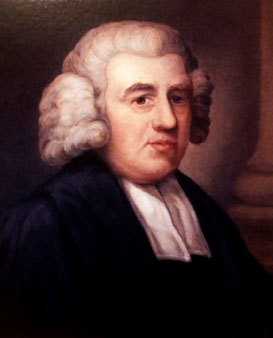
In "Views of Divine Truth," John Newton addresses the doctrine of salvation by grace through faith in Christ, emphasizing the importance of understanding divine truth as revealed in Scripture. He argues that many people are ignorant of God's holiness and their own sinfulness, leading them to rely on their works rather than the grace offered through the Gospel. Newton utilizes several Scripture passages, including 1 Corinthians 2:9-15 and Romans 5:1, to affirm that true wisdom and understanding come only through divine revelation and the work of the Holy Spirit, which leads to repentance and faith in Christ for salvation. The significance of this doctrine is profound within Reformed theology, as it underscores the total depravity of humanity, the necessity of regeneration, and the centrality of Christ as the only means of redemption.
Key Quotes
“He who wins souls is wise… the only ground of hope, the supreme object of desire as appointed of God to be wisdom, righteousness, sanctification, and redemption to all who believe in his name.”
“True religion is not a science of the head – so much as an inward and heart-felt perception which casts down imaginations and everything that exalts itself in the mind and brings every thought into a sweet and willing subjection to Christ by faith.”
“Until a person has experienced this change he will be at a loss to form a right conception of it. This is not being convinced of a mere opinion – but receiving a principle of Divine life and light in the soul.”
“The Gospel, my dear sir, is a salvation appointed for those who are ready to perish – and is not designed to put them in a way to save themselves by their own works.”
What does the Bible say about the necessity of a Savior?
The Bible emphasizes that all are sinners unable to save themselves and in need of a Savior, as seen in Romans 3:23 and Ephesians 2:8-9.
Romans 3:23, Ephesians 2:8-9
How do we know the doctrine of grace is true?
The doctrine of grace is confirmed through Scripture, which emphasizes salvation as a sovereign act of God through faith in Christ.
Ephesians 2:4-5, Ephesians 2:8
Why is true religion more than just knowledge?
True religion involves a heartfelt response to God, transcending mere intellectual understanding.
John 3:3, 1 Corinthians 2:14, John 14:15
Why are the doctrines of grace essential for Christians?
The doctrines of grace encapsulate God's plan of salvation, essential for understanding our need for His mercy and the work of Christ.
Ephesians 1:4-5, 1 Corinthians 1:30
June 23, 1775
Dear Sir,
I hope that the Lord will make you comfortable and useful in your present rank as a curate. Advancement is not necessary, either to our peace or usefulness. We may live and die contentedly, without the honors and emoluments which aspiring men thirst after, if God is pleased to honor us with a dispensation to preach his Gospel, and to crown our endeavors with a blessing. He who wins souls is wise; wise in the choice of the highest end he can propose to himself in this life; wise in the improvement of the only means by which this desirable end can be attained.
Wherever we cast our eyes, the bulk of the people are ignorant, immoral, careless. They live without God in the world; they are neither awed by his authority, nor affected by his goodness, nor enabled to trust to his promises, nor disposed to aim at his glory. If, perhaps, they have a serious interval, or some comparative sobriety of character, they ground their hopes upon their own doings, endeavors, or purposes; and treat the inexpressible love of God revealed in Christ, and the Gospel method of salvation by faith in his name, with neglect, often with contempt.
They have preachers, whom perhaps they hear with some pleasure, because they neither alarm their consciences by insisting on the spirituality and sanction of the Divine Law, nor offend their pride by publishing the humiliating doctrines of that Gospel, which is the power of God through faith unto salvation. Therefore what they do speak, they speak in vain; the world grows worse and worse under their instructions; infidelity and profligacy abound more and more. For God will own no other doctrine but what the Apostle calls the truth as it is in Jesus; that doctrine which drives the sinner from all his vain pleas, and points out the Lord Jesus Christ as the only ground of hope, the supreme object of desire, as appointed of God to be wisdom, righteousness, sanctification, and redemption, to all who believe in his name.
When ministers themselves are convinced of sin, and feel the necessity of an almighty Savior, they presently account their former gain but loss; and determine, with the Apostle, to know nothing but Jesus Christ, and him crucified. In proportion as they do this, they are sure to be wondered at, laughed at, and railed at, if the providence of God, and the constitution of their country, secure them from severer treatment. But they have this invaluable compensation, that they no longer speak without effect. In a greater or less degree, a change takes place in their hearers—the blind receive their sight, the deaf hear, the lepers are cleansed; sinners are turned from darkness to light, and from the power of Satan to God; sinful practices are forsaken; and a new course of life in the converts, evidences that they have not followed cunningly devised fables, nor taken up with uncertain notions—but that God has indeed quickened them by his Spirit, and given them an understanding to know him who is true.
The preachers, likewise, while they attempt to teach others, are taught themselves: a blessing descends upon their studies and labors, upon their perusal of the Scripture, upon their attention to what passes within them and around them; the events of every day contribute to throw light upon the Word of God; their views of Divine truth grow more enlarged, connected, and comprehensive; many difficulties, which perplexed them at their first setting out, trouble them no more; the God whom they serve, and on whom they wait, reveals to them those great things, which, though plainly expressed in the letter of the Scripture, cannot be understood and realized without Divine teaching; 1Co. 2:9-15. Thus they go on from strength to strength, hard things become easy, and a Divine light shines upon their paths. Opposition from men perhaps may increase—they may be represented as those who turn the world upside down; the cry "troublers" will be raised against them; the gates of the temple of preferment will be seldom open to them; but they will have the unspeakable consolation of applying to themselves those lively words of the Apostle, "As unknown, and yet well known; as dying, and, behold, we live; as chastened, and not killed; As sorrowful, yet always rejoicing; as poor, yet making many rich; as having nothing, and yet possessing all things." 2 Co. 6:10.
It is the strain of evident sincerity which runs through your letters, that gives me a pleasing confidence the Lord is with you. An unselfish desire of knowing the truth, with a willingness to follow it through all disadvantages, is a preparation of the heart which only God can give. He has directed you to the right method—searching the Scripture, with prayer. Go on, and may his blessing attend you. You may see, from what I have written above, what is the desire of my heart for you. But I am not impatient. Follow your heavenly Leader, and in his own time and manner He will make your way plain. I have traveled the path before you. I see what you yet want; I cannot impart it to you—but He can, and I trust He will. It will rejoice my soul to be any way assistant to you; but I am afraid! should not afford you much, either profit or satisfaction, by entering upon a dry defense of creeds and articles.
The truths of Scripture are not like mathematical theorems, which present exactly the same ideas to every person who understands the terms. The Word of God is compared to a mirror, 2Co. 3:18; but it is a mirror in which—the longer we look, the more we see! The view will be still growing upon us, and still we shall see but in part while on this side eternity. When our Lord pronounced Peter blessed, declaring he had learned that which flesh and blood could not have taught him—yet Peter was at that time much in the dark. The sufferings and death of Jesus, though the only and necessary means of his salvation, were an offense to him. But he lived to glory in, what he once could not bear to hear of. Peter had received grace to love the Lord Jesus, to follow him, to venture all and to forsake all for him—these first good dispositions were of God, and they led to further advances.
So it is still. By nature, SELF rules in the heart. When this idol is brought low, and we are truly willing to be the Lord's, and to apply to Him for strength and direction, that we may serve Him—the good work is begun. For it is a truth that holds universally and without exception, "a man can receive nothing except it be given him from God." The Lord first finds us when we are thinking of something else (Isa. 65:1), and then we begin to seek him in good earnest, and he has promised to be found of us. People may, by industry and natural abilities, make themselves masters of the external evidences of Christianity, and have much to say for and against different schemes and systems of sentiments; but all this while the heart remains untouched.
True religion is not a science of the head—so much as an inward and heart-felt perception, which casts down imaginations, and everything that exalts itself in the mind, and brings every thought into a sweet and willing subjection to Christ by faith. Here the learned have no real advantage above the ignorant; both see when the eyes of the understanding are enlightened; until then, both are equally blind. And the first lesson in the school of Christ—is to become a little child, sitting simply at his feet, that we may be made wise unto salvation.
I was not only prevented beginning my letter as soon as I wished—but have been unusually interrupted since I began it. Often, as soon as I could well take the pen in hand, I have been called away to attend company and intervening business. Though I persuade myself, after what I have formerly said, you will put a favorable construction upon my delay—yet it has given me some pain. I set a great value upon your offer of friendship, which I trust will not be interrupted, on either side, by the freedom with which we mutually express our difference of sentiments, when we are constrained to differ. You please me with entrusting me with the first rough draught of your thoughts; and you may easily perceive by my manner of writing, that I place equal confidence in your candor. I shall be glad to exchange letters as often as it suits us, without constraint, ceremony, or apology—and may He who is always present with our hearts make our correspondence useful. I pray God to be your sun and shield, your light and strength, to guide you with his eye, to comfort you with his gracious presence in your own soul, and to make you a happy instrument of comforting many!
April 3, 1759.
Dear Sir,
I know not if my heart was ever more united to any person, in so short a space of time, than to you; and what engaged me so much, was the spirit of meekness and of love (that special and inimitable mark of true Christianity) which I observed in you. I mean it not to your praise. May all the praise be to Him, from whom every good and perfect gift comes--who alone makes the best to differ from the vilest of men. But I think I may well mention, to your encouragement, that all who conversed with you greatly regret your speedy departure; and I am persuaded, the same temper, the same candor, will make you acceptable, honorable, and useful, wherever you go. Blessed are the poor in spirit, the meek, the merciful, and the peacemakers; they shall obtain the mercy they need, and possess the peace they love. They shall inherit the earth. The earth, sinful and miserable as it is, shall be worthy to be called an inheritance to them, for they shall enjoy a comparative heaven in it. They shall be called the children of God, though dignified with no title among men. Alas! how much are these things overlooked, even by many who, I would hope, are real believers.
Methinks a very different spirit from that of the church of Laodicea is to be seen among us; though perhaps it is not easy to say which is the best of the two. Laodicea was neither cold nor hot; we are both cold and hot at once, and both to the extreme. Hot, hasty, and arbitrary, in those few things where mediocrity is a virtue; but cool and remiss in those great points, where the application of the whole heart, and soul, and mind, and strength, is so absolutely necessary, and so positively enjoined. Surely there is too much room for this observation, and I perhaps stand self-condemned in making it.
I hope you will take opportunity to improve your interest in Mr. **** by letter. He expressed much satisfaction in the hour he spent with you before you sailed, and a great regard for you; therefore would, I doubt not, give you a fair hearing. He makes such large concessions sometimes, that I am apt to think he is conscious of the weakness of his own argument; and then he is as soon angry with himself for complying so far, and flies off to the other extreme. Yet for the most part, when he speaks plain, and is not restrained by complaisance for particular people, he appears not only a stranger to experimental religion--but averse to the notion, and generally inclined to treat it with levity. His obstacles are very many and very great; his reputation as a learned man, his years, his regular life, and perhaps, above all, his performances in print, especially his last book--are so many barriers that must be brake through before conviction can reach him. But the grace of God can do all this, and more; and indeed, when I think of the many truly valuable parts of his character, and the indefatigable pains he has taken in his researches after truth, I am willing to hope that the Lord will at length teach him the true wisdom, and enable him (however hard it may seem) to give up his own attainments, and sit down like a little child at the feet of Jesus.
I hope to hear soon and often from you. I number my Christian correspondents among my principal blessings; a few judicious pious friends, to whom, when I can get leisure to write, I send my heart by turns. I can trust them with my inmost sentiments, and can write with no more disguise than I think. I shall rejoice to add you to the number, if you can agree to take me as I am (as I think you will), and allow me to commit my whole self to paper, without respect to names, parties, and sentiments. I endeavor to observe my Lord's commands, to call no man master upon earth; yet I desire to own and honor the image of God wherever I find it.
I dare not say I have no bigotry: for I know not myself; and remember to my shame, that formerly, when I ignorantly professed myself free from it, I was indeed overrun with it. But this I can say, I allow it not; I strive and pray against it; and thus far, by the grace of God, I have attained, that I find my heart as much united to many who differ from me in some points, as to any who agree with me in all. I set no value upon any doctrinal truth, farther than it has a tendency to promote practical holiness. If others should think those things hindrances--which I judge to be helps in this respect, I am content they should go on in their own way, according to the light God has given them.
If it should be asked--Which are the necessary things? I answer--Those in which the spiritual worshipers of all ages and countries have been agreed. Those, on the contrary, are mere subordinate matters, in which the best men, those who have been the most eminent for faith, prayer, humility, and nearness to God, always have been, and still are, divided in their judgments. Upon this plan, I should think it no hard matter to draw up a form of sound words (whether dignified with the name of a creed or not--I care not), to which true believers of all sorts would unanimously subscribe. Suppose it ran something in the following manner:
"I believe that sin is the most hateful thing in the world. I believe that I and all men are by nature in a state of wrath and depravity, utterly unable to sustain the penalty or to fulfill the commands of God's holy law; and that we have no sufficiency of ourselves to think a good thought. I believe that Jesus Christ is the chief among ten thousand; that he came into the world to save the chief of sinners, by making a propitiation for sin by his death, by paying a perfect obedience to the law in our behalf; and that he is now exalted on high, to give repentance and remission of sins to all who believe; and that he ever lives to make intercession for us. I believe that the Holy Spirit (the gift of God through Jesus Christ), is the sure and only guide into all truth, and the common privilege of all believers; and under his influence, I believe the holy Scriptures are able to make us wise unto salvation, and to furnish us thoroughly for every good work. I believe that love to God, and to man for God's sake, is the essence of true religion, and the fulfilling of the law; that without holiness no man shall see the Lord; that those who, by a patient course in well-doing, seek glory, honor, and immortality, shall receive eternal life. And I believe that this reward is not of debt--but of grace, even to the praise and glory of that grace whereby He has made us accepted in the Beloved. Amen."
I pretend not to accuracy in this hasty draught; they are only outlines, which, if you please to retouch, and fill up at your leisure, I hope you will favor me with a sight of it. I fear I have tired you. I shall only add my prayers, that the Lord may be with you, and crown your labors of love with success, that you may hereafter shine among those who have been instrumental in turning many to righteousness.
Jury 14, 1775
My Dear Friend,
I confess, I am not a friend to that lukewarmness and indifference for truth, which bears the name of candor among many in the present day. I desire to maintain a spirit of candor and benevolence to all men, to wish them well, to do them every good office in my power, and commend what appears to me commendable in a Socinian, as readily as in a Calvinist. But I must judge of principles by the Word of God, and of the tree by its fruit. I meddle with no man's final state; because I know that He who is exalted to give repentance and remission of sins, can do it whenever, and to whoever, he is pleased. Yet I firmly believe, and I make no scruple of proclaiming it, that swearers, drunkards, adulterers, continuing such, cannot inherit the kingdom of God. And I look with no less compassion upon some people whose characters in common life may be respectable, when I see them unhappily blinded by their own carnal wisdom; and, while they account themselves, and are accounted by many others, master-builders in Zion, rejecting the only foundation upon which a sinner's hope can be safely built.
I am far from thinking that the Socinians are all hypocrites—but I think they are all in a most dangerous error; nor do their principles exhibit to my view a whit more of the genuine fruits of Christianity than deism itself. You say, "If they am sincere, and fail not for lack of diligence in searching, I cannot help thinking that God will not condemn them for an inevitable defect in their understandings." Indeed, my friend, I have such a low opinion of man in his depraved state, that I believe no one has real sincerity in religious matters—until God bestows it! And when he makes a person sincere in his desires after truth—he will assuredly guide him to the possession of it in due time, as our Lord speaks, John 6:44-45. To suppose that any people can sincerely seek the way of salvation, and yet miss it through an inevitable defect of their understandings, would contradict the plain promises of the Gospel, such as Mat. 7:7-8, John 7:16-17. But to suppose that nothing is necessary to be known, which some people who profess sincerity cannot receive, would be in effect to make the Scripture a nose of wax, and open a wide door for skepticism.
I am not a judge of the heart; but I may be sure that whoever makes the Foundation-stone a rock of offense, cannot be sincere in his inquiries. He may study the Scripture accurately—but he brings his own pre-conceived sentiments with him, and, instead of submitting them to the touchstone of truth, he makes them a rule by which he interprets. That those who lean to their own understandings should stumble and miscarry, I cannot wonder; for the same God who has promised to fill the hungry with good things, has threatened to send the rich empty away. So Mat. 11:25. It is not through defect of understanding—but a lack of simplicity and humility, that so many stumble like the blind at noon-day, and see nothing of those great truths which are written in the Gospel as with a sun-beam.
You wish me to explain myself concerning the doctrine of the Trinity. I will try—yet I know I cannot, any farther than as he who taught me shall be pleased to bear witness in your heart to what I say. My first principle in religion, is what the Scripture teaches me of the utter depravity of human nature. I believe we are by nature sinners, and by practice we are universally transgressors; that we are dead in trespasses and sins; and that the bent of our natural spirit is enmity against the holiness, government, and grace of God. Upon this ground, I see, feel, and acknowledge the necessity of such a salvation as the Gospel proposes; which, at the same time that it precludes boasting, and stains the pride of all human glory, affords encouragement to those who may be thought, or who may think themselves, the weakest or the vilest of mankind.
I believe, that whatever notions a person may take up from education—that no one ever did, or ever will, feel himself and own himself to be such a lost, miserable, hateful sinner—unless he is powerfully and supernaturally convinced by the Spirit of God. When God pleases—there is a certain light thrown into the soul, which differs not merely in degree—but in kind—from anything that can be effected or produced by moral persuasion or argument.
But (to take in another of your queries) the Holy Spirit teaches or reveals no new truths, either of doctrine or precept—but only enables us to understand what is already revealed in the Scripture. Here a change takes place—the person who was spiritually blind begins to see. The sinner's character, as described in the Word of God—he finds to be a description of himself—that he is afar off from God—a stranger to God—a rebel against Him; and that he has hitherto lived in vain! Now he begins to see the necessity of an atonement, an advocate, a shepherd, a comforter. He can no more trust to his own wisdom, strength, and goodness; but, accounting all his former gain but loss, for the excellency of the knowledge of Christ—he renounces every other refuge, and ventures his all upon the person, work, and promise of the Redeemer!
In this way, I say, he will find the doctrine of the Trinity not only a proposition—but a principle: that is, from his own needs and situation, he will have an abiding conviction that the Son and Holy Spirit are God, and must be possessed of the attributes and powers of Deity, to support the offices the Scriptures assign them, and to deserve the confidence and worship the Scriptures require to be placed in them, and paid to them. Without this awakened state of mind—a theologian, reputed orthodox, will blunder wretchedly even in defending his own opinions. I have seen labored defenses of the Trinity which have given me not much more satisfaction than I would probably receive from a dissertation upon the rainbow composed by a man blind from his birth!
In effect, the true knowledge of God cannot be attained by studies on our part; it must be by a revelation on his part. "No one knows the Son except the Father, and no one knows the Father except the Son and anyone to whom the Son desires to reveal Him." Matthew 11:27. "Blessed are you, Simon son of Jonah, for this was not revealed to you by man, but by my Father in heaven." Matthew 16:17. This is a revelation, not objectively of new truth—but subjectively of new light in us. Then he who runs may read. Perhaps you may not quite understand my meaning, or not accede to my sentiment at present. I have little doubt, however—but the time is coming when you will. I believe the Lord God has given you that sincerity, which he never disappoints.
Far be it from me to arrogate infallibility to myself, or to any writer or preacher; yet, blessed be God, I am not left to float up and down the uncertain tide of opinion, in those points wherein the peace of my soul is nearly concerned. I know, yes I infallibly know, whom I have believed. I am under no more doubt about the way of salvation, than of the way to London. I cannot be deceived, because the Word of God cannot deceive me.
It is impossible, however, for me to give you, or any person, full satisfaction concerning my evidence, because it is of an experimental nature; Rev. 2:17. In general, it arises from the views I have received of the power, compassion, and grace of Jesus, and a consciousness that I, from a conviction of my sin and misery, have fled to him for refuge, entrusted and devoted myself and my all to him. Since my mind has been enlightened, everything within me, and everything around me, confirms and explains to me what I read in Scripture; and though I have reason enough to distrust my own judgment every hour—yet I have no reason to question the great essentials, which the Lord himself has taught me.
I take great pleasure in your correspondence, still more in the thought of your friendship, which I hope to cultivate to the utmost, and to approve myself sincerely and affectionately yours.
August 11, 1775
My dear Friend,
I thank you for your letter. Your objections neither displease nor weary me. While truth is the object of your inquiry, the more freedom you use with me the better. Nor do they surprise me; for I have formerly made similar objections myself. I have stood upon your ground—and I continue to hope you will one day stand upon mine! As I have told you more than once, I do not mean to dictate to you, or to wish you to receive anything upon my recommendation; but, in the simplicity of friendship, I will give you my thoughts from time to time upon the points you propose, and leave the outcome to the Divine blessing.
The term Arminian, as at present applied, is very indiscriminate, and takes in a great variety of people and sentiments, among whom, I believe, there are many who hold the fundamental truths of the Gospel, and live a life of faith in the Son of God. I am far from supposing that God will guide every sincere person exactly to adopt all my sentiments. But there are some sentiments which I believe essential to the very state and character of a true Christian. And these make him a Christian; not merely by being his acknowledged sentiments—but by a certain peculiar manner in which he possesses them.
There is a certain important change which takes place in the heart, by the operation of the Spirit of God, before the soundest and most orthodox sentiments can have their proper influence upon us. This work, or change, the Scripture describes by various names, each of which is designed to teach us the marvelous effects it produces, and the Almighty power by which it is produced. It is sometimes called a new birth, John 3:3; sometimes a new creature, or new creation, as 2 Co. 5:17; sometimes the causing light to shine out of darkness, 2 Co. 4:6; sometimes the opening the eyes of the blind, Acts 26:18; sometimes the raising the dead to life, Eph. 2:5. Until a person has experienced this change, he will be at a loss to form a right conception of it. This is not being convinced of a mere opinion—but receiving a principle of Divine life and light in the soul. And until this is received, the things of God, the truths of the Gospel, cannot be rightly discerned or understood by the utmost powers of fallen man, who, with all his wisdom, reason, and talents, is still but what the Apostle calls the natural man, until the power of God visits his heart! 1Co. 2:14.
This work is sometimes wrought suddenly, as in the case of Lydia, Act. 16:14; at other times very gradually. A person who before was a stranger even to the form of godliness, or at best content with a mere religious form, finds new thoughts arising in his mind, feels some concern about his sins, some desire to please God, some suspicions that all is not right. He examines his views of religion, hopes the best of them, and yet cannot rest satisfied in them. Today, perhaps, he thinks himself fixed; tomorrow he will be all uncertainty. He inquires of others; weighs, measures, considers; meets with sentiments which he had not attended to; thinks them plausible; but is presently shocked with objections, or supposed consequences, which he finds himself unable to remove.
As he goes on in his inquiry, his difficulties increase. New doubts arise in his mind; even the Scriptures perplex him, and appear to assert contrary things. He would sound the depths of truth by the plummet of his reason—but he finds his line is too short! Yet even now the man is under a guidance, which will at length lead him right. The importance of the subject takes up his thoughts, and takes off the relish he once had for the things of the world. He reads, he prays, he strives, he resolves. Sometimes inward perplexities and outward temptations bring him to his wit's end. He almost wishes to stand where he is, and inquire no more—but he cannot stop.
At length he begins to feel the inward depravity, which he had before owned as a mere opinion. A sense of sin and guilt cut him out new work. Here reasoning will stand him in no stead. This is a painful change of mind; but it prepares the way for a blessing. It silences some objections better than a thousand arguments; it cuts the web of his own wisdom and attainments; it makes him weary of working for life; and teaches him, in God's due time, the meaning of that text, "To him who works not—but believes in him who justifies the ungodly—his faith is counted for righteousness."
Then he learns, that Scriptural faith is a very different thing from a rational assent to the Gospel; that it is the immediate gift of God, Eph. 2:8; the operation of God, Col. 2:12; that Christ is not only the object—but the author and finisher of faith, Heb. 12:2; and that faith is not so properly a part of that obedience we owe to God, as an inestimable benefit we receive from him for Christ's sake, Phi. 1:29; which is the medium of our justification, Rom. 5:1, and the principle by which we are united to Christ (as the branch to the vine), John 17:21. I have described a path in which I have known many led, and in which I have walked myself.
The Gospel, my dear sir, is a salvation appointed for those who are ready to perish—and is not designed to put them in a way to save themselves by their own works. It speaks to us as condemned already, and calls upon us to believe in a crucified Savior—that we may receive redemption through his blood, even the forgiveness of our sins. And the Spirit of God, by the Gospel, first convinces us of unbelief, sin, and misery; and then, by revealing the things of Jesus to our minds, enables us, as helpless sinners, to come to Christ, to receive him, to behold him; or, in other words, to believe in him, and expect pardon, life, and grace from him; renouncing every hope and aim in which we once rested, "and accounting all things loss and rubbish for the excellency of the knowledge of Christ." John 6:35; Isa. 45:22; with John 6:40; Col. 2:6.
In some of my Omicron's Letters, you will find my thoughts more at large upon these subjects than I have now time to write them. You will see in it the sentiments of a man of great learning, sound reasoning, an amiable and irreproachable character, and how little he accounted of all these advantages when the Lord was pleased to enlighten his mind.
Though we have not exactly the same view of human depravity—yet as we both agree to take our measure of it from the Word of God, I trust we shall not always differ about it. Adam was created in the image of God, in righteousness and true holiness, Eph. 4:24. This moral image, I believe, was totally lost by sin. In that sense, he died the day, the moment, he ate the forbidden fruit. God was no longer his joy and delight; he was averse from the thoughts of his presence, and would (if possible) have hid himself from him. His natural powers, though doubtless impaired, were not destroyed. Man by nature, is still capable of great things. His understanding, reason, memory, imagination, etc. sufficiently proclaim that the Hand that made him is Divine. He is, as Milton says of Beelzebub, majestic though in ruins. He can reason, invent, and by study, attain a considerable knowledge in natural things. The exertions of human genius, as specified in the characters of some philosophers, poets, orators, etc. are astonishing. But man cannot know, love, trust, or serve his Maker—unless he is renewed in the spirit of his mind.
God has preserved in him likewise, some feelings of benevolence, pity, some sense of natural justice and truth, etc. without which there could be no society. But these, I apprehend, are little more than instincts, by which the world is kept in some small degree of order. But, being under the direction of pride and self, do not deserve the name of virtue and goodness, because the exercise of them does not spring from a principle of love to God, nor is directed to his glory, or regulated by the rule of his Word—until a principle of grace is superadded.
You think that I will not say, "that God, judicially in punishment of one man's sin, added these corruptions to all his posterity." Let us suppose, that the punishment annexed to eating the forbidden fruit, had been the loss of Adam's rational powers, and that he should be degraded to the state and capacity of a brute. In this condition, had he begotten children after the Fall in his own likeness, his nature being previously changed, they must have been, of course, brutes like himself; for he could not convey to them those original powers which he had lost. Will this illustrate my meaning?
Sin did not deprive him of rationality—but spirituality. His nature became earthly, sensual, yes devilish; and this fallen nature, this carnal mind, which is enmity against God—is not subject to his law, neither indeed can it be, Rom. 8:7—we universally derive from him. Look upon children—they presently show themselves averse from good—but are exceedingly propense to evil. This they can learn even without a master; but ten thousand instructors and instructions cannot instill good into them, so as to teach them to love their Creator—unless a Divine power acts in their hearts. This is just as it is with the earth, which produces weeds spontaneously. But if you see a fruit filled garden—you are sure that it was planted or sown there, and did not spring from the soil by itself.
I know many hard questions may be started upon this subject; but the Lord in due time will clear his own cause, and vindicate his own ways. I leave all difficulties with him. It is sufficient for me that Scripture asserts, and experience proves, that it is thus in fact; Rom. 3:9-21; Job. 14:4.
Thus, we have not only forfeited our happiness by transgression—but are by our depravity, incapable of it—and have no more desire or taste for such a state as the Scripture describes heaven to be, than a man born deaf can have for a concert of music. And therefore our Lord declares, that, unless a man is born again—he not only shall not—but cannot see the kingdom of God! Hence a twofold necessity of a Savior: his blood for the pardon of our sins; his life, Spirit, and grace, to quicken our souls, and form us anew for himself, that we may feel his love, and show forth his praise.
Paul, before his conversion, was not sincere, in the sense I hope you to be. He thought himself in the right, without doubt, as many have done when they killed God's servants, John 16:2. He was blindly and obstinately zealous. He did not enter into the merits of the Christian cause, or inquire into facts with that attention which sincerity would have put him upon. You think that his sincerity and zeal were the very things that made him a chosen instrument: he himself speaks of them as the very things that made him peculiarly unworthy of that honor, 1Co. 15:9; and he tells us, that he was set forth as a pattern of the Lord's long-suffering and mercy—that the very chief of sinners might be encouraged, 1Ti. 1:15-16. Had he been sincerely desirous to know whether Jesus was the Messiah, there was enough in his character, doctrines, miracles, and the prophecies concerning him—to have cleared up the point. But he took it for granted he was right in his opinion, and hurried blindly on, and was (as he said himself) exceedingly mad against them.
Such a kind of sincerity is common enough. People believe themselves right, and therefore treat others with scorn or rage. They appeal to the Scriptures—but first lay down their own preconceived sentiments for truths, and then examine what Scriptures they can find to countenance them. Surely a person's thinking himself right, will not give a sanction to all that he does under that persuasion.
Ignorance and obstinacy are in themselves sinful, and no plea of sincerity will exempt from the danger of being under their influence: Isa. 27:11; Luke 6:39.
It appears to me, that, though you will not follow any man implicitly, you are desirous of discovering your mistakes, supposing you are mistaken in any point of importance. You read and examine the Word of God, not to find weapons with which to defend your sentiments at all events—but to know whether they are defensible or not. You pray for God's light and teaching; and in this search you are willing to risk, what men are commonly much afraid of hazarding— character, interest, preferment, favor, etc. A sincerity of this kind I too seldom meet with; when I do, I account it a token for good, and am ready to say, "No man can do this—unless God is with him." However, sincerity is not conversion; but I believe it is always a forerunner of it.
I would not be uncharitable and censorious, hasty and peremptory, in judging my fellow-creatures. But if I acknowledge the Word of God—I cannot avoid forming my judgment upon it. It is true, I cannot look into people's hearts; but hearts and principles are delineated to my hand—in the Scripture. I read, that no murderer has eternal life in him; I read likewise, "If any man loves not the Lord Jesus Christ, let him be accursed;" and therefore I conclude, that there are speculative errors as heinous in their guilt, as destructive in their effects, as murder—and that the most moral, upright man—if he loves not the Lord Jesus Christ, is in the sight of God, the Judge of all—as displeasing to Him as a murderer!
It has pleased God, for the peace and support of society, to put a black mark upon those sins which affect the peace and welfare of our neighbor, such as adultery and murder. But undoubtedly the sins committed immediately against himself must be more heinous than any which offend our fellow-creatures. The second commandment, Mat. 22:39, is like the first; but it depends upon it, and is therefore inferior to it. Men ordinarily judge otherwise. To live regardless of God and the Gospel, is looked upon as a minor fault—in comparison with offenses against society. But sooner or later it will appear otherwise to all.
A group of robbers may pride themselves upon the justice, honor, and truth they observe towards one another; but because they are a nuisance to the public good, they are deservedly accounted villains, and treated as such, notwithstanding their petty morality among themselves. Now, such a company of robbers bears a much greater proportion to a whole nation, than a nation, or all the nations of the earth, bears to the great God. Our dependence upon him is absolute, our obligations to him infinite. In vain shall men plead their moral discharge of relative duties to each other—if they fail in the unspeakably greater relation under which they stand to God. Therefore, when I see people living without God in the world, as all do until they are converted, I cannot but judge them in a dangerous state; not because I take pleasure in censuring, or think myself authorized to pass sentence upon my fellow-creatures—but because the Scripture decides expressly on the case, and I am bound to take my sentiments from thence.
The Philippian jailer was certainly a Christian when baptized, as you observe. He trembled; he cried out, "What must I do to be saved?" Paul did not bid him amend his life—but to believe in the Lord Jesus. He believed, and rejoiced. But the Lord blessed the Apostle's words, to produce in him that saving faith, which filled him with joy and peace. It was, as I observed before, something more than an assent to the proposition, that Jesus is the Christ. It was a resting in him for forgiveness and acceptance, and a cleaving to him in love. No other faith will purify the heart, work by love, and overcome the world.
I feel myself much interested in your concerns; and your unexpected frank application to me, I consider as a providential call, which binds me to your service. I hope our correspondence will be productive of happy effects, and that we shall both one day rejoice in it.

Comments
Your comment has been submitted and is awaiting moderation. Once approved, it will appear on this page.
Be the first to comment!