Bootstrap
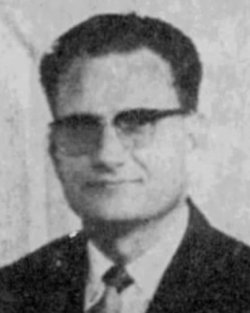
W.E. Best

Separation

2 Corinthians 6:8-11
W.E. Best April, 1 1981 Audio
0 Comments
Best on Separation

Sermon Transcript

Auto-generated transcript • May contain errors

100%
Open your Bibles this evening
to the 6th chapter of 2 Corinthians. 2 Corinthians chapter 6. I mentioned to you in both services
last Sunday that we had not touched the tip of the iceberg in the
discussion of the covenant theology or family covenant theory. I've been continuing
my investigation of some additional works that I have come across
and what I have, rather than what I have studied in the past. This thing could go on for many
weeks, but I do not feel that it's necessary to carry it that
far. So I'm trying to decide just
where to cut it off. But there are several areas that
I think do need to be discussed, and so we will spend at least
another Sunday and maybe two in the discussion of the subject.
Let us read beginning with verse 11 and read through the concluding
verse of the chapter. O ye Corinthians, our mouth is
open unto you. Our heart is enlarged. You're
not straightened in us, but you're straightened in your own bowels. Or we could read it like this,
you're not restricted in us, but you're restricted in your
own bowels. Now for a recompense in the same,
I speak as unto my children, be ye also enlarged. be ye not
unequally yoked together with unbelievers? For what fellowship
hath righteousness with unrighteousness? And what communion hath light
with darkness? And what concord hath Christ
with Belial? Or what part hath he that believeth
with an infidel or an unbeliever? And what agreement hath the temple
of God with idols? For ye are the temple of the
living God. As God has said, I will dwell
in them and walk in them, and I will be their God, and they
shall be my people. Wherefore, come out from among
them, and be ye separate, saith the Lord, and touch not the unclean
thing, and I will receive you. And will be a father unto you
and ye shall be my sons and daughters saith the Lord Almighty I Would
like for us to continue our thinking together tonight on the subject
of separation I've made the statement in the past that if we in our
early Christian lives Had been subjected to to the great doctrinal
teaching in many areas of biblical study, of the work of the Puritans,
and if we had been subjected to the tremendous practical teaching
that the Plymouth Brethren people have done and those who are Orthodox
continue to do, we would have avoided a great number of pitfalls
in our own Christian lives. I continue to maintain that thinking. The more I study, the more I'm
convinced that there is not enough today being said concerning the
subject of biblical separation. What I'd like to do tonight by
way of introduction is to show you what all is really involved
in the subject of separation. We could approach this subject
from many different points of view. For instance, I have here
in the margin of my Bible an outline that I have used in times
past. I'll also give to you two other
approaches to the subject of separation in addition to this.
So we will not just be repeating something we have given in the
past. We'll also be going a little further into the study of the
subject. In every age, I don't care what age it is, the call
of God has always been for his people to live separated lives. For instance, to Abraham, God
said, Get thee out of thy country and from thy kindred. The call
that came To Abraham, or to Abram as it was then before his name
was changed, was a call to separation. When we are called effectually,
it is a call from something. It is a call to something. And that call from something
denotes separation. To Israel, secondly, God told
them to get out of Egypt. And Egypt, of course, is typical
of the world. John the Baptist, as we have
been discussing now for several services, stood outside of organized
Judaism. And as John the Baptist was to
stand outside of organized Judaism, so are we as Christians, recipients
of grace, are to stand outside of organized Christendom. Number four, the Lord Jesus Christ,
as he went into Judaism, John chapter 10, he saved the elected
ones from Judaism and led them out of Judaism, as we're told
in the first 11 verses of the 10th chapter of John. Number
five, Peter told the converts on the day of Pentecost to save
themselves from this untoward generation. That's separation. Don't be confused over the statement
that Peter makes in verse 40 of chapter 2 of the Acts. We
are to save ourselves from this untoward generation. Number six,
we've referred to this recently, The writer of Hebrews said, let
us go outside the camp bearing the reproach of Christ. And finally,
the call of God shall go forth for his people to come out of
Babylon in Revelation 18 and verse 4. Now after having given
those things, let's go back for a moment and look at the subject
of separation from another point of view. In other words, we'll
mention some things that we did not mention in these seven things
that I've already given. We're separated, first of all,
by covenant. By covenant. John 17, verse 6. We're now in the study of the
subject of the covenant. And having mentioned the word
covenant, let me give to you a little preview of what we will
be discussing with you next Lord's Day morning, the Lord willing.
We do not want to confuse the biblical subject of the eternal
covenant with covenant theology or family covenant fellowship. Now, it's very easy for persons
to make the wrong statement when you hear someone say, I'm going
to preach or I'm going to teach on the subject of the eternal
covenant. I read just today a small work where some think that there
is a way to avoid the controversy that exists between those who
believe in covenant theology and those who reject covenant
theology. This person's idea is that we
should not use the expression, the eternal covenant of grace.
That's interesting and so we will go into that a little bit,
not too much, but enough for you to be acquainted with it
this coming Sunday. But we are separated by covenant.
No one can read John 17, even though this statement, covenant
of grace, is not found, and we'll explain that later, yet we are
separated by covenant. Seven times in John 17, references
made to those whom the Father gave to the Son. The question
is, when did the Father give them to the Son? That goes back,
you see, into God's eternal purpose. Now, there are those who think
we ought to use the expression God's eternal purpose or God's
eternal decree rather than God's eternal covenant. Secondly, we're
separated by calling, by calling. Well, I've already referred to
that, really, briefly, when Abraham was called from Ur of the Chaldees,
but we'll give a New Testament reference to this subject, 1
Peter 2, verse 9. And then thirdly, we're called,
or we're separated by redemption. That's Galatians chapter 1, verse
4. I want to acquaint you with the
vast amount of scriptures and different facets of the subject
of separation. So thirdly, we're separated by
redemption. That's Galatians 1, 4. Fourthly,
we are separated by faith. And there are many verses to
give on this, but we'll give John 5, 24. Fifthly, we're separated
by power. And John 17, verse 15 is an outstanding
text on this particular point. Sixthly, we're separated by command. And this is taken from the passage
that we read this evening from 2 Corinthians 6 and verse 14.
And finally, we're separated by dedication. And we'll give
Numbers chapter 6, the entire chapter, as a reference because
there are many things connected with consecration and dedication
and so forth in Numbers chapter 6. Now let's look at it still
from another point of view. Well, even adding to what we've
already stated. There are, number one, ceremonial
number six and verse six National we're talking about separation.
I'm just giving one word There are number one ceremonial number
six six national Exodus 33 verse 16 Functional numbers 8 verse
14 and acts 13 verse 2 Sinful Isaiah 59 to Church Ecclesiastical and of course
that would be this passage that we are looking at brief of the
night in 2nd Corinthians 6 14 through 18 Holy 1st John 2 15
and Finally Matthew 25 32 and this refers of course to the
final separation and that's Matthew 25 verse 32 and Now, after having
given these things to give you a little insight into the subject
of separation and how many references, and we haven't covered all of
them by any means, but it is a biblical subject. It is one
to which we should give close attention, and we must give close
attention to it as Christians, or we'll find ourselves in the
same position that Israel found herself in. So, church separation
is very important. Now, I've divided our study tonight
into several points. First, we'll look at church separation.
Then we'll look, secondly, at separation in the Scriptures.
And then we'll give some other points a little later. In discussing
church separation, two biblical concepts of the church must be
considered. Number one, there is the invisible
concept of the Church, and we know the invisible concept of
the Church includes all of those who are being called out by the
grace of the sovereign God, both Jews and Gentiles. Now, there is also the local
aspect, and it is the local aspect that you and I are concerned
about. We are, of course, in the family of God. We are members
of the body of Christ. And being members of the body
of Christ, we are to be associated with the local church, because
the Lord ordained the local church for the edification of His people.
And since this passage that we have read from 2 Corinthians
6, beginning with verse 14 through 18, has to do with the separation
of the people in the church at Corinth, from those things that
would hinder them in their service for the Lord, then there is an
application in this for you and me. So there are marks of true, visible separation on the part
of God's people who are associated with the local church. They are,
number one, doctrine. Doctrine is a very important
thing. We must know doctrine. I realize that many today are
making light of doctrine. And we know what the results
are. They're tragic. And they'll continue to be tragic
whenever doctrine is minimized. So we must know doctrine. We
must be well versed in doctrine. And there'll be no really understanding
of separation unless there is understanding of biblical doctrine.
Secondly, discipline. So these are three outstanding
marks of a local church, a true local church. Number one, doctrine.
And when I say doctrine, I don't mean just a few things that people
like, a few choice subjects that people love to discuss and others
enjoy hearing. But I'm talking about the whole
counsel of God. So doctrine is very important.
Second, discipline. Discipline must be exercised.
There must be the discipline of life. And discipline, of course,
takes in more than just bringing someone and exposing someone
for evil deeds. Discipline includes one's life
as he disciplines himself for study, as he disciplines himself
in exercise and putting into practice the things that he has
learned. And finally, distribution. So these are three outstanding
marks of a true, visible church. Doctrine, discipline, and distribution. Now as we consider separation
in scripture, we have in Deuteronomy 7, verses 2 through 4, a classic
example of separation in the Old Testament, as Moses gave
directions to the people of Israel. They were not to associate themselves
with the people of the land. Notice, with the people of the
land. They were to destroy the people of the land. They were
to destroy the idols, lest they become in danger of compromise. And that's why that when the
Israelites went into the land of Canaan, they were to destroy
all the kings, and there were some 31 of them. And each one
of the kings in the land of Canaan has a meaning. Of course, we
cannot go into all 31 tonight. It would take a number of services
to do justice to that subject. But they were to be destroyed.
Now, we do not destroy people, but you and I do have a responsibility. We are to crucify the flesh with
all of its affections and lusts. So what the nation of Israel
was to do in destroying the idols, lest they be in a compromising
situation, you and I must crucify the flesh with all of its affections
and lusts. I appreciated what Brother Leon
Jones said this afternoon while he was talking to me. He was
quoting a passage from the seventh chapter of the book of Romans.
He said, you know, Brother Bass, When the scripture says, and
he preached on this last Sunday night, and that's why he wanted
to tell me about it, I don't think he gets to preach too often,
so when he does, he liked to preach it several times, and
so he preached it to me. And he was quoting a passage
in the seventh chapter of Romans, in verse 18, that I find in me
that is in my flesh dwelleth no good thing. And he said, with
you and me, he said, there are things that come to our minds
every day. that if we were to reveal those
things that come to our minds, they would embarrass us and embarrass
people with whom we might be discussing things. I said, you're
exactly right. So he said, we have to put those
things, we have to crucify them. Those things are there and they
just come to our minds. And he said, we can't be hypocritical.
And that is true. So we do have a responsibility
as Christians. We are to crucify the flesh with
its affections and lusts. And as we are told in the 7th
chapter of 2 Corinthians and verse 1, and notice here, actually
we shouldn't even stop in our reading. We should go right on
and read the first part of the seventh chapter after having
read the last part of chapter six for our scripture reading
tonight. Paul said, having therefore these promises dearly beloved,
let us cleanse ourselves from all filthiness of the flesh and
spirit, perfecting holiness in the spirit of God. We're not
only to cleanse ourselves of the filthiness of the flesh,
but also the spirit. And that's what he was talking
about in reality by revealing even the things that come to
our minds. And it isn't necessary for you,
it isn't necessary for me to go around and it isn't necessary
for me, I hope and I don't intend to, to tell you all the things
that I'm thinking. And it isn't necessary for you
to tell me all the things that you're thinking. But we are to
cleanse ourselves. This is addressed to the children
of God. So as the Israelites were to kill, they were to put
to death the things that would hinder them lest they put themselves
in a compromising position. You and I must crucify the flesh
with its affections and lusts, and when things do come to our
minds that aren't right, that are dishonoring, we are to crucify
them, put them out, and the best way to put them out is to begin
to think upon the things of the Lord. So if you want to see how
Israel did in this regard, when you have time, read the second
chapter of Judges, and it isn't too pleasant to read. And we're
told that the gods of the land would be the snare, would be
the snare of the people of Israel. And the gods did become a snare
to the Israelites. But I like the testimony of the
Hebrew children. I'm talking about Shadrach, Meshach,
and Abednego. Regardless of what happened to
them, they said, we will not serve thy gods. Now, beloved,
we don't go around today and bow before images and gods, but
yet if we're not careful, the things that come to our minds
and the things that we want to do and taking too much time for
ourselves, these things become gods to us. And they're just
as heinous in the sight of God whom we worship as these things
before the Israelites bowed some of them. Then let's go a step further.
Coming to the New Testament. Separation is mentioned in many
scriptures, and I'll cite just two or three. Separation from
idolatry. Separation from darkness. Separation
from unbelief. And here are some scriptures
that I will give. We'll not have time to turn and read them. Romans
16, 17 through 19. A great text of scriptures, Ephesians
5, verse 11. Another outstanding passage is
2 Timothy 2, verses 15 through 19. And the latter one has to
do with false teaching, with Hymenaeus and Philetus, who erred
concerning the truth. But Paul said, even in the face
of all of the heresy, heretical things that were being propagated
in his time, he said, nevertheless the foundation of God standeth
sure, having this seal, the Lord knoweth them that are his, and
let every one that nameth the name of Christ, what? Depart.
That's separation. Depart from iniquity. That's
separation. I'd like for us to think about
separation in history. Separation in history. I'd like
to mention Martin Luther briefly, John Calvin, John Knox, the Puritans,
and then we'll talk about separation today. We'll see how applicable
this subject is. It is interesting to observe
some things in the life of Martin Luther. I'm not a Lutheran by
any means and don't intend to be. I could not cooperate with
him. I could not fellowship with him. There are certain things
they believe that I absolutely could not endorse. And yet, I
believe there are Christians irrespective of Lutheranism that
is taught. But Luther, of course, does have
one outstanding book, and that's The Bondage of the Will. But
that's about as far as I believe I could go with Martin Luther.
You might be able to go further. His subject, of course, that
he emphasized so strongly, justification by faith. But this is interesting. Luther termed the papacy, from
which he had separated himself as the king of Babylon. He didn't
pull any punches. In his letter to Leo X, he made
this statement, quote, We have administered unto Babylon, and
she is not cured. Let us abandon her, he said,
end of quote. Well, at least he recognized
some things that were heinous in the eyes of God, from which
he must depart and separate himself in order to live with his own
conscience. And he did that. And we're thankful for that.
We know that John Calvin was a Frenchman, but when he departed
from the Roman Catholic Church, he fled from Paris and went to
Geneva and spent the remaining days of his life in Geneva. Why
did he flee from Paris? He fled because he was fearful
for his own life. That's the reason he fled. What
about John Knox? John Knox, too, was a Roman Catholic,
and he left his teaching position in the Church of Rome, and we
know the contribution he made in many respects in Scotland.
And yet I have given to you the Church of Scotland and her principal
beliefs concerning the covenant theory, and we'll have more to
say about that. Even though John Knox preached
a lot of truth and was a stalwart man for the truth that he knew,
I don't think we need to be too hard on them. They lived up to
the life that they had, And I'm wondering today if we're
living up to the life that we have. I'm just wondering if we're
really living up to the life that we have. You know, I've
been doing some serious thinking in the last few days. It's amazing
to me how much the Lord does with what he has to do with.
That's a good way to express it. Between all the young, smart
addicts and the older disgruntled people. We have many in between the young
smart alecks and those who are soreheads, so to speak, a great
host of people who are complacent, apathetic. So that leaves very few, doesn't
it, when you really think about it. Isn't it amazing what the
Lord does, with what little he has to do with. I remember before
I left the Southern Baptists, one Baptist preacher kept saying,
Baptists are many but not much. And I thought that was a good
expression at the time. I agreed with him 100%. But I'm wondering
if that is not true even with persons who are not affiliated
with maybe any denominational group. If there are not many
and yet in reality they're not much. I find that to be true
to a great extent today. Then let's think about the Puritans.
Martin Lutheran, Calvin, John Knox. What about the Puritans?
The Puritans left all. in 1662 when the Act of Conformity,
and all of us are familiar with the Act of Conformity of 1662,
who have done any study of church history. So they left all in
1662 when the Act of Conformity was imposed by the clandestine
Papist, Charles II. And we're thankful for their
separation. And when we read church history,
when we read the works of the Puritans and see how faithful
they were in the face of great opposition, we all have to bow
our heads and thank God for the faithfulness of these men and
for the grace of God that enabled them to do what they did in the
face of such terrible opposition. That brings us to our time. Separation
today. Not just separation in the Old
Testament, separation in the New Testament, separation in
history, but what about separation today? There is the World Council
of Churches. I could never have anything to
do with the World Council of Churches, but yet there are many
today who are aligning themselves with the World Council of Churches.
There are many today who deny the deity of Jesus Christ. And
there are those, and this I abhor with all the passion of my soul,
and I'm afraid this is having its influence to a great extent
in many, many institutions that claim some orthodoxy. And that is, immorality today,
to a great extent, is purveyed as situational ethics. as situational ethics. I abhor
that thought with all the passion of my soul." And then we see
fellowship with Rome is beginning to increase to a great extent.
And I like what one man said. He said, fellowship with Rome
has passed the, quote, getting to know you, end of quote, stage. I like that statement. You know,
in times past, there are many who have said, well, we need
to know Romanism better. So this person, who is a real
man of God, made this statement that fellowship with Rome is
past the, quote, getting to know you better. Then we have, of
course, the social gospel that is very prevalent today. I can
illustrate that by about five phone calls I've already received
this week. I want to ask you a question.
How many of you around midday or anywhere from 5 to about 7
o'clock in the evening receive quite a few calls from different
religious organizations and everything else you can think of? Some connected
with hospitals, some connected with the Purple Heart, some connected
with this, and I believe that's the Catholic organization. And
I've already received this week, and you know what I'm doing now?
I don't know whether they just go through the phone directory
and see minister or, I don't care, reverend in front of my
name or behind it or any other place, but I do and I'm listed
in the pages now as minister and I've had to do that for a
particular reason because There are a couple of other W.E. Best,
and one of them has really given me a lot of problems due to his
over $100,000 in judgments against him, and so I get his phone calls
sometimes, and they get pretty nasty. So I had put, several
years ago, Minister in front of my initials W.E. Best. I don't
know whether they go through and just see the name Minister
or what, and I'll tell you what I'm doing now. As soon as they
start in and they go far enough that I can tell, what they are. I used to say I am not interested.
I'm even stopping that. I just politely hang up the phone. Just politely hang it up. Now
you can do differently if you want to. I don't see any need
because in the first place you can't explain to them. And I
have tried to explain to some of them and they want to argue
about it. So there is no argument as far as I'm concerned. And
they think that every preacher, I suppose I get more maybe than
you do, But they think that every preacher and his church ought
to be interested in whatever their social program is. And
I want you to know I'm not interested in any of it. So this is a gospel,
social gospel age in which we're living. They're feeding the hungry
and they want recreational facilities for all the children to keep
them off the streets. This is what I heard last night. But
they're not feeding and not interested in feeding anybody's souls. And
you can make that statement to them, and they think you're some
kind of an oddball. So I just said to myself, well,
the better thing to do is just politely hang up. So if you're
on some organization and call me, and I politely hang up, and
I trust that we don't have anybody in this church family who is
affiliated with any of those organizations. If you are, well,
you got the message. But I don't think we do have
any. Now, that brings me to the last thought that'll take me
some time to develop. Now, we've seen the subject of
separation. We know it's biblical. Now, my last point is excuses,
excuses as to why people do not come out and be separated, be
a separated people. And I have seven things I want
to discuss with you, discuss with you under this point. Excuses,
excuses. All right, excuse number one.
Now, I know that all of us have heard some of these, and it may
be that we have heard all of them. So number one, the Lord
has told me not to leave. The Lord just hasn't told me
to get out of this situation. Here's a person with whom maybe
you have talked. He says he's a Christian, and
he gives some evidence of being a Christian. He gives some evidence
of loving the scriptures. or some scriptures anyway. And
so when you ask him about his affiliation with a denomination
or with an organization that is teaching contrary to the truth
of God's word and he recognizes, by the way, I didn't bring it
because I didn't want to read the article from the pulpit,
you read the paper. Once in a while I'll acquaint
you with something you may not have seen or you may have and I want to
bring it as an illustration. But Brother Burton brought me an
article out of the Houston Chronicle last week. I don't know how many
have read it. And this fellow has a lengthy article, and it's
interesting. He recognizes in the Episcopal
Church, the Lutheran, the Methodist, and on and on he went, describing
all the gimmicks and all the foolish things and the clowns
and the clown acts and everything else. So men are becoming disturbed
in various denominations as to what is going on today. But yet
you can ask the same Episcopal, I think it was an Episcopalian
who wrote this article, you could ask him, well, why don't you
get out of the Episcopalian organization? And he'd probably say, the Lord
just hadn't told me to. And so there are many Baptists,
you have Baptist friends, you have Methodist friends, you have
Baptist relatives, Methodist relatives and so forth, and as
you try to witness to them, and you point out these things, and
beloved, it is our responsibility to do this. As you point out
some of these glaring things today, and then they turn right
around and say, but God hasn't told me to get out. Now, what
answer would you give to a person like that? God hasn't told me. Well, the answer is very simple.
What about the scriptures? And then when you start quoting
scriptures, the Lord is not going to say whatever your name is,
and you can give the name, the Lord isn't going to say you,
John Doe, get out of. He's already given you the scriptures
and that's sufficient. And that's why I gave you some
21 different references tonight. 21 different references on separation,
and separation from different things. So the Lord isn't going
to speak to anyone. He didn't speak to me and say,
Will Best, get out. I kept reading and studying the
scriptures and they just jumped out at me and I knew that I had
to do something in order to live with my own conscience. Secondly,
so excuses, excuses. Opportunities to win souls. But
preacher, if I get out, I'll not have the opportunity to win
souls. So is it right to do evil? That we might have the opportunity
to do right or good? Isn't that a foolish argument?
So for a person to think that it's right to do wrong, that
he might have the opportunity of doing right, that's very unusual
thinking, isn't it? And so that's an answer that
we should have for him at our fingertips. Then here's another
one. Excuses, excuses. I can reform from within, but
if I get out, I'll not have any influence. That sounds real good,
doesn't it? That sounds real good, but there's
not any truth in it. Withdraw thyself is the language
of scripture. Purge thyself. Come out from
among them. Be ye separate, saith the Lord. These are biblical statements.
Do they mean what they say? I believe they do. I believe
they do. So their attitude is, I've got
to stay in in order to reform, but I'll tell you something.
There has never been any reformation carried on from within. If there's
any reformation at all, it is always accomplished from the
outside and not from the inside. I remember a statement that I
heard several times by my preacher brethren before I left the Southern
Baptist Convention. Bill, they called me Bill most
of them did, some called me Will, some called me Bill. Bill, there
is an old cliche that we've heard for years and years and so they
sought to use it. You don't abandon the ship. Swab the deck. Don't abandon
the ship. And it sounds real good. Well,
I'll tell you now, I won't abandon a sinking ship, don't you? I
don't want to stay on it and go down with it. You say, well,
it hasn't gone down yet. Well, just wait. Just give it
time. If the Lord tarries, it's coming. So Christians are not led by
the Spirit of God that is contrary to the Word of God because the
Spirit of God has given us His Word. Here's another one. We still
have our standards. And we're going to seek to maintain
those standards. The other night, I've been doing
something for a couple of weeks. I've been listening to a number
of different preachers. One of you and I have been going
to bed a little earlier, and I have a little radio in our bedroom, a little
battery radio, and I just lay it on the bed with us. It's one
I got when I thought we were going to have a hurricane last summer,
and I wanted something, you know, to keep up with the weather report.
So I just, it's a little pocket thing, I lay it on the bed, and
I'll keep going across different stations, AM, FM. And one fellow,
I won't tell you who it is, but I couldn't help but laugh the
other night, he has departed from a denomination. And he said,
they're always sending out their Baptist standard. He said, I
don't know why they call it a standard. I could never lie. He said, why
in the world do they continue to call it a standard? No standard
to it. And he took off, and I'll tell
you, he did some preaching for a while, but he did hit the nail
on the head, I will admit that. So they have their standards.
The standards are no more, as one man said, than paper tigers. I like that. Standards are no
more than paper tigers. And I know that to be true. I
can remember before we left the convention, I was making some
investigations, and of course, the doctrinal belief that I had,
and I checked in and I got a charter of the Louisville Seminary in
Louisville, Kentucky, the oldest of the Southern Baptist Seminaries.
And when I read the charter of Louisville Seminary, the great
doctrines of grace right down the line, the very things that
I am now preaching concerning the great issues, and yet they
are not proclaimed today. In fact, the majority of men
still in that organization, they become...places where I spoke
while I was gone. There was only one church One
church that I felt like knew anything about the Word of God,
and that was the Jackson Avenue Baptist Church in Portland, Oregon.
Small congregation. I suppose had fewer members probably
than we have. Most of the people were elderly
people. I would say from anywhere from 40 up. I never spoke in
a place with any greater freedom And I spoke on a deep doctrinal
subject, and I had the attention of the people as I spoke. And
I spoke for about an hour and 15 minutes. And that's unusual,
you know, in the average Southern Baptist church. And the people
were very, very commendable of the subject that we discussed.
But I'll tell you why. Dr. Ben Milam had gone out there
from Texas about 10 years before, And he started out in that little
church and he was a real doctrinal teacher and preacher. And I'll
never forget one statement he made. He said, I don't believe
in putting all the eggs in one basket. And he said, that's why
I contend for the local churches. He said, you know, the Methodist,
You know, they don't believe that each local church is a local
church. It's just a part of the Methodist
Church, and so forth. He said, isn't it wonderful to
know what the Bible teaches? The Lord never put all of his
eggs in one basket. I never will forget this statement.
And he said, and he uses an illustration, the seven churches, the seven
letters to the seven churches in Asia. He said, we have Ephesus,
Smyrna, Thyatira, and so forth on through to Laodicea. And he
said when one church got off base, all of them didn't necessarily
get off base. That's why the church at Philadelphia
was a strong church, and really was a church that was commended
greatly. Ephesus, strong in doctrine,
but not strong in practice. But Philadelphia, an outstanding
church, so he said, you see, whenever one institution gets
off base, that doesn't mean all of them are off base. So the
Lord didn't put all of his eggs in one basket. And I like that
statement. And the same thing is true today.
No other church has any jurisdiction over us, and we don't have any
over any other institution. So they could all go to pot,
or we could go to pot, so to speak. and the others who are
true churches are not responsible for us, and we're not responsible
for them. So Paul dealt with the situation
in Carth, because it was a local institution in Carth, and discipline
was exercised. And then you hear it said in
the form of a question, Well, where will we go? Where can I
go? Well, my answer is, it is better
to obey than sacrifice. I do not believe that we ought
to isolate ourselves, and I abhor this idea. I said something recent
and I'll repeat it tonight. I'm grateful for the contribution
that Arthur W. Pink made as far as doctrine is concerned
in his written ministry. But I think he made a tremendous
mistake, even though sometimes I feel like doing what he did. And I'm sure all of us might
feel like it at times if we let our feelings get the best of
us. But it's wrong for one, and I'm afraid that with his views
Knowing something about 15 years of his life spent in isolation
If it hasn't rubbed off with a lot of people who have read
his works And that's why they're so independent. They're independent
of everything and everybody and I don't like it Just recently I had somebody
to call me and This person said, the one book that has meant more
to me in my Christian life in coming to the knowledge of the
absolute sovereignty of God is the book written by Pink on the
sovereignty of God. And then when I kept talking
to this person, I found out this person is really not aligned
with any institution, just floating around. Beloved, that is not God's plan.
for the Christian. That's contrary to the truth
of God's Word. So where will I go? Don't worry
about it. Just depart, and I believe the
Lord will open up the door to every sincere and honest person
who is seeking an institution, that is, a church, a living organism
that is earnestly contending for the faith. Will separation not involve the
formation of a new sect? Now this is one that sounds real
good, so listen to this one carefully. And this is the attitude of some
today. Will separation not involve the formation of a new sect?
The narrowest and most intolerant of all sects? Now let me give that one again.
Will separation not involve the formation of a new sect, the
narrowest and most intolerant of all sects? It may seem to
be so in the judgment of mere nature, even religious nature. The first step toward keeping
the unity of the Spirit in the bond of peace, according to Ephesians
4 and verse 3, is to step out of the divisions of Christendom. What is the present-day trend?
The present-day trend is people becoming affiliated with religious
systems under the plea of promoting Christian unity. But what about infant sprinkling? I'm going to call it sprinkling
because it isn't baptism. What about man-made titles and
man-made organizations? What about mixed communions? What about fleshly pomp and pageantry? What about worldly prestige? What about all the modern innovations
today? Let us not stop without thinking
very seriously about a counterfeit unity that Satan is promoting
in these last days. I said a counterfeit unity that
Satan is promoting. Come out and be separate, saith
the Lord, and I'll be a father unto you. and you shall be my
children. Let us stand for the benediction.
W.E. Best
About W.E. Best
Wilbern Elias Best (1919-2007) was a preacher and writer of Gospel material. He wrote 25 books and pamphlets comprised of sermons he preached to his congregation. These books were distributed in English and Spanish around the world from 1970 to 2018 at no cost via the W.E. Best Book Missionary Trust.

Comments

0 / 2000 characters
Comments are moderated before appearing.

Be the first to comment!

Joshua

Joshua

Shall we play a game? Ask me about articles, sermons, or theology from our library. I can also help you navigate the site.