Bootstrap
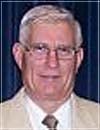
Mark Pannell

The Only Foundation

Matthew 7:21-27
Mark Pannell • May, 10 2009 • Audio
0 Comments
Mark Pannell delivers an excellent message from Matthew 7:21-27 on Christ the only true foundation.

Sermon Transcript

Auto-generated transcript • May contain errors

100%
As I said, my text is going to
be Matthew 7, beginning in verse 21, a message entitled, The Only
Foundation. You know, the history of humanity
is one of rebellion, and I'm really not talking about the
rebellion of wars or rumors of wars. in capability of man to
get along with one another. I'm talking about a rebellion
against God. It's all the way back to Adam
in the garden. What did Adam do? He rebelled
against that standard God gave him. God said you can eat of
any tree but that one. Don't eat of it because in the
day you do, you shall surely die. It went on to the nation
Israel, this rebellion. How many times did they murmur
and complain against God, rebelling against His provision, rebelling
against His mercy and goodness to them? And even Saul of Tarsus
rebelled against the gospel he heard preached before God brought
him and converted him, gave him eyes to see. And what's the bottom
line on this rebellion? What are we rebelling against?
We're rebelling against God's standard of good and evil, against
God's standard of saved and lost. Like Adam and Eve after the fall
hid from God among the trees of the garden. And why did they
hide? They were afraid. They were afraid
of this God of justice. Because what do you tell them?
When you eat of that tree, you'll surely die. Like Cain, we don't
like God's strict and inflexible standards. So what do we do?
we attempt to come to God our own way. And we end up coming
not to the true and living God, but to a God of our imagination.
We end up serving not the Christ God sent, but a counterfeit. As we'll see in our lesson today,
sinners will continue in this rebellion I'm talking about.
They'll continue all the way to final judgment unless God
stops them, unless God mercifully and graciously delivers them
from this rebellion. Thankfully. He does deliver some. Now, let's look at verse 24. You see a therefore here. I'm
in Matthew 7 and verse 24. This is the end of his sermon
on the mount, and he could be saying, therefore, because of
all these things I've said. But I think in the immediate
context here, we have to go back to these verses just prior to
the therefore. So let's go back up to verse
21. He said, ìNot everyone that saith
unto me, Lord, Lord, shall enter into the kingdom of heaven, but
he that doeth the will of my Father, which is in heaven.î
Now, whoís speaking here? Christ is doing the talking.
Preachers all over this world are reading this very word, maybe
this very passage that Iím reading, and theyíre calling the Christ
they see revealed in this word, theyíre calling Him Lord, just
like these, Lord, Lord. But just because they see a Christ
here, and just because they call the Christ they see in this word
Lord, that does not necessarily mean that they're thinking about,
or looking to, or worshiping the Lord that's actually revealed
here. It doesn't mean that the one
in their preaching is the one who is identified and distinguished
in this word. He clearly says here, not everyone
who calls Him, and he's talking about himself. He's talking about
himself. They're calling him Lord. But
he said, not everybody that does that, not everybody that calls
me Lord, Lord, will enter the kingdom of heaven. But, in that
same verse, some will. Some will enter the kingdom of
heaven. Who? He that doeth the will of
my Father which is in heaven. Now, we'll see more about that
a little later on. Go on to verse 22. Many will
say to me in that day, Lord, Lord, have we not prophesied
in thy name? And Lord, in thy name have we
not cast out devils? And Lord, in thy name have we
not done many wonderful works? Many, he says, will say to me
in that day. How many? Well, I can't give
you a number, but I can tell you how many. All who are not
delivered from their counterfeit Christ to the true Christ, the
one this Word identifies and distinguishes. That's how many.
In that day here that he's talking about is the day of final judgment. This is a picture of final judgment
for these who've come before the Lord of all judgment. And
they call Him Lord. These many are those who claim
that their faith is in the Christ who died on the cross. They claim
that their hope is in His blood. It's in His death. It's in His
cross. To them, the things that they're talking about here prophesied
in thy name, cast out devils, done many wonderful works." These
things are things that give evidence of their faith. To them, these
things are evidences that they are believing in the Christ that
they see in this Word. It is evidence to them that they
are looking to the Christ of this Word. That is how they see
it. So why then in verse 23 does Christ call these works of iniquity? Well, it is because their faith
is not in the Christ of this Word. Their works are motivated
by a counterfeit Christ. Now, they believe in the Christ
who died for their sins. They believe that his blood saved
them. But the Christ in their theology did nothing to fulfill
God's law or satisfy God's justice. It did nothing. The Christ in
their theology did nothing to put away the sin of every sinner
Christ died for. You see, the Christ of this world
did that. But the Christ in their preaching didn't. The Christ
in their theology did nothing to establish every sinner he
died for in an unchangeable standing of justification before God based
on his righteousness alone. These many are like those in
John chapter 5 and verses 39 through 40 of whom Christ said,
You do search the scriptures, for in them, in the scriptures,
you think you have eternal life. And those scriptures you search
and think you have eternal life in, those scriptures are they
which testify of me. And you will not come to me that
you might have life. Men read the scriptures, and
the scriptures they read do identify and distinguish the true Christ
from all counterfeits. The only distinction we have
of Christ is in this Word. Yet these men, these many, continue
looking to their counterfeit unless and until God stops them. Go on to verse 23. Christ said,
And then will I profess unto them, I never knew you, depart
from me, you that work iniquity. And there's an article in front
of iniquity. And I'll talk about that article.
The iniquity. This is something specific and
not general. He said, I never knew you. I never viewed you with favor. I never loved you like I loved
Jacob. I never knew you in divine election. I never knew you in redemption.
I never knew you in regeneration. And now I don't know you in final
glory. Depart from me, you that work
the iniquity. The iniquity. This is a specific
iniquity he's talking about. Now, this iniquity, although
it is a specific iniquity, it has many faces. Cain brought
the works of his hands. That's the iniquity he's talking
about. In John 3, they hate the light. They won't come to the
light because the light exposes their deeds to be evil. That's
the iniquity, hatred of the light. In Luke 18, the Pharisee thanked
God he was not like other men. That's the iniquity. Bill quoted Romans 10.3, being
ignorant of God's righteousness and have not submitted themselves
unto the righteousness of God. That's the iniquity. This iniquity
has a lot of faces, but it's just one iniquity. It's just
one specific thing. This iniquity is this right here. It's no interest in or regard
for God's law and justice in salvation. In Romans 3, verses
10 through 18, you're familiar with this passage, and I'm just
going to summarize it a little bit. It starts out, there's none
righteous, there's none good, there's none seeking after God.
They've all gone out of the way. And the bottom line, this is
the indictment against all of humanity, and the bottom line
is, verse 18, there is no fear of God before their eyes. There
is no reverence and respect for the honor of God's redemptive
glory. No respect for his honor in the
salvation of sinners. They're just like us before we
came to the gospel and God showed us what we were doing. Did you
ever think about a just God and Savior? Did you ever think about
the justice of God? Never crossed our mind. Never
came up in the preaching. This specific iniquity has many
faces, but it's the same thing in all faces. No fear of God
before their eyes. Now, we'll see more of this when
we come to the foolish man who built his house on the sand down
here. Let's go on to verse 24. He says, Therefore, whosoever
heareth these sayings of mine, and doeth them, I will liken
him unto a wise man which built his house upon a rock. And there
is an article in the original there that is the rock. These
sayings of mine, he says, whoever hears these sayings of mine and
doeth them. Now, these sayings are not only
what Christ said, but they're also everything that says anything
about him. They are this entire word. You
can go all the way back to Genesis 1, and you can go all the way
to Revelation 22, whatever. And all the words of this book
are about Christ. Everything speaks of him and
points to him. All the pictures in the Old Testament,
all the types, they're all pointing to Christ in some shape, form,
or fashion. To do his sayings is to rest
in that rock. He said, �Whoever hears my sayings
and doeth them, I liken him to a wise man.� To do his sayings
is to rest in that rock here which the all-wise God built
his house on, his church on. In Isaiah 28 and verse 16, another
familiar verse to us, it says, �Therefore thus saith the Lord
God, Behold, I lay in Zion for a foundation, a stone, a tridestone,
a precious cornerstone, a sure foundation. He that believeth
on him shall not make haste. He won't be put to shame. He
won't be confounded. Peter quotes that same verse
in 1 Peter 2, wherefore also it is contained in the Scriptures,
Behold, I lay in Zion, a chief cornerstone, elect, precious,
and he that believeth on him shall not be confounded." To
do Christ's sayings is to rest in the Christ of the Scriptures,
the Christ who put away the sins of every sinner he died for and
established for them a righteousness by which God is just to justify
them unchangeably and forever. To do Christ's sayings is to
rest in the God-man. who has upheld God's strict and
inflexible standard of law and justice. Yes, God has a standard
we can't meet. Yes, it's strict and inflexible.
That's why Christ had to come. That's why salvation has to be
conditioned on Him and on Him alone. The wise man here, I believe,
is a reference to God Himself, because who among men is wise
enough to think of the salvation that God has produced and brought
about in the person and work of Christ? Look on to verse 25. It says, And the rain descended,
and the floods came, and the winds blew, and beat upon that
house, and it fell not, for or because it was founded upon the
rock. These terms here, the rain and
the floods and the winds blowing, these are descriptive of God's
wrath against sin. The house God built on the foundation
of Christ and him crucified, the rock, the rock upon which
he built his church. This house fell not under the
storms of God's wrath because Christ himself bore the fury
of God's wrath. He bore the fury that his sheep
deserve. God laid on Christ the iniquity
of his elect. He bore our sins in his body
on the tree, and he bore them away so completely that God has
no more wrath to pour out on those Christ lived and died for.
The cup of his wrath has been drank to its full. It's done.
As Bill says, he drank damnation dry. Now, like Noah, The elect are
like Noah. Was Noah under the wrath of God? Did he endure the wrath of God? Yeah, he did. He was in this
world when God rained that flood for 40 days and 40 nights. But
why wasn't Noah consumed like everybody else? Because he was
in that ark. Him and his family were safe
inside the ark. That ark is a picture of Christ.
And when God pours out His wrath on this world in this later time,
We're safe. We've already endured the wrath
of God. We've already experienced all the punishment that God has
for our sins. Was Israel, were they in Egypt
when God poured his wrath and took the firstborn of every household?
They were. Why were they safe? Because they
were covered by the blood. Colossians 2 and 14 says, Christ
blotted out the handwriting of ordinances that was against us,
against his elect. and that was contrary to us,
and he took it out of the way, nailing it to his cross. Romans
5.21, another familiar verse, that as sin has reigned unto
death, even so might grace reign through righteousness unto eternal
life by Jesus Christ our Lord. Where has sin already reigned
unto death? It has already reigned in the
person of Christ and on everyone who is united with him, baptized
into his death. God is first and foremost a just
God. He must and He will punish sin,
and He already has punished the sins of His elect in the person
of a substitute. Every sin of every one of God's
elect has already been punished with all the punishment God's
justice demands. When Christ died, His elect died
with him, in him, and God's wrath can never touch his elect again.
Let's go on to verse 26. And everyone that heareth these
sayings of mine, and doeth them not. Now, back up there, he said,
who that hears them and does them. But down here, he says,
everyone that hears them and does not do them. He'll be likened
unto a foolish man which built his house upon the sand. And
the rain descended, and the floods came, and the winds blew and
beat upon that house, and it fell, and great was the fall
of it." Now these, the foolish, these are those exemplified in
verses 22 through 23. The many who say to Christ in
that day, Lord, hadn't we done all these things? And he'll say
to them, depart from me, I never knew you, you that work in the
iniquity. who start out on the broad way.
This includes all without exception. It includes even his elect, the
foolish, building their house without a foundation, building
their house on the sand. This includes even God's elect.
You see, we all start out on the broad way that leads to death. We are on a way that seems right
to us, but the end of it is death. We're all foolishly building
a spiritual house on the sand, no foundation. We all have no
regard for God's law and justice in salvation, and we're all working
the same iniquity that these in verse 23 perished for. We're
working that iniquity. We're doing the same thing they
did. We, too, have no regard for God's glory by nature. We
have to be delivered from that. I'll start out here. all start
out equally worthy in themselves of God's eternal wrath. Well,
why don't all end up there? Is it because they do something?
Is it because they are smarter than other people or just more
zealous than other people? Why don't all end up there? Verse
21 again, Not everyone that saith to me, Lord, Lord, shall enter
into the kingdom of heaven, but some will, he that doeth the
will of my Father which is in heaven. Now, bear in mind, we're
going to talk about what it is to do the will of the Father
right here. And bear in mind in this, you can be turning over
to John chapter 6, if you will, to look at this will of the Father.
Bearing in mind that this is God's will for fallen humanity. Who is fallen humanity? That's
sinners. constant, continual sinners who
have no hope of being saved or kept saved based on anything
found in them, but are totally, absolutely dependent on the mercy
and grace of God for all of salvation. Now, look at John chapter 6 here,
and let's read a few verses here. We're looking at the will of
God. Whoever does the will of God,
he's going to enter the kingdom of heaven, he said. So let's
start back up here in verse 35. Jesus said to them, I am the
bread of life. He that cometh to me shall never
hunger, and he that believeth on me shall never thirst. But
I said unto you that you also have seen me, and believe not.
All that the Father giveth me shall come to me. That word giveth
there, another translation is entrusting. All that the Father
is entrusting to me shall come to me, and him that cometh to
me I will in no wise cast out. For I came down from heaven,
not to do mine own will, but the will of him that sent me.
And this is the Father's will which has sent me, that of all
which he hath given me I should lose nothing, but should raise
it up again at the last day." Let's stop right there. We're
going to see God's will in two parts here. First is the will
that he had for his Son in coming. Christ, as the surety of the
sheep, has been entrusted with the complete salvation, up to
and including the final glory of those sheep. All that the Father has entrusted
to me, I'll lose nothing. I'll raise it up again at the
last day." In other words, he's going to do everything, everything
necessary for them to be finally glorified together with Christ.
Everything. He's going to put away their
sin. He's going to establish a righteousness by which God
can justify them. He's going to bear their sins
in his body on the tree. That's the will of God for him. What about those doing the will
of God, and by so doing are enabled to enter into the kingdom of
heaven? Let's go on to John 6, verse 40. And this is the will
of him that sent me, that everyone which seeth the Son, and believeth
on him, may have everlasting life, and I will raise him up
at the last day. Christ not only did everything
necessary to save His sheep, that is, to deliver them from
the punishment and penalty His sheep deserved. And he did that
by his obedience unto death alone. But he also brings each of these
sheep in time, in each successive generation, to the knowledge
of what he alone has done to save them and to give them final
glory. He brings them to that knowledge.
He won't leave one of his, like these back over here in verse
23, working that iniquity that we all start out in. He delivers
each of his sheep from having no regard for God's redemptive
glory, to an honor and respect for that glory. He delivers his
sheep from working the iniquity from which men perish, and he
delivers them to resting all of their salvation in the doing
and dying of Christ alone. The sheep find themselves delivered
not by any effort on their part. but by the mercy and grace of
God in Christ to save them and to keep them for Christ's sake
alone. The sheep didn't choose to be sheep. God chose them to
be sheep. The sheep don't make any contribution
toward their salvation, but they're saved entirely by God's grace
in Christ alone. They're not saved because they
believe Christ died for them. That's a popular message today.
If you'll just believe that Christ died for you, he'll save you.
Believe you're a sinner, believe Christ died for you, and he'll
save you. But the sheep are not saved because
they believe Christ died for them. They evidence that they're
saved because the one they believe in put away their sins by the
sacrifice of himself. And by his obedience unto death,
he established an everlasting righteousness by which God counts
them righteous, declares them righteous forever. And the sheep
don't somehow miraculously find their way to this shepherd. We
didn't come to Christ. He came to us. We didn't come
to the gospel. He brought it to us. They don't miraculously come
to the shepherd. He comes to seek and to save the sheep in
their lostness. And the sheep are blindly and
ignorantly working this iniquity for which men perish. And we'd
be just as content to stay there if God didn't come and call us
and bring us and show us what Christ has done to deliver us
and to keep us. No part of salvation, from election
all the way back before the world began to final glory at the end
of this age, no part of salvation is dependent upon the will or
the work of sinners. But all of salvation is dependent
on the obedience unto death of Christ alone. I'm going to close
in 2 Timothy chapter 2. Let's turn over there, if you
would. 2 Timothy chapter 2, verse 19. Now, the context of
this verse is, Hymenaeus back up in 17 and Philetus have erred
concerning the truth. They've left the gospel. They're
talking about a resurrection that's already passed. But he
says in 19, nevertheless, although there's heresy in the world,
although there are those who don't believe the truth, nevertheless,
the foundation of God stands sure, having this seal, the Lord
knoweth them that are his, and let every one that nameth the
name of Christ depart from iniquity. Let everyone that names the name
of Christ depart. That word there is actually unrighteousness. Now, there is a reference in
your Sinner Concordance back to Matthew 7.23, but that word
is unrighteousness. But in the context, he's speaking
about that same specific iniquity that Matthew was talking about,
that all depart from unrighteousness, from any notion that they're
righteous before God based on anything but the imputed righteousness
of Christ alone. Let all who name the name of
Christ depart from such unrighteousness, from such iniquity. There's another
example of the iniquity. That specific iniquity just has
another face. It's still the same iniquity.
Now, let all the foolish, let all those working the iniquity
for which men perish, forsake the houses they're building on
the sand. and find their place in the house
and wisdom that God has built on the foundation of Christ's
blood and righteousness alone. You see, we're all either building
our own house without a foundation on the sand. We think we're doing
something to make ourselves acceptable to God, or we found our place
in God's house, which he's built on the blood and righteousness
of the Lord Jesus Christ alone. And we're finding all our hope.
and all our comfort and all our consolation in him and in him
alone. One or the other, let the foolish
forsake their way and come to this Christ. This is the Christ
revealed in the scriptures. This is the Christ who is identified
and distinguished by the gospel.

Comments

0 / 2000 characters
Comments are moderated before appearing.

Be the first to comment!

Joshua

Joshua

Shall we play a game? Ask me about articles, sermons, or theology from our library. I can also help you navigate the site.

0:00 0:00