Bootstrap
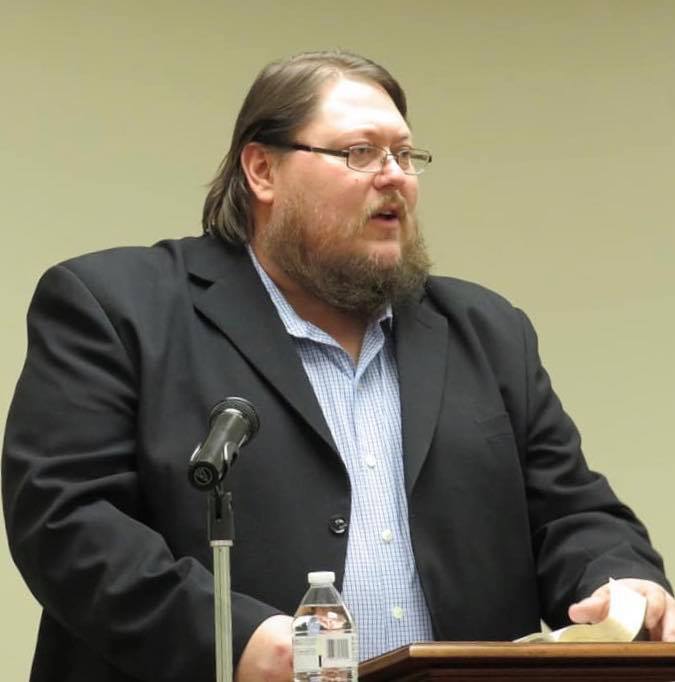
Mikal Smith

What Serveth the Law?

Galatians 3:19
Mikal Smith September, 26 2021 Audio
0 Comments
What was the purpose of the law? Was it given that men might follow and be "right with God"? Was it given to obey for righteousness? We look at what the scriptures teach on this matter.

The sermon titled "What Serveth the Law?" by Mikal Smith focuses on the theological significance of the law in relation to sin and grace, drawing extensively from Galatians 3:19. The primary point of the sermon is that the law was instituted not to justify or sanctify believers but to reveal human sinfulness and transgressions. Smith argues that since the covenant of grace was made prior to the law—with the promise given to Abraham—the law serves to highlight the reality of sin rather than to bring righteousness. Key Scripture references include Romans 7:7, where Paul states he became aware of sin through the law, and Romans 5:20, which asserts that the law entered so that sin might abound. The practical significance of this teaching underscores the Reformed view of total depravity, affirming that salvation is solely by grace through faith in Christ, hence the futility of relying on the law for maintaining one's standing before God.

Key Quotes

“We are not justified by the works of the law, nor are we kept or sanctified by the works of the law.”

“The law is given to show our exceeding sinfulness. It's not to save us.”

“If you believe that you can earn your salvation, you can believe that you can lose your salvation because you earned it.”

“The law serves to expose sin, to make known, to shine a light on what was there.”

Sermon Transcript

Auto-generated transcript • May contain errors

100%
Help us to praise Father all
glorious, O'er all victorious, Come and reign over us, Ancient
of days. Come Thou incarnate Word, gird
on Thy mighty sword, our prayer attend. Come and thy people bless,
and give thy word success. Spirit of holiness, on us descend. Come Holy Comforter, Thy sacred
witness bear in this glad hour. Thou who almighty art, now rule
in every heart, and there from us depart spirit of power to
the great one in three eternal praises be hence evermore his
sovereign majesty May we in glory sing and to eternity love and
adore. Amen. There's some that believe
that I don't believe in the trinity of God, but there it is right
there. We believe There is one God. We believe in the Father, we
believe in the Word, we believe in the Holy Spirit being that
one God. Alright, turn now if you would,
well just change my page. Turn to page 38, hymn number
38. Praise Him! Praise Him! Praise
Him! Praise Him! Praise Him! Praise
Him! Praise Him! Praise Him! Praise Him! Praise Him! Praise Him!
Praise Him! Praise Him! Praise Him! Praise Him! Praise Him!
Praise Him! Praise Him! Praise Him! Praise Him! Praise Him! Praise Him!
Praise Him! Praise Him! Praise Him! Praise Him! Praise Him! Praise Him! Praise Him! Praise Him!
Praise Him! Praise Him! Praise Him! Praise Him! Praise Him! Praise Him!
Praise Him! Praise Him! Praise Him! Praise Him! Praise
Him! Praise Him! Praise Him! Praise Him! Praise Him! Praise Him! Praise Him! Praise Him! Praise
Him! Praise Him! Praise Him! Praise Him! Praise Him! Praise Him!
Praise Him! Praise Him! Praise Him! Praise Him! Praise Him! Praise Him! Praise
Him! Praise Him! Praise Him! Praise Him! Praise Him! Praise Him! Praise Him! Praise Him! Praise
Him! Praise Him! Praise Him! Praise Him! Praise Him! Praise
Him! Praise Him Like a shepherd, Jesus will guard his children. In his arms he carries them all
day long. Praise him, praise him, tell
of his excellent greatness. Praise him, praise him, ever
in joyful song. Praise Him, praise Him, Jesus
our blessed Redeemer. For our sins He suffered and
bled and died. He our rock, our hope of eternal
salvation. Hail Him, hail Him, Jesus the
crucified. Sound His praises, Jesus, to
bore our sorrows. Love unbounded, wonderful, deep,
and strong. Praise Him, praise Him, tell
of His excellent greatness. Praise Him, praise Him, ever
in joyful song. Praise Him, praise Him, Jesus,
our blessed Redeemer. Heavenly portals fly with hosannas
ring. Jesus, Savior, reigneth forever
and ever. ? Crown Him, crown Him, prophet
and priest and king ? ? Christ is coming over the world victorious
? ? Power and glory unto the Lord belong ? ? Praise Him, praise
Him, tell of His excellent greatness ? Praise Him, praise Him, ever
in joyful song. All right, turn around if you
would, too, and let me see if I can find it again here. I've
lost my place. There it is. And number 74. Sweet
effort. Sweet hour of prayer, sweet hour
of prayer, that calls me from a world of care, and bids me
at my Father's throne, makes all my wants and wishes known. In seasons of distress and grief,
My soul has often found relief, And oft escaped the tempter's
snare By thy return, sweet hour of prayer. Sweet hour of prayer,
sweet hour of prayer, Thy wings shall my petition bear, To Him
whose truth and faithfulness Engage the waiting soul to bless,
And since He bids me seek His face, Believe His word and trust
His grace. I'll cast on Him my every care,
And wait, or least, without a prayer. Sweet hour of prayer, sweet hour
of prayer, may I thy consolation share. Till from out his young,
softy eyes, I view my home and take my flight This robe of flesh
I'll drop and rise To seize the everlasting prize And shout while
passing through the air Farewell, farewell, sweet hour of prayer. Amen. What a blessed day that
will be, when my Jesus I shall see, when I look upon his face,
the one who saved me by his grace. Turn next to Wood in your Gadsby
hymn books, hymn number 778. Number 778. I'm just going to
sing a tune of a worship the King. Though straight be the way, with
dangers beset, and we on the way are no farther yet, Our good
guide and Savior has helped us thus far, and it is by His favor
we are what we are. A favor so great we highly should
prize, not murmur nor fret, nor small things despised. But what call we small things
sin's whole cancelled sum, tis greater than all things except
those to come. My brethren reflect on what we
have been, how God had respect to us under sin. When lower and lower we every
day fell, He stretched forth His power and snatch us from
hell. We need to rewrite that last
line. Then let us rejoice and cheerfully sing with heart and
with voice to Jesus our King. brought us from evil to good,
the ransom that bought us no less than his blood. For blessings like these so boundlessly
give, for prospects of peace and for taste of heaven. Tis grateful, tis pleasant to
sing and adore. Be thankful for present, and
then ask for more. All right, does anybody have
something you'd like to sing? Got anything in books? All right, how about hand number
980? We'll sing that song, and if
nobody else has a song, we'll move into our preaching time.
980. Sing this to the tune of just as I am. when sins and fears prevailing
rise, and fainting hope almost expires. Jesus, to Thee I lift
my eyes, to Thee I breathe my soul, ? Desires ? ? Art thou
not mine, my living Lord ? ? And can my hope, my comfort die ?
? Fixed on thy everlasting word, that word ? which built the earth
and sky. If my immortal Savior lives,
then my immortal life is sure. His word a firm foundation gives,
Here let me build and rest secure. Here let my faith unshaken dwell,
Immovable the promise stand, Not all the powers of earth or
hell can e'er dissolve the sacred vows. Here, O my soul, thy trust
repose, If Jesus is forever mine Not death itself at last A foe
who shall break A union so divine Praise the Lord for that. All
right, does anybody have a song you'd like to sing? Anybody got
anything you'd like to say? Is it scripture? All right. Relations chapter three. We're
going to be looking at verse 19 today. Or at least start looking
at verse 19 today. You know, we've already talked
a lot about the law over in this passage, or excuse
me, in this chapter, chapter 3, whenever we looked at verse
10, 11, 12, 13. We've talked about the law quite
extensively in chapters 1 and 2. basically because this whole
entire letter is written to defend the gospel of grace against the
works of the law for justification or what some might call sanctification. We are not justified by the works
of the law, nor are we kept or sanctified by the works of the
law. And there are a lot of people
that would disagree with us on that. But they do not have biblical
standing for those things, I believe. Now today we're going to be looking
at verse 19. We looked last week at verses
15 down through 18, and we've seen that the inheritance is
not of the law. It's by promise. receive that
inheritance, which is Christ and all that is connected with
Christ. We received that. It was given
by promise. It was given as a covenant. It
was a covenant that was before the foundation of the world.
It was delivered to Abraham before the law was even given. And that
covenant was a covenant of grace. It was a covenant that said that
these promises of salvation was going to be given to those that
God had given to Christ, and that Christ was going to redeem
those who had, in Adam, natural Adam, had become sinners. Sin and death had come upon the
world through Adam, and we, born of Adam, born in our natural
state, are born dead in trespasses and sin. and we must be redeemed
from that if we are to be saved. We have to be redeemed of those
trespasses. And so we see that Christ is
the one who came to redeem those people and he did that by keeping
the law for us because we've learned over the course of all
these messages that we cannot keep the law. There's just no
way that natural man can keep the law. God never designed it
to be such. God made us in such a way in
Adam, made us such a way that we could not keep the law, that
we were going to be transgressors of that law. I'll point that
out as we look today. I'll point that out, that that
was always God's purpose. We hear these discussions all
the time in theological circles of whether or not God ordained
that man would fall, that man would fall into sin and death,
that he would disobey God. And there are some that believe
that God did not ordain that, that man did that by himself,
that God created him upright, that God created him perfect,
that God created him holy and righteous, and that he had free
will, that Adam was the only human to have free will. And I don't believe that the
Bible bears that out any. And that's for another day, another
time, another subject. However, I do not believe that
Adam was made such. I believe that Adam was made
exactly as the Bible says, that he was made natural of the earth,
earthy, the natural man received not the things of the spirit
of God, Adam was born without the spirit of God. He did not
have the spirit of God in him and then lost it and then got
it back again. Adam was made a natural man and
he was given spiritual life by God at the appointed time that
God gives eternal life, that God gives the spirit, that God
quickens the man and then gives him repentance and gives him
faith. uh... and there's also a discussion
on that is applied as well however uh... but i did not did not have
free will to do as he wants uh... adam already by his nature uh... had what was needed for sin and
death to take place and i would hope to show that by scripture
today not by my own philosophies but by scripture and i believe
it goes along with what we see in verse nineteen The scripture says, if you'll
look with me there, Galatians 3, verse 19. It says, wherefore
then serveth the law? Okay, so that question comes
on the heels of the fact that we just read last week. And this
I say, that the covenant that was confirmed before of God in
Christ, the law, which was 430 years after, cannot disannul
it. The fact that God's law came
in after God gives the promise to Abraham saying that your seed
is going to come and he's going to be the righteousness for all
his people, that he is going to redeem all his people and
that all your sins would be covered and that you would be saved.
That promise, even before the law came out, whenever the law
hit and proved how guilty we were, how nobody could keep the
law, Whenever that came out, that did not disannul the covenant
that God made before the foundation of the world and was confirmed
with Abraham. It didn't disannul it. It wasn't
just for up to that time because there was no law. Okay? Just because there was no law
doesn't mean that we were not transgressors. We were still
transgressors even though the law had not yet been given. We
were transgressors. We are transgressors by nature.
Okay? And so, why the reason Paul is
asking this question, wherefore then serve the law? He said,
well, if the law came in and it doesn't change anything about
whether or not you're guilty before God or not, because the
covenant of God stands sure. The covenant of God is ordered
and is sure. It's not going to fail. It's
not going to go away. God made that promise within
the everlasting covenant, within the Godhead. He made that everlasting
covenant. And that everlasting covenant
is not going to fall away. It's not going to be disannulled.
But then the law comes in and the law crushes us and condemns
us, showing us that we are sinners before God, showing us that we
cannot attain the righteousness of God or keep and be righteous
as God is righteous or be holy as God is holy in our natural
self. We can't do that. And so the
thought would be, then, why is the law here? If the law isn't
going to make us righteous, and we learned that, that the law
isn't going to give us righteousness, it's not there to give us righteousness
or to make anybody righteous, and that no one's going to be
justified by the law, then what's the purpose? Why are we given
the law? What was the law's purpose? Well,
a lot of people believe that the law's purpose was given so
that if we follow that, we'd make God happy. If we followed
the law and kept the law, then we would be righteous. You're
Christians now. You ought to start acting righteously.
So here's some laws. Go keep those laws, and you will
be righteous. Some people believe that by keeping
that righteousness that God keeps us saved. But if we don't, and
if we tarry too long in unrighteousness, then God's going to take away
that salvation, and we're not going to be saved anymore. We're
going to lose our salvation. And that's not the case. That's
the whole purpose of why Paul is making this statement. Remember,
remember, go back to the beginning. What is the purpose of this letter?
There were some who were coming to the Galatians of the Judaizers
who was telling the Galatians that yes, salvation is of grace,
but you have to keep, you have to be circumcised and keep the
law of Moses to be saved and to stay saved. Okay. To be, to, to be saved and to
stay saved. And so Paul is going back and
teaching them once again, the gospel does not teach that. Matter of fact, he even told
us, the law is not of faith. Salvation is by faith. Christ's
faithfulness saved us. And then we believing upon Christ
by the God-given faith to us, when we believe upon Christ,
that shows forth the evidence of our salvation. It shows forth
our salvation. And God gives us that faith to
trust in him alone and not think that we can keep a righteousness
of our own to make him happier, to please him, or to keep ourselves
saved. And so the gospel is the good
news of a finished salvation on our behalf, a salvation that
cannot be lost, a salvation that cannot be earned, it cannot be
lost. See that's, if any of y'all have
seen the post that I made on Facebook earlier this week, that
said, you know, that the reason that people believe in the false
teaching of losing one's salvation is because they believe in the
false teaching that you can earn your salvation. If you believe
that you can earn your salvation, you can believe that you can
lose your salvation because you earned it, you can lose it. But
brethren, we didn't earn it and we can't lose it because it was
all in Christ. And so Paul here is asking, wherefore
then serveth the law? If it isn't for keeping us righteous
or making us righteous, if it isn't for pleasing God, if it
isn't for keeping us in good standing with God, if it isn't
for justifying us before God or sanctifying us, whatever that
means, whenever people use that term for that purpose, then what
is the law for? Wherefore then serveth the law? Well, he answers the question
right after that, he says, It was added because of transgressions. The reason God give the law is
because of the transgressions. He added the law to us. He give the law to us for the
purpose of showing our transgression. Without the law, we would not
know that we had transgressed God. Without the law, we would
not know How often we transgress God? Remember, the law is in
totality. It's not partial. Some people
like to segment the law out and say, well, there's the ceremonial
law, the civil law, and the moral law. And we only are responsible
to keep now the moral law because Christ has fulfilled the ceremonial
law and the civil law. It's gone away, but the moral
law is still here. Nowhere in scripture does the
Bible break the law up into three categories and then at some point
in time say, these parts are gone and these parts are still
here. No matter of fact, the Bible
says, and we read it, that if we are to keep the law, we have
to keep everything, every bit of the law. That if we desire
to be saved by the law, then we are required to keep the law
in all points because if we break the law in one point, We've broken
them all. So if you break the law in the
moral law, you've broke all of them. If you break it in the
civil law, you've broken them all. If you're breaking them
in the ceremonial part, you've broken them all. So if you desire
to be righteous or stay righteous or to please God through law
keeping, you are enjoined to keep the whole entire law all
the time. And none of us have, none of
us can. And so it's futile to think that. It's futile to portray
that. And whenever those who want to
break the law up and say, well, we only are responsible to keep
this part and everything, they don't understand the law. The
law was given in totality. The law was one body of law that
was given to crush us. And that's what we're going to
see here. It was added because of transgressions till the seed
should come to whom the promise was made. Now, let's look here
at first at this first part. It was added because of transgressions. Look with me if you would back
at Romans chapter 7 and let's look at some things that Paul
said regarding the law. Paul also being the one that
the Holy Spirit used to write this. It's the Lord's words,
but Paul penned them. Romans chapter 7. And let's look, if you would,
at verse 7. It says, What shall we say then? Is the law sin? God forbid. Nay, I had not known sin, but
by the law. See, Paul realized that I didn't
realize that there was a sin before God. I was transgressing
God until in God's word I read that that's a sin. That's what
you're doing is a sin. So I didn't know I was transgressing
him. I just didn't know it. I didn't
have no cognitive understanding that I was transgressing God's
holiness. But now the laws come and the
law has shown me that this is a sin, and then I look, especially
when you think back, wow, how many times have I done that?
How many times have I done that sin? I've done that a lot. Oh,
wait a minute, there's another one. Ah, I've transgressed that
sin as well, or I've transgressed that law as well. And so now
we see that the law shines the light on our natural nature,
that cannot keep God's laws. It shows us that. Now look what
he says. He says, I had not known sin,
but by the law, for I had not known lust, except the law had
said, thou shalt not covet. But sin, and I want you to pay
close attention that he used the word lust. He brought that
out first. Now there's other sins that we
can have, but he got to the root, he got to the root problem, lust. And I'm going to point that out,
Lord willing, if he gives me ability and gives me words, I'm
kind of jumbled in my mind this morning, but, for I have not
known lust except the Lord said, thou shalt not covet. So keep
that in mind about the lust. But sin, taken occasion by the
commandment, wrought in me all manner of concupiscence. I never
can say this word, concupiscence. For without the law, sin was
dead. What does he mean by that? Before
I had the law, there was no knowledge of sin. I didn't know sin. Sin
was dead to me, meaning that I didn't know about it. Didn't
know there was a sin. So as far as I know, sin's dead
to me. I mean, that's not a sin. I didn't know nothing about it,
okay? Verse nine, for I was alive without the law once, but when
the commandment came, sin revived and I died. So what he's saying
is that whenever the law came in and said, don't do that, not
only did it show the fact that I was doing something wrong,
but then it also, whenever I'm told don't do that, it stirs
something up in the lust of me that makes me want to do that.
And we've seen, I've given this example before. whenever you
kids was little and your mom would make cookies or something
and she would make those cookies and she would tell you guys,
y'all don't get into the cookie jar, those cookies are for later
and everything. You may have went by 15 times
and not even noticed those cookies in the cookie jar that she put
in there and had no idea about taking the cookies. But soon
as we said, don't take the cookies, what's the first thing you wanted
to do? You wanted to take the cookies. And every now and then
we'd see you try to sneak in there and maybe get a cookie.
Okay, well what happened? Well, before the law came in,
you were dead to that law. Didn't know it existed. Didn't
even know that there was something there for you to do to be disobedient
to. But, as soon as we said, don't
have one of those cookies, what happened? All of a sudden there
was a lust that came up in your heart. You desired that cookie. You wanted that cookie, you coveted
that cookie, and for some of you, you tried to get that cookie,
if not did get that cookie, and you disobeyed. You sinned. Okay? That's what Paul is talking about.
Sin revived in me, and I died. Not physically, not spiritually,
but he died in the fact that now I realize I realized that
I am dead in trespasses and sins. And the commandment which was
ordained to life, I found to be unto death. For sin, taking
occasion by the commandment, deceived me and by it slew me."
And what's he saying there? He's saying, well, now the commandment
is given and I think that I can keep the commandment. I think
that I can keep the commandment unto life. I think that I can
keep these things and therefore be right before God." And that's
what Paul said. He said he was the Pharisee of
Pharisees and he did all this stuff that he thought was righteous. And he said that whenever he'd
come and whenever Christ revealed his Son in him, he realized that
all those things that he thought was gain was done. Okay. It says, for sin taking
occasion by the commandment deceived me and by it slew me. Wherefore,
the law is holy. The commandment is holy. and
just and good. It's given. God has given this.
It is a holy law. It is a just law. It is a good
law. We don't think bad about the
law as far as the law itself, the law in and of itself. We
think bad as far as the law whenever you think that you can keep the
law for righteousness. That's where we think that it
is bad. We think of the law bad as in the fact that it can give
life. It cannot give life. The law cannot give life. But as far as the law in and
of itself, it is good and it is holy. It is given of God.
He goes on to say is was then that which is good may death
unto me. God forbid, but seeing that it
might appear sin, working death in me by that which is good,
that sin by the commandment might become exceeding sinful. You see that that sin by the
commandment might become exceeding sinful. What serveth the law?
By making sin exceeding sinful. The law is given to show us how
sinful we are. It's not to save us. It's not
to keep us right, make us right, keep us right, to get you more
Christian, to get you more godly. The law is given to show your
exceeding sinfulness. Verse 14, for we know that the
law is spiritual, but I am carnal, sold under sin. See, by our own
nature, we are natural, we are carnal, we are of the earth earthy,
we are not spiritual. The only way that we are spiritual
is whenever Christ has regenerated that person, then they are spiritual. They're only spiritual through
what men call regeneration, we call quickening, through being
born again, right? Now, pay attention here and watch
what it's about to say. For that which I do, I allow
not, and for what I would, that do I not, but what I hate, that
do I. If then I do that which I would
not, I consent unto the law that it is good. So even though that
I sin and do the things that I don't want to do or shouldn't
do, I consent that that doesn't make the law bad. That makes
me bad. Just because the law exposed my sin doesn't make the
law bad, it shows that I'm bad. Okay? So the law's not bad, I'm
bad. If then I do that which I would
not, I consent to the law that is good. Now then, it is no more
I that do it, but sin that dwell within me. It's that principle
of life that is in us, that sin nature, the nature that we got
from Adam. Adam was our natural head, and
by our natural head, he too was natural. He too could not keep
from sinning. There was no way, and we're going
to see that here in just a minute. I'm going to show forth this
by the Word of God, I hope, in just a minute. For I know that
in me that is in my flesh, not in my spirit, in my flesh, okay,
that in me that is in my flesh dwelleth no good thing. And that's
how it is from the time we're born until the time that we die
or Christ comes again, brethren. There is no good thing in your
flesh. You can't produce any good works
in your flesh. There is nothing in your flesh
that is profitable. There's nothing in your flesh
that can please God. All this stuff that is pleasing
to God is done in the spiritual realm, what Christ is inside
of us. When he gives us the Holy Spirit
in us, he gives us love, joy, peace, long-suffering, gentleness,
goodness, meekness, temperance, faith. That faith that he gives
us looks to Christ alone. He gives us repentance to turn
from not only dead works, but also to turn from false teachings
that the Bible says about Christ and about salvation. Those are
the works of God that are in us and the Holy Spirit of God
that is in us is perfect. It cannot sin. Therefore, our
spiritual man is perfect. It is holy as God is holy because
it is the seed of God in us. It is Christ in us, the hope
of glory. He is in us and he cannot sin.
He is perfect. Therefore, our spiritual man
that life that was hid with God in Christ before the foundation
of the world, that eternal life that is Christ Jesus, that life
that is in us is perfect and it cannot sin. But the flesh
is a different story. Who we are by nature in Adam,
that is a different story. It is nothing but sin. And it can only show forth sin. And whenever the light of the
law is shined upon us, It reveals that sinfulness, it makes it
exceedingly sinful. Look what he says here, he goes
on to say, for the good that I would, I
do not, but the evil which I would not, that I do. For if I do that,
I would not, it is no more I that do it, but sin that dwelleth
in me. I find in a law that when I would do good, evil is present
with me. And remember, we talked about
that a few weeks ago or a few meetings ago and everything,
that it's not evil over our shoulders saying, you know, do this, do
this, do this. No, what he's saying there, he
says, I find in a law that when I would do good in my flesh,
evil is present with me. It's always evil. I cannot do
any good because my flesh cannot do any good. It's always evil.
It's always sinful in the eyes of God. Evil is always present
with me because I am still in the flesh. Verse 22, for I delight
in the law of God after the inward man. But see, I am the outward
man, I lust after the flesh. But I see another law in my members,
verse 23, but I see another law in my members, warring against
the law of my mind. The law in my members, my flesh,
Wars against my mind, the spirit, the flesh wars against the spirit
and the spirit against the flesh, the spirit that is perfect and
holy and righteous. That is the spirit that is in
us, which is Christ wars against our flesh that lusts against
the spirit. But the spirit against the flesh,
the spirit wants to be. free of this body of death and
it wants to be housed in its glorious body that has been prepared
for us, awaiting us at the return of the Lord Jesus Christ. The
flesh is lusting against the spirit and wants the spirit to
die because the flesh wants its way, wants itself, it wants its
lust to be fulfilled. It doesn't want the flesh or
the spirit in there. It's going to war against itself.
And so he says, My members warring against the law of my mind and
bringing me into captivity to the law of sin, which is in my
members. Oh, wretched man that I am, who
shall deliver me from this body of death? I thank God through
the Lord Jesus, or through Jesus Christ, our Lord. So then with
the mind, I myself serve the law of God. Everybody talks about
serving the law of God, about getting out there and doing all
this activity. You know, I served God because I went to church
today. I served God because I did this or I did that. But brethren,
we serve the law of God in our mind. We serve the law of God
by what we know. We serve the law of God by what
God does in us, by giving us those ordained works that are
spiritual works inwardly. That's how we serve the Lord
Jesus. We serve him that way. The only way we can serve Christ
and serve the law is through the man that's perfect, that's
inside of us. It's not what our flesh does. He says, I thank God through
Jesus Christ the Lord. So then with the mind, now see,
this is where Paul, he finally seen the Lord give him the understanding
and taught him that. And I praise the Lord has taught
us that, that there is now, we have to come to this resolution
in our mind to understand that the flesh is always going to
be the flesh. The flesh is always going to be the flesh, and it's
always going to do what the flesh wants to do. It's going to sin.
It can't do anything more than that. Now, I'm not telling you
to go sin. I'm not saying to love sin. I'm not telling you
to just go ahead and say, well, I'll sin because that's all I
can do, and so it doesn't matter what I do. I'm not saying that.
What I'm saying is, is everything we do, even good things that
we would consider good in the eyes of man, according to the
flesh, wretched vile, as the Bible says, filthy rags before
God. Those outward things of the flesh are always going to
be tainted with sin. So Paul has said, so now I realize
that for the rest of my days, as long as I'm in this body of
death, that I'm going to serve the law of sin in this flesh. But with my mind, I will serve
the law of Christ. Serving the law of Christ is
going to be an inward thing, not an outward thing. OK, now
someone said, well, OK, so what are you getting at? Well, I'm
getting at is the fact that the law, the question was, what started
the law? The law was given. And Paul made
it very clear here is to expose how sinful we are by nature and
how sinful we stay by nature in the flesh. And that only those
who have the spirit of God in them are keeping the law. And they're keeping the law not
by outward works of keeping the law, but they are keeping the
law because Christ is in them and he kept the law. And their
mind is serving Christ by desiring those things and longing for
those things, praying for those things, to be wrought in them
as God sees fit to do so, but this flesh, they're never putting
any confidence in the flesh. As a matter of fact, Paul even
said that we do not put our confidence in our flesh. We don't put our
confidence in keeping ourselves saved or making our self-righteousness
in the flesh because the flesh cannot do that. Now, turn with
me if you would to Romans chapter 5. And I want to, and I hope you
stick with me here. I hope that God, if I'm able
by him, would show exactly what was intended whenever we saw
a while ago about Paul, whenever he talked about the lust. He
said, for I had not known lust except the law had said thou
shalt not covet. In Romans chapter 5, and if you'll
start with me at verse 12, we went through this before. And I want to give a defense
of why I hold, particularly, and if you do too, the church,
why we hold that Adam was not created perfect and righteous,
as men proclaim him to, or with a free will, that he was created
with the nature to sin, and the purpose of the law, what serveth
the law, the law was given so that the sin might be exposed. It was already there in Adam.
And the law was given to expose that, and it didn't start with
Moses. It didn't start with Abraham.
It started with Adam. It started with Adam. He was
the one who brought sin and death into the world, right? Okay,
so look with me at verse 12 and follow along and I pray that
you follow along so that you see this. And I want you to pay
close attention to every time that the word offense is made.
I've preached this before, you've heard this before, but it's always
good to come back and reiterate these things, especially for
people that are not, that hadn't heard it before. or anything,
maybe this will be the place where God teaches them these
things. Verse 12, wherefore, as by one
man sin entered into the world, and death by sin, so sin entered
the world, and death came because sin. And it came by who? One man. So death passed upon all men
for that all have sinned. So that same death that came
And Adam came upon all men. Why? Because all have sinned.
The Bible says, for the wages of sin is death. Okay? For until the law, that was until
the law was given to Moses, sin was in the world. Now, wait a
minute. I thought the Bible says that sin is the transgression
of the law. So how can there be sin before
there ever was given a law? Okay, keep that in your mind. For until the law, for until
the law, sin was in the world, but sin is not imputed when there
is no law. Nevertheless, death reigned from
Adam to Moses, even over them that had not sinned after the
similitude of Adam's transgression, who is the figure of him that
was to come. We have Adam's transgression.
We have the sin entered into the world and death by sin by
one man. Verse 15, but not as the offense. So we're going back to Adam,
right? Again, who's being talked about here? It's Adam, but not
as the offense. So also is the free gift for
if through the offense of one, many be dead, much more the grace
of God and the gift by grace which is by one man, Jesus Christ,
hath abounded to many. So here we see again that what's
in view in the context is Adam's offense. It's not as the offense,
but not as the offense, so also the free gift. For if through
the offense of one, Adam, many be dead. He just said that. Death passed upon all men because
all men have sinned. Adam was the first, and all the
seed that was in him, that came out of him reproduced after lifetime. Adam was a man made natural,
made carnal. Adam was made unable to keep
the law of God. And therefore all of his seed,
all of his progeny, all of his generation, all of his children,
all of his inheritance, all of his people, His offspring is
going to come out just like Him. You say, where do you get that?
Well, hold your finger there and go to Genesis chapter 1 verse 11. Genesis chapter 1 verse
11. And God said, let the earth bring
forth grass, the earth building seed, and the fruit tree yielding
fruit after his kind, whose seed is in itself upon the earth,
and it was so. And the earth brought forth grass
and herb yielding seed after his kind, and the tree yielding
fruit, whose seed was in itself after his kind. And God saw that
it was good. And the evening and the morning
were the third day. And God said, let's drop down. It will be down
to verse 21. And God created great quails
and every living creature that moveth, which the waters brought
forth abundantly, after their kind, and every winged fowl after
his kind. And God saw that it was good. And God blessed them, saying,
Be fruitful and multiply, and fill the waters and the seas,
and let fowl multiply in the earth. And the evening and the
morning were the fifth day. And God said, let the earth bring
forth the living creature after his kind, cattle and creeping
things and beasts of the earth after his kind. And it was so. And God made the beast of the
earth after his kind and cattle after their kind and everything
that creepeth upon the earth after his kind. And God saw that
it was good. And God said, let us make man
in our own image after our likeness, and let them have dominion over
the fish of the sea, over the fowl of the air, and over the
earth, and over every creeping thing that creepeth on the earth.
And God created man in his own image, and the image of God created
he him, male and female, created he them. And God blessed them
and said unto them, be fruitful and multiply, replenish the earth
and subdue it. Now let me just do a side note
there. What does our country right now
in the world want to do? Just the opposite of that. They're
not saying go forth and multiply, but they want to kill. They want
to kill the elderly. They want to kill the sickly.
They want to kill the children, the babies. They're not wanting
to be fruitful and multiply and replenish the earth. They want
to make the population less. Just opposite of what God told
us to do. And God said, Behold, I have
given you every herb bearing seed which is of all the faith
of the earth, and every tree which is the fruit of the tree
yielding seed. To it you shall be for meat."
Now, here we see laid down in the first chapter a pattern. God has created everything with
its seed in itself and everything reproduces after its own kind. He told the whales, go out, replenish,
and multiply. replenish the earth, multiply
after your own kind. And he told man to do the same
thing. But yet we find whenever Adam multiplied and everything,
he multiplied after his own image. Look at verse five. This is the
book of the generations. Chapter five. I mean, this is
the book of the generations of Adam in the day that God created
man in the likeness of God made he him. male and female created
he them and bless them and called their name Adam in the day when
they were created. And Adam lived 130 years and
begat a son in his own likeness after his image and called his
name Seth. So we see that Adam was given
to multiply and replenish the earth after his kind, after his
kind. His kind was natural. Now, there's
a whole other lesson to be about what the image of God means,
and I'm not gonna get into that now, but it's not what a lot
of people think it means, and it can't be because of what we
just read. But anyway, we'll get to that on another day. But
let's think of that now. Everybody is reproducing after
its own kind. In Romans chapter five, we are
seeing that by one man's sin, one man's lust, one man's offense,
sin entered into the world and death by sin. death passed upon
us because we are reproduced after our head, our natural head. Everyone keeps calling him the
federal head. He's our natural head. He's our natural head. Christ is our spiritual head.
There's two seeds. There's the seed of Christ and
the seed of Satan that comes in the natural head. The natural
head is those who are natural that cannot keep the law of God
and then there are those who are of Adam but redeemed who
have the seed of Christ in them. Okay. So let's continue on further. It says here verse 16 and not
as it was by one that sin so is the gift for the judgment
was by one to condemnation. But the free gift is of many
offenses and the justification again, we're still got in context
Adams offense. For if by one man's offense death
reigned by one, much more they which received abundance of grace
and of the gift of righteousness shall reign in life by one Jesus
Christ. Therefore, as by the offense
of one, again, context is Adam's sin, judgment came upon all men
to condemnation, even so by the righteousness of one, the free
gift came upon all men unto justification of life. So those who are in
Christ Jesus, those who are the seed of Christ, Guess what? They were given the judgment
of justification of life, not the justification of condemnation. For as by one man's disobedience
many were made sinners, so by the obedience of one shall many
be made righteous. In the same way, okay? By seed,
by nature. We are by nature, in Adam, sinful. We are by nature, in spirit,
in seed, in Christ, righteous. We are righteous because He is
righteous. And we are His seed. Spiritually. Now we're talking
about spiritual seed. We're talking about a spiritual
thing. Not a fleshly thing. Okay? Hang with me. Verse 19. For as
by one man's disobedience many were made sinners, so by the
obedience of one shall many be made righteous. Moreover, the
law entered. Here it is. What serveth the
law? Moreover, the law entered, that
the offense, now whose offense has been in context this whole
passage? Adam's, Adam's offense. Would you agree with that? Am
I making that up? Am I reaching, overreaching for
things that are not there? Is that not the context of this
whole passage is one man's sin, Adam's. One man's offense, Adam's. One man's transgression, Adam's. The law entered that the offense
might abound. The law was given to Adam. What
law? What law preacher? Don't eat of that tree. He didn't
say, if you eat of that tree, you shall surely die. He said,
in the day that thou eatest thereof, thou shalt surely die. It was a statement of fact. He
was telling Adam what was going to happen. He wasn't giving him
an ultimatum that by his free choice, he either could choose
life or choose death. If you don't eat of the fruit
and you choose not to eat of the fruit, you're going to keep
living forever. Or if you eat of the fruit, then you're going
to die. The choice is yours. You can either choose life or
death. That's not what happened. This thing right here is falling
all over on me. Sorry, it's distracting me. He said, in the day thou
is thereof. Why did he say that? Because
God before the foundation of the world had already ordained
that by one man, sin would enter into the world. Why? Why all
this? Why, God, are you doing all these
things? Well God had purposed before
the foundation of the world a lamb being slain. That God would be
glorified by that lamb slain. And that that lamb slain would
be glorified in that slain because he was redeeming a people who
were sinful. He was redeeming a people who
by nature were transgressors of God. Redeeming a people who
by nature cannot attain righteousness. And so therefore, because they
cannot do anything for themselves, God glorifies himself in his
grace, and his mercy, and his justice, and his law, and his
kindness, and his gentleness, and his love. He exemplifies all those things
of his character in the cross of Jesus Christ. And so, sin
has to come into the world for Christ to be slain. One man or
someone has to bring sin into the world. There has to be a
people that is guilty. And the only way they can be
guilty is if there's sin. The only way there can be sin
is if there's a sinner to do that. And God created a man with
all his seed in him, and everyone who would come from him, the
elect of God who is in Adam naturally. Every one of them come forth,
being guilty before God because they had an inability to keep
God's law, an inability for righteousness, an inability to love God and
to cherish God, to honor God, to do all the things required
of God. There's an inability in that
man, but yet Christ who came forth because he had a spiritual
seed, he came forth and of all those in Adam who was the recipients
of that spiritual seed, he redeemed them. And the only way that could
happen is if sin came into the world. So God's purpose in Christ
being exalted in the end for all of eternity, and even now
through all of time, God's purpose in that had to come because of
sin. That was his purpose. I say it
had to come. God could have done whatever he wanted, but I say
had to come because this is the way that God did it. So the only
way that God did it is the only way it has to be. I mean, he's
the one that ordained it. So if this is the way it is,
this is the most wise way, this is the most correct way, this
is the only way. Because God ordained it to be
so. And so if God ordained that to happen, He ordained that sin
would take place. He ordained that Adam would eat
of the fruit and he would sin. And this right here says, the
law entered that the offense might abound. The reason God
give him the law was to shine a light on what was already in
the nature of Adam. To expose the lust. Now remember, Paul said, remember,
what did he say? He said it was his lust. Back
over in seven, remember? He said, but sin taking occasion
by the commandment wrought in me all men. There's that word. Somebody look
that up on how to say that, it's killing me. all manner of concupiscence,
for without the law, sin was dead. But he said it was by lust, that
it was lust. Now, so we see that the Bible says
that the law, what serveth the law, the purpose of the law is
to expose our sins. And we see that the law was given
to make sin exceeding sinful. It's to show us how exceeding
sinful. And Adam was no different. It
started with him. You say, well, Pastor, again,
I still, I think you're reaching on that because I've always been
taught that Adam was created upright, that Adam didn't have
any sin. You're saying that Adam was made
a sinner. Adam became a sinner by sinning
But the nature that produces sin was already there because
God made him natural. He made him of the earth, earth.
He made him carnal. He didn't make him spiritual. Nowhere in
the scriptures does he say so. Matter of fact, in the scriptures,
the Bible says, turn with me, 1 Corinthians chapter 15. I didn't
mean to go this direction, but I'm sure there's many that's
got issues with what we're saying here. 1 Corinthians chapter 15. Well, let me look here and see where... Verse 37, or excuse
me, verse 38. But God giveth the body as it
is pleased him, and to every seed his own body. and to every
seed his own body. All flesh is not the same flesh,
but there is one kind of flesh of men, another flesh of beasts,
another of fishes, and another of birds. There is also celestial
bodies and bodies terrestrial. Now, some are saying that those
are stars and things like that. In some of my studies, I'm thinking
that there might be talking about other things, but let me continue
on. But the glory of the celestial
is one and the glory of the terrestrial another. There is one glory of
the sun, another glory of the moon, and another glory of the
stars. That's the reason why I think it's different because
it's saying two different things there. Verse 42, so also is the
resurrection of the dead. It is sown in corruption, it
is raised in corruption. It is sown in dishonor, it is
raised in glory. It is sown in weaknesses, it
is raised in power. It is sown a natural body, it
is raised a spiritual body. There is a natural body and there
is a spiritual body. And so it is written, the first
man Adam was made a living soul. That doesn't mean he was made
a spiritually alive person, just made him as a living soul. He
was a living person. God breathed into him the breath
of life and he became a living soul. Okay. Not talking about
the spirit. He wasn't, he didn't have a quickened
spirit. It says, matter of fact, there's
a just position here. The first man Adam was made a
living soul. The last Adam was made a quickened spirit. How
be it that was not first, which is spiritual. Okay. That which was first, talking
of the first Adam, that which was a first was not spiritual,
but that which is natural. He was not spiritual. He was
made natural. And afterward, that which is
spiritual. The first man is of the earth, earthy, natural. The second man is the Lord from
heaven. As is the earthy, such are they
also that are earthy. And as is the heavenly, such
are they also that are heavenly. And as we have borne the image
of the earthy, we shall also bear the image of the heavenly."
Okay, so we see that Adam was not made a spiritual person. He was made a natural person.
Spiritual thing came when God put that in him, okay? But as
his nature, he was natural. The Bible says a natural man
receives not the things of the Spirit of God. So he was made
natural. But let me show it even more
clearer in James. Turn to James chapter one. James chapter one. We'll do this
and then we'll be through. James chapter one. What serveth
the law? The law serveth to expose sin. The law serveth to make sin be
more exceeding. Matter of fact, whenever I read
back there in Romans chapter five, he said that whenever the
law was given that the offense might abound, that word abound
there is the Greek word pleonazo. I may be saying that wrong, neither
here nor there, but the word itself, As it's translated in
our King James Bible, it's translated abound, abounded, abounded, abundant,
increase to make or over. It comes from a root word, which
means to make more or make greater. So whenever God says that the
law was given so that the offense might be made more. might be
made greater, might abound, might increase. To make or to be more
is what the word means. See, until it's the light shone
on it, you don't see much. If you ever got up in the night
and you can't hardly see and you just barely can make something
out, it's kind of real fuzzy, you don't know what it is. But
whenever you turn the light on, it's made more of, you can see
more of it. Okay, that's what the law is
doing. It's showing and exposing how
much more sinfully we really are than we think we are. Okay,
now, we've just put forth that sin is there to make the offense
abound. We've made the claim that Adam
was made in such a way that there was already by nature this inability
to keep God's law and that he was a natural man and by him
being the natural head, all of us are his natural seed. Therefore,
we are sinners because Adam himself is a sinner just like my son
may be part of me because he is my son. He may come with the
same proclivities that I have because he's my son. All right? Natural. He has my blood running
through his veins. Okay? for those who might disagree
and say well, Adam never had a, he wasn't a sinner before
he sinned. The question arises, where did
sin come from? The problem arises of if Adam
was not a sinner and did not have a nature to sin, then how did he sin? If he didn't
have a nature to sin, then how in the world Did he transgress
the law of God? Because the Bible said that the
law is given to show or to make known, to shine a light on, to
make manifest what was there. To make something manifest means
that it was already there, but just unseen. And whenever something
shines a light on it, then all of a sudden we see what was there,
that we didn't know was there. We didn't know that Adam had
sin in his heart until what? The law came in. Just like Paul
said, when the law came out. I didn't know I had sin until
the law came in. You say, well, yeah, that applies to everybody
except Adam. Well, tell me where it says that.
Tell me where it says that. Tell me where it says that Adam
was created spiritual. Tell me where it tells us where
Adam was created perfect. Sinless. Now, I will say this,
until Adam did sin, he had not yet committed a sin. There's
always a first time, right? It always has to start at some
point. But the nature was still there
before the sin was exposed, before the transgression was manifested,
before the lust conceived, right? Let's look at James chapter one. It says in verse 13, let no man say when he is tempted,
I am tempted of God, for God cannot be tempted with evil,
neither tempted he any man. And by the way, God creating
Adam natural with an inability to keep the law, making him natural
with a nature that could sin is not tempting him. That's creating
him to be such as what he wanted him to be. He created him for
that purpose. Therefore, that's why he could
look at Adam, even though he made him natural without the
ability to keep God's law, void of the spirit of God, just like
all the animals was void of the spirit of God. He could look
on that man created in the purpose that he created him in and say
it was good. He didn't say that Adam in and
of himself was good. He said that that creation that
he made is good. What did he create him for? He
created him to bring sin and death into the world. Now, I
would say if I created something and it fulfilled the purpose
for which I created it, then that was good. It did what I
wanted it to do. Right? Now, so it wasn't tempted. God didn't tempt Adam. He created
him in such a way. And Adam, because of his own
lust, sinned. So therefore, we can say God
ordained and he brought forth sin into the world and still
is not the author of sin even though that argument is mute
in my opinion. Let no man say when he is tempted,
I am tempted with God, for God cannot be tempted with evil,
neither tempteth he any man. But every man, every man, does
that include Adam? Every man is tempted when he is drawn away
of his own lust. So for anybody to be tempted,
there has to be lust, because he's drawn away, he's tempted
by lust. That's why Paul said that it
was his lust, right? He knew the root of the problem
was his lust. Let no man say when he is tempted,
I'm tempted with God. God cannot be tempted with evil,
neither tempted with any man. But every man is tempted when
he is drawn away of his own lust and enticed. Then, what happens
whenever lust does that? When lust hath conceived. Now
let's talk about that, that word conceived. That goes along with
the word seed, right? When lust conceives, whenever
two seeds come together they conceive. Whenever a child is
conceived in the womb, that's because two seeds have come together,
and they have been conceived, or they have been made to live
in the womb, okay? It was conceived. So whenever
lust had conceived, it brought forth something. Lust brought
forth something, brought forth a seed. It produced a, so to
speak, a child. What was the child that it brought
forth? When lust hath conceived, it bringeth forth sin. Sin is
a little, sin comes from lust. And Adam had lust in his heart.
Where did that come from? Where did that lust come from?
It says, but every man is tempted when he is drawn away of his
own lust, of his own lust. Well, where did it come from?
It was his own. He already had it. It was there, it just hadn't
been made manifest yet. Then when lust hath conceded,
bringeth forth sin, and sin, when it is finished, bringeth
forth death. Is that not what happened with
Adam? Huh? Did not Adam lust after the fruit? And did not Adam, after eating
the fruit, that was considered a sin? And by that sin did not
God say that it would bring forth death? Is that not the same here? That's exactly what Paul said. That's exactly what Adam did. That's exactly what happened.
Where serves the law? The law is there to magnify or
to make sin exceedingly sinful. It's to show forth sin. It's
to manifest what's already there. So the law is there to show us
our sin. And so whenever Paul, back in
our passage in Galatians, He asked the question, wherefore
then serveth the law? It was added because of transgressions. It was given there because of
transgressions. There is transgression in our
heart. There's transgression in our nature, and it's given
for the child of grace to show him that transgression. Because
until God shows him that transgression, he goes on thinking he's OK,
that there's a righteousness that he's doing. and making himself
okay before whatever God that he's thinking he's worshiping. So the law came in and it served
because of transgressions. Till the seed should come to
whom the promise was made. So the law came in to do that
and so whenever we are preached the law as a child of grace before
we come to know that knowledge until we are given repentance
and faith, then that law is crushing, crushing, crushing us, revealing
how sinful we are. But then faith comes. Faith comes,
not only in the person of Christ, as we'll see, but also in us
in particularly. All right, we'll stop right there
and we'll pick up and see what the rest of this talks about,
Lord willing, next week. Does anybody have any questions
or comments? All right, let's bow and have
a word of prayer. I want to ask you guys to remember my friend
JC Fulton. He's a preacher in Coahuila. He's in the hospital with COVID
pneumonia and got oxygen hooked up. And his mother, who also
has problems with her lungs, she has got COVID, as does almost
everyone in the church in Coahuila. Uh, they have COVID right now.
So if you'll pray for them, uh, the Lord might, uh, give swift
healing and all that, uh, as he desires and, uh, keep them
in your remembrance as, uh, as the Lord gives it to your mind.
Anybody got any prayer requests that you'd like to ask prayer
for that we might remember? All right. Father, we thank you
today for your love and your salvation. We thank you for Christ.
Father, we thank you for the law that is good to show us our
need for Christ, our sin, and how sinful we are and how it
is futile that we keep trying to keep the law for righteousness. But Father, only those who are
born of God, those who are given the spirit of Christ, given faith
and repentance, only those who have been given eyes and ears
to see, know and can see the exceeding sinfulness of their
selves and the futility that is in law keeping. And only those
who are born from above are given faith on Christ alone for their
salvation and for their righteousness. So, Father, I pray today that
you might give eyes to see and ears to hear. We pray, Lord,
that you give repentance and faith to all those that are here
today, Lord, that you might call your sheep to yourself by the
gospel. Lord, we're thankful for Christ.
We're thankful that he came and he bled and he died and that
he took on our sin upon himself, Lord, and that he redeemed us
from the curse of the law by being made a curse for us. We
thank you that by his blood, we have been washed clean and
we've been justified. We thank you, Father, that we've
been reconciled to you. We thank you, Lord, that now
that our perseverance is kept by you preserving us by your
spirit, Lord, and that we pray. that you would continue to keep
us faithful, that you would continue to keep us true to the gospel
and to the word of Jesus Christ. I pray, Lord, for anybody watching
or listening, I ask, Lord, that you just might teach them by
your spirit, that you might draw them to yourself. Lord, we pray
for those in this town that desire this gospel, that you have given
them life and that you have given them an understanding of these
things, but yet they don't know about this church. Lord, we pray
that somehow you would bring into contact this church with
them or them with this church and that they might find a place
where they can meet and where they can fellowship and that
they might be able to worship the Lord God in spirit and in
truth as you enable us. Father, we pray for Kevin and
Jacqueline and Alessandro this morning, Lord, as they are moving.
We pray, Lord, that you would Bless them in that move. We ask,
Lord, that you would just be with them today for Brother Ed,
wherever he's at today. We ask, Lord, that you just might
bless him and minister to him for Sister Beth, as well as they
move to the Branson area. Lord, we ask that you just might
help them and that they might find a true gospel church over
in that area. And Father, we just thank you
so much for all that you do. for us and the way you take care
of us and provide for us, not only spiritually, but also physically,
Father, as you see fit. And it's all in Christ's glory
and honor and praise that we ask these things in Jesus name.
Amen.

Comments

0 / 2000 characters
Comments are moderated before appearing.

Be the first to comment!

5
Joshua

Joshua

Shall we play a game? Ask me about articles, sermons, or theology from our library. I can also help you navigate the site.