Bootstrap
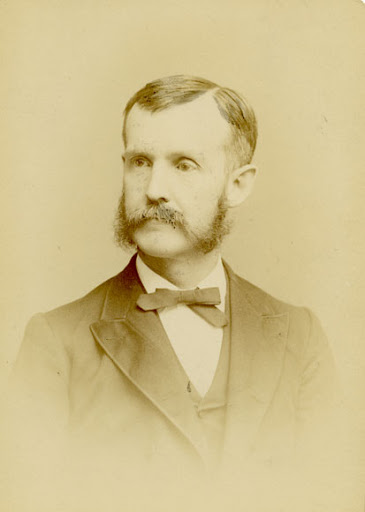
J.R. Miller

05. Your Will—Not Mine

2 Timothy 2:16-17; Psalm 19:7-11
J.R. Miller January, 18 2022 Audio
0 Comments
"Silent Times, A Book to Help in Reading the Bible into Life!" by J.R. Miller, 1886

You will find it helpful to READ the texts--as you LISTEN to the audios.

The TEXTS for the entire 24 chapter book, can be bound here:
https://gracegems.org/C/Miller_silent_times.htm

The AUDIOS for the entire 24 chapter book can be bound here:
https://www.gracegems.org/SermonAudio.htm?sa_ac...


J.R. Miller's "Silent Times, A Book to Help in Reading the Bible into Life" has been professionally read, and graciously supplied by Christopher Glyn. Please visit his YouTube channel at: https://www.youtube.com/c/ChristopherGlyn where you can view a wide variety of Christopher's devotional readings with read-a-long texts online.


Psalm 19:7-11

Puritans Spurgeon Edwards Pink Ryle Devotional meditation prayer Christ trials Calvin Luther reformed Calvinistic grace sovereign election predestination

In this sermon titled "Your Will—Not Mine," J. R. Miller addresses the critical doctrine of prayer within a Reformed theological framework, emphasizing that effective prayer must align with God's will. Miller argues that many approach prayer with superficial understanding, clinging to isolated Scripture promises without considering other biblical teachings that provide the complete picture. He cites 2 Timothy 2:16-17 and Psalm 19:7-11 to affirm that prayer must be rooted in a full understanding of Scripture and the character of God. The significance lies in the assurance that while God hears our prayers, His answers may not align with our desires but are always rooted in divine wisdom and love. Thus, believers are encouraged to surrender their requests to God, trusting in His perfect plan for their lives.

Key Quotes

“Many mistaken conceptions of the doctrine of prayer come from this superficial reading of the Scriptures.”

“The only sure and safe thing to do is to express our desire with earnestness and faith, and then leave the matter in His hands.”

“The highest attainment in prayer is this laying of all our requests at God's feet for His disposal.”

“At the least, we know that God has a perfect plan for our life, marked out by His infinite wisdom.”

Sermon Transcript

Auto-generated transcript • May contain errors

100%
Chapter 5 Your Will, Not Mine
Many people only half-read their Bibles. They skim the surface
and fail to get the full deep meaning of the golden words.
They get but half-truths, and half-truths oft-times are misleading. Even inspired sentences, standing
alone, do not always give the full and final word on the doctrine
or the duty which they present. Frequently it is necessary to
bring other inspired sentences and set them side by side with
the first, in order to get the truth in its full-rounded completeness. When the tempter quoted certain
scriptures to our Lord, he answered, It is written again The plausible
word in its isolation was but a fragment, and other words must
be brought to stand beside it, to give it its true meaning. Many mistaken conceptions of
the doctrine of prayer come from this superficial reading of the
Scriptures. One person finds the words, Ask,
and it shall be given you. And searching no farther, he
concludes that he has a key for the unlocking of all God's storehouses,
that he can get anything he wants. But he soon discovers that the
answers do not come as he expected, and he becomes discouraged and
perhaps loses faith in prayer. The simple fact is that this
word of Christ standing alone does not contain the full truth
about prayer. It is written again. He must
read more deeply, and gathering all of our Lord's sayings on
this subject, combine them in one complete statement. There
are conditions to this general promise. The word ask must be
carefully defined by other scriptures. And when this is done, the statement
stands true, infallible, and faithful. One of the oft-times
forgotten conditions of all true and acceptable prayer is the
final reference of every desire and opportunity to the divine
will. After all our faith, sincerity,
and importunity, our requests must still be left to God with
confidence that He will do what is best. For how do we know that
the thing we ask would really be a blessing to us if it came? Surely God knows better than
we know, and the only sure and safe thing to do is to express
our desire with earnestness and faith, and then leave the matter
in His hands. It is thus that we are taught
in all the Scriptures to make our prayers to God. But do we
quite understand this? Is it not something far more
profound than many of us think? It is not mere silent acquiescence
after the request has been refused. Such acquiescence may be stoical
and obstinate, or it may be despairing and hopeless, and neither temper
is the true one. To ask, according to God's will,
is to have the confidence when we make our prayer that God will
grant it unless, in His wisdom, He knows that refusal or some
different answer than the one we seek will be better for us,
in which case we pledge ourselves to take the refusal or another
answer as the right thing for us. If we understood this, It
would remove many of the perplexities which lie about the doctrine
of prayer and its answer. We pray earnestly and do not
receive what we ask. In our bitter disappointment
we say, has not God promised that if we ask we shall receive?
Yes. But look a moment at the history
of prayer. Jesus himself prayed that the
cup of his agony, the betrayal, the trial, the ignominy, the
crucifixion, and all that nameless and mysterious woe that lay behind
these obvious pains and sorrows might pass, and yet it did not
pass. Paul prayed that the thorn in
his flesh might be removed, yet it was not removed. All along
the centuries, mothers have been agonizing in prayer over their
dying children, crying to God that they might live. And even
while they were praying, the shadow deepened over them, and
their little hearts fluttered into the stillness of death.
All through the Christian years, crushed souls under heavy crosses
of sorrow or shame have been crying, How long, O Lord, how
long? And the only answer has been
a little more added to the burden, another thorn in the crown. Are
not our prayers answered then at all? Certainly they are. Not a word that goes faith-winged
up to God fails to receive attention and answer. But oft-times the
answer that comes is not relief, but the spirit of acquiescence
in God's will. The prayer many, many times only
draws the trembling suppliant closer to God. The cup did not
pass from the master. But his will was brought into
such perfect accord with the father's that his piteous cries
for relief died away in a refrain of sweet, peaceful yielding. The thorn was not removed, but
Paul was unable to keep it and forget it in glad acquiescence
in his Lord's refusal. The child did not recover. but
David was helped to rise, wash away his tears, and worship God. We are not to think then that
every burden we ask God to remove that he will surely remove, or
that every favor we ask that he will not bestow. He has never
promised this. This is the confidence that we
have in him that if we ask anything according to his will, he hears
us. into the very heart of the prayer
which our Lord gave, saying, after this manner pray, He put
the petition, May your will be done. Listening at the garden
gate to the Master's own most earnest supplication, we hear,
amid all the agonies of His wrestling, the words, Nevertheless, not
as I will, but as you will. The supreme wish in our praying
should not, then, be merely to get the relief we desire. This
would be to put our own will before God's, and to leave no
place for His wisdom to decide what is best. We are to say,
This desire is very dear to me, I would like to have it granted,
yet I cannot decide for myself, for I am not wise enough. and
I put it into your hand, if it is your will, grant me my request. If not, graciously withhold it
from me, and help me sweetly to acquiesce, for your way must
be best. For example, your health is broken.
It is right to pray for its restoration, But running all through your
most earnest supplication should be the songful, trustful, nevertheless
not as I will, but as you will. You are a mother, and are struggling
in prayer over a sick child. God will never blame you for
the strength of your maternal affection, nor for the clasping,
clinging love that holds your darling in your bosom and pleads
to keep it. Love is right, mother love is
right, and of all things on earth is most like the love of God's
own heart. Prayer is right too, no matter
how intense and importunate. Yet, amid all your agony of desire,
it should be the supreme, the ruling wish, subduing and softening
all of nature's wild anguish and bringing every thought and
feeling into subjection. that God's will may be done. The groundwork of this acquiescence
is our confidence in the love and wisdom of God. He is our
Father, with all of Father's tender affection and yet with
infinite wisdom so that He can neither err nor be unkind. He has a plan for us. He carries
us in His heart and in His thought. The things we in our ignorance
desire might in the end work us great harm. The things from
which we shrink may carry rich blessings for us. So we should
not dare to choose for ourselves what our life experiences shall
be. The best thing possible for us
in this world is always what God wills for us. To have our
own way, rather than His, is to mar the beauty of His thought
and plan concerning us. The highest attainment in prayer
is this laying of all our requests at God's feet for His disposal. The highest reach of faith is
loving, intelligent consecration of all our life to the will of
God. When a precious life hangs trembling
in the balance, we should not, with all our loving yearning,
dare to choose whether it shall be spared to us or carried home. When some great hope of our heart
is about to be taken from us, we should not dare settle the
question whether we shall lose it or keep it. We do not know
that it would be best. At the least, we know that God
has a perfect plan for our life, marked out by His infinite wisdom. And surely we should not say
that what we with our limited wisdom might prefer would be
better than what He wants us to be.
J.R. Miller
About J.R. Miller
James Russell Miller (20 March 1840 — 2 July 1912) was a popular Christian author, Editorial Superintendent of the Presbyterian Board of Publication, and pastor of several churches in Pennsylvania and Illinois.
Broadcaster:

Comments

0 / 2000 characters
Comments are moderated before appearing.

Be the first to comment!

Joshua

Joshua

Shall we play a game? Ask me about articles, sermons, or theology from our library. I can also help you navigate the site.