Bootstrap
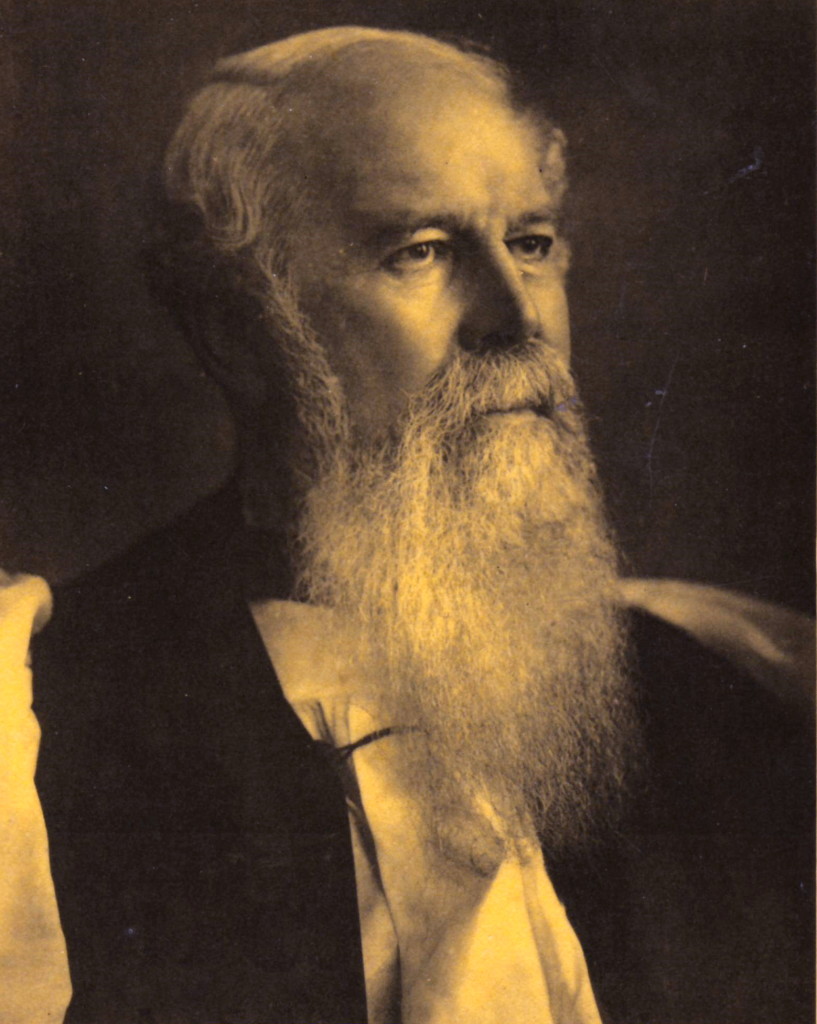
J.C. Ryle

121. Signs of the End of the Age, Luke 21:5-9

Luke 21:5-9
J.C. Ryle October, 19 2018 Audio
0 Comments
This superb narration of Ryle's devotional commentary on the Gospel of Luke has been professionally read, and graciously supplied by Christopher Glyn. Please visit his website, treasures365.com/shop.php, where you can purchase additional superb audios at very reasonable prices.

You will find it helpful to READ the texts--as you LISTEN to the audios!

The TEXTS for the entire commentary can be bound here:
http://gracegems.org/Ryle/Luke.htm

The AUDIOS for the entire commentary can be bound here:
https://www.sermonaudio.com/search.asp?subsetit...

J.C. Ryle's sermon on Luke 21:5-9 addresses the theological topic of eschatological prophecy and the warnings against deception surrounding the end of the age. Ryle emphasizes Christ's prophetic statement regarding the destruction of the Jerusalem temple, underscoring that its physical grandeur cannot replace genuine spiritual worship, as seen in examples from 1 Kings 8:44 and 1 Samuel 16:7. He argues that the primary concern of true worship lies not in the beauty of the building but in the presence of the Holy Spirit and a contrite heart. The practical significance of this teaching warns professing Christians against misplaced admiration for religious structures and encourages a humble approach to understanding prophecy, urging believers to remain vigilant and discerning to avoid deceptions that can arise from flawed interpretations of Scripture.

Key Quotes

“The true glory of a place of worship does not consist in outward ornaments. The Lord does not see as man sees.”

“The material part of a Christian church is by far the least important part of it.”

“Take heed that you are not deceived.”

“Let us beware, on the one side, of that lazy indifference which turns away from all prophetic scripture on account of its difficulties.”

What does the Bible say about the temple in Jerusalem?

The Bible teaches that the temple in Jerusalem, though magnificent, will ultimately be destroyed, emphasizing that true worship is spiritual, not merely outward.

In Luke 21:5-6, Jesus prophesies about the destruction of the temple, stating that not one stone will be left upon another. This was a shocking statement to the Jewish people, who revered the temple as a holy site containing the Ark of the Covenant and significant history in their faith. Ryle underscores that while the temple was admired for its architecture, Jesus highlights that the physical structure was less important than the spiritual truths it represented. True glory comes not from outward beauty but from spiritual worship and the presence of the Holy Spirit among the people.

Luke 21:5-9, 1 Samuel 16:7

How do we know that Jesus' prophecies about the end times are true?

Jesus' prophecies are reliable because they fulfill God's plan as revealed throughout Scripture, including significant warnings about deception.

The prophecies of Jesus concerning the end times, as outlined in Luke 21:8-9, include a solemn warning to 'take heed that you are not deceived.' This caution serves as an introduction to a discourse on events that will span from His time to His second coming. The consistent theme of caution against deception in prophecy is foundational because history has shown that interpreting these prophetic texts can lead to various misunderstandings and errors. From a sovereign grace perspective, the truth of Jesus' words leads believers to approach prophecy with humility, prayer, and a willingness to accept that understanding may evolve over time.

Luke 21:5-9, 1 Corinthians 13:12

Why is true worship important for Christians?

True worship is essential because it aligns the believer's heart with God’s desire for spiritual authenticity rather than mere external observance.

In Ryle's exposition, he emphasizes that the glory of worship is found not in the physical structures or elaborate ceremonies, but in the sincerity and devotion of the heart. Quoting 1 Samuel 16:7, he points out that God does not judge by outward appearance, but looks for genuine spiritual worship. While it is fitting for church buildings to be worthy of their purpose, they must never overshadow the need for truth in teaching and grace among the congregation. Ultimately, Jesus values a 'broken and contrite heart' far more than the grandeur of any earthly temple.

1 Samuel 16:7, Psalm 51:17

What warnings does Jesus give about deception in the church?

Jesus warns that many will come claiming to be Him, and believers must be vigilant against deception.

In Luke 21:8, Jesus cautions His followers to be wary of those who will come in His name claiming to be the Christ. This warning serves as a reminder of the constant need for discernment in the church. Throughout history, this caution has been borne out as various false teachers and prophets have arisen, misleading believers. Ryle encourages Christians to be aware of both extremes—those who ignore prophetic scriptures due to their difficulty and those who approach them with dogmatism. The call for a humble and teachable spirit in studying such texts is crucial for safeguarding against deception.

Luke 21:5-9, Matthew 24:4-5

Sermon Transcript

Auto-generated transcript • May contain errors

100%
J.C. Ryle's Devotional Thoughts on the Gospel of Luke. Section 121. Signs of the End of the Age. Luke 21, verses 5-9.

And as some spoke of the temple, how it was adorned with goodly stones and gifts, he said, As for these things which you behold, the days will come in which there shall not be left one stone upon another that shall not be thrown down. And they asked him, saying, Master, but when shall these things be? And what sign will there be when these things shall come to pass? And he said, Take heed that you be not deceived, for many shall come in my name, saying, I am Christ. And the time draws near. Go you not therefore after them? But when you shall hear of wars and commotions, be not terrified, for these things must first come to pass, but the end is not by and by.

Let us notice in this passage our Lord Jesus Christ's words about the temple at Jerusalem. We read that some spoke of it how it was adorned with beautiful stones and gifts. They praised it for its outward beauty. They admired its size, its architectural grandeur, and its costly decorations. But they met with no response from our Lord. We read that he said, As for what you see, the time will come when not one stone will be left on another, every one of them will be thrown down.

These words were a striking prophecy. An English mind can hardly conceive how strange and startling they must have sounded to Jewish ears. They were spoken of a building which every Israelite regarded with almost idolatrous veneration. They were spoken of a building which contained the Ark, the Holy of Holies, and the symbolic furniture formed on a pattern given by God himself. They were spoken of a building associated with most of the principal names in Jewish history, with David, Solomon, Hezekiah, Josiah, Isaiah, Jeremiah, Ezra, and Nehemiah. They were spoken of a building toward which every devout Jew turned his face in every quarter of the world when he offered up his daily prayers.

1 Kings 8.44
Jonah 2.4
Daniel 6.10

But they were words spoken advisedly. They were spoken in order to teach us the mighty truth that the true glory of a place of worship does not consist in outward ornaments. The Lord does not see as man sees. 1 Samuel chapter 16 verse 7 Man looks at the outward appearance of a building. The Lord looks for spiritual worship and the presence of the Holy Spirit. In the temple at Jerusalem these things were utterly lacking and therefore Jesus Christ could take no pleasure in it.

Professing Christians will do well to remember our Lord's words in the present day. It is fit and right, beyond doubt, that buildings set apart for Christian worship should be worthy of the purpose for which they are used. Whatever is done for Christ ought to be well done. The house in which the gospel is preached, and the word of God read, and prayer offered up, ought to lack nothing that can make it lovely and substantial. But let it never be forgotten that the material part of a Christian church is by far the least important part of it. The fairest combinations of marble and stone and wood and painted glass are worthless in God's sight unless there is truth in the pulpit and grace in the congregation. The dens and caves in which the early Christians used to meet were far more beautiful in the eyes of Christ than the noblest cathedral that was ever reared by man. The temple in which the Lord Jesus delights most is a broken and contrite heart renewed by the Holy Spirit. Let us notice for another thing in this passage. Our Lord Jesus Christ's solemn warning against deception. His striking words about the temple drew from his disciples an important question. Master, when will these things happen? and what will be the sign that they are about to take place? Our Lord's reply to that question was long and full, and it began with a pointed caution, Take heed that you are not deceived.

The position which this caution occupies is very remarkable. It stands in the forefront of a prophecy of vast extent and universal importance to all Christians. A prophecy reaching from the day in which it was delivered to the day of the second coming. A prophecy revealing matters of the most tremendous interest both to Jews and Gentiles. And a prophecy of which a large portion remains to be fulfilled. And the very first sentence of this wondrous prophecy is a caution against deception. Take heed that you are not deceived.

The necessity of this caution has been continually proved in the history of the Church of Christ. On no subject, perhaps, have divines made so many mistakes as in the interpretation of unfulfilled prophecy. On no subject have they shown so completely the weakness of man's intellect, and confirmed so thoroughly the words of Paul, we now see indistinctly as in a mirror. Now we know in part.

1 Corinthians chapter 13 verse 12 Dogmatism, positiveness, controversial bitterness, obstinacy in maintaining untenable positions, rash assertions and speculations have too often brought discredit on the whole subject of the prophetic scriptures and caused the enemies of Christianity to blaspheme.

There are only too many books on prophetic interpretation, on the title pages of which might be justly written. Who is this that darkens counsel by words without knowledge? Let us learn from our Lord's warning words to pray for a humble, teachable spirit whenever we open the pages of unfulfilled prophecy. Here, if anywhere, we need the heart of a little child and the prayer, open my eyes.

Psalm 119 verse 18. Let us beware, on the one side, of that lazy indifference which turns away from all prophetic scripture on account of its difficulties. Let us beware, on the other side, of that dogmatic and arrogant spirit which makes men forget that they are students and talk as confidently as if they were prophets themselves. Above all, let us read prophetic scripture with a thorough conviction that the study carries with it a blessing, and that more light may be expected on it every year. The promise remains in full force, blessed is he who reads. At the time of the end, the vision shall be unsealed.
J.C. Ryle
About J.C. Ryle
John Charles Ryle (10 May 1816 — 10 June 1900) was an English evangelical Anglican bishop. He was the first Anglican bishop of Liverpool.
Broadcaster:

Comments

0 / 2000 characters
Comments are moderated before appearing.

Be the first to comment!

Joshua

Joshua

Shall we play a game? Ask me about articles, sermons, or theology from our library. I can also help you navigate the site.