Bootstrap
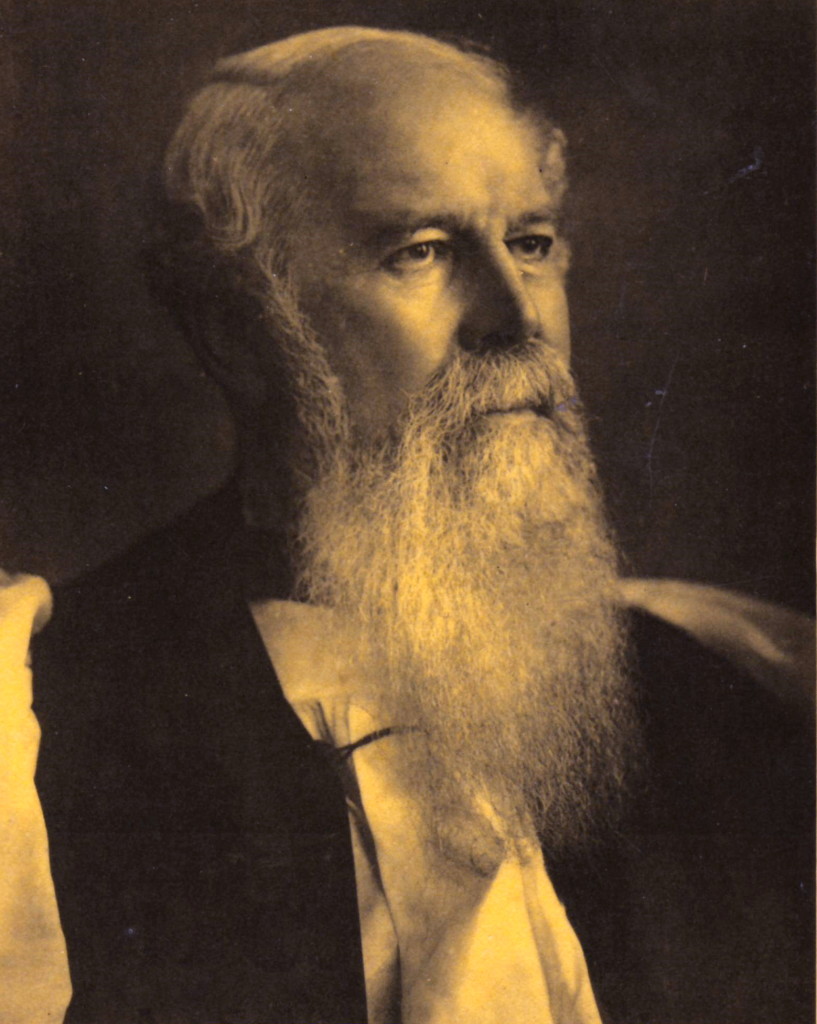
J.C. Ryle

028. The Calling of Matthew, Luke 5:27-32

Luke 5:27-32
J.C. Ryle March, 11 2018 Audio
0 Comments
This superb narration of Ryle's devotional commentary on the Gospel of Luke has been professionally read, and graciously supplied by Christopher Glyn. Please visit his website, treasures365.com/shop.php, where you can purchase additional superb audios at very reasonable prices.

You will find it helpful to READ the texts--as you LISTEN to the audios!

The TEXTS for the entire commentary can be bound here:
http://gracegems.org/Ryle/Luke.htm

The AUDIOS for the entire commentary can be bound here:
https://www.sermonaudio.com/search.asp?subsetit...

J.C. Ryle's sermon on the calling of Matthew from Luke 5:27-32 addresses the doctrine of conversion and the nature of Christ's redemptive mission. Ryle emphasizes the transformative power of Christ’s calling grace, exemplified in Levi (Matthew), a tax collector who immediately abandoned his life of sin to follow Jesus after a divine invitation. Supporting this, he cites Luke 5:32, where Christ declares His purpose: “I came not to call the righteous, but sinners to repentance.” Ryle argues that this call to repentance is inclusive for all, reinforcing the Reformed concept of total depravity, which suggests that no one is beyond the reach of grace. The practical significance of this message encourages believers to rejoice in conversions and actively share the gospel, reflecting the mission-driven heart of a true Christian.

Key Quotes

“We must never despair of anyone's salvation as long as he lives after reading a case like this.”

“Nothing can happen to a man which ought to be such an occasion of joy as his conversion.”

“A converted man will not wish to go to heaven alone.”

“If we feel ourselves to be righteous, then Christ has nothing to say to us. But if we feel ourselves to be lost sinners, then Christ calls us to repentance.”

What does the Bible say about conversion?

The Bible teaches that conversion is a joyful experience of turning from sin to Christ, as exemplified in Luke 5:27-32 with Levi's calling.

In Luke 5:27-32, we see the powerful example of conversion through the calling of Levi, a tax collector. Conversion is depicted as a transformative experience where one turns away from worldly pursuits to follow Christ. Levi's immediate response to Jesus’ call, leaving everything behind, illustrates the profound change that occurs in the heart of an individual who is truly called by Christ. This transformation is a cause for great joy and celebration, as it marks the beginning of an eternal relationship with God.

Luke 5:27-32, Ecclesiastes 10:19, Luke 15:32

Why is the calling of Matthew important for Christians?

The calling of Matthew illustrates the grace of God to sinners and the joy of conversion, reminding Christians of their purpose to share the gospel.

The calling of Matthew, or Levi, is significant for Christians as it highlights the unconditional grace of Christ towards sinners. Jesus' declaration that He came to call not the righteous, but sinners to repentance underscores the fundamental truth of the gospel: no one is beyond the reach of God's mercy. This call to Matthew serves as an encouragement to believers, reinforcing that their own past and failures do not disqualify them from service. Furthermore, just as Levi invited others to share in the joy of his conversion, Christians today are called to share the gospel with others, promoting the conversion of those around them.

Luke 5:27-32

How do we know that all can be saved?

The Bible assures us that no one is beyond salvation, as demonstrated in the transformation of sinners like Levi in Luke 5:27-32.

The assurance of salvation for all is rooted in the grace of Christ, as evidenced by the calling of Levi, a tax collector notorious for his sins. This passage shows that Jesus came to call sinners, emphasizing that His grace is sufficient for even the most hardened hearts. The transformation of Levi is a reminder that no sin is too great to be forgiven and that everyone, regardless of their background, can respond to God's call. This truth is pivotal for believers to embrace, as it cultivates hope and motivates them to share the gospel actively.

Luke 5:27-32

Why should Christians rejoice in conversion?

Christians should rejoice in conversion because it represents a profound change from death to life, as shown by Levi in Luke 5:27-32.

Rejoicing in conversion is vital for Christians, as it signifies the birth of a soul into eternal life. The account of Levi's conversion reveals that nothing should bring more joy than witnessing a sinner turn to Christ. This transformation is a celebration of God’s mercy, where the lost are found and dead souls are made alive. Levi not only rejoiced personally but also invited others to join in his celebration, highlighting the communal aspect of joy in salvation. For Christians, every conversion is an occasion for worship and gladness because it reflects the glory of God’s redemptive work.

Luke 5:27-32, Luke 15:32

What does Jesus mean by calling sinners to repentance?

Jesus’ call to sinners to repentance signifies His mission to save the lost, as mentioned in Luke 5:32.

When Jesus speaks of calling sinners to repentance, He emphasizes His role as the Savior for those who acknowledge their lost condition. This starkly contrasts with the self-righteous, who believe they have no need for repentance. In Luke 5:32, Jesus clearly states His mission: to bring the gospel to those who recognize their sinfulness and need for salvation. This call is not merely an invitation to change behavior but a profound invitation to receive grace and enter into a new relationship with God. For believers, this understanding fosters humility and a recognition of their continual need for grace.

Luke 5:32
Sermon Transcript

Auto-generated transcript • May contain errors

100%
J.C. Ryle's devotional thoughts on the Gospel of Luke, Section 28, The Calling of Matthew, Luke Chapter 5, Verses 27 through 32.

And after these things he went forth and saw a publican named Levi sitting at the receipt of custom. And he said unto him, Follow me. And he left all, rose up, and followed him. And Levi made him a great feast in his own house. And there was a great company of publicans and of others that sat down with them. But the scribes and Pharisees murmured against his disciples, saying, Why do we eat and drink with publicans and sinners? And Jesus answering said unto them, They that are whole need not a physician, but they that are sick. I came not to call the righteous, but sinners to repentance.

The verses we have now read ought to be deeply interesting to everyone who knows the value of his immortal soul and desires salvation. They describe the conversion and experience of one of Christ's earliest disciples. We also are all by nature born in sin and need conversion. Let us see what we know of the mighty change. Let us compare our own experience with that of the man whose case is here described and by comparison learn wisdom.

We are taught in this passage the power of Christ's calling grace. We read that our Lord called a tax collector named Levi to become one of his disciples. This man belonged to a class who were a very proverb for wickedness among the Jews. Yet even to him, our Lord says, follow me. We read furthermore that such mighty influence on Levi's heart accompanied our Lord's words that although sitting at his tax booth when called, he at once got up, left everything, followed Jesus and became his disciple.

We must never despair of anyone's salvation as long as he lives after reading a case like this. We must never say of anyone that he's too wicked or too hardened or too worldly to be saved. No sins are too many or too bad to be forgiven. No heart is too hard or too worldly to be changed. He who called Levi still lives and is the same that he was 1,800 years ago. With Christ, nothing is impossible.

How is it with ourselves? This, after all, is the grand question. Are we waiting and delaying and hanging back under the idea that the cross is too heavy and that we can never serve Christ? Let us cast such thoughts away at once and forever. Let us believe that Christ can enable us, by His Spirit, to give up all and come out from the world. Let us remember that he who called Levi never changes. Let us take up the cross boldly and go forward.

we are taught secondly in this passage that conversion is a cause of joy to a true believer we read that when Levi was converted he made a great feast in his own house a feast is made for laughter and merriment Ecclesiastes chapter 10 verse 19 Levi regarded the change in himself as an occasion of rejoicing and wished others to rejoice with him

We can easily imagine that Levi's conversion was a cause of grief to his worldly friends. They saw him give up a profitable calling to follow a new teacher from Nazareth. They doubtless regarded his conduct as a grievous piece of folly and an occasion for sorrow rather than joy. They only looked at his temporal losses by becoming a Christian. Of his spiritual gains they knew nothing.

In the same way, there are many like them. There are always thousands of people who, if they hear of a relation being converted, consider it rather a misfortune. Instead of rejoicing, they only shake their heads and mourn. Let us, however, settle it in our minds that Levi did right to rejoice. And if we are converted, let us rejoice likewise. Nothing can happen to a man which ought to be such an occasion of joy as his conversion. It is a far more important event than being married, or being made a nobleman, or receiving a great fortune. It is the birth of an immortal soul. It is the rescue of a sinner from hell.

it is a passage from life to death it is being made a king and priest for evermore it is being provided for both in time and eternity it is adoption into the noblest and richest of all families the family of God let us not heed the opinion of the world in this matter they speak evil of things they know nothing of Let us rejoice with Levi. Consider every fresh conversion as a cause for great rejoicing. Never ought there to be such joy, gladness and congratulation as when our sons or daughters or brethren or sisters or friends are born again and brought to Christ.

The words of the prodigal's father should be remembered. It was fit that we should make merry and be glad. For this your brother was dead and now is alive again. He was lost and now is found. Luke chapter 15 verse 32.

we are taught thirdly in this passage that converted souls desire to promote the conversion of others we're told that when Levi was converted and had made a feast on the occasion he invited a great company of tax collectors and others to share it most probably these men were his old friends and companions he knew well what their souls needed for he had been one of them He desired to make them acquainted with that Savior who had been merciful to himself. Having found mercy, he wanted them also to find it. Having been graciously delivered from the bondage of sin, he wished others also to be set free.

This feeling of Levi will always be the feeling of a true Christian. It may be safely asserted that there is no grace in the man who cares nothing about the salvation of his fellow men. The heart which is really taught by the Holy Spirit will always be full of love, charity and compassion towards others. The soul which has been truly saved by God will earnestly desire that others may experience the same salvation. A converted man will not wish to go to heaven alone.

How is it with ourselves in this matter? Do we know anything of Levi's spirit after his conversion? Do we strive in every way to make our friends and relatives acquainted with Christ? Do we say to others, as Moses to Hobab, Come with us, and we will do you good? Do we say, as the Samaritan woman, Come, see a man who told me everything that I ever did? Do we cry to our brethren, as Andrew did to Simeon, We have found the Christ? These are very serious questions. They supply a most searching test of the real condition of our souls. Let us not shrink from applying it.

There is not enough of a missionary spirit among Christians. It should not satisfy us to be safe ourselves. We ought also to try to do good to others. All cannot go to the heathen, but every believer should strive to be a missionary to his fellow men. Having received mercy, we should be eager to share the gospel with others.

We are taught, lastly in this passage, one of the chief objects of Christ's coming into the world. We have it in the well-known verse, I did not come to call the righteous, but sinners to repentance. This is that great lesson of the gospel which in one form or another we find continually taught in the New Testament. It is one which we can never have too strongly impressed upon our minds. Such is our natural ignorance and self-righteousness in religion that we are constantly losing sight of it. We need to be frequently reminded that Jesus did not come merely as a teacher, but as the Savior of those who are utterly lost and that they alone can receive salvation from him who will confess that they are ruined, bankrupt, hopeless, miserable sinners.

Let us use this mighty truth if we never used it before. Are we sensible of our own wickedness and sinfulness? Do we feel that we are unworthy of anything but divine wrath and condemnation? then let us understand that we are the very people for whose sake Jesus came into the world. If we feel ourselves to be righteous, then Christ has nothing to say to us. But if we feel ourselves to be lost sinners, then Christ calls us to repentance. Let not the call be made in vain.

Let us go on using this mighty truth, if we've used it in time past. Do we find our own hearts weak and deceitful? Do we often feel that when we would do good, evil is present with us? Romans chapter 7 verse 21. It may be all true, but... It must not prevent our resting on Christ. He came into the world to save sinners. And if we feel ourselves to be such, then we have warrant for applying to and trusting in Him to our life's end.

If only, let us never forget one thing that Christ came to call us to repentance and not to sanction our continuing in sin. you
J.C. Ryle
About J.C. Ryle
John Charles Ryle (10 May 1816 — 10 June 1900) was an English evangelical Anglican bishop. He was the first Anglican bishop of Liverpool.
Broadcaster:

Comments

0 / 2000 characters
Comments are moderated before appearing.

Be the first to comment!

Joshua

Joshua

Shall we play a game? Ask me about articles, sermons, or theology from our library. I can also help you navigate the site.
