Bootstrap
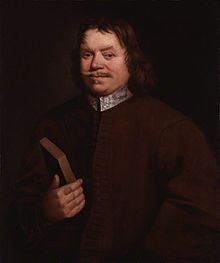
John Bunyan

01. The City of Destruction

1 Peter 2:11; Matthew 7:13-14
John Bunyan • September, 16 2017 • Audio
0 Comments
We have published John Bunyan's "Pilgrim's Progress" in modern English. As you listen to this professionally read audio, you can also read along with the text here:
http://www.gracegems.org/pilgrims_progress.htm#..., where you can purchase additional superb audios at very reasonable prices.

In "The City of Destruction," John Bunyan addresses the theological theme of human nature's plight in sin and the urgent need for salvation. The sermon highlights the distress of a man burdened by his sinfulness and impending judgment, echoing the call to abandon the pleasures of the world, as noted in 1 Peter 2:11. Bunyan references Matthew 7:13-14 to illustrate the narrow path of salvation, emphasizing the difficulty and rarity of finding true life in Christ. This depiction serves to affirm the Reformed doctrine of total depravity and regeneration, underscoring the necessity of a personal encounter with the Gospel for true deliverance from the wrath to come. The practical significance lies in the exhortation for believers to actively pursue their faith and warn others of the coming judgment, affirming the urgency of evangelism within the Christian life.

Key Quotes

“Oh, my dear wife, and you, my dear children, I'm undone because of this burden which lies heavily upon me.”

“For wide is the gate and broad is the way that leads to destruction, and there are many who go in by it.”

“The man began to run. Now he had not run far from his own door before his wife and children, seeing him depart, began to shout after him to return.”

“Do you see yonder narrow gate? ... Keep that light in your eye and go directly to it.”

What does the Bible say about the narrow gate?

The Bible describes the narrow gate as the difficult path that leads to life, as opposed to the broad way that leads to destruction.

In Matthew 7:13-14, Jesus clearly states, 'Enter by the narrow gate; for wide is the gate and broad is the way that leads to destruction, and there are many who go in by it. Because narrow is the gate and difficult is the way which leads to life, and there are few who find it.' This passage emphasizes the importance of choosing the difficult path of faith and discipleship that leads to eternal life while warning us of the many who choose the easier path that leads to ruin. It is vital for Christians to recognize the struggles of living a righteous life and to pursue the narrow way with determination and hope.

Matthew 7:13-14

How do we know that salvation is through faith?

Salvation is through faith as a gift from God, based on Scripture that emphasizes belief in Christ for redemption.

The scriptures teach that salvation is not earned by our works but is a gift of God's grace through faith. Ephesians 2:8-9 affirms this truth by stating, 'For by grace you have been saved through faith, and that not of yourselves; it is the gift of God, not of works, lest anyone should boast.' This indicates that faith in Christ is the way to receive salvation, as we acknowledge our inability to achieve righteousness on our own. This belief must lead to a transformation of the heart and a commitment to following Christ, enabling us to walk in accordance with His will and receive the promise of eternal life.

Ephesians 2:8-9

Why is it important for Christians to recognize they are pilgrims on earth?

Recognizing we are pilgrims helps Christians live with a heavenly perspective, focusing on eternal values rather than worldly distractions.

The concept of being pilgrims is foundational in the Christian faith, as illustrated in 1 Peter 2:11, which urges believers to 'abstain from fleshly lusts which war against the soul.' By acknowledging that we are strangers and pilgrims on this earth, Christians are reminded that our true home is in heaven. This perspective enables us to endure trials and temptations, as we seek to live righteously amidst a world that often opposes our beliefs. Furthermore, by prioritizing our heavenly calling, we are encouraged to witness to others about the hope found in Christ, demonstrating that life is not defined by our present circumstances but by our eternal destination.

1 Peter 2:11; Hebrews 11:13

Sermon Transcript

Auto-generated transcript • May contain errors

100%
The Pilgrim's Progress in the Similitude of a Dream by John Bunyan published in 1678 in modern English yet preserving Bunyan's original meaning, doctrine and quaintness of expression.

Dearly beloved, I beseech you as strangers and pilgrims abstain from fleshly lusts which war against the soul. 1 Peter chapter 2 verse 11

These all died in faith, not having received the promises, but having seen them afar off, were assured of them, embraced them, and confessed that they were strangers and pilgrims on the earth. Hebrews chapter 11 verse 13

Enter by the narrow gate for wide is the gate and broad is the way that leads to destruction and there are many who go in by it because narrow is the gate and difficult is the way which leads to life and there are few who find it Matthew chapter 7 verses 13 and 14

The City of Destruction

As I walked through the wilderness of this world, I came upon a certain place where there was a den, and I laid down in that place to sleep. And as I slept, I dreamed a dream. I dreamed, and behold, I saw a man clothed with rags, standing with his face turned away from his own house, with a book in his hand and a great burden upon his back.

I looked and saw him open the book and read therein. And as he read, he wept and trembled, and not being able to contain himself any longer, he broke out with a lamentable cry, saying, What shall I do?"

In this plight, therefore, he went home, and restrained himself as long as he could, so that his wife and children would not notice his great distress. But he could not be silent for long, because his trouble only increased. Therefore, at length, he spoke his mind to his wife and children, and thus he began to talk to them.

Oh, my dear wife, and you, my dear children, I'm undone because of this burden which lies heavily upon me. Moreover, I'm certainly informed that this city of ours will be burned with fire from heaven. In that fearful catastrophe, both myself, with you, my wife, and you, my sweet babes, will come to miserable ruin, unless some way of escape can be found, whereby we may be delivered.

At this his family was greatly bewildered, not that they believed what he had said to them was true, but because they thought that his mind had become deranged. Therefore, as it was drawing towards night, and hoping that sleep might settle his brains, with all haste they put him to bed.

But the night was as troublesome to him as the day, and instead of sleeping he spent it in sighs and tears. When the morning came, they inquired how he felt. He told them, worse and worse. He then commenced to talk to them again, but they began to be hardened. They also thought to drive away his derangement by harsh and cruel conduct toward him. Sometimes they would deride him, sometimes they would chide him, and sometimes they would simply ignore him.

Therefore he began to withdraw himself to his room to pray for and pity them, and also to comfort his own misery. He would also walk solitarily in the fields, sometimes reading and sometimes praying. And thus for several days he spent his time in this manner.

Now I saw in my dream, while he was walking in the fields, that he was reading his book, as was his habit. Being greatly distressed in his mind as he read, he burst out, as he done before, crying, What shall I do to be saved? I saw also that he looked, this way and that way, as if he wanted to run. Yet he stood still, because, as I perceived, he could not tell which way to go. I looked then and saw a man named Evangelist coming towards him, who asked,â€"'Why are you crying out?' He answered, Sir, I realize by the book in my hand that I am condemned to die, and after that to come to judgment, and I find that I am not willing to do the first, nor able to do the second.

Then the evangelist said, Why are you not willing to die, since this life is attended with so many troubles? The man answered, "'Because I fear that this burden upon my back will sink me lower than the grave, and I shall fall into hell. And, sir, if I am not fit to die, then I am sure that I am not fit to go to judgment, and from thence to execution. My thoughts about these things make me cry out.

' Then Evangelist said, "'If this is your condition, why do you stand still?' He answered, "'Because I do not know where to go.' Then Evangelist gave him a parchment scroll, on which was written, Flee from the wrath to come. The man, therefore reading it, looked very sincerely upon Evangelist and asked, Where must I flee?

Then Evangelist, pointing with his finger over a very wide field, said, Do you see yonder narrow gate? The man answered, No. Evangelist replied, Do you see yonder shining light? He said, I think I do. Then Evangelist said, keep that light in your eye and go directly to it. And then you shall see the gate at which when you knock you shall be told what you must do.

So I saw in my dream that the man began to run. Now he had not run far from his own door before his wife and children, seeing him depart, began to shout after him to return. But the man put his fingers in his ears and ran on, crying, Life! Life! Eternal life! So he did not look behind him, but fled towards the middle of the plain. you
John Bunyan
About John Bunyan
John Bunyan (1628-1688) was a Puritan preacher best remembered as the author of the allegory The Pilgrim's Progress. In addition to The Pilgrim's Progress, Bunyan wrote nearly sixty titles.
Broadcaster:

Comments

0 / 2000 characters
Comments are moderated before appearing.

Be the first to comment!

Joshua

Joshua

Shall we play a game? Ask me about articles, sermons, or theology from our library. I can also help you navigate the site.