Bootstrap
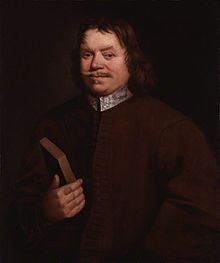
John Bunyan

29. The River of Death

1 Peter 2:11; Matthew 7:13-14
John Bunyan • September, 16 2017 • Audio
0 Comments
We have published John Bunyan's "Pilgrim's Progress" in modern English. As you listen to this professionally read audio, you can also read along with the text here:
http://www.gracegems.org/pilgrims_progress.htm#..., where you can purchase additional superb audios at very reasonable prices.

In John Bunyan's sermon "The River of Death," the primary theological topic addressed is the believer's struggle with death and the assurance of salvation through faith. Bunyan illustrates this through the imagery of a deep river that the pilgrims, especially Christian, must cross to enter the celestial gate. Key arguments emphasize the necessity of facing death through faith, highlighting that the river’s depth corresponds to one's belief in Christ (1 Peter 2:11; Matthew 7:13-14). The struggle Christian faces symbolizes the trials of faith, where doubts and sins threaten to overwhelm, yet the hope offered by Hopeful reminds him that these are not signs of abandonment by God. Ultimately, the significance lies in the portrayal of perseverance in faith amid life’s trials and the assurance of Christ’s presence during life's final passage.

Key Quotes

“You must go through the river, or you cannot enter in at the gate.”

“I’m sinking in deep waters. The billows are rolling over my head.”

“Take courage, my brother. I feel the bottom, and it’s firm.”

“When you pass through the waters, I will be with you.”

What does the Bible say about the River of Death?

The River of Death symbolizes the transition from life to eternity that every believer must face.

In Christian pilgrimage, the River of Death is an essential metaphor, as represented in the allegory where pilgrims must cross it to enter the celestial city. This river, depicted in works like Bunyan's 'Pilgrim's Progress,' illustrates the deep fears and struggles faced by believers when confronting death. Scripture assures us of God's presence through this process, particularly as seen in Isaiah 43:2, which states, 'When you pass through the waters, I will be with you.' This reflects the comfort offered to believers as they navigate the trials associated with leaving this world.

Isaiah 43:2

How do we know that faith helps us in the face of death?

Faith brings assurance that God is with us even in our darkest moments, including death.

The journey through the River of Death reveals the role of faith during times of despair and doubt. Christian's experience illustrates a common struggle among believers as they face the uncertainty of death and judgment. Hopeful's reminders highlight the importance of clinging to God's promises, emphasizing that trials are not signs of abandonment, but tests of faith. As stated in Hebrews 11:1, 'Now faith is the assurance of things hoped for, the conviction of things not seen,' which encapsulates the believer's reliance on God's truth amidst fear.

Hebrews 11:1, Isaiah 43:2

Why is overcoming the fear of death important for Christians?

Overcoming fear of death is vital for Christians as it affirms their trust in God's promise of eternal life.

For Christians, the fear of death can be debilitating, often stemming from the unknown or the anticipation of judgment. However, overcoming this fear is crucial as it reflects a robust faith and understanding of God's promises. The narrative of Christian and Hopeful emphasizes that struggles can drive believers closer to the truth of Scripture and the comfort found in Christ's assurance. Revelation 21:4 reassures us that 'He will wipe every tear from their eyes, and death shall be no more,' underscoring the hope that believers cling to, which empowers them to face death with courage rather than dread.

Revelation 21:4

What does Christian's struggle at the River of Death teach us about sin?

Christian's struggle highlights the burdens of sin and the assurance of God's grace even in our darkest moments.

In the allegory, Christian's anxieties about his past sins during the crossing of the River of Death illustrate a common struggle faced by believers. It raises the question of how sin affects our assurance of salvation and our view of God's presence in times of trouble. The ideal presented through Hopeful's encouragement is that these struggles serve to strengthen faith rather than indicate abandonment by God. The doctrine of grace assures us that despite our sins, we are not forsaken, and that Christ’s atoning sacrifice covers all of our transgressions, as articulated in Romans 8:1, 'There is therefore now no condemnation for those who are in Christ Jesus.'

Romans 8:1, Revelation 21:4

Sermon Transcript

Auto-generated transcript • May contain errors

100%
The River of Death. Now I further saw that between them and the gate was a river, but there was no bridge to pass over it, and the river was very deep. At the sight of this river the pilgrims were bewildered, but the men said to them, You must go through the river, or you cannot enter in at the gate.

The pilgrims then began to inquire if there was any other way to the gate, to which the men answered, Yes, but only two since the foundation of the world have been permitted to tread that path, namely Enoch and Elijah. Nor shall any others go that way until the last trumpet shall sound.

The pilgrims then, especially Christian, began to lose heart. They looked this way and that, but they could find no way by which they might escape the river. Then they asked the men if the waters were all the same depth. No, they replied, you shall find it deeper or shallower, just as you believe in the king of the city.

The pilgrims then approached the water. Upon entering it, Christian began to sink. Crying out to his good friend Hopeful, he shouted, I'm sinking in deep waters. The billows are rolling over my head. All his waves are washing over me. Then Hopeful replied,—'Take courage, my brother. I feel the bottom, and it's firm.'

Christian then cried out,—'Ah, my friend, the sorrows of death have come past me about. I shall not see the land which flows with milk and honey.' With that a great darkness and horror fell upon Christian, so that he could not see ahead of him. He also, in great measure, lost his senses, so that he could neither remember nor talk coherently of any of those sweet refreshments which he had met with along the way of his pilgrimage.

But all the words that he spoke still tended to manifest his horror of mind and heart-fears that he would die in that river and never obtain entrance at the gate. Here also, as those two men who stood by perceived, Christian was much in troublesome thoughts concerning the sins that he had committed, both before and since he began to be a pilgrim. It was also observed by his words that he was troubled with apparitions of hobgoblins and evil spirits.

Hopeful, therefore, laboured hard to keep his brother's head above water. Yes, sometimes Christian almost drowned, but then, in a short time, he would surface again, half dead. Hopeful would also endeavour to encourage him, saying, Brother, I see the gate and the men standing ready to receive us." But Christian would answer, "'It's you, it's you they're waiting for. You've been hopeful ever since I first knew you.' "'And so have you,' responded Hopeful.

Ah, brother!" cried Christian. Surely if I were right with him, then he'd now arise to help me. Because of my sins he's brought me into the snare, and has left me. Hopeful reminded him. My brother, you have quite forgotten the text where it is said of the wicked, they have no struggles in their death, but their strength is firm. They are not troubled as other men, neither are they plagued like other men. These troubles and distresses that you are going through in these waters are no indication that God has forsaken you. Rather, They're only meant to test you as to whether you will call to mind what you've hitherto received of His goodness and live upon them in your present distresses."

Then I saw in my dream that Christian was in deep thought for a while. Hopeful then added this word. Take courage. Jesus Christ makes you whole. With that, Christian cried out with a loud voice, Oh, I see him again. And he tells me, when you pass through the waters, I will be with you. When you go through the rivers, they shall not overflow you.

Then, they both took courage. After that, the enemy was as still as a stone and could no longer hinder them. Christian, therefore, felt firm ground to stand upon and found that the rest of the river was but shallow. Thus, they both crossed over the river. you
John Bunyan
About John Bunyan
John Bunyan (1628-1688) was a Puritan preacher best remembered as the author of the allegory The Pilgrim's Progress. In addition to The Pilgrim's Progress, Bunyan wrote nearly sixty titles.
Broadcaster:

Comments

0 / 2000 characters
Comments are moderated before appearing.

Be the first to comment!

Joshua

Joshua

Shall we play a game? Ask me about articles, sermons, or theology from our library. I can also help you navigate the site.