Bootstrap
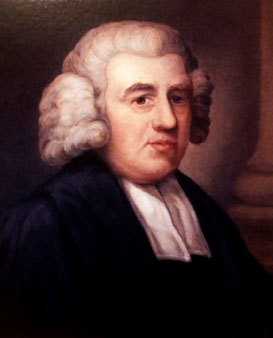
John Newton

Did you ever see my picture?

Galatians 5; Romans 7
John Newton June, 1 2010 Audio
0 Comments
Choice Puritan Devotional

The sermon titled "Did you ever see my picture?" by John Newton addresses the theological topic of human depravity and the internal struggle with sin as articulated in Romans 7 and Galatians 5. Newton points out the paradox of the believer's experience; while they possess a desire to live righteously, they often find themselves unable to achieve it fully due to the lingering effects of sin. He utilizes Paul’s reflections in Romans 7 to describe this contradiction, illustrating the dichotomy of wanting to do good but failing, thereby highlighting the effects of original sin. The practical significance of Newton's message lies in the assurance that despite the believer's struggles with sin, grace through Jesus Christ is available, emphasizing the dependency on Christ's redemptive work for spiritual growth and perseverance.

Key Quotes

“I am drawn in a posture which would be strange and peculiar if it was not so common with me, looking two different and opposite ways at once, so that you would be puzzled to tell whether my eyes are fixed upon heaven or upon the earth.”

“I do not understand what I do, for what I want to do I do not do, but what I hate I do.”

“I have a desire to do what is good, but I cannot carry it out.”

“Thanks be to God, through Jesus Christ our Lord.”

Sermon Transcript

Auto-generated transcript • May contain errors

100%
. Did you ever see my picture?
A letter of John Newton. I do not understand what I do,
for what I want to do, that I do not do, but what I hate, that
I do. I have the desire to do what
is good, but I cannot carry it out, for what I do is not the
good I want to do, no, the evil I do not want to do, this I keep
on doing. Did you ever see my picture?
It has been drawn by a masterly hand, and though another person
and one whom I am far from resembling sat for it, it is as like me
as one new penny is like another. The original was drawn at Corinth
and sent to the Christians at Rome. Many copies have been produced,
and it has a place in most public and private libraries, and I
would hope in most families. I had seen it a great many times,
before I could discover one of my own features in it. But then
my eyes were very bad. What is most remarkable is that
it was drawn long before I was born, and now, having been favoured
with some excellent eye-salve, I quickly knew it to be my own.
I am drawn in a posture which would be strange and peculiar
if it was not so common with me. looking two different and
opposite ways at once, so that you would be puzzled to tell
whether my eyes are fixed upon heaven or upon the earth. I am
aiming at two things inconsistent with each other at the same time,
so that I can accomplish neither. According to the different light
in which you view the picture, I appear to rejoice, or to mourn,
to have nothing, or possessing everything, to be a conqueror
or a captive. In a word, I am a double person,
I am a riddle. So it is no wonder if you know
not what to make of me, for I cannot tell what to make of myself.
I would and I would not. I do and I do not. I can and I cannot. I find the hardest things easy
and the easiest things impossible. I am both rich and poor. I can do nothing, yet I can do
all things. I am opposed beyond my strength,
yet I am not overpowered. I gain when I lose, and I often
am a loser by my gains. But while I am in this perplexity,
you will observe in the same picture a hand stretched forth
for my relief and may see a label proceeding out of my mouth with
these words, Thanks be to God, through Jesus Christ our Lord. The more I study this picture,
the more I discover some new and striking resemblance which
convinces me that the painter knew me better than I knew myself. I do not understand what I do,
for what I want to do I do not do, but what I hate I do. I have the desire to do what
is good, but I cannot carry it out, for what I do is not the
good I want to do. No, the evil I do not want to
do, this I keep on doing. Romans 7 In a word, I am a sinner,
a vile one, but a sinner believing in Jesus. I am a silly sheep,
but I have a gracious watchful shepherd. I am a dull scholar,
but I have a master who can make the dullest learn.
John Newton
About John Newton
John Newton (1725-1807) was an English Anglican clergyman, staunch Calvinist, and abolitionist, most widely known for authoring the hymn Amazing Grace.
Broadcaster:

Comments

0 / 2000 characters
Comments are moderated before appearing.

Be the first to comment!

Joshua

Joshua

Shall we play a game? Ask me about articles, sermons, or theology from our library. I can also help you navigate the site.