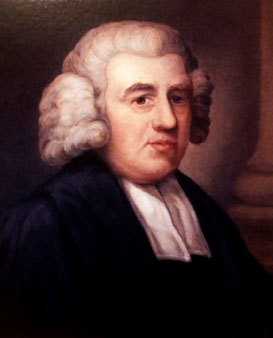
John Newton's sermon, "The Most Generally Prevailing and Ensnaring Sin," addresses the doctrine of covetousness as a pervasive and deceitful sin that entraps many Christians. He argues that covetousness is often overlooked, as it is easy for believers to recognize sin in others while neglecting their own greedy tendencies. Newton references Ephesians 5:5 and 1 Timothy 6:10 to demonstrate that covetousness has dire spiritual consequences, equating it with idolatry and warning that such individuals will not inherit the kingdom of God. The significance of this message is dual: it calls believers to introspectively assess their attachment to materialism and worldly pursuits while underscoring the biblical imperative to seek heavenly treasures over earthly gain, thereby advocating for a life that honors God in both motives and actions.
“Covetousness is a sin from which few people are entirely free. It is eminently a deceitful sin.”
“If we are, indeed, genuine believers in Christ, we are bound by obligation and required by our scriptural rule to set our affections on the things that are above, not on the things that are on the earth.”
“Their love of money and the desire of more are always in exercise. They attempt to look two ways at once and to reconcile the incompatible claims of God and mammon.”
“If therefore, my dear reader, you wish to avoid trouble, and to pass through life as smoothly as possible, take heed, and beware of covetousness.”
The Bible warns that covetousness is a sin that leads to idolatry, stating that no covetous person has any inheritance in the kingdom of God (Ephesians 5:5).
Covetousness is identified as a sin and idolatry in Scripture, particularly in Ephesians 5:5, which warns against its destructive consequences.
Avoiding covetousness is essential for Christians as it hinders spiritual progress and is a direct violation of God's commands.
Auto-generated transcript • May contain errors

Comments
Your comment has been submitted and is awaiting moderation. Once approved, it will appear on this page.
Be the first to comment!