Bootstrap
Horatius Bonar

Pestilence! Famine! Earthquake!

Horatius Bonar April, 28 2009 Audio
0 Comments
Choice Puritan Devotional

Horatius Bonar's sermon titled "Pestilence! Famine! Earthquake!" addresses the doctrine of God's sovereign governance over creation and human affairs. The central argument highlights that God's control is both direct and personal, manifesting through natural phenomena such as pestilence, famine, and earthquakes, which are seen as His messengers to humanity. Bonar supports his claims with references to Job 36:31, emphasizing that God's sovereign will interacts intimately with the world, refuting the notion that such events are mere products of chance or natural laws. The sermon underscores the practical significance of recognizing God's presence in daily occurrences, urging believers to discern the divine messages contained in life’s calamities and blessings, aligning with Reformed doctrines of providence and God's intimate involvement with creation.

Key Quotes

“He has not left them alone. He sustains and rules, as truly as He creates them.”

“By His mighty acts, He governs the people. The things by which he is here said to govern the people are the common things of the day and year.”

“Each of these has a special message to the nations and to each of us.”

“This separation of God from His works is one of the awful features of human unbelief.”

Sermon Transcript

Auto-generated transcript • May contain errors

100%
Pestilence, Famine, Earthquake
By Horatius Bonner By his mighty axe he governs the people. Job
36 verse 31 God's purpose comes in contact
with earth and its dwellers, not generally and by means of
laws, but directly and minutely. His will, His voice, His hand,
His arm, all come into contact with this world, as well as with
all other worlds, the creations of His power. He has not left
them alone. He sustains and rules, as truly
as He creates them. Not for a moment does He let
go His hold. He is the governor among the
nations. He rules by His power forever. His eye beholds the nations.
He does according to His will in the armies of heaven and among
the inhabitants of the earth. It is with no distant, unheeding
God that we have to do, but with that God who fixes the bounds
of our habitation, who counts our hairs, who feeds the ravens,
who notes a sparrow's death, and who clothes the lilies of
the field. God governs the people by means
of the changes of nature. We use nature for lack of a better
word. We mean earth and sky with all
their motions and alternations and transformations, great and
small, all natural phenomena, as they are called. These phenomena,
or appearances, appear to us common things, by some ascribed
to chance, by others to laws of nature. Here, they are ascribed
directly to God. They are His voice, by which
He speaks to us, His finger, by which He touches us, His rod,
by which He corrects us, His sword, by which He smites us. It seems to be the thought of
many that in none of these can we, or ought we to recognize,
directly and specially, the interposition of God. That it is fanaticism
to interpret them so as to make them special messengers of God
to us. But the words before us are very
explicit. By His mighty acts, He governs
the people. The things by which he is here
said to govern the people are the common things of the day
and year, the rain, the clouds, the lightning, and such like. He uses these as his voice in
warning, or commanding, or chastising, or comforting. These common things
do not come by chance or at random or by natural law, but go out
from God as his messengers. Thus everything has a divine
meaning and a heavenly voice. Let us listen and interpret and
understand. Summer speaks to us with its
green fields and fragrant gardens. Winter speaks to us with its
ice and snow and frost. By these God governs the people,
the pestilence, the famine, the earthquake, the lightning, the
storm, the shipwreck, the overthrow of kingdoms and kings. Each of these has a special message
to the nations and to each of us. Let us see God drawing near
to us in them, showing his care and love, manifesting an unwearied
concern for our welfare. Woe to us if we either misinterpret
them or refuse to interpret them at all. The common daily changes
of personal or family life all speak in the same way. Not only
the sweeping calamity that carries off its hundreds, but the sickness,
the pain, or the gentle sickness, these have a voice to us. He who has an ear, let him hear. We disjoin God from creation,
and so see nothing in it of divine life and power. We disjoin God
from the changes of creation, and so find no meaning in these. We disjoin God from the beautiful
or the terrible, and so realize nothing in them which overaws
or attracts or purifies or comforts. We have so learned to separate
between God and the works of God that we seem to imagine that
they contradict each other. The fair sky and the clear stream
and the green hills all speak of divine goodness. This separation
of God from His works is one of the awful features of human
unbelief. How much more of Him would we
know were we to interpret His works aright and hear His voice
in each, whether in love or discipline? By His mighty acts He governs
the people. Job 36 verse 31. This Puritan devotional has been
brought to you by Grace Gems, a treasury of ageless Sovereign
Grace writings. Please visit our website at www.gracegems.org,
where you can browse and freely download thousands of choice
books, sermons, and quotes, along with select audio messages. No
donations accepted. Thank you.
Horatius Bonar
About Horatius Bonar
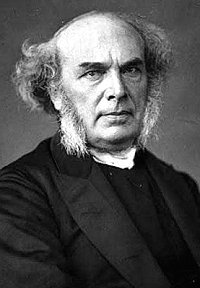
Horatius Bonar (19 December 1808 — 31 July 1889), was a Scottish churchman and poet. He is principally remembered as a prodigious hymnodist. Friends knew him as Horace Bonar.
Broadcaster:

Comments

0 / 2000 characters
Comments are moderated before appearing.

Be the first to comment!

4
Joshua

Joshua

Shall we play a game? Ask me about articles, sermons, or theology from our library. I can also help you navigate the site.