Bootstrap
Horatius Bonar

No oil

Horatius Bonar February, 18 2009 Audio
0 Comments
Choice Puritan Devotional

In Horatius Bonar's sermon "No Oil," the main theological topic revolves around the necessity of the Holy Spirit in genuine Christian faith, as illustrated through the Parable of the Ten Virgins (Matthew 25:1-13). Bonar argues that mere outward profession of faith, characterized by externalism, is insufficient for true identification with Christ; only those with the "oil" of the Holy Spirit possess true wisdom and readiness for His return. He emphasizes the subtle yet significant difference between the two groups of virgins, noting that while they outwardly appeared similar, the lack of oil in the foolish virgins revealed their spiritual bankruptcy when the Bridegroom arrived. Ultimately, the sermon underscores the practical significance of being filled with the Holy Spirit, warning against an artificial Christianity that bears no fruit and may result in exclusion from the kingdom of heaven at the final judgment.

Key Quotes

“There are points of likeness between the two classes. They get the same name, virgins. They wear the same dress. They are on the same errand. They both have lamps.”

“A religion without the Holy Spirit profits nothing.”

“Though in most respects they were all alike, yet there was a difference. It was within. It was imperceptible from without.”

“What does it profit now? What will it profit in the day of wrath?”

Sermon Transcript

Auto-generated transcript • May contain errors
100%
No oil by Horatius Bonner The
five who were foolish took no oil for their lamps. Matthew
25 verse 3 This parable has many sides and
aspects. It is prophetical. It is also
practical. It suits all ages, but especially
the last days. It suits the world, but especially
the Church of God. It is searching and sifting.
It is also quickening and comforting. It suits us well in these days
of profession, fashionable religion, and religiousness. It is a parable
for the church. It comes into the inner circle
of Christian profession and sifts it, divides it. There are points
of likeness between the two classes. They get the same name, virgins. They wear the same dress. They
are on the same errand. They both have lamps. They both
slumber and sleep. They have thus many features
in common. The peril of mere externalism
is that which our Lord points out here. This externalism may
not always be hypocrisy, but it is imitation. It is not the
flower in its natural color and growth, but painted, artificial. Let us watch against an artificial
life and an artificial religion. What does it profit now? What
will it profit in the day of wrath? The name, the dress, the
lamp, the outward show, will all go for nothing in that day
of universal discovery and detection. Though in most respects they
were all alike, yet there was a difference. It was within. It was imperceptible from without. It could only be discovered when
the bridegroom came. Up until then, all were completely
similar. Only then the deficiency came
out in the foolish. Then was it seen who were wise
and who were foolish. That day is the day of certain
and unerring detection. It is the day of weighing in
the balances. It is the separation of the false
from the true. The difference was confined to
a single point, the lack of oil. The oil is the Holy Spirit. Thus a man may be very like a
Christian and yet not be one. He may come very near the kingdom
and yet not enter in. He may have all the outward features
of a Christian, and yet be lacking in the main one. He may have
the complete dress of the saint, and yet not be one. He may have
a good life, a sound creed, a strict profession. He may be one who
says and does many excellent things. He may be a subscriber
to all the religious societies in the land, a member of all
their committees, or a speaker at all their meetings, and supporter
of all their plans. He may profess to be looking
for Christ's coming, and going forth to meet the bridegroom,
yet he is not necessarily a Christian. He may lack the oil, the Holy
Spirit, A religion without the Holy Spirit profits nothing. There is the religion of the
intellect, of the imagination, of the flesh, of the creed, of
the liturgy, of the catechism, of nature, of poetry, of sentiment,
of mysticism, of humanity. But what are these without the
Spirit? Christianity without Christ,
what would that be? Worship without God, what would
that be? Sow religion without the Holy
Spirit, what would that be? The five who were foolish took
no oil for their lamps. Sir, sir, they said, open the
door for us. But he replied, I tell you the
truth, I don't know you. This Puritan devotional has been
brought to you by Grace Gems, a treasury of ageless Sovereign
Grace writings. Please visit our website at www.gracegems.org,
where you can browse and freely download thousands of choice
books, sermons, and quotes, along with select audio messages. No
donations accepted. Thank you. You.
Horatius Bonar
About Horatius Bonar
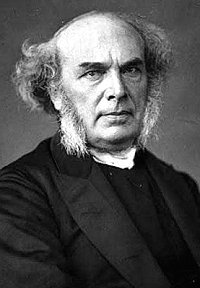
Horatius Bonar (19 December 1808 — 31 July 1889), was a Scottish churchman and poet. He is principally remembered as a prodigious hymnodist. Friends knew him as Horace Bonar.
Broadcaster:

Comments

0 / 2000 characters
Comments are moderated before appearing.

Be the first to comment!

Joshua

Joshua

Shall we play a game? Ask me about articles, sermons, or theology from our library. I can also help you navigate the site.
