Bootstrap
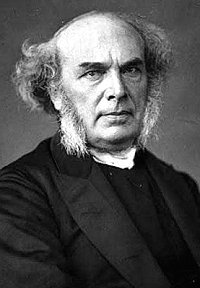
Horatius Bonar

To the dust you will return

Horatius Bonar July, 5 2008 Audio
0 Comments
Choice Puritan Devotional

Horatius Bonar's sermon, "To the Dust You Will Return," addresses the grave and pervasive reality of death in a fallen world. The key argument revolves around the inevitability of death for all humanity, stemming from sin's curse, as highlighted in Romans 6:23: "For the wages of sin is death." Bonar emphasizes that life in a sin-cursed world is characterized by continual reminders of mortality, such as the natural decay and death surrounding humanity. He supports his argument through Scripture, referencing Genesis 3:19, which states humanity's origin from dust and destined return to dust, and concludes with the hope found in Revelation 21:4 and Hosea 13:14, proclaiming God's ultimate victory over death for believers. The practical significance of this sermon lies in its call to recognize the gravity of death's presence while also offering hope in the resurrection and eternal life through Christ, a core tenet of Reformed theology.

Key Quotes

“For the wages of sin is death... You will return to the ground from which you came. For you were made from dust, and to the dust you will return.”

>

“Earth is a vast graveyard. At every moment, one of the sons of Adam passes from this life.”

>

“I will ransom them from the power of the grave. I will redeem them from death.”

>

“He will wipe every tear from their eyes. There will be no more death or mourning or crying or pain...”

Sermon Transcript

Auto-generated transcript • May contain errors

100%
To the dust you will return By
Horatius Bonner For the wages of sin is death Romans 6 verse
23 All your life you will sweat to produce food until your dying
day. Then you will return to the ground
from which you came. For you were made from dust,
and to the dust you will return." Genesis 3 verse 19. Ours is a dying world. We dwell in a world of death,
in a land of graves. Immortality has no place upon
this earth. That which is deathless is beyond
these hills. Mortality is here. Immortality
is yonder. Mortality is below. Immortality
is above. Earth is a vast graveyard. At every moment, one of the sons
of Adam passes from this life. At each swing of the pendulum
is the death warrant of some child of time. Death, death,
it says, unceasingly, as it oscillates to and fro. The gate of death
stands ever open. It has neither lock nor bars. The river of death flows sullenly
past our dwellings. We continually hear the splash
and the cry of one and another and another as they are flung
into the rushing torrent and carried down to the sea of eternity. Earth is full of deathbeds. The groan of pain is heard everywhere,
in cottage or castle, in prince's palace or peasant's hut. The tear of parting is seen falling
everywhere. The rich and poor, good and evil,
are called to weep over the death of beloved kindred, husband or
wife, or child or friend. Who can bind the strong man,
that he shall not lay his hand upon us, or our beloved ones? Who can say to sickness, you
shall not touch my body? Or to pain, you shall not come
near me? Or to death, you shall not enter
my home? Who can light up the dimmed eye,
or recolor the faded cheek, or reinvigorate the icy hand, or
bid the sealed lip to open, or the stiffened tongue to speak
once more the words of warm affection? Who can enter the death chamber
and speak, little girl, I say to you, get up. Who can look
into the coffin and say, young man, arise? Who can go into the
tomb and say, Lazarus, come forth? The voice of death is heard everywhere. Not only from the coffin, nor
the funeral procession, nor the dark vault, nor the heaving churchyard. Death springs up all around. Each season speaks of death,
the dropping spring blossom, The scorched leaf of summer,
the ripe sheaf of autumn, The chill winter cold, all tell of
death. the wild storm with its thick
clouds and hurrying shadows, the sharp lightning bent on smiting,
the dark torrent ravaging field and valley, the cold sea wave,
the crumbling rock, the uptorn tree, all speak of death and
corruption. Earth numbers its graveyards
by hundreds of thousands, And the sea covers the dust of uncounted
millions Who, coffined and uncoffined,
Have gone down into its unknown darkness. Death reigns over earth
and sea, City and village are his. Into every house this last
enemy has entered, In spite of man's desperate efforts to keep
him out. There is no family without some
empty seat or crib, No garden without some faded rose, No forest
without some seer leaf, No tree without some shattered bough,
No harp without some broken string. There is no exemption from this
necessity, there is no discharge in this war. The old man dies,
but the young also. The gray head and the golden
head are laid in the same cold clay. The wicked dies, so also
does the godly. The common earth from which they
sprang receives them both. The fool dies, so also does the
wise. The poor man dies, so also does
the rich. I will ransom them from the power
of the grave. I will redeem them from death.
Where, O death, are your plagues? Where, O grave, is your destruction? Hosea 13 verse 14 For the wages
of sin is death, but the free gift of God is eternal life through
Christ Jesus our Lord. Romans 6 verse 23 He will wipe
every tear from their eyes. There will be no more death or
mourning or crying or pain, for the old order of things has passed
away." Revelation 21 verse 4. No failing of eyesight, no wrinkles
on the brow, no hollowness in their cheeks. no gray hairs upon
their heads, no weariness of limbs, no languor of spirit,
no drying up of their rivers of pleasure. This Puritan devotional has been
brought to you by Grace Gems, a treasury of ageless Sovereign
Grace writings. Please visit our website at www.gracegems.org,
where you can browse and freely download thousands of choice
books, sermons, and quotes, along with select audio messages. No
donations accepted. Thank you.
Horatius Bonar
About Horatius Bonar
Horatius Bonar (19 December 1808 — 31 July 1889), was a Scottish churchman and poet. He is principally remembered as a prodigious hymnodist. Friends knew him as Horace Bonar.
Broadcaster:

Comments

0 / 2000 characters
Comments are moderated before appearing.

Be the first to comment!

101
Joshua

Joshua

Shall we play a game? Ask me about articles, sermons, or theology from our library. I can also help you navigate the site.