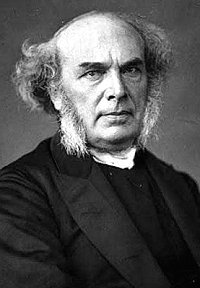
In "The Church's Widowhood," Horatius Bonar addresses the theological concept of the Church's identity and condition in the present age, likening it to the figure of a widow as depicted in Luke 18:3. He argues that the Church, as the true bride of Christ, is characterized by weakness, rejection, and longing, existing as a remnant in a world governed by darkness and opposition. Key Scripture references include Luke 18:3, which sets the tone for understanding the Church's supplication for divine vindication amidst adversity, and various allusions to the state of apostate churches that have compromised their witness. Bonar emphasizes the practical significance of the Church maintaining its distinctiveness from the world, as its widowhood serves as a testament to faithfulness to Christ and anticipation of His return, urging believers to resist worldly temptations and instead fix their hope on their future glory with Him.
“She has nothing in common with it. All is uncongenial. her prospects. She is an heir of God, and a joint heir with Christ Jesus.”
“It is in her widow's garments that she passes along the world's highway, as one who has little in common with it, whose sympathies have all gone upwards to one whom, having not seen, she loves.”
“If the Church of God would mingle in such scenes, she must first renounce her widowhood.”
“Satan…with fair words, as an angel of light…approaches the Church…How can one whose characteristic is that of widowhood and orphanage find commonality in such scenes?”
The Bible uses the figure of a widow to represent the Church's current state of humility and separation from worldly influences.
Luke 18:3
The concept of widowhood is crucial for Christians as it encapsulates their separation from the world and their longing for Christ's return.
Luke 18:3
The widowhood of the Church reflects its current condition as foretold by Scripture, aligning with the suffering experienced by Christ.
Romans 8:18, 2 Corinthians 4:17
Being a witness in a hostile world means that the Church must testify to Christ's glory while remaining distinct from worldly influences.
Hebrews 11:13-16, Philippians 3:20
Auto-generated transcript • May contain errors

Comments
Your comment has been submitted and is awaiting moderation. Once approved, it will appear on this page.
Be the first to comment!