Bootstrap
Carroll Poole

Prayer

Matthew 6:5-13
Carroll Poole September, 22 2013 Audio
0 Comments
Carroll Poole
Carroll Poole September, 22 2013

Sermon Transcript

Auto-generated transcript • May contain errors

100%
One preacher said, what about
prayer? We profess to know all about it. We profess to know
everything about it. We do virtually nothing about
it, which in reality, if we knew anything about it, we'd do all
we could about it. The well-known inventor, Thomas
Edison, was a man of wisdom. And he wrote the following lines,
I'm about to read you, in the year 1921, ten years before he
died. He wrote this. We don't know the millionth part
of one percent about anything. We don't know what water is. We don't know what light is. We don't know what gravitation
is. We don't know what enables us
to stand upright on our feet. We don't know what electricity
is. We don't know what heat is. We don't know anything about
magnetism. We have a lot of hypotheses,
but that is all. But we do not allow our ignorance
about all these things to deprive us of their use. We do not know much about prayer,
but surely this need not prevent us from praying. We do know what
our Lord has taught us. Matthew 6 verse 9, after this
manner, therefore pray ye. So we want to talk about A man
by the name of Philip Henry, father of Matthew Henry, the
commentator, was pleading with the Lord over
a certain matter in prayer. And he said, I'm not going to
be like those who come knocking on my door and say, if you'll
help me this time, I'll never ask again. He said, Lord, I'm
not coming like that. He said, if you answer, if you're
pleased to grant my request, I'll probably be coming all the
more often. I'll come all the more often. Well, the Lord has
been so good. He has answered prayer for all
of us so many times in so many ways. Why would we come less? Oh, to plead with him more. in
the matter of prayer. After this manner, therefore,
pray ye. In verse 9, that is a clear word
of instruction. It is not a suggestion. Our Lord does not say you might
want to do it this way. No, He says after this manner. I'm going to tell you exactly
how. After this manner, therefore, pray ye. He is saying this is
how to do it. Get a hold of this. Practice
this. Stay with this. We often see this prayer we've
read in this passage, we often see it in print, sometimes fairly large print
on a poster hanging on a wall somewhere. And it will be titled,
The Lord's Prayer or the model prayer. Well, it is not the Lord's
prayer in that it is not a prayer that our Lord would have prayed
for himself, and that for numerous reasons. We'll not get into that
a lot, but one being that he would not begin with the words,
our Father. His relationship to the Father
is different from ours. He and the Father are one. We
are truly sons of God, but Christ was not just the Son of God,
he was God the Son at one. When he prayed in John 17, which
is truly the Lord's Prayer, he prayed Father, Righteous Father,
Holy Father, but he never said Our Father. He's on a different
level from ourselves. He prayed for the disciples.
He never prayed with the disciples. And another reason, obviously
this is not the Lord's prayer, is he could not pray, forgive
us our debts, as I just read in this prayer. Luke's account
says, forgive us our sins. Well, Christ our Lord had no
debts or sins to be forgiven. So this is not the Lord's prayer.
It is rather a model prayer given by Christ to his disciples. Luke
chapter 11 says, in answer to their request, it said, Lord,
teach us to pray. Then he gives this model prayer
in which he teaches the essential elements of true prayer. One great writer and preacher,
John MacArthur, he wrote this. Every essential element of true
prayer is compacted into these 66 words. He said, no set of
volumes ever written, no exhaustive thesis of great length, no series
of teachings or preachings offered by men could have captured the
fullness of all that prayer is, as does this profoundly simple
model that our Lord gave, how true that is. But it is only
a model, a pattern, an outline to follow in which we express
our hearts to God, the model prayer. Somebody says, well,
I believe this is a prayer that's to be recited often, word for
word, and a lot of people do that. Well, that's all right,
nothing wrong with that. After all, it is God's Word.
from the lips of God's Son, nothing wrong with reciting it, but I
believe our Lord gave it as more than just a prayer to be recited
word for word. And I'll give you three reasons
for believing that. Number one, it's recorded twice
in the scripture here in Matthew 6 and again in Luke 11. And the
wording is slightly different between Matthew 6 and Luke 11. I said different, not contradictory,
not at all, but slightly different. Matthew gives us what Christ
said in his own words, and Luke gives us what Christ said in
his own words. Both are true. Both are divinely
inspired. There's no contradiction and
no error. But you see, if Christ had given
this prayer to the disciples, only to be recited word for word,
the Holy Spirit would have made sure that Matthew's account reads
identical, word for word, with Luke's account. But that's not
the case. A second reason, this is not
just for reciting, in Luke 11.2, they ask, Lord, teach us to pray. They never asked, Lord, teach
us a prayer. Uh-uh. But rather, Lord, teach
us to pray. They weren't just asking for
something to quote. They were asking how they might
enter into that blessed exercise of soul, spirit, heart of communing
and communicating with God as they had seen Him do so many
times. often spending all night in prayer. And thirdly, in verse
7, our Lord said, when you pray, use not vain repetitions as the
heathen do, that is, with no heart, with no genuineness. Why would he say that? and then
immediately give a prayer that's only to be recited with or without
any heartfelt feeling or approach to God. Well, he wouldn't. He
wouldn't. So it's more than just a model
to be recited. It's a model to be expanded on
to take these principles. Now we don't have time to cover
this line by line. It's a beautiful, beautiful passage.
in this prayer. So I want to give us four general
observations from the text and then some practical and hopeful,
profitable application for our own individual hearts and lives.
Number one, we see in this that true believers do pray. Note with me the repetition of
the word when. Verse 5, he says, and when thou
prayest. Verse 6, but thou, when thou
prayest. Verse 7, but when you pray. It's not if, but when. Believers do pray. I often hear people all worked
up and preachers all worked up, and they say, oh, they've taken
prayer out of our schools. Well, that's a big issue. Brother
Bill has ratted concerning that for a long time, and I wish it
were not like it is today. But to get right down to it,
I want to just say it this way. Prayer never was in schools.
It was in believers' hearts. It was in children's hearts.
And still is. Still is. So I'll say this to
you children here today, you in school. Sammy and I forget
your friend's name. Aubrey, yes. And Jesse and Hunter
and Kenzie and Skyler and Natalie and all of you school children. Just listen to me. No one can
forbid you to talk to God from your heart in school or out of
school. That's yours. That's yours. To communicate with Him, to talk
to Him, to pour your heart out to Him. When I was your age,
and many of us can remember this, I was in the lower grades like
some of you are. And this is one of the things
I remember. First grade, second grade, third
grade, first thing at school every morning, the teacher would
have a stand. She'd call the class to attention,
have a stand. The first thing we'd do is pledge
allegiance to the flag. And then she, the teacher, would
have one of the students to read from the scripture, read the
Bible. And then either she or she would call on one in the
class to pray every morning. Now, that's something you kids
have never seen in public schools, probably. And it ought to be
the case. They might not allow it nowadays.
But what I'm saying is they cannot take prayer out of your heart.
And that's where true prayer is and from is the heart. I believe it was John Bunyan
who said, prayer may be heart without words, but it cannot
be words without heart. A lot have considered praying
that's just words for others to hear. No, no, no. It's heart
communicating with God, with or without words. So believers do pray. The second
thing in this model prayer is the unfolding of a sevenfold
relationship which we as believers have with our God. And this sevenfold
relationship surfaces clearly in the words our Lord spake here. First, it's a father-child relationship. It begins with our Father. A deity and worshipper relationship. Hallowed be thy name. Holy be thy name. Third, it's a sovereign and subject
relationship. Thy kingdom come. Fourth, it's a master-servant
relationship. Thy will be done. Fifth, it's a benefactor-beneficiary
relationship. It's give us this day our daily
bread. And sixth, it's a savior-sinner
relationship. Forgive us our debts. And seven, it's a guide-pilgrim
relationship. Lead us not into temptation. He is the father, the deity,
the sovereign, the master, the benefactor, the savior, and the
guide. We are the child, the worshiper,
the subject, the servant, the beneficiary, the sinner, and
the pilgrim. Sevenfold relationship. And the third thing I see here,
we have defined in this prayer, this model prayer, we have defined
the true spirit of prayer in so many particulars. Our Father
is a family spirit. Hallowed be thy name, a reverent
spirit. Thy kingdom come, a loyal spirit. Thy will be done, a submissive
spirit. Not my will, but thine be done.
Give us this day our daily bread, a dependent spirit. Forgive us our debts, a repentant
spirit. Lead us not into temptation,
an humble spirit, trusting spirit. Thine is the kingdom, a triumphant
spirit. And the glory, a praised spirit. an eternal spirit, the true spirit
of prayer comes out here. And then number four, the unity of true believers that
we see our Lord emphasizing in these lines. As believers, we're on the same
side. It's not a matter of denomination. It's not a matter of what church
people go to. The Lord's people are on the
same team. The unity of believers that our
Lord emphasizes in these lines. And even though we're all different
in so many ways, we all approach God on one and the same common
ground through the shed blood and the perfect righteousness.
of our Redeemer and Lord Jesus Christ. With God as our Father, and we
as His children. Prayer is not a selfish business, but a united business. There's
no need in one child pleading with the Father to kick another
one of his children out of the house. He ain't gonna do it.
Uh-uh. He loves his own. All of his
own. So it's a united business. United
business. And to emphasize that point,
let me show you there are no singular personal pronouns in
this prayer. They're all plural. The Lord
magnified this to me as I was meditating on this. You see,
it's not about me, it's about us. In verse 9, it's our Father,
not my Father. I've heard some high and mighty
preachers pray in public, I think wanting to be impressive. And
you say, oh, my father. No, our Lord said for us not
to pray like that. You can't say my father in the
sense that he's your father and not my father. No. He said pray
our father. Now, he could pray like that,
but this is not his prayer. This is a model given for us.
Pray our father. Our father. Verse 11, it's give
us, not me. Our daily bread, not my daily
bread. And verse 12, it's forgive us,
not me. We all want forgiveness, but
are we willing that others be forgiven and to forgive others?
We need to think pretty often about what the Scripture says
toward the end of the book of Job. The Bible says that the
Lord turned the captivity of Job when? When he prayed for
his friends. That's when. If we want to move,
we want to progress with the Lord, we must understand that
this whole business It's not about us. Lord bless me and my foe and
no more. No, that's not it. It's our Father. Give us. Forgive us. Not just me, and not as I forgive
my debtors, but as we forgive our debtors. And lead us, not
just me, lead us, not in a temptation. Deliver us from evil, not just
me. It's the unity of believers that
emphasize here. Christ is saying don't pray selfishly. It's not me, mine, mine. It's
we, us, and our. Now before I move on, let me
say this. Two things prayer is not. Prayer is not to petition the
Lord for things we already have. Now we need to understand this. In other words, how foolish would
it be for you to walk up to somebody and say, I wish I had air to
breathe. and you stand in there breathing.
No, you don't need to ask for something you already have. People pray for God to give them
the Holy Spirit. When the New Testament clearly
teaches, know ye not that ye are the temple of God, and that
the Spirit of God dwelleth in you. People pray, Lord, give me strength. He's promised to do that, has
done that. I will strengthen thee, I will
help thee, I will uphold thee. And then people pray, Lord, be
with us. He said, Lord, I am with you
always. And then people pray, Lord, don't
leave me, please don't leave me. He said, I will never leave
thee, nor forsake thee. We need not pray for things we
already have. Lord, put love in my heart. Romans 5, 5, the love of God
is shed abroad in our hearts by the Holy Ghost which is given
unto us. We don't need to ask for what
we already have. What we need is clear and constant,
consistent communion and communication with the giver of all these good
gifts. Prayer. Cultivate. Cultivate. Second thing, prayer is not contradictory
to God's sovereignty, to God's eternal decrees. an unalterable
purpose. And this is quite confusing to
some people, but may I say prayer does not change God's mind. I know there's a few places in
Scripture where that seems to be the case. But you see, He who decreed the
end from the beginning doesn't have to change in any way along
the way. Our problem is we don't understand
that when things look so negative, God may be doing something positive.
And when things look so positive, things are looking up, we say.
Things are going good, we say. God may be setting the scene
for something negative to come into your life. We just look at the immediate
outward appearance. God's bigger than that. God's
bigger than that. So true prayer is not contradictory. It does not change God's mind
concerning His eternal decrees and His unalterable purpose. Everything God does He has always
been going to do it. Now, that's pretty big. He hadn't decided to do anything. You say, well, prove that. I
can do it. Acts 15, 18. Known unto God are
all his works from the beginning of the world. He hadn't decided
on anything since we've been here. You hadn't talked Him into
anything. You hadn't talked Him out of
anything. Prayer is not to change God. It's to change us. See? He has never changed His mind
about me. He has changed my mind about
Him. That's the beauty of it. John the Baptist made a statement.
which describes every believer's life over the long haul. He said
of Christ, He must increase and I must decrease. That is a certain
and abiding principle. It may not happen overnight,
but over the long haul, for God's children, He must increase, I
must decrease. So this morning, if in your mind
you are greater than you ever thought you were, you're going
the wrong direction. If in your mind God is any smaller
than you once thought he was, you're going in the wrong direction. Every day we live, if God's not
getting bigger and we're getting smaller, We're going in the wrong
direction. You see, prayer is God's appointed
means to carry His people through this life. It's God's appointed
means for His people to petition Him to work His will. Ezekiel 36, and we'll not turn
there. But you can mark this, Ezekiel
36, 33-37. The Lord said what He was going
to do and then immediately He said
this, I will yet be inquired of for this by the house of Israel
to do it for them. He first said I'm going to do
it But I'm going to move the hearts of my people to cry for
me to do it. Then I'll do it. That's what prairie is, pleading
with God about what He has purposed and what He has promised. You
see, we are really in a sick religious age. that has convinced
people that prayer is backing God into a corner. That prayer is blackmailing God. That prayer is to say, Lord,
my will be done. That prayer is God playing Santa
Claus while we read off our wish list. No, no. True prayer is not trying to
pull God off the throne to do our bidding. It is bowing and
submitting to his authority, his sovereignty, pleading with
him to condition our hearts, to be merciful to us, and to
be in accordance with his will, what he's going to do. We often say this, well, we have
much to pray about, and we do. We do. But it's not a bunch of
selfish wishes for our own glory, but we do have much to pray about
for his glory, and God will have his glory. The question is, are
we thrilled about it? Are we thrilled about it? Are
we petitioning Him? Are we praising Him for having
His way, for doing as He wills in the armies of heaven and among
the inhabitants of the earth? Are we on the other team whining
because He didn't do what we wanted Him to do? Uh-uh. We're
here to worship God, not Him worship us. We're here to seek
His will, not convince Him to switch sides and do what we want. Oh, no. Much to pray about. Listen to
this verse, John 14, 13. And whatsoever you shall ask
in my name, or in my stead, that will I do. This is the Lord
speaking, Christ speaking. Whatsoever you ask in my name,
now that don't just mean when you finish your prayer you say
we pray these things in Jesus' name. That's not what it means. It means in my stead. In other words, the things I
would prescribe, the things I would do, the things I would say, the
things I would grant, and whatsoever you shall ask
in my stead, you're my ambassadors in this world, that will I do. Why? That the Father may be glorified
in the Son. You see, our interest in prayer
Our faithfulness in prayer, our consistency in prayer is not
supposed to be about our glory in this world, but about His
glory in this world. People that pray a lot don't
get all they want in this life, but they see God getting all
He wants in this life. See, that's the difference. That's
the difference. Now turn with me to Mark chapter
5. I want to give you a couple of verses here and we'll be through
in a minute. Mark chapter 5. Two verses. Now hopefully this
simple scene will show us where we are and where we need to be
in our hearts in the matter of prayer. Mark 5. verses 22 and
23. And behold, there cometh one of the
rulers of the synagogue, Jairus by name. And when he saw him,
that is, when Jairus saw Jesus, he fell at his feet. And besought
him greatly, saying, My little daughter lieth at the point of
death. I pray thee, come and lay thy hands on her, that she
may be healed, and she shall live." Now in this scene, a man
named Jairus, desperately concerned about his daughter at the point
of death, he pleads with Christ to take his case. It's just like opening the door
to the doctor, and turning the sick one over to the care of
the doctor, and having a willingness to do whatever the doctor asks
you to do. Now, we're long past the day
of house calls. Some of you old enough to remember,
I'm not near that old. But you've heard it talked about
doctors making house calls. When somebody's sick, the doctor
comes to your house. Well, that's strange. Nowadays
it is, but they used to do that. Well, guess what? When the doctor
finally came to check on whoever's sick, knocked on the door, you
let him in. Doc, we're glad you're here.
We're happy you made it. We're glad you've come. And where's
the sick party? Take him in there. And guess
what? You're ready. You're ready to
Let the doctor take charge. When he says, I need this, I
need that, I need hot water, I need damp cloth, I need that,
you do it. You do it. You're turning the
case over to the doctor. Jairus never came here to give
Jesus his own opinion about what needed to be done. We read that he fell at his feet,
as if to say, Lord, you know better than I do what needs to
be done. In prayer, we plead with God
to give strength for our weakness, wisdom for our folly, guidance for our blindness. We plead with Him to do for us
what we cannot do for ourselves. We plead with Him to do for others
what they cannot do for themselves. Prayer is pleading for the greatness
of God to take over the smallness of me. The fullness of God to take over
the emptiness of me. The everything of God to take
over the nothingness of me. The great preacher R.G. Lee pastored
the Bellevue Baptist Church in Memphis. By the way, in his younger
days, he was a very famous preacher, but in his younger days, he pastored
a little bit of church right down here at the foot of the
mountain. and trying to call the name of
it, Lama, Lama Baptist up on the hill. Little old room, not
bigger than this area up here. Here's what he said, prayer is
that which brings two lovers together into one joyful room to feed
and fellowship together. Prayer is that which brings two
lovers together. Do you love him? If you're his
child, he loves you. It's the testimony of a fool
that says, I need to pray, but I just don't have time to pray. With the problems I have, there
are things I need to do with my time that are more important
than praying. Is that so? With the needs I
have, there are things I need to be doing that are more important
than talking to God about it. What a difference. What a difference.
Just a few hearts committed to prayer would make in this church
or any other church. If I had time, I could read you
the testimonies of great men of old, preachers of old, that as they preached and God
honored and blessed their ministries, these men testified it was not
because of I was anything special or I did anything different or
I was so smart. It was because that certain individuals,
sometimes in Spurgeon's case, hundreds had committed themselves
to be on their knees praying while he was in the pulpit preaching.
But that's not how it is nowadays. No. We think we ought to party. and laugh and run and be selfish
and sinful and do as we please and take a few minutes on Sunday
and come to church with the attitude, I hope that preacher is somewhat
different today. Well, honey, you're looking at
a preacher that wishes he was different. You're looking at a preacher
that wishes the power of God to be on my life and in this
place and to move in our midst. How do we know from one Sunday
to the next? We ought to really be ashamed.
How do we know from one Sunday to the next who God is going
to send through those doors? Many, many, many is the time
I've looked up and think, I sure never expected them to be here.
And many, many times look up and be somebody I've never seen
before in my life. What kind of impression will
be made while they're here? Is it a one-time visit? If it's
left up to us, it will be. But oh, that God, they might
sense the presence of God and be moved in the heart to worship
God. It's not the difference we can
make. It's a difference God can make. Why don't we ask Him? Why don't we ask Him? He can
do for us what we cannot do for ourselves. He can do for our
children what we cannot do for them. He can do for our worship
what we cannot do. He can do for our fellowship
what we cannot do. Oh, at the top of our need list,
as a matter of fact, Our need list should only have one item. Lord, teach us to pray. And by the way, the disciples
never asked him, Lord, teach us how to pray. I think that's
what they meant, and that's what he teaches in this model prayer. But our prayer this morning would
go beyond their request. Not Lord teach us how to pray,
but Lord teach us literally to pray, to practice it, to love
it, to petition thee constantly. Pray without ceasing, Paul said. Well, how on earth can a person
do that? Because prayer is from the heart. And back to Bunyan's
statement, true prayer may be Heart without words, it can never
be words without heart. And our prayer this morning,
Oh God, give us a heart for you and a heart to pray and commune
with our heavenly father. Amen. Stand with us.
Carroll Poole
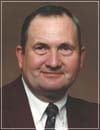
About Carroll Poole
Carroll Poole is Pastor of East Hendersonville Baptist Church, Hendersonville, NC. He may be reached via email at carrollpoole@bellsouth.net.
Broadcaster:

Comments

0 / 2000 characters
Comments are moderated before appearing.

Be the first to comment!

Joshua

Joshua

Shall we play a game? Ask me about articles, sermons, or theology from our library. I can also help you navigate the site.