Bootstrap
Daniel Parks

A Near Kinsman

Ruth 3:9
Daniel Parks September, 1 2007 Audio
0 Comments
2007 Danville, KY Conference

Sermon Transcript

Auto-generated transcript • May contain errors

100%
I invite your attention to the
book of Ruth, chapter 3. I am most appreciative of the
opportunity to attend this conference, to have been led in worship as
we have been led, ministered unto in the reading
of God's Word, the singing of hymns of praise to Him, and in
the preaching of these men. And I appreciate also the hospitality
that has been shown by this church in so many ways to all of us. The book of Ruth begins with a man named Elimelech. His name
means God is King. Elimelech is married to Naomi. Her name means pleasant. They have two sons. Their names are Mahlon and Kilion. Their names mean, believe it
or not, sickly and puny. They live in Bethlehem, which
name means house of bread. But there came a time when there
was no longer bread in that house, and Elimelech evidently sold
his inheritance. and took his pleasant wife and
his two sickly and puny sons and left that place to sojourn
in Moab, which God calls my washpot. There in that land of Moab, the
two sickly and puny boys married Moabitess women, Orpah and Ruth. We do not know the meaning of
Orpah's name. It's of no consequence. She's
never mentioned again. Ruth means friend. In the course of time, he whose
God is king died, and likewise did his two sickly and puny sons. The pleasant woman said, God
has dealt bitterly with me and changed her name to bitterness
or Mara. She decided to return to the
land of Bethlehem, having heard that bread had returned in that
place. Her two daughters-in-law say
that they will return with her. But when they reached the border
of the land, Naomi looks at the two daughters-in-law
and tells them to go back to their homes and to their families
and to their gods. Orpah lifted her voice and wept
and returned and is never heard of again. Ruth expressed her
commitment when she said, where you go, I will go. And where
you lodge, I will lodge. And your people shall be my people. And where you die, I will die.
And there will I be buried. And I will not be dissuaded from
going with you. So they return to Bethlehem in
poverty, in destitution, at the time of barley harvest, which
would have been the beginning of the harvesting season. Because they live in destitution,
they're looking for some way to obtain grain. And so, Ruth was sent to glean in the
fields, hoping that she might find some place to glean a few
grains here and there. In that day, two types of people
went into the field at harvest time. First were the reapers. And the young men would come
through with their sickles and their scythes and they would
cut the grain and leave it lying on the ground. And behind them
would come the reapers, usually young women and young men. And they would perhaps make a
line across the field and they would gather the grain into their
arms and then put it into the shocks in the field. Behind them
came the gleaners, the poor of the land. And the Lord said to
His people, to the reapers in particular, you cannot go into
the corners of the field. And furthermore, when you have
left the field, you cannot go back into it. And if you should
be reaping and you look behind you and see that you have left
some grain, neither can you go back to get that. This was for
the gleaners, the poor of the land. They could go into the
corners of the field and cut the grain that was there. They
could gather what was left in this place and that. Now Ruth began to glean in the
field of one by the name of Boaz, a rich man. Boaz came out into
his field one day to look over the situation and he could not
help but notice This young woman, gleaning in his field with particular
diligence, and he asked whom she was. Well, this is Ruth,
the Moabitess woman. She has come back from the land
of Moab with her mother-in-law, Naomi. Boaz observes her and he says
unto his reapers, leave some handfuls on purpose behind for
her. And they did so, purposely leaving
handfuls, although there was a purpose in his mind that they
did not know. He said, let her eat with my
reapers. He said to his young men, she's
hands off to you, do not touch her. And there was a reason for
that as well. Ruth gleaned so amply that she
filled her apron up and went home to Naomi and Naomi says,
you've been gleaning? Yes. You got that much? Yes. In whose field were you? I was in the field of one by
the name of Boaz. Ah, he's a kinsman. I will tell
you what you must do. Wash yourself. Anoint yourself
with oil. Put on your good garment. Go
down to the threshing flower. He will eat tonight and he will
drink. And then his heart will be merry.
And when he lies down to sleep, you mark the place where he lies. And you go down and lie down
at his feet. When he awakes, he will tell
you what you must do. So Boaz eats, and Boaz drinks,
and his heart is merry. And he goes to lie down for the
night on the threshing floor, perhaps sleeping on the grain.
And after he's gone to sleep, Ruth comes and lies down at his
feet. And in the middle of the night,
the man awakens and he says, who are you? Though he well knew. Who are you? I am Ruth, your
maid servant. Cover me with your garment. Take
me under your wing. For you are a near kinsman. That's my text. Ruth chapter
3 verse 9. Take me under the mantle of your
garment. Cover me with your wing. Because
I am your servant and you are a near kinsman. When she said
a near kinsman, he knew what that meant. Because kinsmen were
obligated in Israel to be redeemers of their brethren, usually in
four different ways. They must avenge an innocent
brother's blood, as the avenger of blood, to redeem innocent
blood. If a brother has fallen in the
hard times and must sell his property, it must be redeemed
and restored. If a brother has fallen in the
hard times and must set himself into servitude, his kinsman,
his brother, must redeem him and set him at liberty. If he
dies before there is a male child born to his wife to receive his
inheritance so that his inheritance continues among his family, his
kinsman, must see that there is a male child born in the grace
of God to receive the inheritance. And so when Ruth says to Boaz,
you are a kinsman, he knew his obligation and he set apart to
do it. He restored the inheritance. He married her. He covered her
with his garment. He brought her under his wing.
Because that's what a kinsman does in redeeming. Let me tell you, furthermore,
that in this instance, Boaz is a type of Christ. Ruth is a type
of all God's elect. God's elect are in need of a
kinsman. Christ is the kinsman. And God's
elect are in need of redemption. The kinsman is obligated and
has obligated himself to do so. Now, let me share with you by
means of allegory, if God be pleased, how I came to find Jesus
Christ to be my kinsman, Redeemer. I was raised in the home of a
faithful minister of the gospel. My parents diligently from infancy
taught me the truth of God's word. But I lived most of my
young life having no fear of salvation because I thought I
had it. On the 2nd of February 1972,
while living in Germany, I had a very remarkable religious experience
which I equated with conversion. I began trying to do good works
to prove I was saved. I joined myself to some Pentecostalists. On New Year's Eve 1973, received a baptism in the Holy
Ghost, or what they call it, and spoke in unknown tongues,
began to preach among Pentecostalists. But after beginning a more thorough
study of God's word, I saw the error of the sect, left it and
became a Baptist. I saw also the error of a greater
problem, free willism. And so I left that and became
a good Calvinist. Enrolled in a school of religion
and eventually obtained a degree in theology and was preaching. But on the 17th of June, 1975,
I found myself in the most peculiar situation. For the first time in my life,
I was under arrest. And the arresting officer was
none other than the Holy Spirit of God, who arraigned me before
God's court of justice at Mount Sinai. And there I stood before
the judge of heaven and earth. And the judge said, what be the
charge against this man? And the arresting officer said,
he's a sinner. For all have sinned and come
short of the glory of God." The judge said, the sentence
is sure. The soul that sins shall die.
The wage of the sin is death. Take him to his doom. Ah, sir,
there must be some mistake. I'm a Calvinistic Baptist preacher,
and Lord, Lord, Have I not done many wonderful works in your
name? Cast out demons in your name? There must be some mistake. No. The judge, if he makes no
mistake, take him away. Sir, I desire to approach the
bench. Do you not know your God is a
consuming fire? Approach this bench as you are
and you will be consumed. Take him to his doom. I appeal
the decision. There is no appeal by the condemned
in God's court. The judge of heaven and earth
makes no mistake. Take him away. My mouth was shut. And I was taken by the Spirit
of God to a far off state, a state called conviction. And there
I was placed in a prison called despair, a place of darkness. I was placed in the shackles
and in the bonds, put into a cell in absolute darkness that couldn't
be felt. I was delivered into the care
of a hard and austere man named Justice. Justice ascertained
that I was secured in that place of conviction, in that prison
of despair. I said to Justice, I desire to
be released. And Justice said, I don't blame
you. How may I be released? One way. One way only. Justice must be satisfied. How may I satisfy Justice? One way. one way only, die. Because justice is satisfied
in the death of the sinner. And when you die, justice is
satisfied. I saw then that I had no hope
of coming out of that prison condemned, deep in conviction, and in utter
despair and having no hope. a noise above me. And I asked,
Justice, what's this noise I hear? Justice said, that's the wrath
of God. He abides upon you. What's he doing? I hear a noise. He's preparing the day of your
doom. What will the day of my doom
be like? Justice said, listen. And from the deepest and darkest
recess, of the place of condemnation. I heard one screaming in terror,
Father Abraham, send Lazarus that he may dip the tip of his
finger in water and cool my tongue, for I am tormented in this flame.
And his end was mine. No hope. None at all. One day, The door to the prison
opened. For the first time, a shaft of
light pierced that darkness that could be felt. Someone stepped
in, walked down toward justice, a different footstep. This was
a soft footstep, unlike that of hard justice. Justice said,
who comes? And the voice replied sweet and
melodiously, My name is Mercy. Well, Mercy, what brings you
to this dismal place? And Mercy said, Do you have one
here by the name of Daniel E. Parks? Indeed I do. Condemned to die. Mercy said,
I've come to release him. And I was ready to go. And I
raised my hands, and I rattled my chains, and I said, Justice,
did you hear this? Mercy has come to release me.
Turn it loose. I'm free. And Justice said, not
yet. Not yet. But you just heard,
mercy seeks me. Not yet. Mercy upon what ground
would you seek the release of Daniel Parks? And mercy said,
he has a kinsman named Jesus Christ. who has come
to redeem him. Mercy, are you sure? I've got
a kinsman, and he's come to redeem me. Yes. Justice, did you hear
that? Yes, Justice said. And I raised
my hands, and I rattled my chains, and then tore me loose. Justice
said, not yet. Why not? Because I just told
you. You do not leave my prison until
Justice is satisfied. What did it take to satisfy justice? I must know, said justice, that
this Jesus Christ is your near kinsman. I mean, is very God
a very God? How can very God a very God be
related, a near kinsman, to the likes of you? Oh, mercy tell
me. Is Jesus Christ very God a very
God? Is He related to me? Mercy said,
he is. Just like you, he was born of
a woman. Just like you, he was born under
the law. And in order to be made like
you, he made himself of no reputation. That suits Daniel Parks quite
well. He took upon him the form of
a servant, a form like mine. He was married in the likeness
of men. He came to look like me. He was
found and found as a man, a man like me. Very God of very God. To be my kinsman took my humanity. But all He did more than that,
because it behooved Him in all things to be made like unto His
brethren. What are you saying, Mercy? Jesus
Christ, very God of very God, has become the brother of that
wretched sinner Daniel Parks. Oh, Justice, did you hear this?
Upon the authority of God's infallible Word. Have you heard this? Are
you satisfied? He's my near kinsman. And Justice
said, I'm satisfied. And I raised my hands, and I
rattled my chains, and I thought, justice is satisfied. I'm free. I'm free. But justice said, not
yet. What do you mean, not yet? You
just said you're satisfied. Well, yeah. That's the first
qualification, but there is a second. What is this second qualification?
Well, this Jesus Christ, in order to redeem you, must be a free
man. because one slave cannot purchase
the freedom of another slave. It takes a free man to purchase
the liberty of a slave. I must know beyond any shadow
of a doubt that this Jesus Christ is a free man, free from the
condemnation of the law. Oh, mercy, tell me, is he free?
Oh, yes, he's free, said mercy, he's a free man. Paul the lawyer
said, he knew no sin. Jesus Christ himself stood before
his enemies and was unanswerable and unanswered when he said,
which of you convicts me of sin? None could. Peter walked with
him for three and a half years. knew him as well as anyone in
all this earth could have known him. And Peter said, he did no
sin, and neither was guile found in his mouth. But would you like
to know what an enemy said? Pilate, the Roman procurator
over Palestine, officiating as judge at the trial of Jesus Christ,
heard every trumped-up charge that was raised against him by
the Jewish Sanhedrin. And then having looked at all
the evidence, his enemy said, I find no fault in this man.
He's a free man. No sin. None could show that
he'd ever sinned. He's free. Ah, Justice, did you
hear this? Mercy has shown by the infallible
authority of God's Word that he's a free man. He may redeem
me. He's a free man. Are you satisfied? And justice said, I am. And I
raised my hands and I rattled my chains. And I said, I'm free. I'm free. Justice said, not yet. What do you mean, not yet? You
demanded to be a kinsman. He's a mere kinsman. You demanded
he be a free man. He's the one and only free man. What else could you ask for?
Well, I must know that he is able to redeem you. I must know
that he has the power to do so. Tell me, mercy, is he able? And mercy said he is completely
able because he is able to save to the uttermost those who come
to God through him. Furthermore, he is exceedingly
able because he is able to do exceedingly abundantly above
all that we ask or think according to the power that work within
us. Whatever power is needed to redeem, he has that and much,
much, much more. Oh, Justice, you've heard the
report. Up from the authority of God's own Holy Word, are you
satisfied that He has the power to redeem me that He's able?
I'm satisfied. And I raised my hands and I rattled
my chains and I said, now I'm free! Now I'm free! But Justice
said, not yet. What do you mean, not yet? He's able to redeem. Yes, said
Justice. Is He willing to redeem? It is one thing to have the power
to do so, but it is quite another thing to be willing to do so.
I must know beyond any shadow of a doubt that this Jesus Christ
is willing to redeem one so vile and wretched as Daniel Parks.
Is He willing? Mercy said He is lovingly willing.
Paul declares a life which I now live in the flesh. I live by
the faith of the son of God who loved me and gave himself for
me. Jesus Christ himself says, my
father loves me because I laid down my life. No man takes my
life from me. I lay it down myself, and for
the sake of my kinsman Daniel Parks, I will lay my life down
for him. I'm willing to do so. All the
spikes from all the mines in all the world could not have
held him to the cross that day, except that he was willing to
hang there. legions of angels were there, would have come at
his call, had he but given the word. But no, even for Daniel
Parks he hangs in agony, forsaken by even his God, for three hours
of darkness, bearing the penalty that I deserved. Well, justice
seems to me he's willing to do it. No man forced him. Are you
satisfied? Yes, I'm satisfied. And I raised
my hands and I rattled my chains and I thought, now I'm free,
now I'm free. But justice said, not yet. What do you mean not yet? You demanded to be a kinsman.
He's a near kinsman. You demanded to be a free man.
He's the only free man. You demanded he be able. You
demanded he be willing. Will you ever be satisfied? Do
you have an infinite number of qualifications? You're going
to raise one after the other until you find one way to disqualify
him? Justice said, wait. One more
qualification. Just one more. Let him meet this
qualification, and I tell you, you're a free man. What is it? He must have the price of your
redemption. It is one thing to be able, and
it is another thing to be willing. It is yet another to have the
price. What is the price? Well, said
Justice, I'll tell you this. They that trust and boast in
the multitude of their riches and all their wealth, none of
them can by any means redeem his brother. What are you saying?
The price of your redemption will be more than all the gold
and silver and all the wealth of this world. I have no idea
what that could be. But this is the last qualification.
I look at mercy. I said, mercy, you hear what
justice requires? He requires that my kinsmen have
something worth more than all the wealth of this world. And
if Jesus has it, I go free. Now tell me, Does he have the price of my
redemption? Yes, he does. Send mercy. For you were not
redeemed with corruptible things like silver and gold, but by
the precious blood of Christ as of a lamb without blemish
and without spot. Well, you see, but I didn't understand
that, you know. You understand I didn't because
I'm thinking He demands something more valuable than silver and
gold and you bring blood? How can blood redeem me when
these won't? And as I raise my hands now in
frustration, I realize the chains are gone. The stocks are removed. The doors my prison has opened.
Mercy takes me by the hand. pulls me out of that prison.
I walk out of the darkness and into the glorious light. And
there, as my eyes adjusted, I wondered, how can this be? And looking
back, I see myself, and I see the name on it, Daniel E. Parks,
and written in red over that, redeemed by the blood of his
kinsmen. And now as my eyes become accustomed
to the light I had never seen before, I see it. I'd oftentimes
preached about it and sung about it, but now I was seeing it for
the first time. How that up Calvary's mountain,
one dreadful morn, walked Christ my Savior, weary and worn, facing
first sinners, his kinsmen, there from the cross that he might
save them and redeem them from endless loss. And then I realized
how that in evil long I took delight, in awe by shame and
fear, till a new object struck my sight and stopped my wild
career. I saw one hanging on a tree.
in agonies and blood, who fixed His languid eyes on me as neath
His cross I stood. Ah, never till my latest breath
shall I forget that look. It seemed to charge me with His
death, though not a word is spoken. My conscience felt and owned
that guilt and plunged me in despair. I saw His blood. My sins had spilt and helped
to nail Him there. And then I heard him speak. Looking
at me, he said, Come, ye sinner, poor and wretched, weak and wounded,
sick and sore. Jesus ready stands to save you,
full of pity joined with power. For the first time in my life,
I was thirsting for that. And I heard him again. Well then,
come ye thirsty, come and welcome. God's free bounty glorify. True belief and full repentance,
every grace that brings you nigh. But I was so weary, and I thought,
surely I've got to do something to merit this. And he replied,
come ye weary, heavy laden, lost and mangled by the fall. For
if you tarry till you're better, you will never come at all. Now
my conscience smoked me. This is too good to be true.
And he said, let not conscience make you linger, nor of fitness
fondly dream. All the fitness Christ requireth
is to feel your need of Him. And for the first time in my
life, I said, I will arise. And I'll go to Jesus. And He
will embrace me in His arms. And in the arms of my dear Savior,
oh, there are ten thousand charms. And I went. And I laid down at
His feet. And He looked down and He said,
Who are you? I am Daniel E. Parks. your bond servant. Put your wing over me and cover
me with your garment. You are a near kinsman." And
he did. His wing of protection is now
over me. His garment of righteousness
now covers me. And since that day, there is
a song I love to sing since I have been redeemed. of my Redeemer
kinsman friend since I have been redeemed. Oh, sinner, is there one here today, perhaps religious but lost, claiming
to walk in light but condemned in darkness? Would God be pleased
to arrest you? If He does, it'll be a stroke
of sweet mercy. Bittersweet, but sweet. May He
show you what a sinner you are before His bar of justice. May He throw you into a prison
of despair in a state of conviction. May He show you justice you cannot
satisfy. May He send mercy. to show you
Christ, and when he does, flee to his feet. Tell him he's your
kinsman, and knowing him as such, he'll redeem you.
Daniel Parks
About Daniel Parks
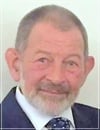
Daniel E. “Moose” Parks is pastor of Sovereign Grace Church, 1000 7th Avenue South, Great Falls, Montana 59405. Call/text: 931.637-5684. Email: MooseParks@aol.com.
Broadcaster:

Comments

0 / 2000 characters
Comments are moderated before appearing.

Be the first to comment!

Joshua

Joshua

Shall we play a game? Ask me about articles, sermons, or theology from our library. I can also help you navigate the site.