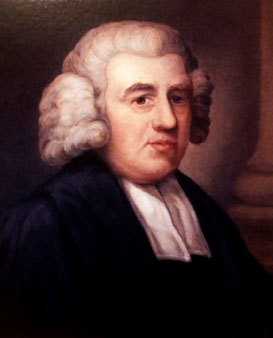
John Newton's article "Thought on the Ice-Palace" serves as a theological meditation on the transience of life and the eternal significance of one's soul in light of the Gospel. Newton vividly illustrates the fleeting nature of worldly ambitions by comparing them to an ice palace, beautiful yet ultimately ephemeral: "the wind passes over them—and they are gone." He emphasizes that, unlike earthly endeavors, the spiritual realities and consequences of one’s conduct have eternal weight. The argument draws upon Matthew 16:26, reiterating that a single soul's worth far surpasses worldly gains, highlighting the urgency of and gratitude for salvation through Christ. Through this reflection, Newton calls believers to live purposefully in light of their eternal hope, using their temporal existence for the glory of God and the advancement of His kingdom.
Key Quotes
“Men build and plan as if their work were to endure forever...their final breath departs; they return to their earth; in that very day their thoughts perish.”
“What will it profit a man if he gains the whole world—yet loses his soul?”
“Should I suggest in some companies that the conversion of a hundred sinners to God is an event of more real importance than the temporal prosperity of the greatest nation upon earth—I would be charged with ignorance and arrogance.”
“One soul is worth more than the whole world on account of its redemption price, its vast capacities, and its endless duration.”
What does the Bible say about the brevity of life?
The Bible emphasizes that life is transient and fleeting, urging believers to focus on eternal matters (Psalm 103:15-16).
Psalm 103:15-16, James 4:14
How do we know that God's plans are for His church?
God's sovereignty and design in history ultimately serve His church and kingdom (Ephesians 1:11).
Ephesians 1:11
Why is the eternal value of a soul important for Christians?
A soul's eternal value surpasses all earthly wealth (Matthew 16:26).
Matthew 16:26
What should motivate Christians to live for God's glory?
Believers are motivated to live for God's glory by grace and a desire to serve Him (2 Corinthians 5:15).
2 Corinthians 5:15
January 20, 1775
Dear sir,
We have entered upon another year! So have thousands, perhaps millions—who will not see it close! An alarming thought to the worldling! at least it should be so. I have an imperfect remembrance of an account I read, when I was a boy, of an ice palace, built one winter at Petersburgh. The walls, the roof, the floors, the furniture, were all of ice—but finished with taste; and everything that might be expected in a royal palace was to be found there; the ice, while in the state of water, being previously colored, so that to the eye all seemed formed of proper materials; but all was cold, useless, and transient. Had the frost continued until now, the palace might have been standing; but with the returning spring it melted away, like the baseless fabric of a vision. No contrivance could exhibit a fitter illustration of thevanity of life. Men build and plan as if their work were to endure forever; but the wind passes over them—and they are gone! In the midst of all their preparations, or at farthest when they think they have just completed their designs, their final breath departs, they return to their earth; in that very day their thoughts perish! "How many sleep—who kept the world awake!"
Yet this ice-house had something of a leisurely dissolution; though, when it began to decay, all the art of man was unable to stop it. But often death comes hastily, and destroys to the very foundations without previous notice. Then all we have been concerned in here (all—but the consequences of our conduct, which will abide to eternity) will be no more to us than the remembrance of a dream. This truth is too plain to be denied; but the greater part of mankind act as if they were convinced it was false—they spend their days in vanity, and in a moment they go down to the grave! What cause of thankfulness have those, who are delivered from this delusion; and who, by the knowledge of the glorious Gospel, have learned their true state and end; are saved from the love of the present world, from the heart-distressing fear of death; and know, that, if their earthly house were dissolved, like the ice-palace, they have a house not made with hands, eternal in the heavens!
Yet even these are much concerned to realize the brevity and uncertainty of their present state, that they may be stimulated to make the most and the best of it; to redeem their time, and manage their precarious opportunities, so as may most tend to the praise and glory of Him who has called them out of darkness, into marvelous light. Why should any, who have tasted that the Lord is gracious, wish to live another day—but that they may have the honor to be fellow-workers with him, instrumental in promoting His designs, and of laying themselves out to the utmost of their abilities and influence in his service?
To enjoy a sense of His loving-kindness, and to have the light of his countenance lifted up upon our souls, is indeed, respecting ourselves, the best part of life, yes, better than life itself! But this we shall have to unspeakably greater advantage, when we have finished our course, and shall be wholly freed from the body of sin. And therefore the great desirable while here on earth, seems to be grace, that we may serve him and suffer for him in the world. Though our first wish immediately upon our own accounts might be, to depart and be with Jesus—yet a lively thought of our immense obligations to his redeeming love, may reconcile us to a much longer continuance here, if we may by any means be subservient to diffuse the glory of His name, and the blessings of his salvation, which is God's great and principal end in preserving the world itself.
When historians and politicians descant upon the rise and fall of empires, with all their professed sagacity, in tracing the connection between causes and effects—they are totally unacquainted with the great master-wheel which manages the whole movement; that is, the Lord's design in favor of his church and kingdom. To this every event is subordinate; to this every interfering interest must stoop. How easily might this position be proved, by reviewing the history of the period about the Reformation.
I doubt not, but some who are yet unborn will hereafter clearly see and remark, that the present unhappy disputes between Great Britain and America, with their consequences, whatever they may be, are part of a series of events, of which the extension and interests of the church of Christ were the principal final causes. In a word, that Jesus may be known, trusted, and adored—and sinners, by the power of his Gospel, be rescued from sin and Satan, is comparatively the one great business, for the sake of which the succession of day and night, summer and winter, is still maintained. And when the plan of redemption is consummated, sin, which now almost fills the earth, will then set it on fire; and the united interest of all the rest of mankind, when detatched from that of the people of God, will not plead for its preservation a single day.
In this view, I congratulate you, that, however your best endeavors to serve the temporal interests of the nation may fall short of your wishes; yet, so far as your situation gives you opportunity of supporting the Gospel cause, and facilitating its progress—you have a prospect both of a more certain and more important success. For instance, it was, under God, that your favor and influence brought me into the ministry. And though I be nothing—yet he who put it into your heart to patronize me, has been pleased not to allow what you then did for his sake to be wholly in vain. He has been pleased, in a course of years, by so unworthy an instrument as I am, to awaken a number of people, who were at that time dead in trespasses and sins. And now some of them are pressing on to the prize of their high calling in Christ Jesus; and some of them are already before the throne!
"What will it profit a man if he gains the whole world—yet loses his soul? Or what will a man give in exchange for his soul?" Matthew 16:26. Should I suggest in some companies, that the conversion of a hundred sinners to God, is an event of more real importance than the temporal prosperity of the greatest nation upon earth—I would be charged with ignorance and arrogance. But you are skilled in Scriptural arithmetic, which alone can teach us to estimate the value of souls, and will agree with me—that one soul is worth more than the whole world, on account of its redemption price, its vast capacities, and its endless duration.
Should we suppose a nation to consist of forty million people, and each individual to enjoy as much good as this life can afford, without abatement, for a term of fifty years each; all this good, or an equal quantity, might be exhausted by a single person in two thousand million years, which would be but a moment in comparison of the eternity which would still follow. And if this good were merely temporal good, the whole aggregate of it would be evil and misery—if compared with that happiness in God, of which only those who are made partakers of a Divine life are capable. On the other hand, were a whole nation to be destroyed by such accumulated miseries as attended the siege of Jerusalem, the sum total of these calamities would be but trifling, if set in competition with what every single person who dies in sin has to expect, when the sentence of everlasting destruction, away from the presence of the Lord, and the glory of his power, shall be executed.
What an unexpected round have my thoughts taken since I set out from the ice-palace!

Comments
Your comment has been submitted and is awaiting moderation. Once approved, it will appear on this page.
Be the first to comment!