Bootstrap
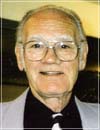
Scott Richardson

The Scapegoat

Leviticus 16:7-21
Scott Richardson May, 19 1996 Audio
0 Comments

Sermon Transcript

Auto-generated transcript • May contain errors

100%
It says that in that seventh verse Aaron now is the high priest. Aaron is the representative of
the house of Israel. them in worship, in going into
the tabernacle to do business with God, He represents them. As our Lord Jesus Christ represents
us, He's our High Priest, and He represents us at the right
hand of God, and ever lives as our days Our Mediator before God. He's there. We're in Him. He's in us. We're in Him. Don't
ask me to explain it. I couldn't. But that's just the
way it is. We're one with Him. And Aaron,
the High Priest, is a type. of our great high priest, the
Lord Jesus. Aaron shall offer his bullock
of the sin offering, which is for himself. Now, he's not that
type of the Lord Jesus when he offers a sin offering for himself.
The Lord Jesus needed no sin offering for himself because
in him was no sin. That's the difference there.
and make an atonement for himself and for his house. Make an atonement. Satisfy God. And it's just a temporary thing,
just temporary until the shadow, which that's what that is, the
high priest the sacrifices, the burnt offerings, the peace offerings,
they were just a tithe of him who was the fulfillment of the
Shaddah, the great high priest of the Lord Jesus. And anyhow,
he is making atonement for himself and for his house, and he shall
take the two goats and present them before the Lord at the door
of the tabernacle of the congregation. That's where God meets with the high priest,
is at the door of the tavern, or no place else. Not a spot
upon the face of the earth will he deal with his people except
that place. If a man attempts to offer a
sacrifice in the open pewter, upon a rock, or any place else,
in that land, he's cursed by God. He won't be recognized or
won't be accepted. He's got to be at the door, at
the door of the tabernacle. Anyhow, Aaron shall cast lots
upon the two goats, one lot for the Lord and the other lot for
the scapegoat. And Aaron shall bring the goat
upon which the Lord's lot fell and offer him for sin offering.
And the goat on which the lock fell to be the scapegoat shall
be presented alive before the Lord, to make an atonement with
him, and to let him go for a scapegoat into the wilderness." Now, over
here in verse 21, It says, And Aaron shall lay
both his hands upon the head of the live goat. Aaron identifies
himself with the sacrifice and is saying that this sacrifice
is me and the people I represent, and he lays his head upon the
the head of the live goat, or his hands upon the head of the
live goat, and confesses over him all iniquities." Now, remember
we talked about that this morning. All of our sins, sins known and
unknown, and all the iniquities of the children of Israel, all
their transgressions, and all their transgressions and all
their sins, all of them, putting them on the head of the goat,
and shall send him away by the hand of a fit man into the wilderness. And the goat shall bear upon
him all their iniquities, all of them now, into a land not
inhabited, and he shall let go the goat into the wilderness." And that's a type of our sins
being transferred on the Lord Jesus Christ, and Him bearing
our sins away and making an end of them. He's the end of the law
to them that believe. He bears the punishment that's
due our sins. is typified in this live goat. He bears our sins and takes them
into this waste howling wilderness where no one shall find them
because no one's looking for them. Our sins are gone in the
person of the scapegoat, our scapegoat in reality. is none other than God's Christ. And that's what I want to talk
about a little bit here this evening. But Pat's going to lead
us into him first, and then we'll talk about this. Now, these two goats we've read
about, they are two aspects of the atonement That's to be seen
in the setting apart of these two goats. It says here that the Lord's
lot fell on one. The Lord's portion fell on one. And the people's lot fell on
the other goat. The goat on which the people's
lot fell typifies, as we've already said, the death of our Lord Jesus
Christ, who died in our stead and place of rule as our blessed
substitute. So that lot that fell upon The
goat, which represented the people, typifies the death, crucifixion,
shedding of the blood of the Lord Jesus Christ, wherein God
has been perfectly glorified with respect to our iniquities
and transgressions and our sins. Perfectly glorified. Now, the
Lord's Lock speaks of the Lord's Lock. Now, God has a peculiar
portion in the death of the Lord Jesus Christ. You need to bear
this in mind, or at least give it some consideration in order
that you might understand what I'm about to say. You need to
bear in mind how that God has been dishonored in this world. That is, his truth has been despised from the very start. The inhabitants
of the earth who came from fallen Adam have
to the person. despised the truth of God. And
we, too, would have still been despising the truth of God if
God had not overcome the stubbornness of our will and brought us unto
Himself. We would not be lovers of the
truth. Well, you know, that his truth has been dishonored
in this world, and his truth has been despised in this world,
and his authority has been rejected from Adam on down. His majesty and his might and
his glory have been slighted by the human race. His law has
been broken by every single solitary member of Adam's race. His law. There is not one, out of all
the multiplied billions of people that came from Adam's race under
this particular time, that is not guilty of breaking God's
law. Keep this in mind now. Bear in
mind that God's been dishonored in this world. from the start. His truth has been despised,
his authority has been rejected, his majesty has been slighted,
his law has been broken, and his claims, the claims of God,
have been not only despised, but disregarded by the human
family. His name has been blasphemed,
Every one of us is guilty in one way or the other of blaspheming
the name of the Lord in our lifetime. Not just one time, but many times.
Sometimes under our breath, sometimes by way of open conversation. We have blasphemed the name of
the Lord. The whole human race is guilty. of Adam's rebellion against the
will and the word of God. Now, what I want to say is this. The death, the substitutionary
work, vicarious death of the Lord Jesus Christ has made provision
for all of this that I've called your attention to, this despising,
rejecting, disregarding, God, his word, his truth, his honor,
his majesty, have all been provided for in and by and through the
substitutionary death of the Lord Jesus Christ. His death
has perfectly glorified God in the very place which all these
things have been done. I said from the start to right
now. before God, violated His character,
despised His truth, slighted His majesty and honor, all that.
But what our Lord Jesus Christ done, perfectly glorified God
in the very place where these things were done, God become
a man. God left heaven's throne. become
a man, and that's a man perfectly glorified God in his death, in
the shedding of his blood, by making atonement for his people's
sins. All right? What he done? Perfectly vindicated his majesty,
perfectly vindicated God's truth, perfectly vindicated the holiness
and the character of God, it perfectly met the claims of His
throne, it has atoned for sin, and it has furnished a divine
remedy for all the misery and all the hurt which sin has brought
to this universe. And it gives God a ground. a
platform which he can act in grace and mercy and forbearance
toward this human family. It furnishes. That is, I'm talking
about these things that dishonored God, was perfectly satisfied,
God was perfectly glorified in what Christ did. These things
that our Lord Jesus Christ perfectly satisfied, not only gives God
a ground, a platform on which he can act in grace and mercy
and forbearance towards the human family, but it furnishes God
a warrant, or furnishes God a just reason for the eternal expulsion
of the prince of this world. That warrants God to send him
to hell with all of his angels. It forms an impassionable foundation
for God's moral government. Now, in virtue of what Christ
has done, made atonement, in virtue of that atonement, or
because of that atonement that Christ made in our behalf. With
His stripes we are healed. In virtue of His atoning death,
God can act according to His own sovereignty. Now, listen to me. He might in the exercising or the dispensing
of his inflexible justice. I say he might. He could have
done this and would have been just in doing so. He might in
the dispensing of his inflexible justice He might have consigned
the whole family of human beings to the lake of fire together
with the devil and his angels. He could have done that. But if he had have done that,
yes, he would have been just in doing that because We, of
our own volition and free will, turned our backs on God, despised
His righteousness and holiness and His truth, and we ought to
have been in hell. Every one of us here tonight
ought to have been in hell the length of our years. We ought
to have went to hell when we was born of woman. If we got
our just due, now God could have consigned the whole human race
to hell, along with the devil and his angels, because of our
first representative's disobedience and the way he dishonored and
violated the character of God, Adam and Eve. That was charged
to us. if he had have done that. He
didn't do that, but he could have done that. That's the point
I'm trying to make. But in that case, where would
have God's love been, God's mercy, God's kindness, God's longsuffering,
God's compassion, God's patience, and God's goodness? Where would
those attributes of God have been if he'd consigned the human
race to hell, and he could have done so justly. And there could
have been nobody of the human race in hell could raise a hand
in defense of themselves and argue with God about it. Well,
I said, if that had happened, where would God's love and grace
and mercy and kindness, His long-suffering, His compassion, His patience,
His goodness be? Well, we'd have never known anything
about it. Then, on the other hand, had these precious attributes
of God—mercy, kindness, grace, love, longsuffering, compassion,
patience, and goodness—attributes of God, on the other hand, had
these precious attributes been exercised in the absence of an
atonement Where then would be justice,
truth, mercy, and the righteous claims of God? How could then
mercy and truth met together, or righteousness and peace kiss
each other? It would have been impossible,
wouldn't it? Ah? You'll agree with me that
God has been bearing, God has been forbearing His better
works. He has been exercising His forbearance
with this world for 6,000 years. Now, the reason why God has foregone and forbears with this
human race, with the people on this planet, is in virtue of
the atonement of Christ, because of what Christ did. has been long-suffering to the
human race. If we'd have got what was our
due, we'd have went to Hell and we'd have spoken. And every son of
Adam would have went along with us. But in virtue of the atonement—see,
this is the Lord's lot. This is the part of the atonement
that has to do with God. If one is laid upon the Lord's
law, that does something for God. That causes Him to forbear and
to put up with the human family, the atonement. All right? In virtue of that
atonement, the most wicked blasphemous of the sons of Adam. They live,
and they move, and they have their being, they eat, they drink,
they sleep, and do everything else in virtue
of the Atonement. The people who live like heathens,
who live like dogs, Wicked, wicked, evil people,
the world's full of them. Of course, we'd be like them
if a constraining God or constraining grace of God would not constrain
us. But it does constrain us from
that. But evil and wicked people, if
it was not for the atonement, these people would already be
in hell. the very smallest, a morsel of
bread which goes into the unbeliever's mouth every morning and every
noontime and every suppertime. Just that morsel of bread, he
owes to the atonement of the Lord Jesus Christ. And he owes it to that atonement,
and he doesn't know anything about that atonement. As a matter
of fact, he makes fun of that atonement. But the very piece
of bread, the very crumb of bread that he has of a morning, he
owes to the atonement. If it was not for the Lord falling
upon that goat that represents the enablement of God to act
sovereignly, But was it for that, God destroyed all of us. Even the sun and the rain,
and we've had a lot of it. A lot of sun today, a lot of
rain the last few days. But this sun and rain, it fertilizes
the field. of unbelievers, and scoffers,
and mockers, and ungodly infidels, and atheists, and those that
despise God, fertilizes their fields, and all of this preaches
them in virtue of the atonement. That's how valuable and important
the atonement is. which the unbeliever and the
skeptic and the agnostic and the infidel and the atheist,
the very breath which this unbeliever spends in cursing God and denying
God's existence, they owe to the atonement of the Lord Jesus
Christ. In other words, Men who live
and move and have their being in this human family and enjoy
the benefits, the benefits of God, His goodness, His kindness,
His longsuffering and all that, they owe to what? They owe to
the atonement, the atonement of the Lord Jesus Christ. Were
it not for the atonement, these same people instead of cursing
God here on earth, would be writhing and wiggling and burning in God's
hell this very night, if it were not for the atonement. There is but one way to the holiest
of all. That's the blood-sprinkled way.
There is a way to God. And it's provided by the Lord
Jesus Christ, the scapegoat. The shedding of the blood. And it's what we sing about in
some of the hymns, the blood-sprinkled way. And it's foolish and it's
vain to strive to enter into that way by any other way apart
from the blood. Men try to pray themselves into
that way. They try to buy themselves into
that way. And they try to get in that way
by a pathway of ordinances that is half ordinance and half Christ. But God speaks of just one way,
and that's by and through the atonement Christ made. That's the way to God. It's through
Christ and His effectual work. There's no separation between
the person and the work of Christ. You can't separate the two. It's
in Christ. The way is in Christ. The blood
is sprinkled with it. One sacrifice of the Lord Jesus
Christ is sufficient for all who come to Him. God asks no
more and can accept no less than the blood sprinkled with it. It is a dishonor to God to add
anything to that way. It's a dishonor to the Lord Jesus
Christ to add anything to that way. It's a dishonor to the Holy
Spirit to add anything to that way. Let me show you something
else here that I think is of great interest in regard to this
atonement in this book of Leviticus. Well, you know, let me read that
again. In this atonement that was made,
it says, Aaron shall identify himself with the live goat, and
he'll confess over him all the iniquities of the children of
Israel, all their transgressions in all their sins, putting them
upon the head of the goat, and shall send him away by the hand
of a fit man into the wilderness. And the goat shall bear upon
him all her iniquities unto a land not happy." All her iniquities,
all of our sins, is laid on him. He bore them all. He cleansed
us with the shedding of his blood. All we do now is simply cast
The mercy of God in Christ Jesus. Receiving! Owning! Owning! Trusting. Well here, in this sixteenth
chapter, no, in the fourteenth chapter of
the book of Leviticus, It says, he's talking here, winding
up, about the cleansing of the leper. You know, there's various
aspects of that cleansing in three or four chapters here of
the book of Leviticus, where the leper, if he had a little
spot on him, God, in his supervision, his care and concern over the
people of Israel, was so careful and concerned and protective
that he told him if this one of them just had a little spot
there on his head, on his hand, and he didn't know what, he couldn't
discern what it was, he said, I want you to go to
the priest. I'll endow this priest with a
certain understanding and knowledge. He'll detect how bad this situation
is. Just a little red spot on his
finger, on his head, anywhere. And this fellow would be concerned,
he'd go to the priest, the high priest. And he'd look him over
carefully, the bottom of his feet to the top of his head.
And if he wasn't sure, he'd set him aside. Tell him to stay in
his house for seven days. I think seven days. Shut him
up for seven days, and then at the end of seven days, come,
we'll look again. And it may do that three or four times.
It may be 21 or 30-some days in the process of him going from
his home to the priest in order to detect whether this thing
is leprosy. See, if a man had leprosy, there's
no cure for it. The roots and the herbs wouldn't
cure it. Only God could cure leprosy.
But God, in his protective, fatherly concern over his people, gave
this priest this instinct to find out. He told his people
to take to the priest. Well, he did this, and finally
there were certain signs about the hair turning white and the
running sores and all of that that was surefire evidence that
this man had leprosy. But they kept shutting him up
and coming back to the priest until this leper, say, had spread
all over him, one big old scab, all over him from his head to
his feet. And when it spreads all over
him, then he's a bona fide, honest-to-God leper. And he can, and the Bible
says when this happens, He pronounces him clean after it's spread all
over. But he's not really clean, not really clean, until the blood
is applied to him. And that's what it's talking
about here. It says in verse 3, verse 2, And this shall be
the law of the leper in the day of his cleansing. He shall be brought unto the
priest, Now, this is a bona fide leper. This is not a man who
has a spurious leprosy. That is, he has something that
looks like leprosy, but this is the man that the priest is
convinced that the leprosy has spread all over him, and he's
a real leper. He's a real leper-like man whom
God works a work in, and convinces them by the work of His Spirit
in their souls, based upon the Word of God, that they are real,
honest-to-God, genuine sinners. Not make-believe sinners, not
pasted-on sinners, but real sinners, and they know they're real sinners.
And when a man knows he's a real sinner, then he's a genuine leper. And it's hopeful. But until a
man comes to that point in his experience, there's no hope for
him. He's got to know that he's a sinner. And then he'll find
out that his need as a sinner is met in Him whom God has provided,
the Lord Jesus Christ. All right? Now, listen. He shall be brought unto the
priest, and the priest shall go forth out of the camp. And
the priest shall look, and behold, if the plague of the leprosy
be healed in the leper. Then shall the priest command
to take for him, that is, to be cleansed." This is the command
of the priest. He told these other fellows,
here's what I want you to do. Take two birds, alive and clean,
live birds and clean birds. and cedarwood, and scarlet, and
hyssop. And the priest shall command
that one of the birds be killed in an earthen vessel over running
water." He's going to kill one of those birds.
Two birds now. Two clean birds. One of the birds is to be killed.
in an earthen vessel over running water. Now, as for the living
bird, the bird that's alive, he shall take it, and the cedarwood,
and the scarlet, and the hyssop, and shall dip them, and the living bird, in the blood
of the bird that was killed, over the running water. And he
shall sprinkle," now this is the cleansing for this leper,
see? Comes out of the blood of the
dead bird. The blood out of the dead bird. "...shall dip them, and the living
bird in the blood of the bird that was killed. And he shall
sprinkle upon him," that is to be cleansed, from the leprosy
seven times, and shall pronounce him clean." This is when he's
really clean here. It's when he sprinkles the blood
of the dead bird upon him seven times. The importance of the
blood. Without the shedding of the blood,
no remission of sin. "...and shall pronounce him clean,
and he shall let the living bird loose." in the open field. That is, take the cedarwood,
the scarlet, and the hyssop, dip them and the living bird
that was killed over running water, shall sprinkle upon him
that is to be cleansed from leprosy seven times, and pronounce him
clean, and then let that living bird loose in an open season. All right? These two birds typify
one Christ in two stages, death and resurrection. Now, 10,000
birds—listen to me—10,000 birds let loose could not have availed
for the leper. It was the living bird, bearing
on its wings the token of accomplished atonement. Blood, blood, blood. Kept the live bird in the blood
of the dead bird. Living bird, bearing on its wings
the token, the blood, of accomplished atonement. Now Christ is the
antitype of that live bird with its blood-stained feathers. Can you see this bird as they
let him loose in the open field, as he clapped his wings, and
the blood spattering through from his wings? Oh, he is the antitype of the
living bird, with blood-stained feathers, flying into the open
heavens—precious, glorious, triumphant, so satisfying of Jesus, that
bird. A risen, ascended, victorious,
triumphant Lord Jesus Christ, who's passed into the heavens,
the Bible says. bearing in his own sacred person
the marks of accomplished atonement. It's with him, dear brethren
and sisters, that we have to do here this evening. He may
be despised by this world, but I'll tell you right now, He is
the center of heaven's joy, and He's the theme of the angels'
song. And He's our all in all. He's
our atonement, the living bird that's been dipped in the blood
of His companion. His companion must shed His blood
for Him. He's dipped in his blood, and
then they take him to an open field, and there he flies. The
ascended Christ is going into heaven with the tokens of the
bloodshed of insanity. That's our salvation. That's
the atonement. That's Him in whom I trust. That's
Him who is my life, my Lord. My hope, my heaven, is the Lord
Jesus Christ. All honor and glory belongs to
Him. He did it alone. Let's stand,
we'll be this way.
Scott Richardson
About Scott Richardson
Scott Richardson (1923-2010) served as pastor of Katy Baptist Church in Fairmont, West Virginia.
Broadcaster:

Comments

0 / 2000 characters
Comments are moderated before appearing.

Be the first to comment!

Joshua

Joshua

Shall we play a game? Ask me about articles, sermons, or theology from our library. I can also help you navigate the site.