Bootstrap
Scott Richardson

There Is One God And One Mediator

1 Timothy 2:5-7
Scott Richardson April, 21 1996 Audio
0 Comments

Sermon Transcript

Auto-generated transcript • May contain errors

100%
Saving a sinner, a poor sinner
like me. Well, that's what this life is
all about. Whether you be in Christ or out
of Christ. Whether you have a good hope
or whether you have no hope at all. That's what it's all about. Who this man Christ Jesus is? Why did He come? What did He
do? Why is He so important? We talk about the Bible here.
The Bible is, in fact, Pat takes the book with the hymns in it
and talks about the hymn book. But really, this is the hymn
book because this book, from start to finish, talks about
him. It talks about him. Whom to know is life eternal. That's how important all this
is, whether you be in or out, whether you have a good foundation
or a bad foundation. whether you're covered with his
righteousness or whether you trust him in your own. I hope
that God will answer those questions for us. In 1 Timothy chapter
2, 1 Timothy chapter 2, Very serious subject is verse number 5. Very serious. Very important. I had a conversation with a fellow
just recently who used to come here once in a while, a few times. So I talked to him and asked
him how he's doing and all. He said, oh, he's doing fine.
I said, well, that's good. He said, I've been going to a
little Methodist church up in the country, up at Monumental,
I believe he told me. Methodist church at Monumental.
Been going up there. He said, they have such a good
time there. They have such a good time. He
said, it just meets my needs. And I said, well, that's fine.
And he said, they don't have much preaching. He said, as a
matter of fact, he said, I wonder why they pay the preacher. Because
he said, he comes and he says a few words for about ten minutes. And he said, then we all separate
in groups. He said, a group over here and
one of the ladies, make some comments on what's
going on and so forth, and the plight of this world and all.
And someone else over here, they talk a little bit, and then we
all talk, ask questions and all that, and said, I enjoy it. I
said, well, I try to be a little bit more
serious than that. I said, there is a place. in the church for a minister.
I said, God appoints and ordains men to be ministers of His. And I said, if a man says he's a minister
and he hasn't got anything to say, I said, maybe they ought
to get someone who does. Because the apostle here, he
said, in verse 7, he says, Whereunto I am ordained a preacher. Did
you read that, verse 7? Ordained. When was he ordained? I'm not talking about here in
time when they have a meeting, the churches and the elders and
the bishops They come together and they take one man and separate
him for the public ministry, and they lay hands on him and
so forth. Paul wasn't talking about that
kind of an ordination. He said he was ordained a preacher. He was ordained a preacher before
time ever was. Paul was. and it come to pass
here in time when Jesus Christ himself met Paul on the road
to Damascus and appointed him a preacher. Thus he was ordained.
He said, I am ordained a preacher and an apostle, a high office. The highest office in the church
of our Lord Jesus Christ was an apostle. I don't think that
that office is effective in our day. I think when the apostles
died, the office of an apostle died with them. Well, I've ordained
a preacher and an apostle, and listen to what he says. I speak
the truth in Christ. I speak the truth. I'm interested, he said, in truth,
not fiction. I'm not interested in what the
philosophers, Socrates and these at Mars Hill had to say. I'm
not interested in that. I'm interested in the truth,
the whole truth of nothing but the truth. How did I get here
and where am I going? Is there a heaven? Is there a
hell? If there's a heaven, how do I get there? Truth. I want to talk about truth, he
said. Serious business. I speak the truth in Christ.
And he said, I lie not. I lie not. I don't lie. I tell
the truth. A teacher of the Gentiles in
faith and verity. Well, look with me this morning,
if you will, to that fifth verse. For there is one God, one God,
not three gods, not a Muslim god, and not a god of Confucius. There is one God, one true and
living God who has manifested Himself in three persons, God
the Father, God the Son, and God the Holy Spirit. One in three and three in one. One God. The Lord Jesus Christ
was God. The Holy Spirit is God. God the Father is God. There is one God. And there's one Mediator between
God and man, the man Christ Jesus. Now, I
told you here at the outset that the Mediator, one Mediator is
one God, one Mediator between God and man, and that's the man
Christ Jesus. And the Mediator has to do with
two parties. and these at variance among themselves. Now the mediator, he stands as
a middle person, and it's his business, as the mediator, it's
his business to bring these two parties together and make peace
between them. That's the business. of the mediator. That's his business. Bring these
two parties together. Make peace between them. Be on friendly terms. Reconcile. Now these two parties here, we're
not talking about a labor union that's out of sort with the management. Therefore, they've got to go
to the government and call in a negotiator and a mediator to
bring the two parties together. That's not what we're taught.
Now, that is a sense of mediation, but here the two parties involved
in the reconciliation are God and his people. I could say God
and his elect people. God and his elect, according as he hath chosen us
in Christ Jesus before the world was born. Elect people. Now,
the two parties are God and his people. His people who, that's
you and I, that's all of us, who in their natural state, the
way they were born, are at a distance from God. They're born not in
fellowship with God, but when they're born, They're born out
of fellowship with God. They are enemies of God. They are at a distance from God
and at enmity to Him. They have broken His law and
they have affronted His justice. And the Lord Jesus Christ, the
Mediator, the God, The God-man stands here as the middle man,
a days-man between them, and lays his hands upon both parties. He has to do with things pertaining
to the glory of God, and he makes reconciliation for the sins of
his people and brings them that were afar off from God, nigh
unto God. That's what the mediator does.
And he makes peace between God and man. And how does he make
that peace? He makes peace by the blood of
his cross. And in consequence of this, he
appears for them in the court of heaven, intercedes for them,
pleads for them, and he is their advocate. He's their advocate. He's like Jeff. Jeff is an advocate
for the man that he represents, him being a lawyer, He pleads
this man's case. This man does not say anything.
He lets his advocate do all the pleading if he's got any sense.
He'll let the lawyer talk for him. He's our advocate, our Lord
Jesus Christ, our advocate where we need an advocate in the worst
way, in the court of heaven, in the throne room of God. We
need someone to plead our case. Now, what does he do? He sees
that all covenant blessings of which he is a mediator of are
applied unto those that he represents. He preserves their persons which
are committed unto his care. and under His charge, that they
will eventually be brought safely to everlasting happiness, to
the Kingdom of Heaven. Now, as this Mediator is the
man, Christ Jesus, not just mere man, He is truly and properly
God, not just man, see. He is God, all God, and all man in one person. That's the mediator,
all God and all man in one person. And his business is to bring
these warring parties together. It's his business to make peace
and reconciliation between these two parties. Not mere man, but
he's the God-man. As much God as if he's never
man, and as much man as if he's never God. This is what he does,
verse 6. There is one God, one mediator
between God and man, the man Christ Jesus, who gave himself
a ransom for all, for all sorts of men, for men and women of
every rank, of every quality, of every state and every condition. and of every age and of every
sex. Not all men in the sense of every man, every
woman, every boy, every girl that was ever born. All sorts of men. Jews and Gentiles. They come from every tribe, every
tongue, Blood never nation, all sorts of man, who gave himself
a ransom for all to be testified in due time. Now, what the mediator
gave as a ransom for man is this simple. It's this simple. He
gave himself. He gave himself. It's that simple,
Bob. His body and His soul, which
were made an offering for sin, He gave His life, which is the
result of the union between His soul and His body. He gave His
whole human nature as in union with his divine person. He is a man, all man, as if he
was never God, but yet on the other hand, he was all God as
if he was never man in one person. As a man, who is our mediator, as a man that he might have something
to offer. You haven't got anything to offer,
have you? What could you offer? If it was
up to you, what could you offer God? When everything that you've
thought or touched is tainted with that which God hates, what
good work could you drag up? The only thing you and I can
do is to lie and sin and go to hell when we die. That's all
we can do. We need one. We need a man who
has something to offer on our behalf and have some confidence
that what he offers will be accepted on our behalf. A man that he
might have something to offer, and a man that he might be capable
of obeying and suffering and dying. Oh, and in so doing, that is,
offering unto God, obeying, perfect obedience, suffering, and die,
and in so doing make satisfaction," listen to me close now, to make
satisfaction in the nature, to make satisfaction in the nature
that had sin. And had he been not God as well
as man, he could not have gone nigh unto God on behalf of men. Not, I already mentioned to you,
not for every individual of mankind, he said. There is one God and one mediator
between God and man, the man Christ Jesus, who gave himself
for ransom for all, not for every individual of mankind. It means
all sorts of men and women, colors, races, sexes, all sorts, but
not for every individual of mankind. Now, I know that that comes as
a shock to the religious person. I thought Christ paid to death. God loves everybody, and everybody's
going to be saved when they die. Whether they're saved in time
or not doesn't make any difference. Somehow God's going to save every
member of the human race, everybody that's connected with the first
Adam. God's going to save them. He
sent Christ. God loved them. God loved them
and sent Christ to die for them and pay their penalty. Well,
it says here, who gave himself a ransom for all. That means
for all sorts of people, all sorts of men, the rich, the poor,
the black, the yellow, the red, every sex, every country, every
tribe, every nation. Well, if he died... Now, let me just offer you this. If he died for every individual
of mankind, from Adam until the last man is born of woman. If so, then all would be delivered,
all would be freed, and all would be saved. But you and I know
that that's not so. All men at any given time and
any given place are not saved by the grace of God. The majority
of men and women and the people that make up this planet are
not interested in God Almighty. They've never committed themselves
to Him. They don't know anything about
their sinnerhood. They don't know anything about
what God requires. They're indifferent to God and
to His Son, and they trample underneath their feet every day
His blood. So we know, then, that it does
not mean for every individual of mankind a member of Adam's
fallen race. If so, then all would be saved,
all would be delivered, all would be freed, but all are not. Or, listen now, or else the ransom
price is paid in vain. If this all means all of mankind,
then the ransom, it says here, who gave himself a ransom, he
paid the ransom and he paid it in vain. If he paid it to save
all men, why are not all men saved? See what I'm saying? He did not pay the ransom in
vain. He paid it for a number of people
whose names are written in the Lamb's Book of Life that are
in the covenant. He's the fulfiller of the stipulations
of the covenant on their behalf. Listen, or, else the ransom price
was paid in vain, or, or, or is Unjust! God! Is God unjust? Well, He would
be if He refused to receive a ransom price that Christ made, and yet
not let the captive go free. He'd be unjust. He gave himself
a ransom for many, all sorts. And Paul said, as I've already
told you, about he being ordained a preacher. I'm ordained a preacher
and an apostle, and I'm telling you the truth in Christ. And
I'm just telling you this morning what Paul preached and what this
means. for His glory and for His honor.
Well, one mediator between God and man in a man's Christ Jesus.
Now, there is but one man through which God will accept man. That is by one man's obedience. I read that to you in Romans
chapter 5. There's a way. by which God will
accept men and women and boys and girls. There is a way. That
is by one man's disobedience, or one man's obedience. Christ,
by virtue of his death, put away the sin that separates his people
from God. Now his people come to God by
him and through him. the Lamb of God to take away
the sin of the world. Now, listen to me, we must, if we ever go to heaven when
we die, it will be upon this ground. We must be declared free
from guilt and invested with a righteousness that will stand
before the law of sinless perfection and entitle us to the kingdom
of God. That's what we've got to have. That can only be found in the
mediator who gave himself a ransom. It can only be found in him.
Only way we can be reconciled. We who are far off from God are
made nigh to the blood of Christ. Now listen, and if we have it
not in ourselves, where must we look for it but existing solely in the person
of Christ? dependence therefore upon that
righteousness wrought out by him and him alone, and appointed
by God for sinners to trust him." That's the only way, through
this man, Christ Jesus. Satan and the world might ask
you, if you tell them some things that I'm telling you, if you
bear testimony of him in whom is your confidence
and trust, if you do that, Satan and this world may ask you, How
can you be justified by a righteousness which is not yours? They might
ask you that question. And the answer is the righteousness
of Christ is ours, and ours only, by as great a right as any other
thing that we possess. It's ours by the free gift of
God. It's a gift. He gives it to us.
He doesn't pay it to us. He gives it to us, a free gift. What is this righteousness that
we must have? It is a righteousness answerable
to justice. Does your righteousness answer
to inflexible justice that demands the soulless sinner shall die? Our righteousness is of Him. He did die that we might not
die. He bore our sins to penalty,
do our sins. He's our obedience. God requires
that His law be kept. He kept it. He kept every jot
and tittle of that law. He kept it. He kept it from the
time He entered into this world to the time He left. He kept
that law. As a mediator, as a representative
of his people, he kept that law. He magnified that law and made
it honorable. He brought for his people a sinless
perfection, a righteousness that would answer to the justice of
God, that must be satisfied. I say to you this morning, the question is not, will you
accept the Lord? That's not the question. The
question is, will He accept you? And He'll accept anyone who comes. out of all sorts of people, He'll
accept them and meet their need and their cry for mercy only in Him whom God has appointed,
our Mediator, our Savior. I say, trust in Him. Trust in
Him and Him alone. I told you this story several
times about the lady who was talking to the Pentecostal preacher,
and she was trying to tell the Pentecostal preacher of the Lord Jesus Christ. And
she so extolled and exalted the Christ of God, he turned to her
and he said, you must think a whole lot of the Lord Jesus, don't
you? She said, He's my all. And He
said to her, He said, Do you think that Jesus is enough? And she said, If He is all you've
got, He's enough. See what I'm saying? If He's
all you've got, He's enough. You got anything else to go along
with him? Won't do it. Must be him, the
mediator. All right, meet again this evening.
Scott Richardson
About Scott Richardson
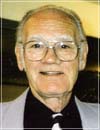
Scott Richardson (1923-2010) served as pastor of Katy Baptist Church in Fairmont, West Virginia.
Broadcaster:

Comments

0 / 2000 characters
Comments are moderated before appearing.

Be the first to comment!

Joshua

Joshua

Shall we play a game? Ask me about articles, sermons, or theology from our library. I can also help you navigate the site.