Bootstrap
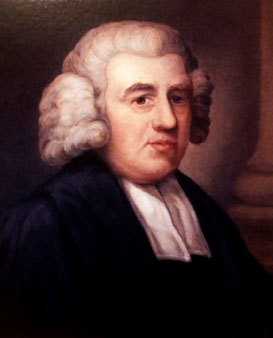
John Newton

Every man's shoes should be exactly of one size!

Ephesians 4; Romans 15:7
John Newton • June, 1 2010 • Audio
0 Comments
Choice Puritan Devotional

The main theological topic addressed in John Newton's sermon, "Every man's shoes should be exactly of one size," is the unity and diversity within the Church of Christ. Newton emphasizes that while believers are all united by genuine faith in Christ, their experiences and understandings of Scripture may differ due to various cultural, relational, and personal influences. This idea is supported by references to Ephesians 4, which illustrates the unity of the Spirit, and Romans 15:7, which calls for believers to accept one another as Christ accepted them. The practical significance of this message lies in the encouragement of love and acceptance among believers, even amidst doctrinal diversity, so they may maintain unity in Christ while resisting the divisive tendencies that arise from differing interpretations and opinions.

Key Quotes

“A uniformity of judgment among them on these secondary matters is not to be expected.”

“Thus, although all agree in asserting the authority and right of the Lord Jesus as King and Head of His Church, yet the various ideas they frame of the rule or standard to which He requires them to conform, and their pertinacious attachment to their own conceptions of it, separate them almost as much from each other as if they were not united to Him by a principle of living faith.”

“The spirit of love is restrained, offences are multiplied, and Satan is gratified by beholding the extensive effects of his pernicious and long-practiced maxim, Divide and Conquer.”

“Accept one another therefore, just as Christ accepted you, in order to bring praise to God.”

What does the Bible say about unity in the church?

The Bible emphasizes unity among believers, highlighting that they are all accepted in Christ despite their differences.

The Scriptures urge believers to accept one another just as Christ accepted them, promoting love and unity within the Church (Romans 15:7). The Church is composed of individuals savingly united to Christ through genuine faith, regardless of their differences in spiritual light, cultural backgrounds, or personal circumstances. While there may be variations in opinions on secondary matters, the essence of the faith should unify believers as they strive to live under the lordship of Christ, the King and Head of the Church.

However, this unity is often disrupted by individual believers imposing their own standards of conduct upon the community. This narrow mindset can lead to divisions, as each believer may insist their understanding is the norm, creating a situation where they forget their shared identity as children of the same family. Thus, mutual love and acceptance are essential in overcoming such fragmentation and fostering a spirit of togetherness in faith.

The call to mutual acceptance is therefore not just a suggestion; it's a command that brings glory to God and serves as a testimony to a world watching the Church's witness. Therefore, Christians are encouraged to focus on what unites them rather than their differences, embodying the love that Christ demonstrated to all.

Romans 15:7, Ephesians 4

How do we know our faith is genuine?

Genuine faith is evidenced by a saving union with Christ, resulting in acceptance and the work of the Holy Spirit.

Genuine faith is marked by a saving connection to Christ, where believers are accepted in the Beloved (Ephesians 1:6). This faith is not solely based on intellectual assent but is a transformative trust in Jesus that leads to a life reflecting His character and grace. As believers grow in their relationship with God, their lives will increasingly exhibit the fruit of the Spirit, indicating that their faith is authentic.

Furthermore, while believers may experience varying degrees of spiritual illumination and grace, they are nonetheless all under the purview of the same Holy Spirit, who guides and leads them into truth. This shared experience of spiritual growth and sanctification demonstrates that they are indeed part of the greater Church, united in mission and purpose (1 Corinthians 12:12-13).

Ultimately, the assurance of genuine faith lies in the witness of the Holy Spirit within them, affirming their identity as children of God and providing the confidence that they will persevere in their faith unto salvation.

Ephesians 1:6, 1 Corinthians 12:12-13

Why is mutual acceptance important for Christians?

Mutual acceptance fosters unity and reflects Christ’s love in the Church.

Mutual acceptance among Christians serves to embody the love and grace that Christ extends to all believers. Romans 15:7 challenges Christians to accept one another as Christ accepted them, highlighting that this acceptance is not based on conformity to individual standards but rather on a shared identity in Christ. This principle is crucial in maintaining unity amidst diversity, allowing believers from various backgrounds, cultures, and histories to come together as one body under the Lordship of Jesus.

When Christians practice mutual acceptance, they mitigate the divisions caused by personal preferences and interpretations, which can lead to unnecessary disputes and a fractured witness to the world. Satan delights in division, as it weakens the testimony of the Church and detracts from the mission of spreading the gospel. By emphasizing love and acceptance, believers can counteract these divisive tendencies and present a unified front that glorifies God.

Moreover, fostering acceptance reinforces the idea that every believer is on a similar journey of faith, recognizing that all are in the process of transformation by the Holy Spirit. This understanding nurtures an environment where growth, encouragement, and support can flourish, allowing the entire body of Christ to be built up together in love.

Romans 15:7

Sermon Transcript

Auto-generated transcript • May contain errors

100%
Every man's shoes should be exactly of one size. A letter of John Newton.

The Church of Christ is composed of all who are savingly united to Him by genuine faith. They are infallibly known only to Himself. They are scattered far and wide, separated from each other by seas and mountains. They are a people of many nations and languages, but wherever their lot is cast, they hear His voice and are under His gracious eye.

They do not have equal degrees of spiritual light or measures of grace, but they are all accepted in the Beloved. They are all spiritual worshippers and joint partakers of grace, and all will hereafter appear together at their Saviour's right hand in glory. In whatever is essential to their salvation, they are all led by the same Spirit and mind the same things.

but at present they are in an imperfect state. Though they are new creations, they are not freed from the principle of indwelling sin. Their knowledge is clouded by much remaining ignorance, and their zeal, though right in its aim, is often warped and misguided by the corrupt influence of self. They still have many corruptions, they live in a world which furnishes frequent occasions of enticing them, and Satan, their subtle and powerful enemy, is always upon his watch to mislead and ensnare them.

Besides all this, they are born, educated, and effectually called under a great variety of circumstances. Habits of life, local customs, early relationships with families and friends, and even bodily constitution, have more or less influence in forming their characters, and in giving a bias and turn to their manner of thinking, so that in matters of a secondary nature, their sentiments may, and often do, differ as much as the features of their faces.

A uniformity of judgment among them on these secondary matters is not to be expected. While the wisest are defective in knowledge, the holiest are defiled with sin, and while the weaknesses of human nature, which are common to them all, are so differently affected by a thousand impressions which arise from their various situations.

They might, however, maintain a unity of spirit, and live in the exercise of mutual love, were it not that almost every individual unhappily conceives that they are bound in conscience to prescribe their own line of conduct as a standard to which all their brethren ought to conform. They are but few who consider this narrow mindset to be as unnecessary, unreasonable, and impractical as it would be to insist or expect that every man's shoes should be exactly of one size.

Thus, although all agree in asserting the authority and right of the Lord Jesus as King and Head of His Church, yet the various ideas they frame of the rule or standard to which He requires them to conform, and their pertinacious attachment to their own conceptions of it, separate them almost as much from each other as if they were not united to Him by a principle of living faith.

Their petty differences form them into so many separate churches, and the fury with which they defend their own ideas and oppose all who cannot agree with them in every minute point, makes them forget that they are children in the same family and servants of the same master. And, while they vex and worry each other with disputations and censures, the world is bewildered by all this, and laughs at them.

The spirit of love is restrained, offences are multiplied, and Satan is gratified by beholding the extensive effects of his pernicious and long-practiced maxim, Divide and Conquer.

Accept one another therefore, just as Christ accepted you, in order to bring praise to God. Romans 15 7
John Newton
About John Newton
John Newton (1725-1807) was an English Anglican clergyman, staunch Calvinist, and abolitionist, most widely known for authoring the hymn Amazing Grace.
Broadcaster:

Comments

0 / 2000 characters
Comments are moderated before appearing.

Be the first to comment!

Joshua

Joshua

Shall we play a game? Ask me about articles, sermons, or theology from our library. I can also help you navigate the site.

0:00 0:00