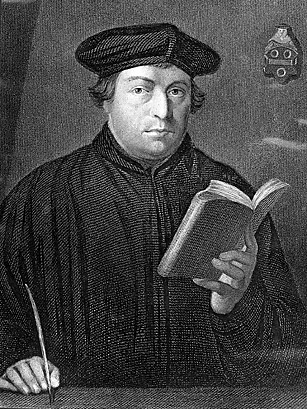
Martin Luther's letter to a friend addresses the theological doctrine of predestination and the ongoing debate with Erasmus of Rotterdam. Luther critiques Erasmus's understanding of predestination, asserting that he lacks the depth of understanding possessed by the schools of thought he criticizes. Throughout his argument, Luther emphasizes the supremacy of divine truth over human eloquence, citing 1 Corinthians 1:25 and Psalm 8:2 to demonstrate that God's wisdom surpasses human abilities. The practical significance of Luther’s argument lies in the assertion that faith and truth, supported by divine revelation, should guide Christians, rather than human intellectualism or philosophical reasoning.
Key Quotes
“Truth is more powerful than eloquence; the Spirit is far above human talent; faith is beyond all erudition.”
“I fear he will not find in Luther a Faber of Picardy nor be able to exult over me as he does over him.”
“Christ fears neither the powers of the air nor the gates of hell.”
“The foolishness of God is wiser than men.”
What does the Bible say about predestination?
The Bible teaches that predestination is God's sovereign choice to save certain individuals.
Moreover, 2 Timothy 1:9 echoes this truth, stating that God has saved us and called us not according to our works but according to His own purpose and grace. This reinforces the belief that our salvation is entirely due to God's grace and not contingent upon our actions, thus instilling deep assurance within believers about God's unalterable love and promise of salvation for His elect.
How do we know predestination is true?
Predestination is affirmed by various scripture passages that emphasize God's sovereignty over salvation.
This doctrinal understanding of predestination reassures believers that their salvation is secured by God’s promises and plans, rather than their fluctuating faithfulness. Consistent with Matthew 11:27, where Jesus affirms that no one knows the Father except the Son and those to whom the Son chooses to reveal Him, the Scriptures compel us to see that God's electing grace is a part of His divine sovereignty, emphasizing that our hope rests solely in Him.
Why is the concept of predestination important for Christians?
Predestination reassures Christians of God's sovereignty and grace in their salvation.
Furthermore, this truth fosters humility and gratitude in the Christian life. When believers comprehend that their salvation is wholly a result of God's grace, they are moved to live in thankfulness, understanding that they could not contribute to their own salvation. The significance of predestination thus lies in its capacity to shape the believer's identity, purpose, and confidence in God's eternal plan, assuring them of their unshakeable status as children of God.
TO A CERTAIN FRIEND.
Grace and peace in Christ,
I RECEIVED your last letter gladly, my excellent friend, because I believe you wish well to, and are concerned for, the state of the Christian cause. And I wish and pray, that the Lord would perfect that which he hath begun in you.
I am grieved at hearing, that among you also this cruel persecution is carried on against Christ. But it will come to this:—either that cruel tyrant will change his fury of his own accord, or you will change it for him, and that shortly.
Concerning Predestination, I knew long ago, that Mosellanus agrees with Erasmus: for he is an Erasmian altogether. My fixed opinion is, however, that Erasmus knows less about Predestination, (or rather pretends to know) than even the schools of the Sophists have known. Nor have I any need to fear a fall, while I maintain my sentiments unchanged. Erasmus is not to be dreaded on this point, nor indeed on any essential point of Christianity. Truth is more powerful than eloquence; the Spirit is far above human talent; faith is beyond all erudition; and, as Paul saith, "the foolishness of God is wiser than men!" (1 Cor. i. 25). The eloquence of Cicero, was often overthrown by inferior eloquence, in the discussion of public causes. Julian, was more eloquent than Augustine. In a word, the victory is in the hands of lying eloquence!—As it is written, "Out of the mouth of babes and sucklings hast thou ordained strength, that thou mightest still the enemy and avenger" (Ps. viii. 2; Matt. xxi. 16).
I will not provoke Erasmus, nor will I even when provoked once or twice, return the blow. And yet I do not think he shews his wisdom in directing the powers of his eloquence against me. For I fear he will not find in Luther a Faber of Picardy, nor be able to exult over me, as he does over him, where he says, 'All congratulate me upon my victory over the Gaul.' But however, if he will enter the lists with me, he shall find, that Christ fears neither the powers of the air, nor the gates of hell. And I, a most weak-tongued babe will meet the all-eloquent Erasmus with confidence, caring nothing for his authority, his name, or his reputation. I know well what is in the man; seeing that, I am well acquainted with the thoughts of Satan; though I expect he will daily manifest more and more that disposition towards me which he fosters in his heart.
I express myself thus plainly, that you might have no fear or concern on my account, nor be frightened at the great and swelling words of others. I wish you to salute Mosellanus in my name: for I am not therefore ill-affected towards him, because he leans to the side of Erasmus rather than to mine.
Nay tell him to stand by Erasmus firmly: for the time will come, when he will think otherwise. In the meantime, the weakness of an excellent heart is to be borne with. And may you also prosper in the Lord.
Wirtemberg, 1522.

Comments
Your comment has been submitted and is awaiting moderation. Once approved, it will appear on this page.
Be the first to comment!