Bootstrap
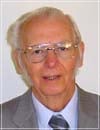
Bill McDaniel

Serpent's Head Bruised

Bill McDaniel November, 1 2015 Video & Audio
0 Comments

Sermon Transcript

Auto-generated transcript • May contain errors

100%
These are words unto the serpent,
as you might realize and recognize, verse 14 and 15. And the Lord
God said unto the serpent, Because thou hast done this, thou art
cursed above all cattle and above every beast of the field. Upon
thy belly shalt thou go, and thus shalt thou eat all the days
of thy life. Now watch this. Now we'll put
enmity between thee and the woman, between thy seed and her seed,
it shall bruise thy head and thou shalt bruise his heel. So there are two bruising there
that we want to look at. It'll bruise thy head and thou
shalt bruise his heel. Now, the text is part of the
arraignment of those three that had part in the sin and the fall
of mankind. And God brings each one of them
to account at his bar and passes sentence against them, each one
of them. Now, to the woman, God said,
as you remember, In verse 16 of this chapter, I will greatly
multiply thy sorrow and thy conception, in sorrow shall I bring forth
children, thy desire shall be unto thy husband, and he shall
reign over thee. To the man, God said, in verse
17 through verse 19, that the earth and the ground was to be
cursed for his sake, whereas it had been a garden and an Eden. It would now be cursed with thorns
and briars and all manner of unpleasant plant and such like. Man's labor would be in the sweat
of his brow that he might gain a living out of it. But the text
we've taken today are the words of God and the sentence of God
upon and against the serpent. And though it contains punishment,
Yet it said, thou art cursed above all the cattle and all
of the beasts of the field. I thought John Gill made a good
point on this, that there is both here a literal and a mystical
meaning in the synod, possibly because the serpent was used
of and by Satan in the deception of the woman Eve. First of all,
some are of the opinion that the serpent might have been at
one time more upright as he was created and as he went about
the garden. But now it must go upon its belly
and must slither, as it were, in the dust of the earth and
grovel in the dust of the earth that he lives upon. So we know
we must reject the notion of such as regard this whole matter
as a fable or simply an allegory or a myth and therefore not a
literal actual event at all. It is easy to see, said Calvin,
that the language is a mixture. For, quote, God so addresses
the serpent that the last clause belongs unto the devil. He addresses it to the serpent,
but here certainly it has its effect upon the serpent or the
devil toward him. By this point, I will put enmity
between thee and the woman. Though it is more and greater
enmity that would follow, and enmity would last throughout
all of the ages, one upon the other. But let's, uh, if we might
think about this with our first parents, the woman said, when
called to account, Oh, the serpent beguile me. And, uh, I did eat
in verse 13. And the man said, the woman that
you gave me to be with me, she gave unto me and I did eat. And that's in verse 12. There's
no doubt is an answer to the question of the Lord in chapter
3 and verse 11 Have you eaten of the tree? whereof I commanded
you that you should not eat then coming to verse 15 and the then
the double bruising one of the head and the other of the heel
as well as the two words of it and his as we look at it in the
scripture and also the word seed thy seed and her seed now is
that singular or is it plural it may be hard for us to ascertain
and come to a conclusion. But in Genesis 3.15 there is
a word here to learn which we can reduce to a very simple explanation
as we look at it. This has been called the first,
and let me get it down, praetivangelium, which means that Genesis chapter
3 and verse 15 contains the very first promise in all of the Bible. Here's the first, as it were,
announcement or gospel announcement or gospel message that the seed
of the woman would bruise the head of the serpent. And remember,
such terminology is also used by Paul when he writes in Romans
chapter 16 and verse 20, and the God of peace shall bruise
Satan under your feet shortly. Certainly had that thought and
that passage in mind. Now a question might puzzle us,
why was such an announcement made unto the serpent rather
than unto Adam and unto Eve? If this be a promise of victory
over Satan and would be enjoyed by the members or rather the
offspring of the woman, why then not make that declaration and
that promise directly unto her and unto the man. Why this indirect
method of conveying this message of victory and of bruising? And if it was meant to be a source
of hope and assurance unto sinners and of the human variety, why
not then clearly state to the pair, Adam and Eve, the victory
that was to come unto them. For this reason, many do not
see any connection here unto Christ in this declaration. And even some like Calvin were
not too strong upon that matter. But back to the question. Why
make the very first declaration of gospel victory under the serpent
who was an instrument of the wicked one in bringing about
the sin of our first parent? Could it be said that though
the words proclaim a victory by the seed of the woman, it
at the same time declares the destruction, the ruin, and the
overthrow of Satan himself? It shall bruise thy head. So when we look at it like that,
it is singular and must refer unto the Lord Jesus Christ. And this defeat of Satan is freely
declared in the New Testament. The New Testament picks up that
theme and that subject and solidifies it for us. Already we've quoted
Romans 16 and verse 20 the God of peace shall bruise Satan under
your heels feet shortly, but other texts are there Hebrews
chapter 2 and verse 14 Jesus also took part of flesh and blood
that through death he might destroy him that had the power of death
that is the devil and 1st John chapter 3 and verse 8 for this
purpose the Son of God was Manifested that he might destroy the works
of the devil our Lord would spoil Principalities and power he would
lead He would lead captivity captive His death and victory
upon the cross, but then back to the text in chapter 3 and
verse 15 We note a double enmity said to be the work of God I
will put enmity and then the two-fold enmity. Number one,
I will put enmity between thee and the woman, where at one time,
as Gil said, there had been too much familiarity and too much
friendship between the two of them. Now, enmity between the
woman and the serpent. Secondly, there was to be enmity
between her seed and thy seed, as he said to the devil, or the
serpent, between thy seed and her seed. Now concerning the
text, Gil shows how the seed is used in the singular. Therefore this is a first however,
an obscure reference under Messiah and under the gospel and under
the victory of Christ. These words are a part of the
gospel preached, first of all, outside of paradise, or the first
promise of grace that was made to mankind, now fallen and dead
trespass it and in sin many have written on this Matthew Henry
said on Genesis 315 here was the dawning of the gospel day
wherein a gracious promise is made of Christ Jonathan Edwards
wrote on Genesis 315 in these words the gospel is was first
revealed or announced upon the earth. This was the first revelation,
he said, of the covenant of grace. This was the dawning of the light
of the gospel upon the earth. one might use this and remember
how that God revealed more and more as history went by and as
time passed. But even so in Genesis 3 and
15 is the first dawning of gospel life in the world and a race
that had fallen and gone into spiritual darkness, now there
is a ray of hope, there is a promise that is made. And what was that? Well, the Son of Righteousness,
Malachi 4 and 2. did arise, and that with healing
in his wing. The Old Testament closes out
with that promise of one who would arrive. So let's quickly,
if we might, give a panoramic view of the unfolding of redemptive
purpose of God as it existed throughout the Old Testament
and then brought to its fullness in the coming of our Lord and
Savior Jesus Christ. First of all here in Genesis
chapter 3 and verse 15. After the day of Cain and Abel,
there was the practice of sacrifices, and this was typical of the worship
of God and of the sacrifice of our Lord and Savior, Jesus Christ. And God did actually begin to
save sinners in that day. They called upon the name of
the Lord, and they were saved and delivered. Noah found grace. Enoch walked by faith. Abraham
by faith and on and on. Well, that brings us to the time
of Abraham, one of the most prominent names in all of the Old Testament. And here we have a prominent
display, not only of God's sovereignty, but of God's divine election. As he pitches upon one man out
of a heathen family and makes him God's people, And out of
him was to come a promised seed by which the families of the
earth would be bled. And in this period of time, God
separated the people from the common herd of humanity to be
a people unto himself and to bear and to wear his name in
the world. came another very prominent character
in the Old Testament, Moses, a deliverer, to bring the people
of God out of bondage in Egypt and become, therefore, a type
of a redeemer and of redemption. Also, Moses acted as a mediator
between God and men and also as a lawgiver, for the law came
by Moses, only to lead them to the land of promise and put them
according to what God had promised them. Edwards called this a great
advancement of the revelation of redemption. And again, the
covenant was trimmed, the lamp was trimmed a little bit lighter
as they moved for forward toward the coming and appearance of
the Lord and Savior. Now, during the days of Moses,
another great thing was done. God inspired the writing of some
of the scripture. God began to commit his word
unto writing. The word and the law of God in
written form for the first time, a sacred oracle, an inspired
record that God had inspired for men to write. Again, we notice
in the high priest and the tabernacle, the sacrifices and all that are
pertained under that, God did set up his worship among a particular
people with some of the four closer types of Christ, yet to
be seen. And again, the covenant lamp,
if I may say, was trimmed a little bit brighter again. But the revelation
begins with Genesis chapter three and verse 15, which being the
first, but also perhaps the most obscure of all of those declaration
and types and promises that was to come. So let's approach it
from this standpoint. And I admit I got the idea from
reading John Owen, the great Puritan author and preacher,
that there is one central promise that is central to the foundation
of the Old Testament and one that is the central foundation
in the New Testament. Our text is the foundation of
the Old Testament and that in Matthew 16 and 18 is the foundation
and the promise of the New. Upon this rock will I build my
church, and the gates of hell shall not prevail against it.
And this is, as Owen applied it, the first held out for 4,000
years and was never in peace. God's purpose stood in the covenant. These are the boulevard of the
two testaments respectively, the old and the new. In Genesis
3 and 15, the first promise was the foundation of the whole system
of the worship of God and carries us all the way into the New Testament
and the appearing of our Lord. I think Madden made a good point
in a published sermon on Genesis chapter 3 and verse 15, that
being that it was all the gospel which the antediluvian fathers
had to live on. It was all of the gospel. And
then, but there were the type and the shadows as well. That
is, those that lived before and up to the time of the flood. And yet, to live upon it, they
did. And God called and saved sinners. and gave them faith and they
lived and they walked by faith. They obtained a good report among
the fathers, Hebrews 11 and verse 2. Here we had such men as Noah
and Enoch and Abel and those saints of God in that time and
in that period. And therefore, we see that from
the foundational promise, number one, Eve supposed she had produced
the promise one. Oh, perhaps I've gotten a man
from the Lord, she thought in Genesis chapter four and verse
one. Again, we find a man named Abel. offered a more excellent sacrifice
to God than did his brother Cain, by which he obtained witness
from God that he was righteous. Hebrews 11 and verse 4. In this
period we find that Enoch walked with God and was translated from
the earth God took him Genesis chapter 5 and verse 24 Then we
find that Noah built an ark to the saving of his house and condemned
the world Hebrews 11 and 7 all under the promise of Genesis
chapter 3 and verse 15 the like first given and There are expositors
of old who put it this way, as obscure as the words are, an
eagle-eyed and discerning faith could pick a great deal of comfort
from them." That is God's elect. and could have faith and believe
and walk with God in the light that God had given unto them. These words lay the foundation
for the great messianic deliverer that was to come into the world
and gain the victory over sin and death, the world, and all
of that. And therefore, again, an eagle-eyed
faith could spy out in this interesting text. Can we say, as did one,
that those few words contain some of the chief article of
the Christian faith, Genesis 3 and verse 15? And the question
might come, and how so? How is that? Well, let's look. First of all, in the seed of
the woman is germinally the doctrine of the incarnation. Even here,
there is a hint of the doctrine of the incarnation, the seed
of the woman. Secondly, in the bruising of
his heel, his suffering and his death, thou shalt bruise his
heel. Not a fatal and a forever wound,
but a temporary one. Thirdly, in the crushing of the
serpent's head is the glorious victory and the conquest over
the wicked one whom Christ shall destroy with the brightness of
his coming. And that to the good of the people
and the elect of God. What the New Testament called
the destroying of the one who has the power of death. Now this enmity that we read
about, it has two aspects. Number one, between the two heads
of the seed, Satan and Christ. And number two, between the friends
of Christ and the servants of the devil or of Satan. As to the second, we see the
commencement of the Holy War, commencing between Cain and Abel,
out of the same family. In fact, the first two sons born
in the world. that he offered one a pleasing
sacrifice to God and the other became at animosity over it and
actually killed him. Of Cain we read that he was of
that wicked one in the New Testament and that his own works were evil
and that he murdered Abel upon two accounts. Abel's works were
righteous, Cain's works were evil, and for that reason we
read that he destroyed or killed his brother. Now, we see this
warfare again in Jacob and in Esau. Again, they were twins,
born of the same mother and father, born at the same time, and Esau
was even the elder. And this is held up as an example
of an apostate in the case of Esau in Hebrews 12, 16 we read
Jacob I love Esau on the other hand have I hated Malachi 1 2
& 3 Romans 9 and verse 13 now there are four truths that are
stated here in Genesis chapter 3 and verse 15 a that there are
two seeds of the world there are two sorts of seeds that are
in the world in the spiritual sin there are two manner of people
though their origins are the same they are born of woman but
the Lord said in his days upon earth and Ye are of your father
the devil John 8 and 44 he did not mean that they were the offspring
of Satan as to the flesh that is that Satan had physically
begotten them for Cain is said to be a that wicked one. 1st John 3 and verse 12. And yet he was the physical offspring
of Adam and of Eve as to the flesh. Genesis 4 and 1. She bare Cain. So the two seeds
proceed from the common first parent of the race, Adam and
Eve. Consider Genesis 25 and 23. These words to Rebecca, two manner
of people shall be separated from thy bowels. And it referred
to the person of Jacob and of Esau. But then B, the two seeds
would be at enmity over religion. It would be a spiritual enmity
that stood between the two. Enmity over right and wrong. I will put enmity between. As stated earlier, the first
manifestation of this enmity was that between Cain and Abel. But we see this enmity playing
out in our society as the two sides are constantly warring
one against the other. But then see, as we look at that
great text, There is one to carry the banner and to one on each
side as seen in our text, he and thou, he and thou, as referring
to Satan and another. And indeed, the seed of a woman
will be victorious, not in themselves, not in the people, but in the
special seed, in that special one that is a seed of a woman,
how be it a virgin, and that one shall be victorious. Now, the word seed here can be
used two ways. Number one, as to a whole family
or to an offspring. but to a whole family as well,
a tribe, an offspring of them, a race, a generation of people. But number two, the word also
is used of a single person. As of Eve in our text. Seth in
Genesis 4 and 25 another seed and Paul applies it to Christ
in the singular in Galatians chapter 3 and verse 16 until
the seed should come which is Christ he leaves us without a
doubt So the conclusion is the woman, a transgressor in the
garden, would become an instrument of God to bring forth a special
seed to bruise the head of Satan and put away sin. Goodwin put it this way, that
the it or the he in the text does prophetically point out
and terminate on Christ. That this one is ultimately to
be in the person of Christ. For such a one is the seed of
the woman, not of the man. For he comes not by ordinary
generation. He is the seed of the woman,
but not the seed of the man. like all others are. We have
one who has given the wicked one a deadly blow, has given
him a fatal wound in his death upon the cross. He has crushed
and bruised the head of the serpent so that he has lost his power
of death to those that Christ has been the seed for and has
died upon the tree. Thank God for that wonderful
seed that has come which is the Lord Jesus Christ and has won
the victory has Destroyed the works of the devil and though
you may say well look they're worse than ever seems like in
our day and yet is it an ultimate victory of because he has given
a fatal, deadly wound to Satan and to all of his imps, and to
all of his plan, all of his enmity, and all of his purposes. Our
Lord is the victorious one, the seed of the woman.

Comments

0 / 2000 characters
Comments are moderated before appearing.

Be the first to comment!

Joshua

Joshua

Shall we play a game? Ask me about articles, sermons, or theology from our library. I can also help you navigate the site.