Bootstrap
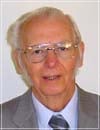
Bill McDaniel

Spiritual Adoption

1 John 3:1-3
Bill McDaniel February, 22 2015 Audio
0 Comments

Sermon Transcript

Auto-generated transcript • May contain errors

100%
All right, here's that passage
of scripture for our consideration. Behold, what manner of love the
Father hath bestowed upon us, that we should be called the
sons of God. Therefore the world knows us
not, because it knew him not. Beloved, now are we the sons
of God, and it does not yet appear what we shall be, but we know
that when He shall appear, we shall be like Him, for we shall
see Him as He is. And watch this. And every man
that hath this hope in him purify himself even as he is pure."
Adoption. Now, for those that are born
of God and as the fruit of regeneration, There awaits a high and a precious
privilege for them, and that is to be brought to the knowledge,
the spiritual knowledge, that we are the sons of God. As it is in John chapter 1, I
believe, to them that received Him, to them gave He power or
the authority or the right to become the children of God. Then here in the epistle of 1
John chapter 3, Behold what manner of love the Father hath bestowed
upon us that we should be called the sons of God. There's a great
and an inestimable gift. What an act and a manifestation
of God's love and of God's goodness and of God's mercy that we should
be called sons of God, children of God. What love on God's part
bestowed upon us that in order that so that we might be called
literally be the children of God now we're going to be studying
adoption spiritual adoption for a few minutes this afternoon
a study of the biblical doctrine of adoption by the way this is
a doctrine I don't think you hear A lot preached about it,
or preached on much in our day. And usually, when it is, it is
approached more from the human standpoint than it is from the
spiritual or the scriptural or the truth of God's sonship. Scripture gives us at least three
degrees or kinds of adoption that are to be found within its
pages. First of all, concerning Moses,
there is civil adoption like that in Exodus, the second chapter
when Moses, you remember, was spared the death of little Hebrew
boys and was taken in by the daughter of Pharaoh, made her
son and raised in that house and therefore adopted into that
condition. Again, there's the case of Esther,
which we find in the book of Esther, an orphan child And yet
in Esther chapter 2 and verse 7, who Mordecai, when her father
and mother were dead, took her for his own daughter. Now in each case they were brought
into a family that was not their natural family. Then there is
a case of national adoption that we find in the scripture, and
that is of Israel. Romans 9 and verse 4. To whom pertaineth the adoption? Among all the blessings that
God had bestowed upon them, one was adoption, that they are the
son of God. They are called God's son. It was not merely due to their
natural ability or anything of that sort, but because God would
take them as his own. In Exodus 4 and 22, Thou shalt
say unto Pharaoh, Thus saith the Lord, Israel is my son, even
my firstborn. And you have that language, again,
found in the scripture in the Old Testament. And then there
is that spiritual adoption that we want to talk about in the
New Testament, secured by and through the redemptive work of
the Lord Jesus Christ, whereby we are brought not just as slaves,
but as sons, given full, mature sonship in the family of God,
being the sons of God, and with all the rights and all the privileges
that appertain to one who is a son or a daughter of God. So, first thing let's do is let's
define this adoption as to its meaning as it is used in the
scripture. What is meant by adoption. We say somebody adopted a plan,
they adopted an idea or something like that. But what is it to
adopt in the familial or in the spiritual sense of the word.
Scripture rather calls us the benefactors of a divine adoption. So what is involved? You know,
it's reckoned as a great blessing. It is a high privilege from the
scripture. Therefore, we want to inquire
into it. as to what is concerned. Now,
in the civil sense, adoption usually, or mostly, will come
about because of some tragic circumstances in the life of
one or of another, such as an orphan. One has been left orphaned
and with no parents, or their parents having passed away, sometimes
being illegitimate and they are given up for adoption. Sometimes
they're just simply not wanted by their parents, by their father,
or by their mother, or the parents are unfit, or sometimes the parents
may be too poor and lacking in this world's good in order to
raise them and afford them. But whether civil or whether
spiritual, the meaning of the word is the same, adoption. And the word adoption, I understand,
is from the combining of two words, a son and placing. So that when one is adopted,
it is the placing of them as a son or a daughter. It is the
bringing of one into a family that is not part of that family
by nature. It has no right under that family
and the privileges that go with it, except by the desire and
the goodness of the one who is doing the adoption. Now, the
word pictures one being brought into the family, not born into
it, not in it by nature or biologically, but then put among the children. We have that expression in Jeremiah
3. I believe it's verse 19. Put
them among the children. Now, the word adoption is five
times in the New Testament writing and scripture. And no surprise,
all five times, It is from the pen of the Apostle Paul. I'll give you the five places
in case you ever want to make a study of it. It is Romans 8.15,
Romans 8 and 23, Romans 9 and 4, Ephesians chapter 1 and verse
5, then it's again in Galatians chapter 4 and verse 5 that you
might receive the adoption of children. Now the saints are
also often called sons in the scripture, referred to as the
children of God. To adopt them, therefore, is
to take one originally belonging to another family, or not belonging
to this family and bring them into the new family and put them
among the children. Invariably, and especially in
civil adoption, it is almost always going from a worse to
a better condition. Those who have need of adoption
in the civil sense usually have need of it because of the awfulness
of their situation. I'm reading John Owen, and he
lists five particulars that make up a full and a complete adoption,
bringing one into the family. Number one, that the one to be
adopted, as we've already said, is of another family than that
into which they are to be brought by the act of adoption. All are children of the family
under them to which they were originally not born. It is the
transfer, therefore, one out of one family into another. And secondly, the adopted has
no natural right or claim to be made a part of that family. We have friends that were adopted,
he was, And what a blessing to hear him talk about the situation
that he was in. And then a family adopted him
and raised him and gave him a very, very good life. So it's a translation
out of one family into another. by one who has the power or the
authority to make that transfer. And then thirdly, or fourthly,
thirdly, yes, adoption, there is a legal authoritative translation
of that one into the family. Fourthly, the adopted person
is freed from all ties and from all obligation of their former
family and of their former condition. For as none can worship two gods
or serve two masters, neither can one have or serve two fathers. And then fifth and lastly, once
adopted and transferred from one family into another, the
adopted one is invested with the full rights and all of the
privileges and receives a full admittance and inheritance into
the family by which they have been adopted. And Owens, who
wrote extensively on it, said, again, made this point, all of
these things and all of these circumstances that are mentioned
are to be found in the adoption of an elect believer. one who is elect and is adopted
and becomes and is called a son of God. We might say they originally
were the children of wrath, Ephesians chapter 2 and verse 3, but in
adoption they are put among the children of God, God as their
father, and all other saints as their brother and of their
sister." Now this translation, this adoption, the spiritual
adoption is according to the sovereignty of God by which they
are freed from all ties to our former family and way of life
and given that full admittance of and inheritance and blessing
of the adoption. So let's consider that passage
in Ephesians chapter 1 and verse 4 and 5 and see the connection
of adoption with all the other spiritual blessing with which
we are blessed in the heavenly places in Christ Jesus our Lord. Here in that passage we find
these three or four things. Number one, Election in verse
4, chosen in Christ before the world. And then number two, predestinated
or foreordained, that's in verse five. Thirdly, adoption, to the
adoption of children, unto the adoption of children. John Gill
wrote in his Body of Divinity, predestination to adoption stands
next to election, for we see the order chosen in Christ predestinated
unto the adoption of children. Those chosen in Christ were the
predestinated unto the adoption of children by Jesus Christ. Now based upon the text and others
John Gill called adoption quote an eternal and imminent act of
God." Imminent meaning it was in the mind, it was in the will
of God, it was the purpose of God from all eternity. In fact, adoption actually takes
its rise in the will of God before the world ever began. not in
time or when we are brought to the knowledge of Christ. Gill
called it, and he wrote extensively on it too, a branch of the spiritual
blessing and part and partial of the eternal purpose of the
good pleasure of God toward those chosen in the Lord Jesus Christ. Adoption, therefore, as an imminent
act of God belongs among, I think, the eternal blessing, those with
which yet blessed us before the foundation of the world. Now
there are four such mentioned in Ephesians 1, 3 through 6. One election, two, for donation,
three, adoption, four, acceptance in the beloved through Jesus
Christ. All of these in relation to the
Lord Jesus. None of them without a connection
unto him. Thus, our adoption does not first
commence at regeneration, nor is it consequent upon our believing
or our conversion for it is only manifest at that time in our
believing and our conversion. None are adopted because they
are regenerate, but they are regenerate in consequence of
their having been ordained unto adoption. And this is the order.
Adoption under sonship therefore proceeds regeneration Galatians
4 listen and because ye are sons God has sent forth his spirit
into your heart crying Abba father by eternal or imminent adoption
the elect are put in God's purpose among all the children of God. And then at the fullness of time,
they are spiritually quickened unto the manifestation of that
imminent sonship and adoption. So that, like election, election
is previous unto our being or unto our realizing or knowing
it. It is previous to the incarnation
and redemptive work of Christ. Our election is the work of the
Holy Spirit, rather our regeneration is the work of the Holy Spirit
in imparting new life and in quickening. So that I'm trying
to say that adoption is in the purpose and the mind of God from
eternity. Because Paul puts it among those
spiritual blessings. One summed it up like this, and
I'm quoting, adoption is a sentence of grace conceived in the divine
mind, settled in the divine will, and pronounced in divine predestination,
which is an eternal act of God, unquote. The good Dr. Ames, in
his theological work, Adoption is a gracious sentence of God,
first pronounced in divine predestination, afterward in Christ, then in
the elect believers themselves, who are given the spirit of adoption,
and the spirit of adoption to both enforce and to witness to
their adoption through Christ. Romans 8 14 through 16 is a good
passage. That is why in John 1, 12 and
13, those who believe and receive Christ as a consequence of having
been born of God are given power. They are given the right, the
exousia, the privilege of becoming the sons of God. It is here that
they enter into their personal conscious experience as the children
of God. They become aware that God is
their heavenly father and they are the children of God and he
is our father. That there is a father child
relationship. And in regeneration, the Holy
Spirit takes up his perpetual abode in the elect of God, and
he witnesses to them of their adoption through Christ. They
are aware of their spiritual sonship, for it is revealed unto
them by the spirit of adoption, Romans 8 and verse 15. Thus it
is that each of the Holy Three, the Father, the Son, and the
Holy Spirit, have a part in our adoption of children through
Jesus Christ. First of all, the Father ordains
us to the adoption of sons in Ephesians 1 and 5. Secondly,
the Son partakes of flesh and blood taking the likeness of
the children which God has given unto him, you find that in Hebrews
chapter 2, who also, Galatians 4 and verse 5, redeemed them
from under the law that they might receive the adoption of
son. For none can enter into the gracious
experience of adoption. That is, they can't receive it
unless they are freed from the bondage of sin, and in the case
of the Jew, from the law. And then thirdly, the Holy Spirit
is sent to cause them to cry, Abba, Father, Abba, Father, as
we read in the sacred scripture. Now, to settle the matter once
and for all, adoption is an act of God's sovereign good pleasure. He's not adopted out of need
or irresistible desire to have sons or to have children, but
out of free grace and sovereign pleasure has God made adoption. Now, among human families, most
do not adopt if they have their own natural children. But God
had an eternal son and created sons in the angels. Humans mostly
adopt because they cannot bear children or because the child
is in such great need, have lost their parents or whatever it
might be. But God adopts out of his sovereign
good pleasure in perfect harmony and connection with election
and predestination. So looking closer at 1 John chapter
3, the first two verses that we read as our text, As others
have pointed out, here in verse 1 is not a new thought, is not
a new subject that the Apostle is taking up, but is the second
proof that those that are of God perform righteousness. That they that are born of God
do not live in sin, but that they live according to righteousness. They are born of God, 1 John
2 and 29. They are sons of God in every
sense of the word. Now the latter is preferred by
a call to attain. Behold, It says, behold, that
catches our attention. It calls for our attention. This
is a weighty matter that's about to be declared. So therefore,
be alerted. Wake up. Be alert. Something of truth is to be given
forth and is to be admired and is to be rejoiced in. The Father hath bestowed upon
us. Behold what love the Father hath
bestowed upon us, not just God or the Lord, but God the Lord,
God the Lord and Father of our Lord and Savior Jesus Christ. Now this love that he has bestowed
has a saving efficacy as he bestowed it. It's his great love. Wherewith
he loved us. Ephesians chapter 2 and verse
4. Even when we were dead, in trespassing
and in sin, he quickened us. and the great love of God has
caused us to be called the children of God, sons and daughters of
the Almighty God. He our Father, we his children,
by grace and through the Lord. Though formerly aliens and enemies
to God, as we were, born in sin and living in sin as we did until
the time of grace in our very life. And then God came through
Jesus Christ in a marvelous way to bring us not only into adoption,
but to the knowledge of our adoption. Now, this speaks not of all men. Or in 1 John 3 and 16, the world
knows us not. For the whole world lies in wickedness."
1 John 5 and verse 19. How could they know us as sons
of God when they know not God? If they do not know God, then
they cannot know us as the sons of God. Beloved, it said in the
second verse, now are we the sons of God. Even now, as we
live in this world and abide in this body of flesh. And what's
more, in Romans chapter 8, 14 through 16, the spirit of God
is called there the spirit of adoption. And this, as I've already
said, causes us to cry out, Abba, Father, to feel confident that
God is our spiritual father, that he loves us, and that we
are his children. Even though here, 1 John 3 and
verse 2, It does not yet appear what we shall be. It has not
yet been made manifest unto us. We think and we have by faith
understand the coming state. But this fleshly existence is
not the final state of our sonship. There's more and deeper glory
that is to follow. For in this life only we have
hope we would be of all men most miserable. And there's more glory
that is to come for they that are brought into the family.
of God. It has not yet been manifested
all that we shall be. How could it? It never had. But
two things attached to the sonship of the elect. Number one, he
said, when our Lord appears We shall be like him, for we shall
see him as he is. Philippians 3.21 Who shall change
our vile body, that it might be fashioned like unto his glorious
body, in accordance with the effectual working of the Almighty
God. Now the second thing that we
look at here is 1 John 3 and 3 this time. The doctrine of
our divine sonship is a purifying one. They who see themselves
as the children of God, God's our father, they use that rather. It has a purifying effect upon
their life. Look at this. Everyone that had
this Hope in him purifies himself, even as he is pure." This person
who feels the adoption applied in their soul and their life.
lives different from those who are without the grace of God.
He lives soberly, he lives righteously, he lives godly in this present
world. He walks not in the flesh but
in the spirit. He is purified by the blessed
hope that dwells in him of that full sonship that will yet appear
in the duly manifested time. Malachi 1, honor me as a father. The Lord rebuked them through
the power of prophet. Paul speaks in Romans 8, 23 of
the final earthly manifestation of our adoption, waiting for
the adoption to wit, the redemption of our body, he writes in that
eighth chapter. There is a coming glory that
will be revealed in the saints of God, Romans 8 and 18, and
this is illustrated, and it runs parallel with a subjection of
creation, which is temporary and is in bondage with a promise
of deliverance, Romans 8, 20 through 22. For the earnest expectation
of the creature waits for the manifestation of the sons of
God. But adoption expresses itself
in a wonderful way. And that is that if we are the
children, there is the witness in us of our sonship, and if
children, then heirs, heirs of God, and joint heirs with the
Lord Jesus Christ. How blessed is our adoption,
who hath ordained us to the adoption of children by the Lord Jesus
Christ." We had no natural right to that. We had no inherent goodness
that might move God to take us in adoption, but simply out of
the pleasure of his goodwill, those he elected, he foreordained
to the adoption of children, that it will become effectual
in them and they will be brought to the realization of their sonship
and live under that privilege and that blessing the rest of
their days. Thank God for adoption, the right
to be called the children of God.

Comments

0 / 2000 characters
Comments are moderated before appearing.

Be the first to comment!

Joshua

Joshua

Shall we play a game? Ask me about articles, sermons, or theology from our library. I can also help you navigate the site.