Bootstrap
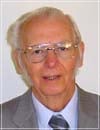
Bill McDaniel

The Great Savior of Sinners

Galatians 1:1-5
Bill McDaniel September, 12 2010 Video & Audio
0 Comments
Paul taught that Christ is the only way of salvation. After establishing this truth with the Galatians, they began to stray away from the simplicity of the gospel of salvation by grace alone. Similarly, many in today's churches do not realize that salvation is according to God's sovereign purpose.

Sermon Transcript

Auto-generated transcript • May contain errors

100%
Reading from the text in Galatians
chapter 1 verses 1 through 5 for our text of the evening, Galatians
1, 1 through 5, basically verse 4 will form our point of study
for the evening. Paul, an apostle, not of men,
neither by men, but by Jesus Christ, God the Father, who raised
him from the dead, and all the brethren which are with me unto
the churches of Galatia. Grace be to you and peace from
God the Father and from our Lord Jesus Christ, who gave himself
for our sins, that he might deliver us from this present evil world
according to the will of God our Father, to whom be glory
for ever and ever. Amen. Flipping to 1 Timothy 1
verse 15, this is a faithful saying worthy of all acceptation,
that Christ Jesus came into the world to save sinners of whom
I am chief. Galatians 1, 4, who gave himself
for our sin that he might deliver us from this present evil world
according to the will of God and our Father. I believe that
we would do well to consider the circumstances that were involved
and the divine providence of God in the history and the founding
of gospel worship in the region of Galatia. You know, Paul is
the one who brought the gospel to that area. He came there on
his second missionary journey. And it was a double providence
that favored the people of Galatia with the gospel. First of all,
in that Paul did not intend to come there. He had set his sights
on another area to preach the gospel in Asia, and yet the Spirit
of God direct him this way. Second, there is another act
of providence Some physical infirmity that overtook the apostle Paul
forced him to stay there longer and recover from whatever malady
it was. Now, he writes in Galatians 4
and verse 13 about that. He said, You know how that through
infirmity of the flesh I preached the gospel unto you at first. Something lay Paul low for a
time, and weak and frail, he stayed there and yet managed
to preach unto them the gospel. Lightfoot wrote about that, and
he said that it humiliated him and it prostrated his physical
strength. But this is amazing, is it not,
that such a feeble advocate as little old Apostle Paul such
a feeble advocate for such a momentous message or gospel as Paul preached,
and yet to these circumstances they owed their conversion and
coming to the knowledge of Christ. Here he was, a wandering minister,
a weak and a frail vessel at that, a stranger, as might cause
one to ask Can any good thing come by this frail messenger
who has come among us? Yet they had received Paul, even
in that condition, as if he had been an angel of God, or even
the Lord Jesus Christ Himself. They were not stumbled at His
infirmity. They did not reject Him. They
heard the gospel, and the Spirit of grace worked in their heart,
and they received the gospel message of salvation by and through
the Lord Jesus Christ. Paul says, concerning their liberality
to Him, that they would have even plucked out their eyes if
it had been possible, and given them to the apostles. Chapter
4 and verse 15. But since then, since Paul came,
since Paul preached the gospel, and since many believed and were
converted, there had come a great change in the churches in Galatia. There had come a great change
both toward Paul and also toward the gospel that he had preached
unto them in the first. That's why he said in chapter
4 and verse 15, where is the blessedness that you spoke of? Where is the blessedness that
you once had? Once so strong that they would
have plucked out their eyes and accorded him a great favor. Why were they now turning away
from the gospel and beginning to regard Paul as an enemy and
revolting against him, his ministry, gospel, and apostleship? In chapter 1 and verse 6, Paul
gets right to it. I marvel that you are so soon
removed from the grace of God of Christ unto another gospel
which indeed is not another." And we'll come back to this later
in our study, but let's focus for now on the opening four verses
of this epistle and see, as some good expositors have noted and
have written, that something in this is conspicuously absent. There is something conspicuously
absent in the first few words of Paul under this. It is a staple
of almost every other Pauline epistle that he writes. It almost
in all occasions formed a part of the opening salutation and
the opening greeting. But here in Galatians we have
a shortened salutation. Compare, if you would, the headings
to the other epistles and see how this is shortened. Now, our
chief text is verse 4, which is the heart and the soul of
the gospel of Christ. It is also the heart and soul
of the Galatian epistle, for around this is the gospel and
around this is this epistle. Actually, in verse 4, we have
a summation of the grace of God in Jesus Christ and of the gospel. This is a full description of
salvation. He needed not but one verse to
give a full description of salvation and the saving doctrine that
is set out in the gospel that he had brought among them. of
the eternal purpose of God which was executed in Christ and formed
before the foundation of the world. Now, everything in the
epistle, I repeat, revolves around what is said here in verse 4.
In some way, It all is related to it. Everything, in fact, in
the Bible is related under this truth. It is the hub, as it were,
in the middle of the wheel that Christ Jesus came into the world
to save sinners. that He is the only Savior of
sinners, that there is no salvation outside of Him or in any other,
that His is the only name given among men under heaven whereby
sinners must be saved. And the way that he saved sinners
is laid out in this verse of Scripture. He gave himself a
sacrifice for the sins of his people. And there is a reason
why Paul makes the statement here on the work of Christ And
I think J.B. Lightfoot is right when he said
that it is the true ground of acceptance with God. It is the
only ground of acceptance with God, a fact of which some at
Galatia had lost sight as the Judaizers pressed the law upon
them again. And many there had begun to ignore
the importance of the gospel and salvation announced in it. This is why, or whether this
is what Paul had preached unto them. He had preached unto them
that the death of Christ was the only way of salvation from
sin. That it was the only way to come
unto God. He had preached unto them that
salvation is in Christ. that Christ saved sinners. But
now enter the Judaizers who began to persuade the Gentiles that
they ought to submit to the right of circumcision and observe the
Mosaic law in addition to acknowledging Christ. And they persuaded. some of the Gentiles to accept
a mixture of Judaism and of Christianity, which Paul calls bondage. He calls it a beggarly element
of the world, and Paul chides them. in Galatians 4 and verse
9. How turn you again to the weak
and the beggarly elements of the world? Do you desire to be
enslaved again? Are you wishing to come into
another bondage? Many had started in the gospel,
and then they had turned back. At least they had looked back
from where Paul had brought them, like Lot's wife looked back and
turned into a pillow of salt, Genesis 19 and verse 16, the
Israelites in the wilderness did as Stephen said in Acts 7
and verse 39. In their hearts they turned back
again unto Egypt. They missed the leeks and the
onions and the garlic and the security that they had had in
that place. Then to that I add that Christendom
is full of those who are not satisfied with the simple ordinance
of the gospel and who make all sort of corrupting perversions
concerning the gospel and the death of Christ. Hardly one in
a hundred is there who stands on Christ alone, yet claiming
all the while to be a Christian. But in verse 4 of our text, is
declared the one and only ground of acceptance with God and salvation
from sin. Let's look at it. The who, at
the beginning of verse 4, has as its nearest antecedent the
Lord Jesus Christ in the end of verse 3, our Lord Jesus Christ
who gave Himself, or the One having given Himself. The tense is such that it views
the death of Christ as past, as a historical fact, a thing
that has already occurred. He has already, as Paul writes,
given Himself. Now, it won't mean much to us,
perhaps, but Linsky, who was pretty good on the tenses in
the Greek, said that this is a substantivized eros participle
that we have here in this play. Now, that's just a fancy way
of us saying that the death of Christ is a past, a historical,
and a literal fact. And Paul said, who gave, and
what he gave was himself." Now, the word gave is the word dédoumé
in the Greek, and it is used here as a verb, to give, and
it is almost always translated by the word give, or gave, or
given. But in a few places in the King
James in the New Testament, it is rendered yielded or grant
or offer. who yielded or granted or offered
up himself. The idea being that our Lord
gave Himself to the death of the cross. He gave Himself up
to that awful death as a sacrifice for sin. We know that the Lord's
life could not be taken away except He lay it down. Who could
take away the life of our Lord? He gave Himself. And we remember that text in
John 10 and verse 18. No man takes my life from me. I lay it down in myself. I have
power, or literally, exusia authority from my Father to lay it down.
And I have authority from my Father to take it up again. This expresses the fact that
our Lord died a completely voluntary death upon the cross. The God-man
gave up himself to the death of the cross. He had power to
lay his life down, power to take it back up again at the appointed
time. Now, someone may say in hearing
that, well, did not God appoint Christ to die the death of the
cross? And was it not necessary that
He die upon that cross to save His people from their sin? Was it not necessary that He
suffer to bring many sons unto glory? And another may say, did
not wicked, wicked hands take Him and crucify Him upon a cross? His own nation rejected Him.
One of the twelve betrayed Him. The officers arrested Him. Pilate condemned him, Roman soldiers
crucified him on the cross, and yet None of these things collectively
or individually dimmed the voluntary submission of the cross and its
death. Yea, they were all the outworking
of divine providence to accomplish whatsoever thy hand and thy counsel
determined before to be done." Acts chapter 4 and verse 28,
"...sure the Father spared not his own son in Romans chapter
8? Yes, Romans 3 and verse 25. God set him forth as a propitiation,
but still is it true that Christ voluntarily, willingly, in love
for his own, gave himself up unto the death of the cross?
As far as bare power goes, he could have prevented his death. Our Lord might have avoided death. Every soldier in the Roman army,
every minion out of hell could not have taken away our Lord's
life had he not submitted to drink the bitter cup which the
Father had set before him. He laid down His life, or the
words of Galatians 4, who gave Himself all the necessity, did
not reduce the fact that Christ willingly died, willingly yielded
up His life to the cross. What an act of grace, an act
of love, and an act of obedience as He was obedient unto the death
of the cross. Yet he gave himself. Ought not
Christ to suffer these things? Luke 24 and 26. Yet he gave himself. Isaiah 50 and verse 6. I gave
my back to the smiters, my cheeks to them that plucked off the
hair. I hid not my face from shame and from spitting. Let
us focus more on the fact and the nature of this giving. Gave. He gave Himself. Matthew 20 and verse 28 said,
The Son of Man came to give His life a ransom for many. In Ephesians 5 and verse 2, has
given Himself for us. He gave Himself. He gave His
life. A thing impossible for him to
do apart from the wonder of the incarnation. of no value apart
from Him being the Son of God Himself. He gave Himself and
even dismissed His Spirit into the hands of His Father, even
God. Now, what was the nature of Him
giving Himself? Or let's put it another way,
of what essence was what He gave? What sort, in what category should
we put what the Lord has given for sin? Well, the answer is,
it was a ransom. The Lord's death and blood was
a ransom. Matthew 20 and verse 28, to give
himself a ransom. And a ransom, of course, is a
price that is paid for the setting free of a captive. On top of
that, it was a sacrifice. Ephesians 5, verse 2, "...hath
given himself an offering and sacrifice," as Paul said it. Furthermore, it was a propitiation. In Romans 3, verse 25, "...whom
God set forth a propitiation." You'll see it again in 1 John
2, 1 and 2. then it was a redemption. It was buying by price out of
the bondage of slavery. His death was not martyrdom. His death was not an accident. His death was not to prove a
point. His death was not the result
of a death wish. His death was according to the
divine an eternal design of the holy three to accomplish a desired
end, the saving of a people. So our text says this. He gave
himself then for our sin. His giving himself was related
to our sin. His giving himself had a connection
to our sin. He gave himself on account of
our sin. Our sins were imputed to Him. being our surety. God made him
to be sin for us without becoming sinful. He made our sins to lie
upon him, Isaiah 53 and verse 6. He bore our sins in his own
body on the tree, 1 Peter chapter 2 and verse 24. He came to put
away sin by the sacrifice of himself, Hebrews 9 And verse
26, Our Lord gave himself an atonement, an expiation, a propitiation
on account of the sin and bondage of the elect. This is the preeminent
factor in the death of our Savior, the foremost purpose of our Lord
in dying. He became incarnate that He might
put away sin by the sacrifice of Himself. For so God had appointed
that the death of His Son is the ground of the forgiveness
of sin before His holy face and throne. Notice that the apostle
makes a connection. between Christ's bearing sin
and a great accomplishment, which is He gave Himself for our sin
so that He might deliver us from this present evil world, literally
age. And I agree with those who think
there is more that is intended here than our moral renewal. There is more than ceasing to
walk after the course of the world and to live in sin. Of course this is included. Of
course this is a result of the death of our Lord Jesus Christ,
for we are risen to walk in newness of life. But let's see how Paul
connects the two things together in Ephesians, the second chapter,
and verse 1 and 2. There he makes much the same
connection that he is making here in Galatians. And, of course,
you realize what a great companion volume is Ephesians and Galatians,
or Roman also and Galatians. So, in Ephesians, the second
chapter, he says, you that were dead in trespasses and in sin,
now watch this, wherein in time past ye walked according to the
course of this world. Let's say it this way, not only
were you unregenerate and in your sin, but our manner and
course of life was evil. And Paul lays it out there in
Ephesians chapter 2. Let's look at some things. Verse 2, At that time we walked,
we lived, we followed, we behaved according to the spirit of the
age. We live like our contemporaries. We partook of the vices prevalent
in society at that time. We fell in with the sins of the
age, is a good way to say it. But then, B, look again at verse
2. We walked according to the prints
of the power of the air and the spirit now at work in the children
of disobedience." See, look at the third verse, "...and among
those living in disobedience we also were under the power
of reigning sins of the age, fulfilling the lusts and the
desires of the flesh, and were ourselves wrathful children."
I sum it up with this quote from John Eady, taken from Ephesians
chapter 2, 1 through 3. Quote, they lived as the age
on all side of them lived. under the popular and universal
errors and delusions, they walked in entire conformity to the reigning
sins of the times." That's what Paul is saying to them. Not only
were you unregenerate, but you also were under this power of
the world. This because they were dead in
trespasses and in sin? And especially was it true of
the Gentiles before their conversion? Now, when we go back to Galatians
1 and verse 4 and read where Paul said, Christ gave Himself
for our sin that He might deliver us from this present evil world,
We think also of the exhortation of the Apostle Peter to those
whose hearts were cut by his message on the day of Pentecost. When they asked direction of
the apostle, what shall we do? Peter answered in Acts chapter
2 and verse 40, save yourselves from this untoward generation. Now, we need to catch that. We
need to pick up on it. What shall we do? Save yourself
from this untoward generation, literally from this crooked,
our corrupt generation, meaning that generation of Jews that
crucified our Lord upon the cross. For that generation would be
visited with a judgment of God that would be commensurate, that
is, would be equal to their sin in proportion to their great
sin in killing the Messiah. Judgment was threatened against
them, first by John the Baptist as he came preaching, by the
Messiah himself who threatened and spoke of judgment. Judgment
was coming. Judgment was coming upon that
generation. The blood of Messiah would be
required of them. It would be upon their heads
and upon the heads of their children. Their temple thrown down, their
priests killed, their city razed and ravaged by the Gentiles who
marauded against it, and great judgment fell upon them and that
city in 70 A.D. And Peter exhorts the penitent
there in Acts 2, save yourself. What does he mean? Save yourself
from this crooked generation. That is, from the judgment, the
judgment coming upon this generation. Save yourself by calling upon
the name of the Lord to escape the condemnation of that generation. Thus, when Paul said in our opening
text that Jesus gave himself for our sins and also to deliver
us from this present evil world, the meaning is being reconciled
to God by the death of Christ, we are rescued, we are delivered,
we are emancipated from the present evil age which is most surely
marked for destruction by Almighty God. These things shall be destroyed."
We're saved from the judgment and the perdition of ungodly
men, 2 Peter 3 and verse 7. No longer under the judgment
of God upon the sinful world. In Christ we are spared the ruin
that is to come upon the world and the age. We have been translated
out of the kingdom of darkness and translated into the kingdom
of His dear Son, Colossians 1 and verse 13. We are in the world. But we are not of the world. John chapter 17 and verse 14. Our Lord recognized that in his
disciple. They are in the world. They are
not of the world. If so, They would perish with
the world when it perished. But in 1 Corinthians 11, verse
32, Paul makes a statement of what we ought to do. He said
that we should not be condemned with the world. Go down under
that condemnation of the world and the world system. Then just
this word in passing, not since the generation that killed our
Lord and Savior has there been one more wicked perhaps than
ours when it comes to religious evil in our day. Now, there are two things to
consider from our original text. First of all, in the end of verse
4, that this wondrous deliverance, look what Paul said, is according
to the will of our God and Father, is how it ought to read. This
deliverance is not a haphazard afterthought. The death of Christ
is not a later remedy. The death of Christ was purposed
by God before the world. It followed a determined and
eternal order, God's purpose to save and elect people. And
as one said, its one source is the supreme and sovereign will
of God. That we have a Redeemer, we have
one who gave Himself for our sin, is of one source a sovereign
God. It has nothing to do with legal
observation. It rests not on merit. It rests
not on good works. our own free will. It is according
to the will of our God and our Father. Who purposed and designed
salvation? It was the Father. It was the
Holy Three before the world ever began. The second thing, look
in verse 5 of Galatians chapter 1, that all of this will redound
to the glory of God forever and forever. God only will receive
glory out of this. The glory will be of eternal
duration. It will never die. It will never
cease. Never will it have an end. It is not God's essential glory,
however, that is in view here, for this He has without a cause
outside of Himself. But what He means is honor and
praise unto God from created and redeemed creatures forever
and ever, praising God. Notice, it is to whom be glory
for ever and for ever. Amen." No wonder then that Paul
wrote, this is a faithful saying and worthy of all acceptation
that Christ Jesus came into the world to save sinners. This gave
a seal to Paul's ministry and his own conversion unto Christ. He calls himself the chief of
sinners. He looks back upon his former
life, how he persecuted the church and wasted it, And even as a
Christian calls himself the chief of sinners, you'll reckon Paul
had low self-esteem, do you? No. He just had high esteem for
the death and the blood of the Lord Jesus Christ. He called
himself before an enemy of Christ. But God saved that chief of sinners. For Christ said, I came not to
call the righteous but sinners unto repentance, the words of
our Lord. Christ only saves sinners. How does he do it? He gave himself
for our sin that he might deliver us from this present evil world
in accordance with the will and the purpose of Almighty God. Salvation is no accident. It
is an eternal decree of an eternal God concerning an eternal purpose. Christ came. He gave Himself. He offered Himself without spot
to God as a sacrifice for our sin, and God graciously received
that as a proper atonement for the sins of the elect. Thank
God He gave Himself. worthy of all acceptation, worthy
to be believed, worthy to be published, worthy to be believed,
he gave himself to save sinners.

Comments

0 / 2000 characters
Comments are moderated before appearing.

Be the first to comment!

Joshua

Joshua

Shall we play a game? Ask me about articles, sermons, or theology from our library. I can also help you navigate the site.