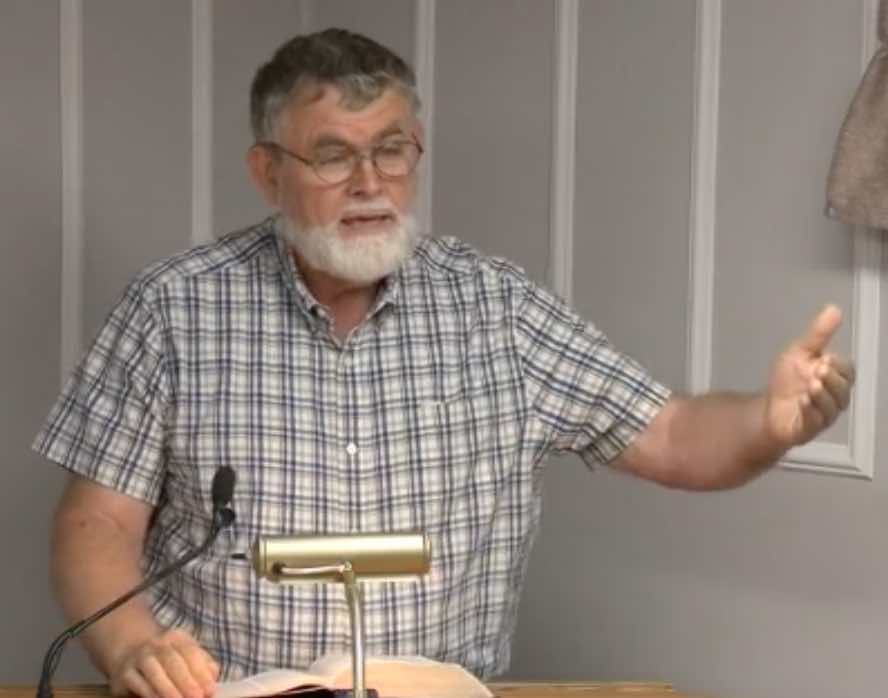
In the sermon "Now is the Time," Mike McInnis addresses the doctrine of God's absolute sovereignty over time and creation. He articulates that God exists outside of time and is not influenced by it, emphasizing that His eternal nature negates the possibility of chance. Key Scripture references include Exodus 3:14, Isaiah 55:8-9, and James 2:17, which support his arguments regarding God's immutability, the necessity of accountability in human actions, and the relationship between faith and works. The practical significance of the sermon urges listeners to respond to God's sovereignty with faith and action, highlighting the need for repentance, awareness of judgment, and active faith in their daily lives.
Key Quotes
“He is eternal, immortal, and invisible. He has neither beginning nor end.”
“We believe that the true and living God is an absolute sovereign.”
“You do what you do because you want to.”
“Now is the time to repent and believe the gospel.”
The Bible teaches that God is absolutely sovereign over all things, orchestrating every event according to His will.
The sovereignty of God is a key doctrine supported by various scriptural passages. It demonstrates that God is not limited by time and is the ultimate predestinator of all things. For instance, Ephesians 1:11 declares that God works all things according to the counsel of His will. The understanding that God orders our steps reinforces the belief that nothing occurs by chance, as mentioned in the sermon. Those who reject this concept often struggle to reconcile it with human reason, but we are encouraged to trust God's revelation, as stated in Isaiah 55:8-9, which highlights that God's ways and thoughts are infinitely higher than ours.
Ephesians 1:11, Isaiah 55:8-9
Predestination is affirmed in the Scripture, emphasizing God's sovereign choice and purpose in salvation.
The doctrine of predestination is supported by numerous biblical texts that affirm God's sovereignty in the salvation process. Romans 8:29-30 explicitly outlines God's intention to conform believers to the image of His Son, establishing a clear path of foreknowledge, predestination, calling, justification, and glorification. This chain of events illustrates God's active role in orchestrating salvation for His chosen people. It's important to understand that acknowledging predestination does not negate human responsibility; rather, it affirms that God’s plan includes human choices, as seen in the lives of figures like Judas and Pharaoh, who acted within God's sovereign decree while still bearing accountability for their actions.
Romans 8:29-30
Repentance is essential for Christians as it signifies a turning away from sin and a commitment to follow Christ.
Repentance is integral to the Christian faith, underscoring the need for believers to turn from their sins and seek forgiveness through Christ. The sermon emphasizes that now is the time to repent and believe the gospel, aligning with the biblical call found in Acts 2:38, where Peter instructs people to 'repent and be baptized.' Repentance is not merely feeling remorse for wrongdoing; it involves a deliberate change of mind and heart that leads to a transformative relationship with God. Such action is a demonstration of faith, reflecting the biblical teaching that faith without works is dead (James 2:26). Thus, genuine repentance is crucial for assurance of salvation and growth in holiness.
Acts 2:38, James 2:26
It means that true faith must manifest in good works; if not, it lacks the evidence of genuine belief.
The phrase 'faith without works is dead' emphasizes the inseparable link between genuine faith and observable actions in a believer's life. It denotes that a profession of faith devoid of transformation is questionable. James 2:19 warns that mere belief is not sufficient, as even demons acknowledge God's existence but do not embody saving faith. This connection means that while we are not saved by works, true faith will naturally produce works as a fruit of salvation. The sermon encourages believers to show their faith through good deeds, manifesting the transformative power of the gospel in their lives, thus confirming their calling and election.
James 2:19, James 2:26
Comments
Your comment has been submitted and is awaiting moderation. Once approved, it will appear on this page.
Be the first to comment!
